Data Center Electrical Architecture: Power Distribution & Redundancy
In a modern facility, the Data Center Electrical Architecture: Power Distribution & Redundancy is the backbone of uptime. We build it so power reaches every server, switch, and storage array the moment it is needed. At Kord Electric, we design with redundancy as the default, not as an afterthought. And yes, we take it seriously, because downtime in a data hall costs real money, not just feelings.
Others might treat electrical planning like a check-the-box task. We treat it like a system that must survive failures, maintenance windows, and the messy reality of growth. In the guide we publish on our site, we explain how efficiency and reliability work together, and we use that thinking on projects for commercial and industrial facilities and major property buildings. Then our technicians and expert service staff walk clients through the logic, step by step, so decisions stay clear.
Plan the electrical single line before you buy a single piece
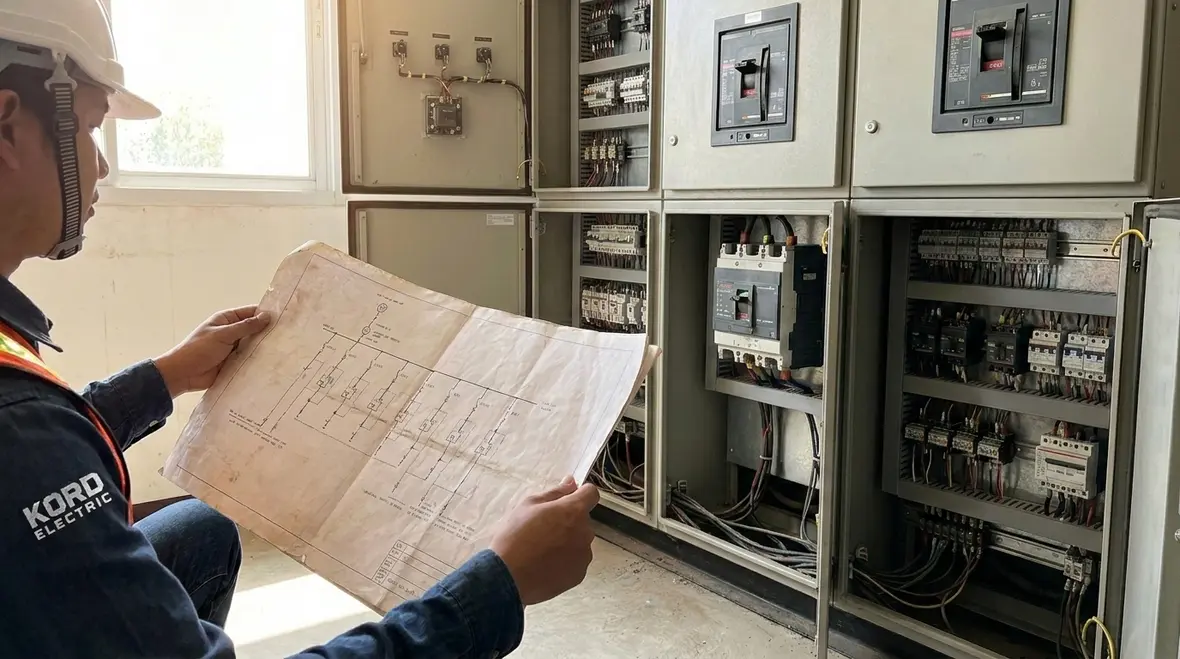
When teams rush into equipment selection, the risk rises quickly. First, we build a clean single line diagram that maps the full path from utility input to critical load. Then we layer in the control philosophy, metering, grounding, and transfer schemes. After that, we verify how power flows during normal operation, planned switching, and fault events.
Our technicians often say the same thing during start up reviews: if it is not clear on paper, it will not be clear in the field. So we make the drawing do the hard work. We define switchgear boundaries, feeder routes, and where redundancy begins and ends. We also align the design with the facility’s growth plan, because data centers rarely stop at “phase one.” They usually ask for phase two before phase one even finishes commissioning.
And while we are on the topic, yes, electrical one lines can look like subway maps. But unlike subway maps, the routes here matter during emergencies. We keep them readable so operators can trust them.
If you want to see how this planning mindset connects directly to performance, our companion piece on Electrical Design Data Center Efficiency walks through how clean one-line thinking turns into stable, efficient operation day after day.
Choose redundancy that matches your risk tolerance
Redundancy is not one size fits all. As power distribution and redundancy strategies change, the site’s cost, space needs, and maintenance approach change too. In practice, we match the redundancy model to the business requirement, then we confirm it with a load study and switching analysis.
We often help clients compare architectures by focusing on what happens when a component fails or gets serviced. For example, a path that looks redundant on paper can still create risk if switching times, selective coordination, or maintenance access are not designed well.
Our expert service staff contributes here in a practical way. They review how systems are actually operated, how alarms behave, and how staff will isolate faults without creating new ones. That viewpoint matters, because real people run real equipment under real time pressure.
To keep the design strong, we apply selective coordination for protective devices, and we build the transfer logic so it supports safe maintenance. Then we test sequences during commissioning so the facility does not “learn” during an outage. Nobody wants a live lesson that costs thousands of kilowatt hours.
Power distribution paths: feeders, switchgear, and bus design
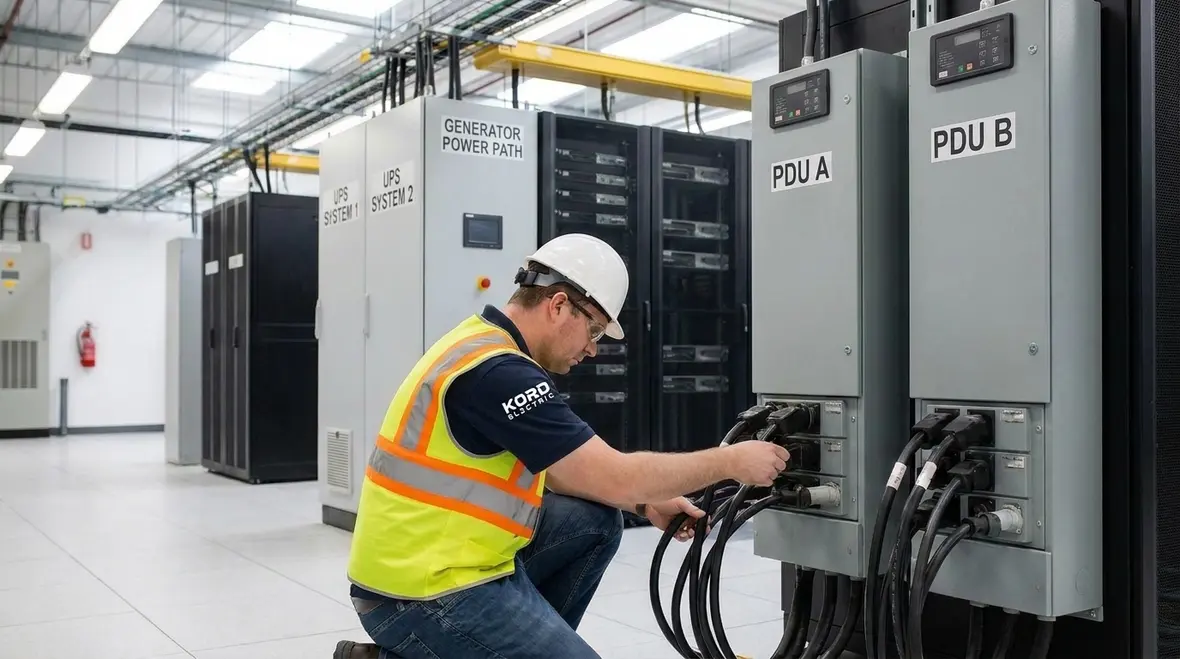
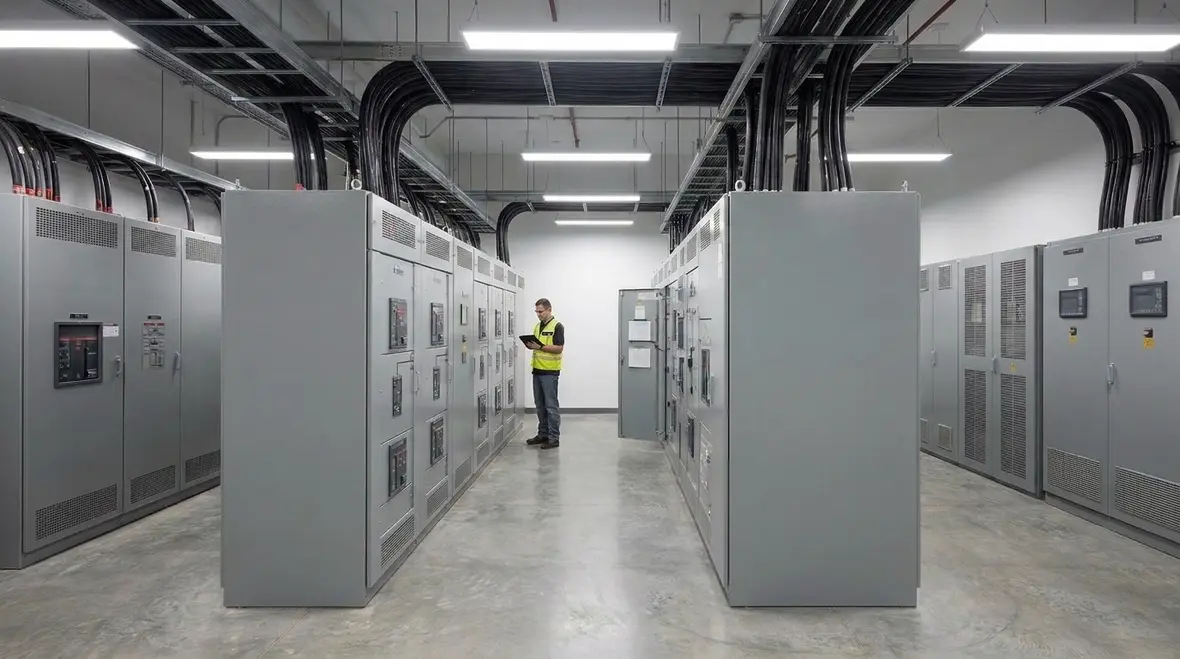
Next, we design the distribution paths that carry critical power. We focus on feeder layout, transformer strategy, bus configuration, and the physical separation needed to support reliable operation. In a solid plan, the architecture reduces single points of failure and limits how far faults can propagate.
Switchgear and bus design deserve extra attention. We evaluate where to place gear, how to handle segregation, and how to support future additions without rewiring the whole facility. Also, we confirm breaker ratings, interrupting capacity, and fault current calculations. That way, protective devices clear faults fast enough and cleanly enough to protect equipment.
Then we think about serviceability. If maintenance staff cannot access a section quickly, uptime suffers. So we keep routing practical and clear. We design for safe lockout and testing points, and we define how operators isolate a bay without shutting down the entire critical load.
Efficiency without cutting reliability corners

Efficient systems can still fail if the reliability design is weak. So we treat efficiency and redundancy as a pair, not as competing goals. When we follow the principles laid out in our electrical design data center efficiency guide, we look at losses across the journey: from upstream power quality to distribution conductors, transformer losses, and conversion steps.
We also consider how the facility uses load across the day and seasons. If the architecture runs far from the expected operating point, efficiency can drop and thermal stress can rise. Therefore, we support design choices that keep equipment in a healthier range.
In our approach, we evaluate voltage levels, distribution topologies, and the impact of switching and loading patterns. Then we verify that metering supports real performance tracking, not just basic visibility. In other words, we want the facility to measure what matters so operators can act early. If the building cannot tell you what it is doing, it is like guessing the temperature with a blindfold on.
Our technicians help validate installation details that affect efficiency, including termination quality, conductor sizing, and the cleanliness of airflow pathways where electrical rooms interface with cooling. When field execution matches the design, the efficiency gains hold steady.
Protection, selective coordination, and power quality that hold under stress
Even the best redundancy strategy fails if protection and power quality controls are not tuned. That is why we design the protective system to behave correctly during faults. We apply selective coordination so upstream devices do not trip for downstream issues. Then we verify that the clearing times align with equipment withstand limits and safety requirements.
Power quality also drives long term reliability. We address harmonics, transient events, and grounding practices that support stable operation. We verify that measurement points cover the right sections so operators can detect drift early. We also ensure that control circuits remain stable during switching operations and that alarm logic helps staff respond quickly.
We explain these concepts in plain language through our service and technician teams. They do not just say “it will be fine.” They walk clients through what the protection system does, why it does it, and how it behaves during realistic scenarios. That kind of clarity reduces confusion later, when the facility needs calm decision making.
And yes, power protection can sound like a boring lecture. But when it prevents a cascading trip during a fault, the story stops being boring fast.
Commissioning, testing, and ongoing service that keeps architecture honest
After installation, commissioning proves the design works as intended. We plan test steps that confirm switching sequences, verify protective behavior, check metering accuracy, and validate transfer and alarm logic. Then we document results clearly so the facility does not rely on memory.
Because data centers evolve, ongoing service matters. Our team supports maintenance strategies that protect redundancy and efficiency over time. We help clients plan inspections, evaluate thermal performance, and manage test cycles for critical components. We also review event history so operators learn from real data, not from vague recollections.
Our expert service staff stays involved with start up and later reviews, and we carry those lessons into future projects. That feedback loop strengthens the next design, because the field always teaches something. Sometimes it teaches a lot. The trick is to listen before the next outage forces the lesson.
For commercial and industrial facilities and major property buildings, that approach creates a predictable maintenance path that supports business goals. It also supports safe operations, which is not negotiable.
If you manage facilities in Southern California and want support beyond a single project, Kord Electric’s broader Los Angeles County electrical services offering helps align data center work with panels, lighting, emergency power, and preventive maintenance across your portfolio.
FAQ: Data center power distribution and redundancy
Conclusion: bring your electrical design under control with Kord Electric
If you manage a commercial or industrial facility, you need electrical systems that stay stable during maintenance, switching, and faults. Kord Electric helps you plan the Data Center Electrical Architecture: Power Distribution & Redundancy so your team can run with confidence. Our technicians and expert service staff explain the “why” behind every decision, and we support commissioning and ongoing care. Ready to make your next expansion calmer than a Friday night sitcom finale? Contact Kord Electric today and let us map your power path.
When you are ready to turn that plan into real-world uptime, our team can also connect this architecture work with broader electrical design and service support, from data center efficiency and power quality to inspections, upgrades, and portfolio-wide planning across Southern California.