Industrial Lighting Audits: Energy Savings, Safety & Compliance
If a commercial building is a machine, then lighting is the part most people forget until it fails. At Kord Electric, we focus on Industrial Lighting Audits: Energy Savings, Safety & Compliance because the goal is not just to “make it brighter.” It is to make it right for people, for operations, and for budgets. Our technicians and expert service staff review how light is built, where it lands, and how it behaves over time, so the site runs safer and wastes less energy. And yes, we explain what we find in plain language. You will not get a mystery report that reads like a sci fi novel.
In the first place, we do this because lighting drives energy costs, affects productivity, and impacts compliance risks. Then we document quick fixes, long term upgrades, and the work plan that fits your facility. Finally, we help others act on the results with confidence, not guesswork. After all, nobody wants a lighting change that works for exactly two weeks. That is not a strategy; that is a prank.
What an industrial facility lighting audit actually includes
An industrial lighting audit should feel like a structured walk through your site, not a casual look and a verbal guess. We start by studying your facility layout, production schedules, and typical occupancy. Then our team gathers data on lamp types, luminaire condition, controls, and light output. Next, we verify how lighting supports tasks like assembly, inspection, warehousing, and material handling.

After that, we measure performance in real locations, because “on paper” brightness often does not match “in practice.” We also evaluate glare, dark zones, uniformity, and emergency lighting coverage. Moreover, we check how the system behaves during shifts and seasonal changes. In other words, we audit the real world, not just the label on the fixture.
Our expert service staff also looks for maintenance drivers that quietly inflate costs: fixtures that are aging, lenses that have collected grime, and ballasts that fail early. Then we connect each issue to likely energy waste and performance gaps. If we see a problem repeating across areas, we flag it as a pattern rather than treating each light as a separate event. That approach keeps the work efficient, and it keeps your downtime minimal.
Where energy savings usually hide in warehouse and production lighting
Energy waste in industrial spaces often looks harmless at first. A fixture may still be “working,” but it can lose output, run longer than needed, or operate without effective controls. Therefore, when we plan Industrial Lighting Audits: Energy Savings, Safety & Compliance for commercial and industrial facilities, we chase the hidden causes.
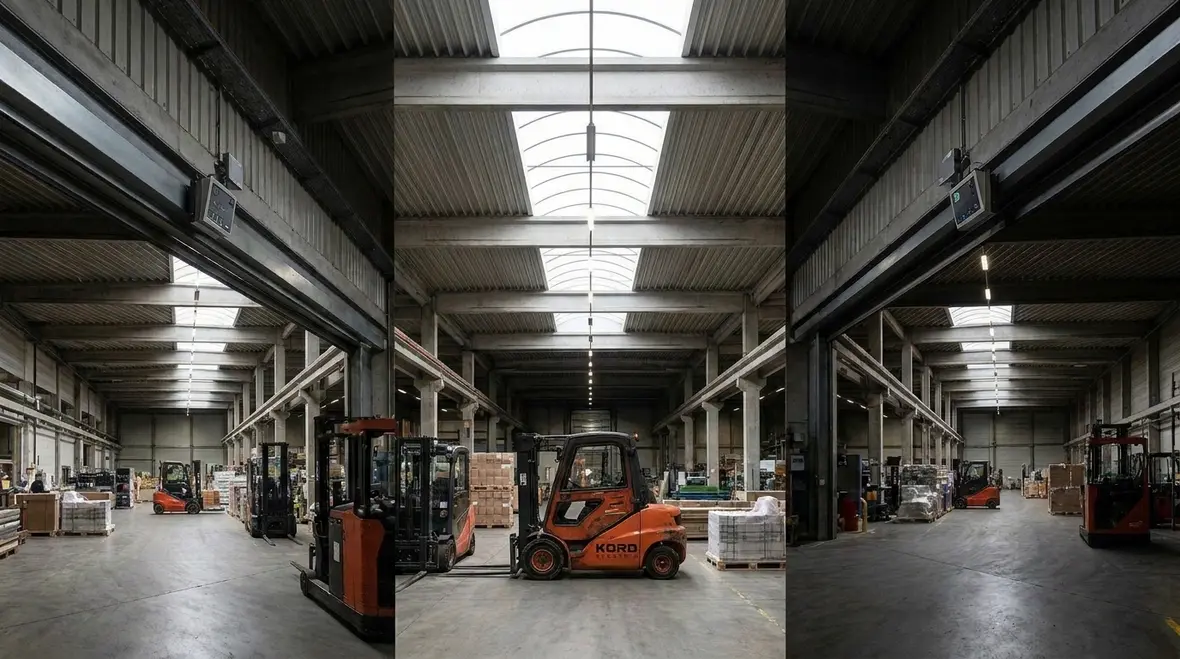
Common savings opportunities include reducing over-lighting, improving fixture efficiency, and adding controls that match how people actually use the area. Many sites use full power for whole shifts even when parts of the facility sit idle. As a result, lighting spends more time at the wrong settings than your team does at the right ones. We also review daylight interaction near doors, skylights, and exterior wall zones. If your lights fight sunlight, your meter will notice.
We also analyze system health. For example, older lamps and reflectors may produce less usable light while consuming the same electricity. In addition, poor optics can push light where it is not needed. Then, even if the site feels “bright enough,” it may still lack uniformity for tasks, which can cause operators to compensate by moving or using extra equipment.
To keep the conversation grounded, we give facility decision makers options that scale. Some facilities start with a lighting tune up in one area. Others choose a phased modernization based on operational risk. Either way, our team ties the numbers to the real spaces you run every day.
If you are also reviewing how fixture placement and mounting heights support your lines, you can connect this audit work with layout insights from resources like Kord Electric’s industrial facility lighting efficiency guide, so energy savings and layout improvements move together instead of in separate projects.
Safety and compliance risks that show up during inspections
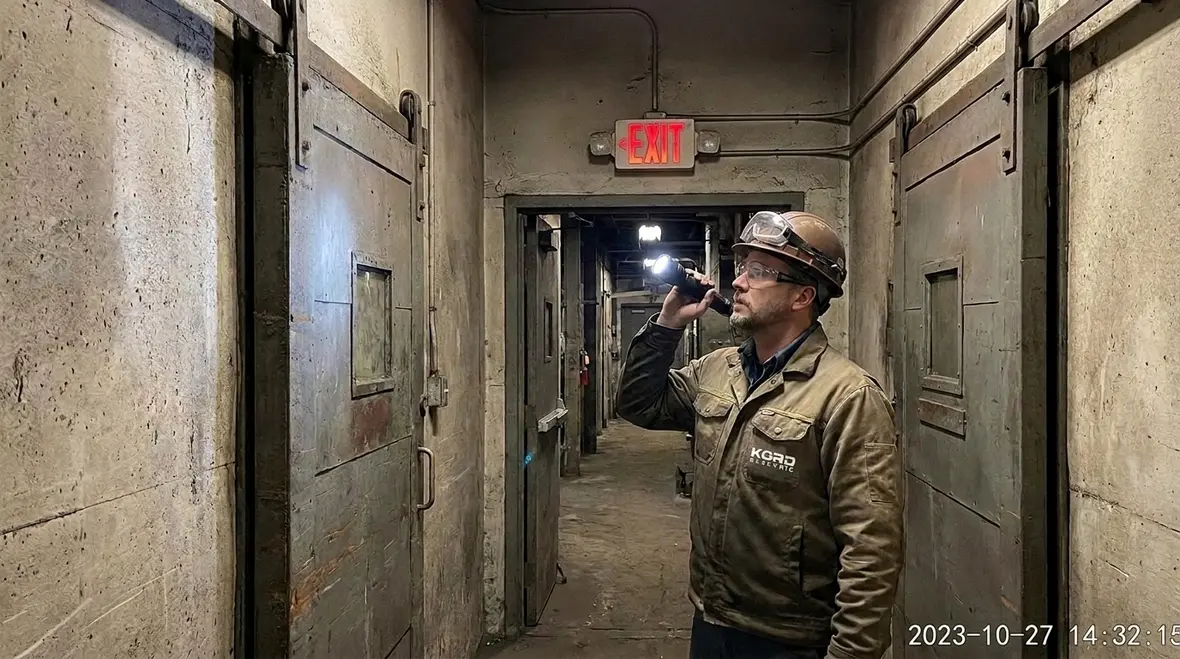
Lighting safety is not a “nice to have.” It affects slip and fall risk, emergency response visibility, and the ability to see hazards. During an audit, we check for conditions that can create real harm, such as excessive glare, flicker, dark corridors, and uneven lighting across walkways.
Compliance risk also grows when emergency lighting and exit pathways do not provide adequate coverage. Meanwhile, deferred maintenance can cause failures during critical hours. That is where an audit pays off. We do not just note issues. We map them to the areas where people travel, work, or store equipment.
Our technicians and expert service staff also review how your controls operate during alarms and power events, and we consider the environment. Factories can have dust, moisture, or temperature swings that stress fixtures. Then, a fixture that looks fine in a clean showroom can behave differently after months of harsh use. So we evaluate the lighting system as part of the entire facility environment.
Finally, we document findings in a way that supports your facility team. You can show the work scope to leadership, maintenance, and safety staff without translating jargon. That clarity reduces friction, and it helps you move from “we should fix it someday” to “we fixed it, and here is why.”
How we measure light levels and map the results

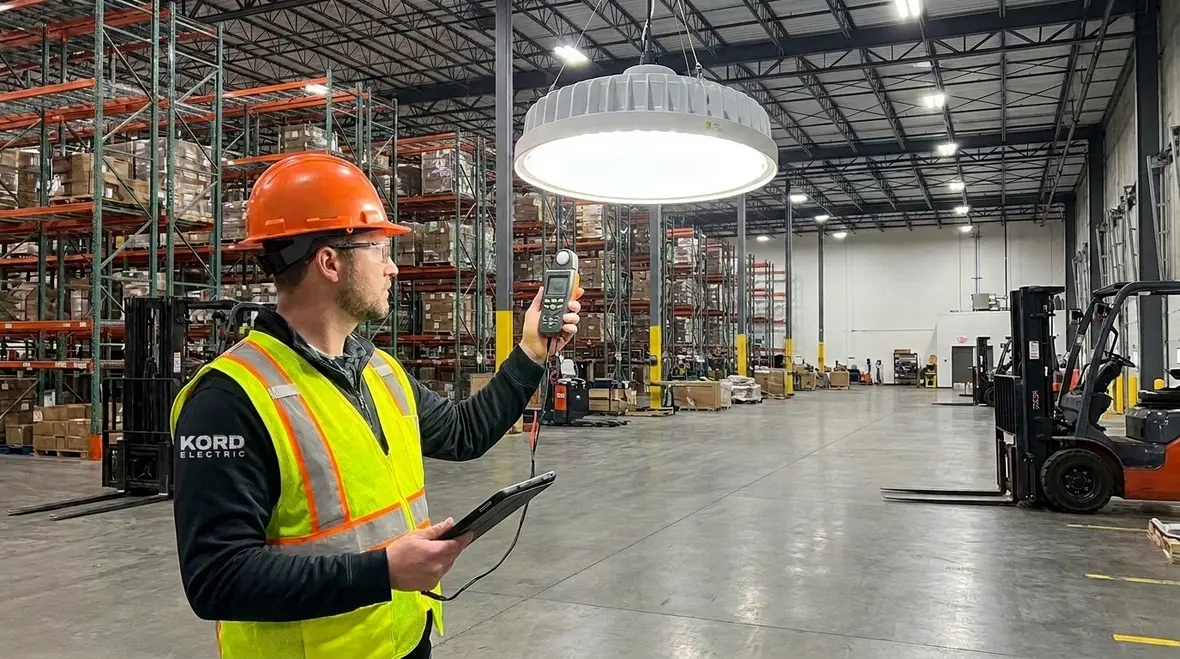
We measure because we trust the numbers more than anyone’s memory of what “used to look bright.” First, we identify task areas and routes that matter for operations. Then we capture light levels, check uniformity, and assess glare where relevant. Because people do not work in averages, we focus on the spots where the task happens and where the risk lives.
Next, we compare current performance against the requirements for industrial work and safe navigation. Then we translate that into an actionable plan: which fixtures to replace, where to adjust, and where controls will help most. In addition, we consider how long the lighting needs to last before the next maintenance cycle. That matters because industrial facilities cannot pause production like a movie set between takes.
To help decision makers understand tradeoffs, we can present upgrade options that balance performance, energy reduction, and installation disruption. For example, we may recommend targeted replacement where the output has dropped or where fixtures show early failures. Elsewhere, we may prioritize controls or lens cleaning schedules. The goal stays the same: better light where it matters, without unnecessary work where it does not.
We also encourage facility teams to avoid a common trap: replacing everything at once without a phased plan. That approach can strain labor, create scheduling conflicts, and trigger surprises. Our team builds a roadmap that supports how your facility actually runs. After all, lights do not need drama. They need daylight quality at the right time.
Upgrade paths that fit real budgets and real schedules
Not every facility needs a full replacement on day one. We often see owners and operators want improvement while keeping downtime low. Therefore, we offer staged strategies that handle the highest impact areas first, then expand based on results.
One common path starts with controls upgrades in high use zones and adds tuning for areas that remain underutilized. Another path starts with luminaire replacement where output is weakest or where fixtures fail early. Meanwhile, some facilities begin with emergency lighting updates to address safety coverage first.
In many projects, we combine both. We install upgrades where they produce immediate operational benefits, and we plan further modernization based on maintenance cycles. Then we forecast energy impacts so your finance team can plan with confidence. We also consider future expansions and whether the lighting layout can grow without a full rebuild.
Here is the part where we add a little humor, because the alternative is stress. If lighting upgrades feel like choosing a new phone carrier, we make it simpler. You do not need to understand every technology detail. You just need options that work, timelines you can trust, and explanations that make sense when someone asks, “Why did you pick that?” We answer that question before it becomes a meeting.
A single audit report should drive action, not just information
When we deliver an audit, we aim for clarity, not clutter. We organize findings by priority and by the work needed, so facility leaders can make decisions quickly. Then we provide recommended next steps, including quick wins and longer term improvements.
Our team also documents each recommendation with reasons tied to performance and risk. That means safety issues, energy waste, and maintenance drivers do not sit in separate boxes. Instead, we connect them. So when someone approves a scope, they understand the “why,” not just the “what.”
In larger facilities, we also include a phased plan that respects production and access constraints. As a result, maintenance teams can schedule work without disrupting the entire operation. And because our expert service staff explains the plan, you avoid surprises during installation.
Additionally, we align the audit outcomes with the goals of commercial and industrial facilities and major property buildings. We do not stretch recommendations for places outside our focus. We keep it relevant and build scopes that match the way your building performs.
Quick comparison for audit deliverables
What our clients get
Industrial site specific measurement
We map task areas, routes, and high risk zones, then record light levels and performance factors that affect safety and productivity.
Energy savings linked to causes
We identify over-lighting, control gaps, fixture aging, and optics issues, then recommend upgrades tied to real drivers.
Safety and compliance priorities
We address emergency lighting coverage and visibility risks so your facility can reduce hazards with clear documentation.
Phased upgrade roadmap
We recommend a plan that supports operations, reduces downtime, and fits budget realities.
FAQ about industrial lighting audits for commercial buildings
Call Kord Electric for a measured lighting plan
When lighting costs rise, teams usually blame the utility bill. Sometimes that is true. Often the bigger cause is wasted energy, uneven light, and maintenance issues that grow quietly over time. With our Industrial Lighting Audits: Energy Savings, Safety & Compliance approach, our technicians and expert service staff measure, explain, and guide you toward practical upgrades. If you want safer spaces and smarter spending, contact Kord Electric today and let us build a plan that fits your facility schedule and goals.
For facilities across the region, especially those coordinating power reliability, panel capacity, and lighting performance, it can help to connect this work with the broader support offered through Kord Electric’s Los Angeles County electrical services, so audits, upgrades, and preventive maintenance all move in the same direction.
If you are ready to take the next step beyond planning and into implementation, our team can also align lighting audit findings with related services such as data driven electrical design, power reliability reviews, or smart lighting control scheduling. That way your facility gains a single, coordinated roadmap instead of a patchwork of one off projects.