Industrial Facility Lighting Efficiency Guide
At Kord Electric, we help commercial and industrial facilities reach peak performance through strong industrial facility lighting efficiency. We know that lighting is not just about making spaces bright. It also affects energy use, safety, downtime, and long term operating costs. And yes, we hear the tired line, “It is just lights.” Others say it with the same confidence people have when they hold a phone flashlight at a car engine. The truth is far less dramatic and far more measurable.
In this article, we explain how our team supports facility owners and property managers in tightening lighting performance. We do it step by step, with technicians who stay practical, talk clearly, and explain the “why” behind every recommendation.
Why lighting efficiency changes a whole facility
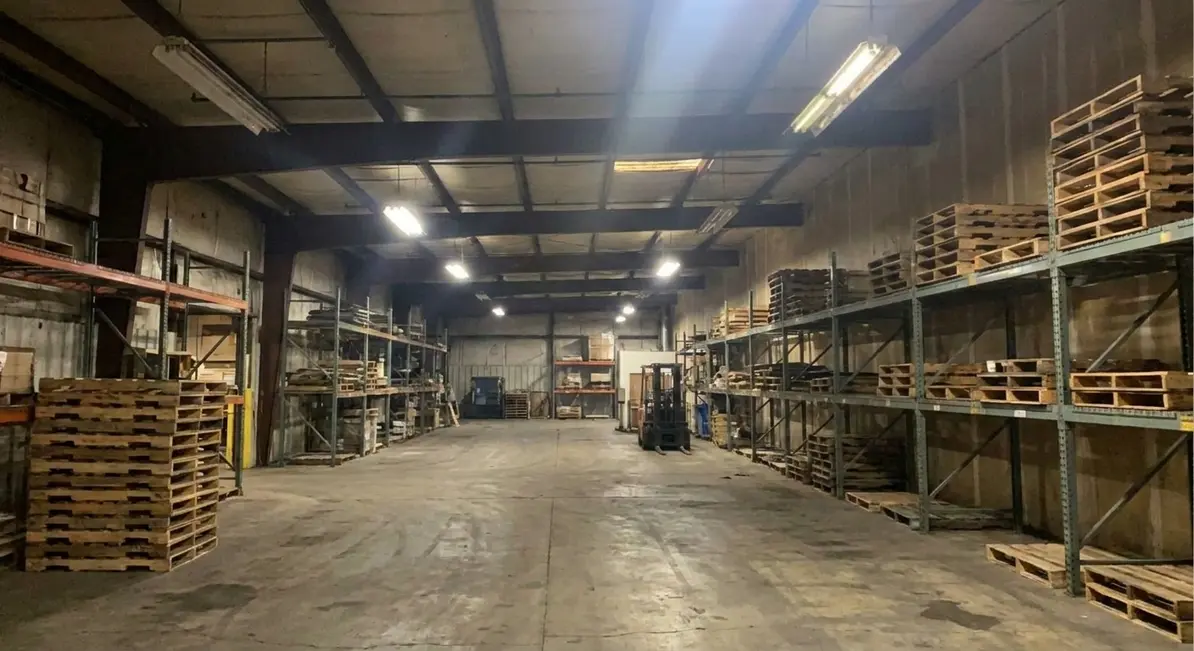
When an industrial site runs on outdated fixtures, poor aiming, or mismatched controls, the results show up everywhere. First, the facility uses more power than it needs. Then, workers experience glare, shadows, and inconsistent brightness. After that, maintenance costs climb because lamps fail sooner and drivers wear out faster. Eventually, operations feel it, even if nobody wants to admit it.
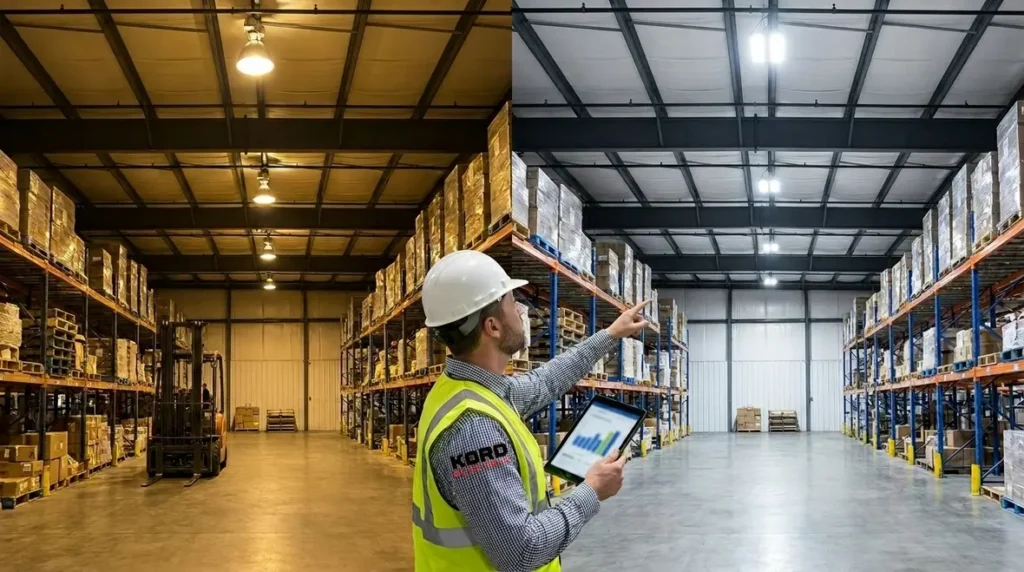
We focus on industrial facility lighting efficiency because it ties directly to how well the site performs. Higher efficiency means fewer wasted watts, better beam distribution, and controls that match real work patterns. In turn, that improves visibility at aisles, docks, staging areas, and production floors. Also, it supports safety compliance and lowers the chance of incidents caused by poor sight lines.
To be clear, we do not sell “brighter.” We help our clients achieve right-bright. That is the difference between lighting that looks impressive on paper and lighting that actually supports daily work.
Start with a real audit, not a guess
Most lighting projects fail at the beginning. A facility owner wants results quickly, so they swap fixtures and hope the math works out. However, efficiency depends on the whole system. That includes fixture type, mounting height, reflectance of walls, beam angles, existing wiring, and control strategy.
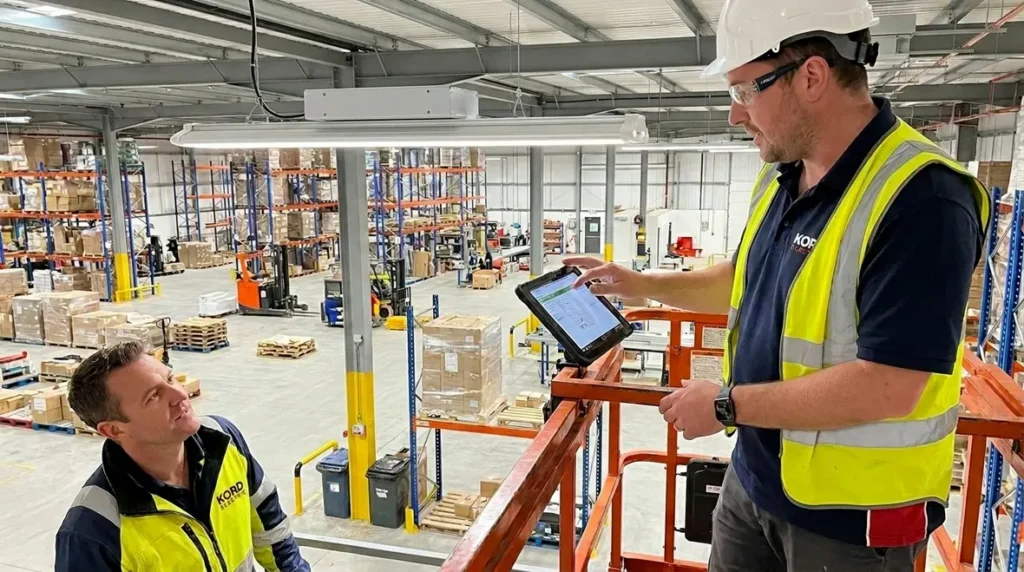
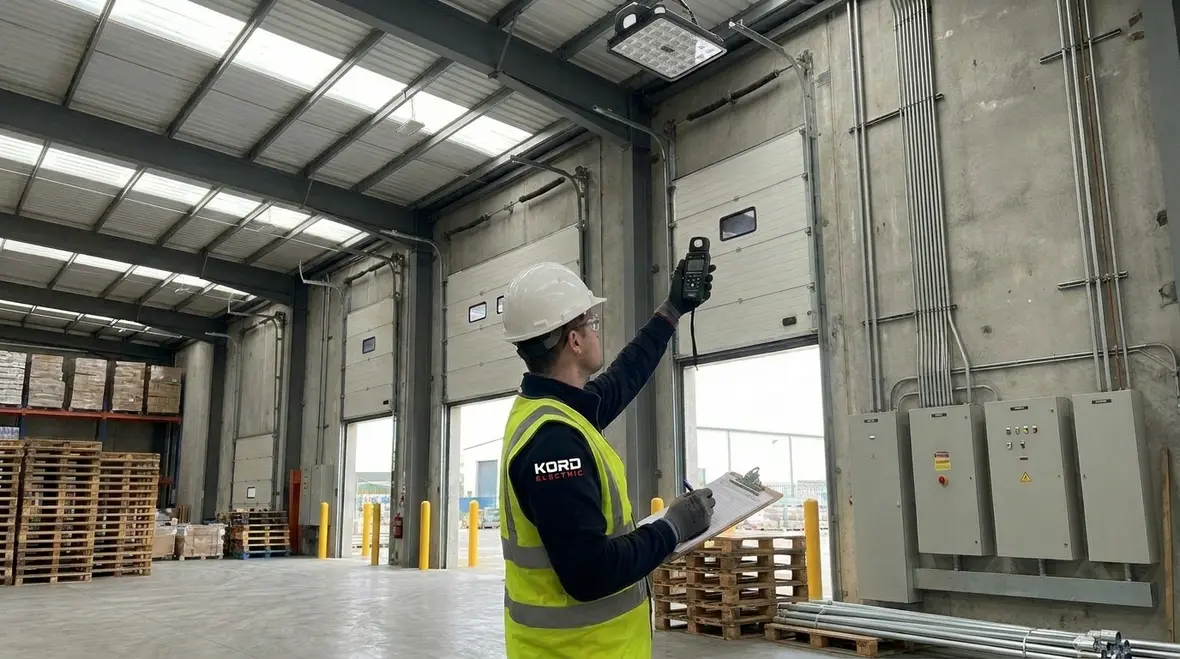
So, our experts begin with a practical audit. One of our technicians measures the current conditions, then we map lighting levels across key areas. Next, we review the electrical layout, the condition of ballasts or drivers, and how the site controls lighting today. After that, we identify where energy use is high and where the site lacks consistent illumination.
We also account for how each commercial and industrial facility actually runs. Warehouses do not operate like office lobbies. Manufacturing lines do not match retail display patterns. Therefore, we build solutions around occupancy schedules, shift lengths, and tasks that change through the day.
And here is the calming part. Once you can see the data, the project stops feeling like a blindfolded dart throw. It becomes a plan.
Design the layout for visibility and control
Lighting efficiency lives or dies based on layout and optics. Even the best fixture underperforms when it gets placed without considering spacing, aiming, and the height of the mounting structure. For industrial facilities, light has to travel across long distances and bounce off floors and walls that may be dusty, painted, or partially reflective.
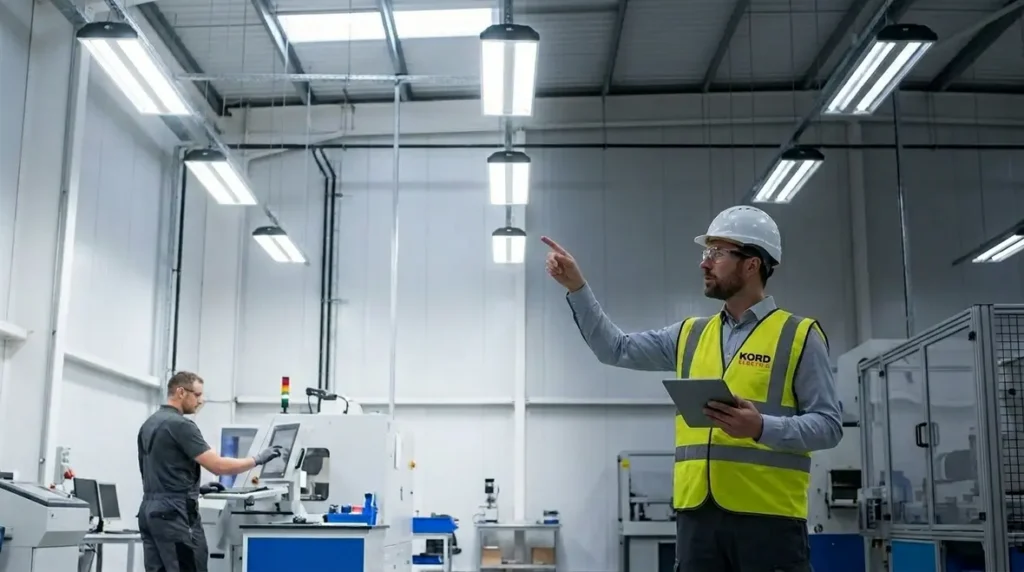
Our service staff explains this in plain terms during the planning phase. They show how beam spread and cut off affect glare. Then they outline why specific aiming angles improve uniformity. Uniformity matters because workers rely on stable visibility, especially in areas with moving equipment, conveyor systems, or frequent staging.
We also design for control from the start. Instead of turning everything on at full output, we align lighting output with real-time needs. For example, zones can dim during low activity periods, and task areas can stay brighter while storage aisles need less. When the site uses smart scheduling and sensing, we reduce wasted energy without hurting performance.
If you have ever seen a facility where lights blaze through the night because “that is how it has always been,” you understand the problem. It is not a lighting issue. It is a control issue.

Upgrade to efficient fixtures that fit the job
Fixture selection drives results, but only when it fits the environment. In harsh industrial settings, durability matters as much as efficiency. Dust, moisture, vibration, and temperature swings can reduce performance if the fixture is not rated for the conditions.
We help our clients choose modern options that support industrial facility lighting efficiency goals. That includes LED systems with proper optics, high efficacy, and drivers built for stable output. It also includes correct lumen packages for each location, so we do not overspend watts to chase a number on a spec sheet.
Then we check compatibility with the existing infrastructure. Sometimes a facility has wiring that can handle the upgrade. Other times, we adjust the electrical approach to protect performance and longevity. This reduces future callbacks and improves the reliability of the lighting system.
One more thing we explain during installation planning: controls and fixtures should work together. If you add sensors but ignore driver behavior, you can get flicker or odd dimming response. Therefore, we coordinate everything as a system, not as separate parts.

Controls and scheduling: where big savings usually hide
Energy waste often comes from lighting that runs when it should not, or it runs at full brightness when the task does not require it. For commercial and industrial facilities, controls create a path to real efficiency.
Our technicians recommend control strategies based on how the building operates. We can implement occupancy sensing for smaller zones and motion based control for areas with variable traffic. We can also support time based scheduling for shifts and maintenance windows. In larger spaces, we divide lighting into zones so the facility does not light the entire yard when only one bay needs coverage.
Additionally, we help facilities reduce “always on” behavior. Many sites keep lights on because turning them off feels risky. Yet modern systems handle transitions smoothly and support long term performance. And when the lights match real activity, workers get steady visibility while the building uses less power.
For the business owners reading this, think of it like HVAC zoning. You would not cool the whole building during one meeting. Lighting deserves the same logic.
Commissioning and testing to prove the results
After installation, we do not walk away. Instead, we commission the system so it performs as designed. Commissioning confirms that fixtures deliver the planned output, controls respond correctly, and zones dim and brighten as expected.
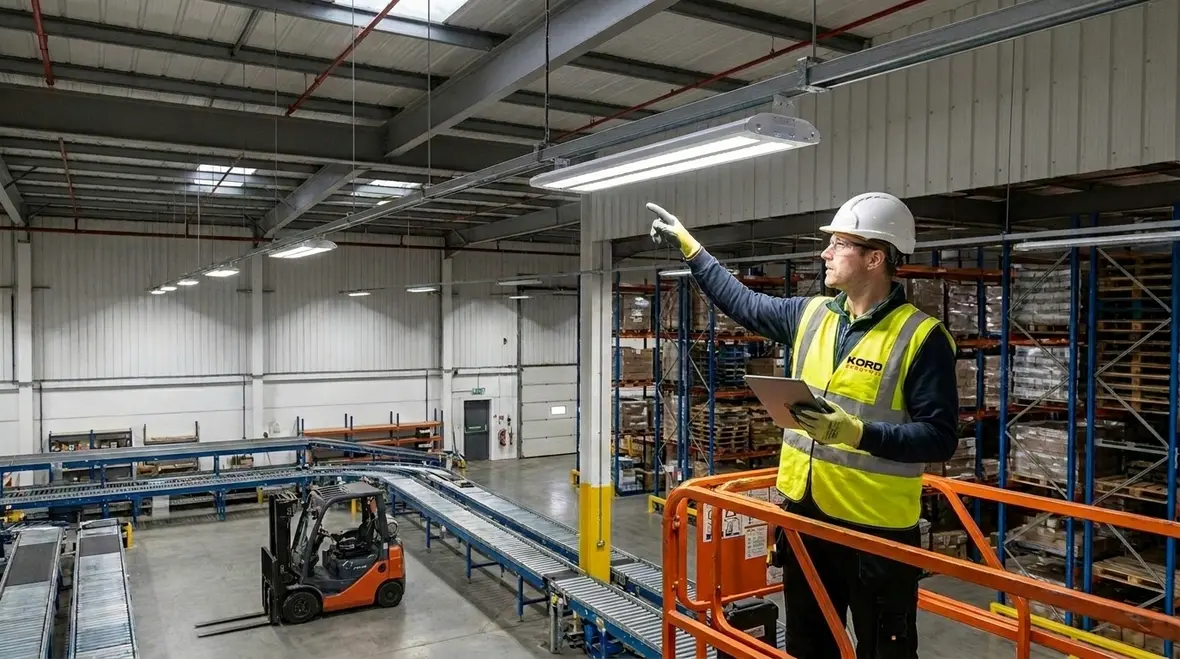
We test key areas against target lighting levels, then we check uniformity and glare risk. If the building has special tasks, like inspection lines or loading docks, we verify performance where people actually work. This protects safety and prevents the “it looks fine to me” problem that shows up later.
To keep everything clear, our service team documents settings and control behavior. Then we explain how facility staff can understand the system during daily operation. If a sensor fails, the staff should know where to look and what the system should do normally.
In short, we treat commissioning as part of the job, not an optional extra. That is how we earn trust and how we protect the investment.
Common mistakes that hurt industrial lighting efficiency
Even well meaning projects can lose efficiency if they ignore details. Here are the mistakes we see most often in commercial and industrial environments.
- Swapping fixtures without redesigning spacing, which can create dark spots or glare
- Choosing brightness first, instead of matching light levels to tasks
- Skipping control planning, which leaves lighting running during low activity hours
- Ignoring reflectance and surface conditions, since dusty or low reflectance surfaces change perceived brightness
- Assuming all zones work the same, even when traffic patterns differ across bays and corridors
- Not commissioning the system, which allows settings drift and performance issues to persist
We address these problems early. Moreover, we make sure the final design works for the site’s real workflow. That approach keeps performance steady instead of fragile.
For facility teams who also want to tighten broader electrical performance beyond lighting, pairing a focused lighting upgrade with a structured electrical maintenance strategy can help keep panels, feeders, and distribution equipment aligned with new loads, not just old assumptions. That kind of combined approach mirrors the way Kord Electric supports complex facilities in their broader commercial and industrial electrical maintenance plans and in uncovering hidden electrical risks that could quietly undo lighting gains over time.
Frequently asked questions
Note: These answers apply to commercial and industrial facilities and major property buildings, because the lighting needs and control strategies differ from other building types.
Ready to upgrade with Kord Electric?
If your facility lights run too long, look uneven, or feel more like a flashlight show than a work environment, Kord Electric can help. We assess performance, design efficient upgrades, and commission the system so it works exactly as planned. Our technicians explain every step in clear language, so your team knows what is happening and why.
For many organizations, the next smart step is to connect a targeted lighting project with a broader service partner that already understands complex electrical loads, safety requirements, and long term performance. Kord Electric’s dedicated Lighting Installation Services are built specifically for commercial and industrial properties that need lighting systems to support operations, not just look good on a drawing. That means careful facility evaluation, lighting design, installation, and commissioning tuned to your production floor, warehouse aisles, campuses, and large buildings.
If you are planning major upgrades or want lighting to align with a wider electrical maintenance or reliability strategy, their team can also coordinate with your ongoing commercial and industrial electrical maintenance plans so panels, feeders, and controls all support the same efficiency goals instead of working against them over time.
Contact us to schedule an on site evaluation and get a lighting plan built for commercial and industrial operations. Let us turn wasted watts into reliable visibility, starting now.