Emergency Power System Reliability Guide
Kord Electric helps commercial and industrial businesses strengthen emergency power system reliability so operations do not stall when the lights flicker or the grid decides to take an unscheduled day off. In this guide, we explain what actually drives dependable backup power in the real world, not just in brochure land. We also walk through how our technicians and expert service staff evaluate equipment, tighten weak links, and build maintenance routines that hold up under stress. Because when a shutdown hits, “we’ll get to it later” is a fun phrase for movies, but it is not a plan for facilities. We build systems that stay ready, start smoothly, and transfer power with less drama and more control.
How businesses prevent emergency downtime
When a power interruption happens, a facility has only a narrow window to protect people, equipment, and processes. Therefore, emergency power system reliability depends on multiple layers working together, not one “good” component. Many organizations focus on the generator alone, yet failure often hides in control wiring, batteries, ATS operation, fuel quality, or the load switching sequence.
At Kord Electric, we approach reliability like a chain where every link matters. First, we confirm the baseline: what the building must keep running, how fast loads need to come online, and which circuits are safety critical versus operationally critical. Then, we verify the transfer path and the control logic that governs the start, the synchronization, and the transfer.
Finally, we run the system through realistic checks. After all, equipment does not care if you hope for the best. It follows physics and maintenance schedules, and it rewards the teams that plan ahead.
What makes a transfer switch truly dependable
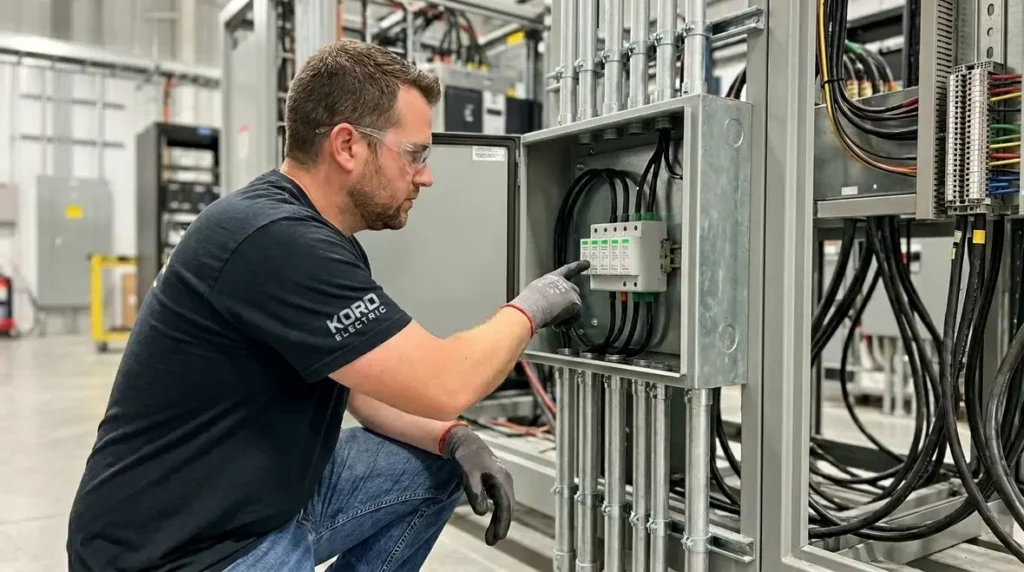
The transfer switch often acts like the conductor of an orchestra, and it can also be the bottleneck when it misbehaves. When Kord Electric evaluates ATS performance, we pay close attention to timing, contact condition, sensing signals, and interlocks. We also review the sequence that moves power from utility to backup and back again, because the wrong order can cause nuisance trips or equipment stress.
In practice, reliability improves when teams stop guessing and start validating. Our technicians inspect mechanical and electrical components, confirm proper settings, and verify that the ATS can execute transfers without hesitation under expected voltage and frequency ranges. Additionally, we check that controls interpret the conditions correctly, especially during borderline utility events when voltage dips or frequency drifts.
And yes, we do see cases where the ATS works perfectly during calm inspections, then acts confused during real disturbances. That is not magical. It is usually a setting, a contact issue, or a control path that needs adjustment.
How fuel and maintenance routines reduce generator failures
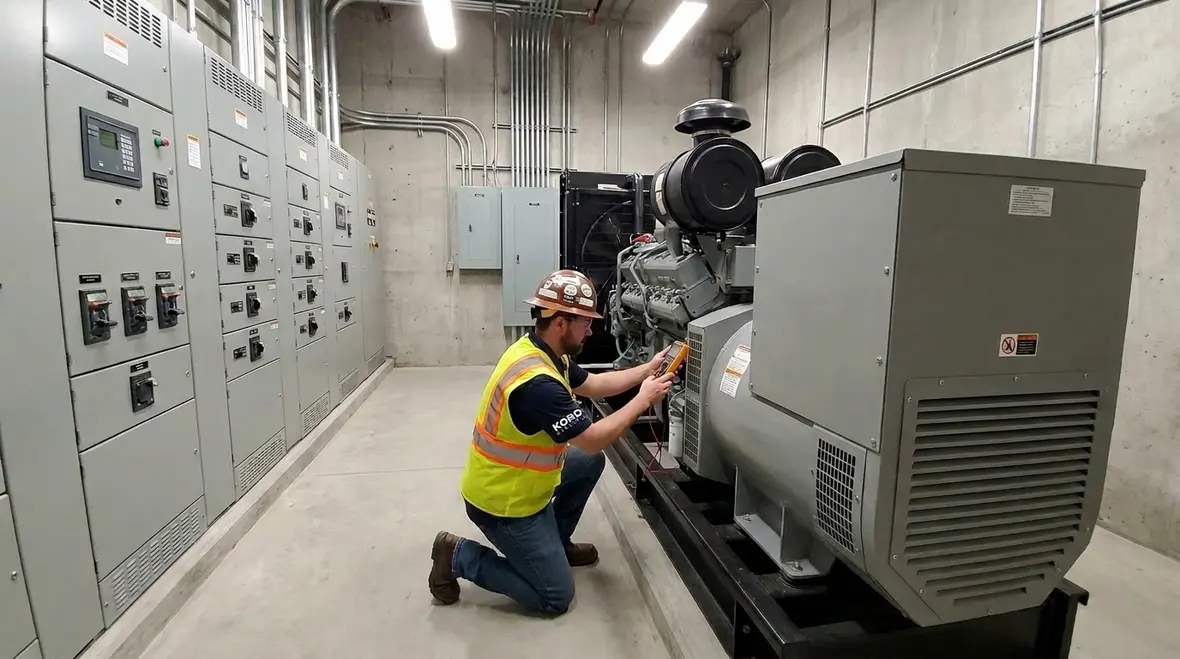
Generators are built to start. Still, they need fuel quality and preventive care to stay healthy. If fuel becomes contaminated, gelled, or stale, the system may crank but fail to pick up load properly. Therefore, Kord Electric supports commercial and industrial facilities with maintenance that tracks fuel condition, run time, and load behavior.
We recommend maintenance plans that match the actual usage pattern of each facility. For some sites, infrequent utility outages mean generators sit for long stretches. For others, the backup system may cycle more often due to grid instability. In either case, reliable operation depends on consistent testing, load bank validation when needed, and careful monitoring of wear items like filters, belts, and battery health.
Our expert service staff also help teams avoid “check-the-box” tasks. Instead of a quick visual inspection, we focus on what affects emergency power system reliability under real demand. That includes confirming coolant performance, exhaust integrity, charging circuits, and the state of the control module and sensors.
Because if a generator can start but cannot carry the load, the facility still loses. We plan so the outcome stays predictable.
Battery systems and controls for stable startups
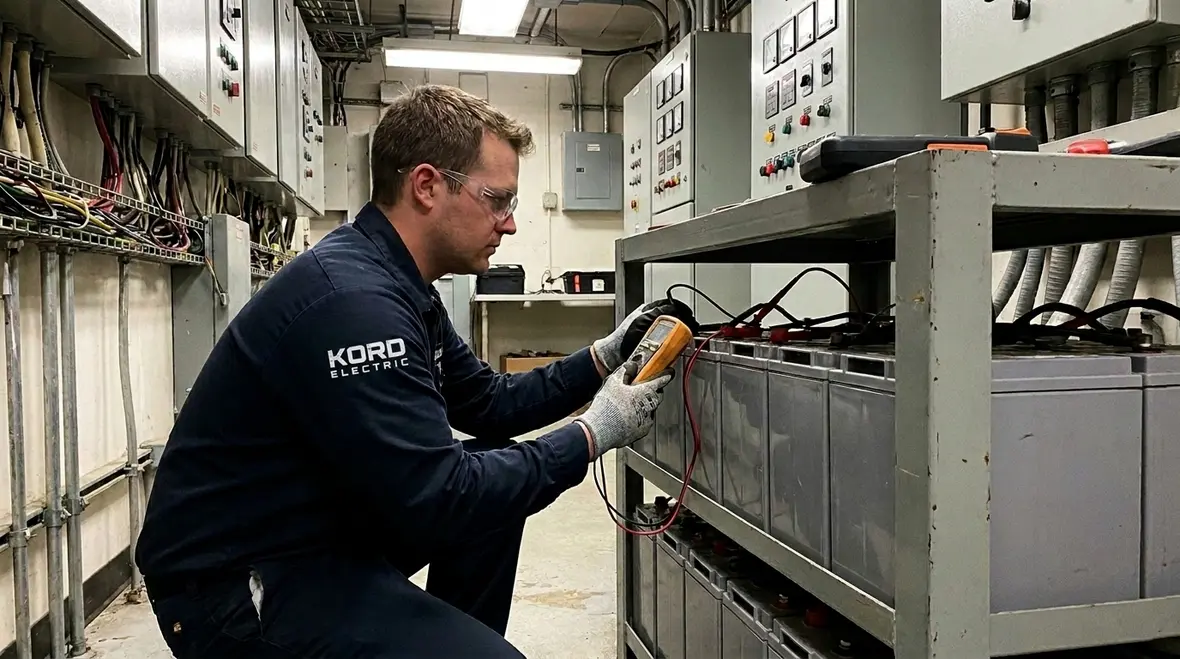
Many failures start long before a generator runs. Weak batteries, poor connections, or aging chargers can cause slow cranking, low voltage, or repeated start attempts that drain resources. Therefore, we treat the battery and control system as part of the reliability equation, not a footnote.
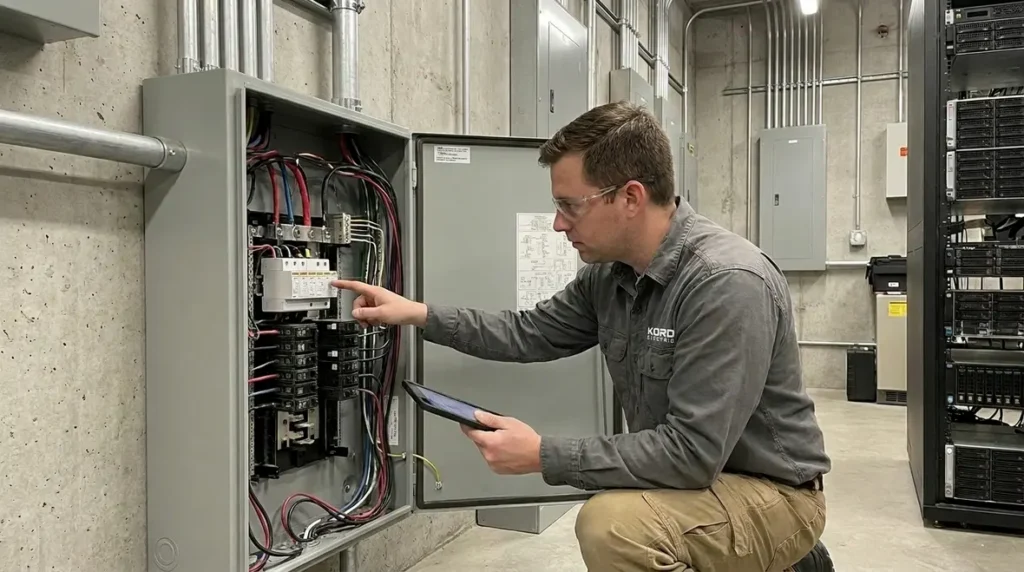
Kord Electric technicians verify battery capacity, test charging behavior, and inspect termination points for heat damage or corrosion. Then, we examine control panels for proper alarms and setpoints. That matters because control errors can prevent a startup even when the generator hardware is fine.
Also, we make sure the controls align with the building’s strategy. Some facilities use staged load shedding, others run critical loads only. We ensure the generator governor, protection features, and sequence logic support that design. As a result, when the event occurs, the system starts in a controlled way rather than reacting like it just woke up from a nap.
Load readiness: matching backup power to real facility needs
A facility does not fail because backup power exists. It fails when backup power does not match the loads that must run. That is where we go deeper than nameplate ratings. Kord Electric helps businesses map critical loads, evaluate startup surges, and build a practical plan for what happens during the first minutes of an outage.
For example, motors and refrigeration systems create high inrush currents. Meanwhile, IT and communication equipment need stable voltage and clean operation. If the emergency system cannot handle the startup sequence, it may transfer successfully and then stall under demand. Therefore, we focus on load categories, time delays, and priority settings.
We also review how the facility controls its own demand during an outage. When the building knows which equipment to bring up first, the generator has a better chance to stabilize. If the building brings everything online at once, it can overwhelm the system. That is a common issue in facilities that grew over time without updating their backup strategy.
So we update the plan, not just the generator. Because in the real world, “good enough” load matching does not survive long outages.
For facilities that want preventive strategies beyond outage planning, structured programs such as electrical preventive maintenance help keep panels, distribution equipment, and emergency power assets aligned with real-world operating demands.
Testing, documentation, and response plans that hold up
Testing turns theory into proof. Yet many sites run tests that reveal problems but do not lead to real fixes, or they log results in ways that nobody can use during an emergency. At Kord Electric, we support commercial and industrial facilities with structured testing and clear documentation that helps teams act fast when conditions change.
Our technicians help facilities define test frequency based on risk and usage, then evaluate performance details like voltage stability, transfer timing, and whether the system reaches steady operation under expected load. Additionally, we assist with maintenance records so managers and operations teams can track trends rather than chasing surprises.
We also encourage an outage response workflow. That includes identifying who approves load shedding, who verifies system status, and how communications happen when staff are stressed. With a response plan, the organization does not scramble like it is searching for a missing TV remote. It follows steps that work.
And that is how reliability becomes an operational advantage instead of a hope.
When unplanned failures do occur, facilities can combine long-term planning with rapid-response solutions such as Kord Electric’s emergency electrical services to stabilize systems and restore power safely.
How Kord Electric strengthens reliability for commercial and industrial buildings
Kord Electric focuses on commercial and industrial facilities and major property buildings, because those sites require serious uptime and disciplined engineering. We work with facility owners, electrical contractors, and operations teams to keep emergency systems dependable across the full lifecycle.
First, we inspect the full system, including ATS behavior, generator readiness, control circuits, batteries, protection devices, and load strategy. Then, we recommend upgrades or adjustments where they matter most. Finally, we support ongoing service so the system stays stable as equipment ages and facility loads change.
Our technicians and expert service staff explain each step in plain terms, so the facility team understands what is happening and why. And when we finish, we help set expectations for future performance, including what to monitor and how to respond during outages.
That is the difference between a system that exists and a system that performs.
For organizations that want to align broader electrical infrastructure with their backup systems, programs such as commercial and industrial voltage correction and preventive maintenance help control power quality before, during, and after an outage.
Emergency power system reliability FAQ
Conclusion
If a business depends on backup power, we help it earn reliability, not just claim it. Kord Electric strengthens emergency power system reliability by auditing the entire pathway from transfer switch to controls, batteries, fuel, and load strategy. Then we support testing, documentation, and practical response planning so your team can act calmly when conditions change. If you are ready to reduce uncertainty for your facility, contact Kord Electric today. Our expert service staff will review your setup and recommend the next steps that make sense.
To connect emergency power planning with broader electrical resilience, many facilities pair this work with Kord Electric’s electrical preventive maintenance services, keeping everyday infrastructure and backup systems aligned around uptime and safety.