

Electrical Design Data Center Efficiency Guide
Commercial and industrial facilities face a simple truth: their Electrical Design Data Center Efficiency is not a slogan, it is a design outcome. When Kord Electric plans electrical systems with modern controls, smart distribution, and clean power paths, the result is lower losses, steadier operations, and less wasted energy over time. In this article, we explain how leading electrical design strategies help data centers and major property buildings use power better, without turning the project into a science fair. And yes, we also keep the work practical, because nothing ruins a good plan like preventable downtime. Our expert service staff and technicians share real-world guidance, so readers walk away with clear steps, not vague promises.
Electrical Design Data Center Efficiency starts with load thinking
When others rush into equipment selection, they often miss the real driver of efficiency: the load. Kord Electric begins by mapping how power flows from utility to critical loads, and how each phase of operation changes demand. Then we segment the design so the electrical system matches how the facility actually runs. This approach strengthens Electrical Design Data Center Efficiency because it reduces avoidable losses and prevents oversized gear from living in a permanent “almost loaded” state.
To do this, our team uses capacity planning with real operating scenarios. For example, we review typical rack expansion schedules, cooling evolution, and tenant power profiles in major property buildings. After that, we align switchgear, distribution, and UPS sizing with the expected load curve. Next, we confirm that the control logic supports those operating modes. In short, we design for how the site behaves, not how a spreadsheet hopes it behaves.
And if you have heard the joke that power planning is “just basic math,” we agree. Then we add that basic math done with missing inputs can still produce very expensive surprises. Our technicians catch those gaps early, before installation locks in the problem.

For facility leaders who want a broader foundation on the electrical backbone that feeds critical IT, Kord Electric’s companion article on data center electrical infrastructure essentials walks through how upstream infrastructure, cooling, and redundancy tie together for long-term performance.
Modern distribution reduces losses and keeps quality steady
Electrical distribution in a data center must carry power reliably, yet it must also keep losses low and voltage within tight bounds. Therefore, Kord Electric focuses on layout, conductor sizing, protection coordination, and harmonic control as a single system, not separate chores. This is where many designs lose energy quietly, often through poor voltage regulation and oversized runs that create heat and inefficiency.
We typically pursue strategies such as optimized feeder lengths and efficient routing that reduce resistance. In addition, we coordinate protection settings to keep nuisance trips away from critical uptime requirements. When harmonics enter the picture, they increase heating and distortion, which then harms power factor and equipment life. So our electrical design data center efficiency work includes harmonic assessment and appropriate mitigation where it fits the load profile.
Moreover, we plan for future changes. Instead of forcing a full rework when expansion arrives, we design distribution with scalable paths and clear load transfer options. As a result, operators maintain stable performance while reducing the energy penalty of repeated retrofits. Our expert service staff explains these decisions in plain terms during the review, so facility managers understand what the design protects and why.
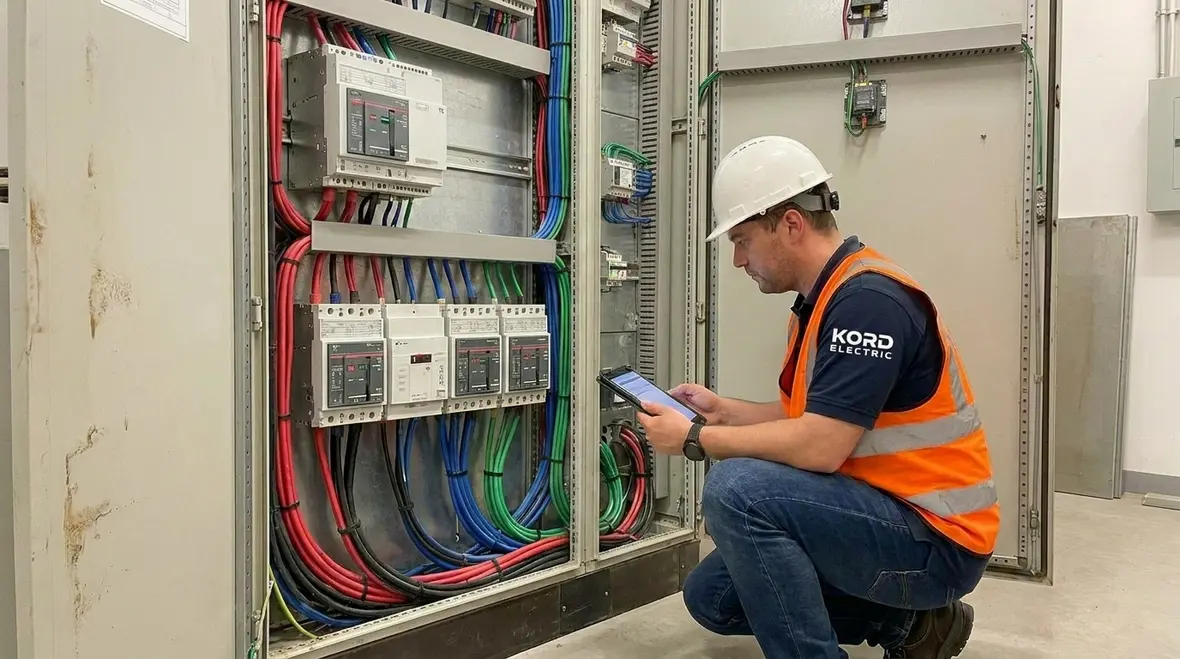
If you are evaluating how your current distribution compares to modern best practices, Kord Electric’s reliability-focused article on data center electrical distribution design for reliability offers a deeper look at redundancy, power quality, and scalable layouts.
UPS and power redundancy must be engineered, not guessed
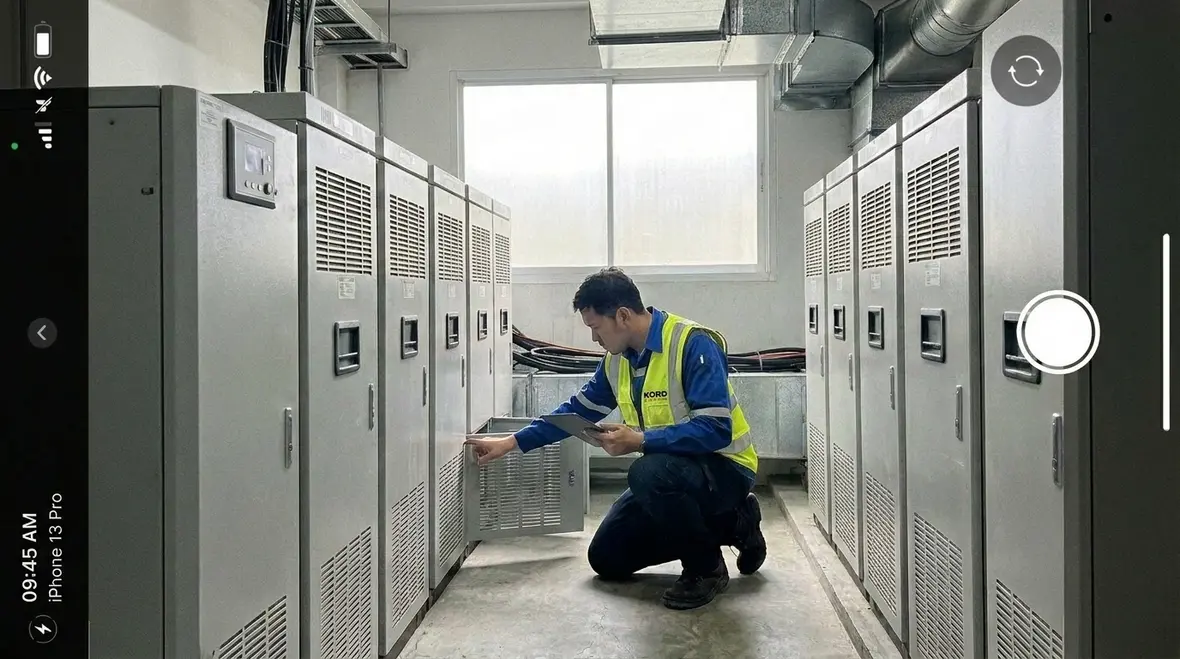
Redundancy sounds simple until it meets real physics. A UPS system impacts losses, battery runtime, and overall electrical efficiency during different operating states. Kord Electric approaches this with careful modeling of load levels, typical runtime needs, and expected test cycles. Then we select configurations that support the facility’s uptime target without unnecessary energy waste.
We also consider how the UPS interacts with generators and switchgear. For instance, we review transfer times, synchronization methods, and the electrical behavior during mode changes. Even small voltage or frequency swings can stress loads, and stressed loads then drift toward higher losses and more maintenance. Therefore, our designs aim to keep power quality stable as the system transitions.
Meanwhile, batteries require their own attention. Battery health affects runtime, and runtime affects the safety margin during events. Our technicians track installation best practices and commissioning steps so the system performs as designed. In the field, we treat commissioning like a pilot checks instruments before takeoff, not like a ceremonial stamp.
Power monitoring and controls that actually drive savings
Electrical design data center efficiency does not end at installation. The design must also “see” itself. Kord Electric implements monitoring and controls that track power, temperature-sensitive effects, and operating modes, then uses that data to guide actions. When operators can identify waste quickly, they correct it before it becomes a recurring cost.
We often support metering at strategic points: utility intake, upstream distribution, major subsystems, and critical load groups. Next, we connect the data to dashboards and alarms that reflect facility priorities. Instead of flooding teams with numbers, we focus alerts on conditions that matter, like sustained overloading, unusual current imbalance, or persistent power factor drift.
Controls also enable operational adjustments. For example, we can align electrical behavior with cooling constraints to avoid working against each other. When power and cooling plans align, the facility reduces stress across the whole stack. Transitioning from “install and hope” to “measure and improve” is how modern electrical strategy becomes real savings.
And when people say, “Monitoring won’t change much,” our technicians usually respond with a calm look and a short story from past projects. They explain how one unexpected load shift led to a quick corrective action that prevented losses from stacking month after month.

Data center energy efficiency improves through better grounding and bonding
Grounding and bonding are not glamorous, but they are essential. A stable reference reduces the risk of nuisance behavior, supports protection coordination, and helps systems meet safety targets consistently. Kord Electric ensures that grounding and bonding match the electrical design model, including how currents flow under normal and fault conditions.
In practice, we plan for equipotential bonding paths, proper installation practices, and clear separation where codes require it. This supports both safety and electrical stability. As a result, operators reduce the chance of unpredictable performance, and technicians spend less time troubleshooting issues that should never have existed.
Then we tie grounding strategy to commissioning. Our expert service staff verifies resistance values and checks continuity in the ways that matter. They explain results step by step in business-friendly language, so the facility team knows what “good” looks like and what to do if something deviates.
Yes, grounding is like seatbelts. People only notice it when they need it. But when they do need it, there is no substitute for doing it right.
Commissioning, testing, and ongoing service protect the design value
Even the best plan can lose performance if the build quality slips. Therefore, Kord Electric treats commissioning and testing as part of the efficiency strategy, not a final paperwork step. We verify that protection settings operate correctly, that monitoring reads accurate values, and that transfer events behave as expected. Then we test in realistic conditions tied to the facility’s operating profile.
During commissioning, our technicians focus on both functional performance and electrical health. They evaluate voltage regulation behavior, check for unexpected losses, and confirm that measurement points align with the expected model. This prevents “design on paper” from becoming “mystery in the field.”
After the project, ongoing service helps maintain Electrical Design Data Center Efficiency as loads change. Kord Electric supports facility teams with scheduled checks and practical guidance. In addition, we help them plan upgrades so that new equipment does not disrupt existing power quality goals. This keeps efficiency from fading as the building evolves.
FAQ
Ready to modernize electrical design for better data center energy performance?
Kord Electric helps commercial and industrial facilities build electrical systems that perform as intended, not just as installed. If your team plans a new build, an upgrade, or a major expansion, we can map loads, improve distribution strategy, and support commissioning and service to protect performance over time. Contact us to review your electrical design goals and timelines, and let our technicians and expert service staff explain the next steps clearly. Because efficiency should not feel like a mystery novel, it should read like a win.
When you are ready to connect design strategy with day-to-day reliability, pairing this Electrical Design Data Center Efficiency guide with Kord Electric’s hands-on services gives your project a practical path forward. From upstream infrastructure and distribution layouts to code-driven details outlined in resources like their article on NFPA 70A vs NEC for commercial electrical compliance, the same team that plans your system can help you keep it aligned with evolving standards and real-world operating conditions.
If your facility is planning serious upgrades or a new mission-critical build, explore how Kord Electric’s dedicated data center and commercial electrical services support design, construction, and long-term maintenance as a unified plan, not a series of disconnected projects.


