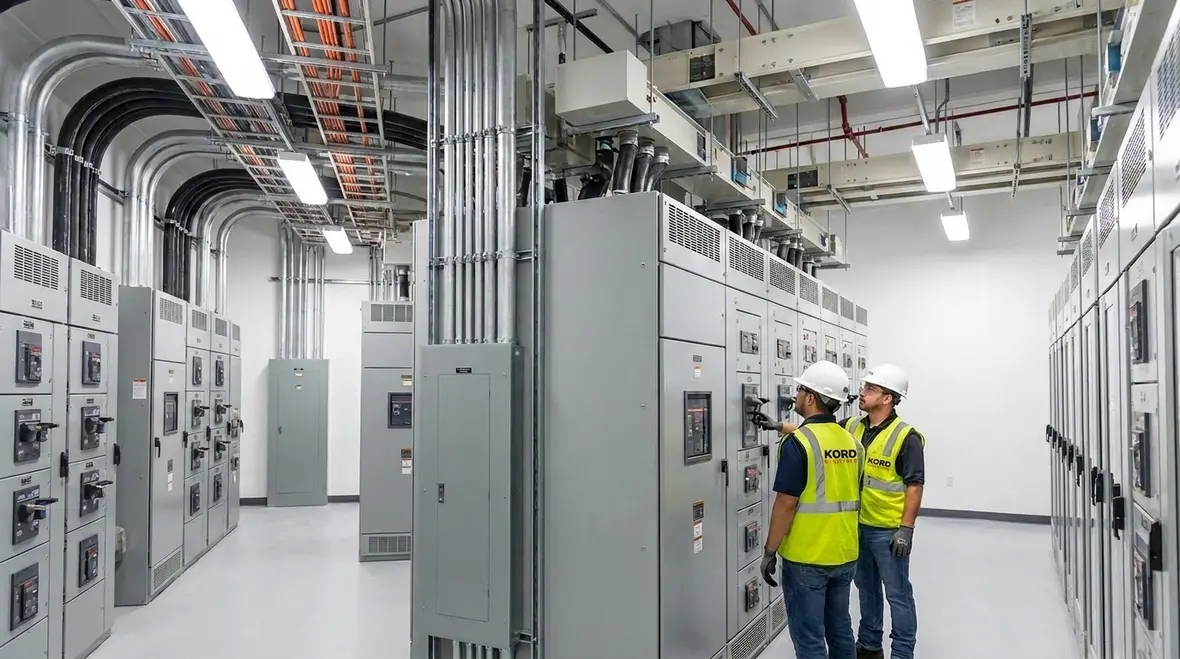
Data Center Electrical Distribution Systems: Design & Best Practices
Introduction: Our Data Center Electrical Distribution Systems: Design & Best Practices for Reliable Power
At Kord Electric, we build data center electrical distribution system plans with Data Center Electrical Distribution Systems: Design & Best Practices in mind from the start. We focus on how power moves, where it might fail, and how fast it must recover. And yes, we do all of this before the first IT rack arrives, because chaos is expensive and downtime is even more expensive. Our expert service staff and field technicians explain each decision in plain terms, so others in the project team understand what we are doing and why.
In this article, third person stays in view, while our approach stays clear. We show the design choices that help commercial and industrial facilities, and major property buildings, keep operations steady under real-world stress. For leaders who want to zoom out to the bigger picture of electrical infrastructure, you can also pair this guide with Kord Electric’s companion article on broader data center electrical infrastructure design for reliability, which walks through how upstream systems, cooling, and routing support long-term performance across a property portfolio.
1. How a Data Center Electrical Distribution System Plans for Real Life

A strong design begins with a simple truth: data centers do not run on luck. They run on engineered power paths. Therefore, the distribution system must support normal load, growth, and maintenance windows without turning every planned outage into a surprise party that nobody RSVP’d to.
Our technicians and expert service staff typically start by mapping the facility power demand. They then align switchgear, busways, transformers, and backup sources to the site’s needs. Next, they account for commissioning, testing, and the operational habits of the end users. When Kord Electric helps a major property building or a large commercial operation, we also coordinate how electrical access works with mechanical systems and building controls, so cooling strategies and control systems do not quietly fight the power plan.
Moreover, design reliability comes from structured redundancy. That means the power system has clear layers: generation and backup, conversion where needed, distribution, and protection. In addition, good designs assume components will age, loads will shift, and maintenance will happen. This is the same mindset Kord Electric applies in its broader work on data center electrical infrastructure and power redundancy, where distribution is treated as a living system that must behave under real operating stress, not just on paper.
2. Single Line Diagrams That Actually Help Teams Move Fast
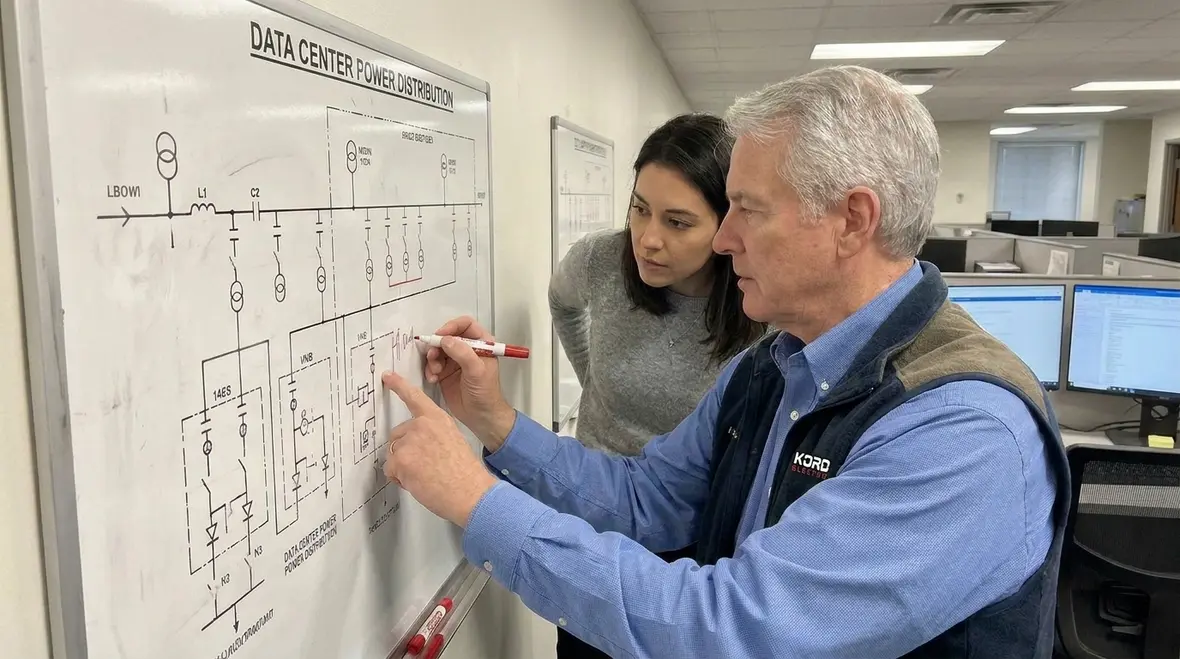
Many projects begin with diagrams, but not all diagrams help people make better decisions. Kord Electric treats single line diagrams as a working tool, not a drawing that gets filed away. We lay out primary feeders, switching gear, and transfer schemes so the project team can trace paths quickly and understand how power flows under both normal and abnormal conditions.
To keep the system reliable, the diagram reflects the build style for the facility. Some sites use multiple utility feeds, others rely on internal generation, and many include multiple transformers and redundant distribution paths. Then the protection settings become easier to verify because the logic stays visible, which helps when engineers, facility staff, and contractors review the design at different stages.
When our expert service staff walks others through the design, we use a calm, step-by-step approach. We explain how interlocks limit unintended switching and how the system avoids creating new hazards during transfer events. In turn, that clarity reduces confusion during installation and later during commissioning, when time and patience can run out fast. Single line diagrams also become the bridge between this best-practice-heavy guide and our deeper article on data center electrical distribution design for reliability, which expands on how diagrams drive both uptime and maintainability.
3. Reliability Goals, Redundancy, and Transfer Schemes
Reliability is not a single number. It is a set of behaviors the system must demonstrate when something changes. For commercial and industrial facilities, Kord Electric targets stable operations by designing transfer schemes that match the expected risk level and uptime requirements.
Typically, designers choose between parallel paths and planned maintenance methods. Next, they define how loads transfer during utility loss, equipment maintenance, or scheduled switchover. In many designs, the system uses redundant switchgear sections and automatic transfer logic so critical loads keep running without waiting for manual steps. Those same principles show up in Kord Electric’s work on data center power redundancy and uptime design, where transfer logic is tuned for real-world conditions instead of once-a-year tests.
Furthermore, distribution design must avoid “single point surprises.” That means a failure in a control signal, a breaker mechanism, or a common bus component should not collapse the entire power chain. Therefore, Kord Electric evaluates dependencies and works toward separation where it makes sense, while still keeping the design maintainable.
And yes, sometimes stakeholders want power to behave like a movie hero: show up right when needed, never stumble, and never get tired. Electrical systems are more like seasoned professionals. They follow the plan, but the plan must be built well. When a facility team reads both this guide and the dedicated Kord Electric blog on data center electrical distribution design for reliability, they see how redundancy levels, transfer schemes, and distribution topology all work together instead of acting like disconnected features.
4. Designing Protection and Selectivity Without Overcomplicating Everything
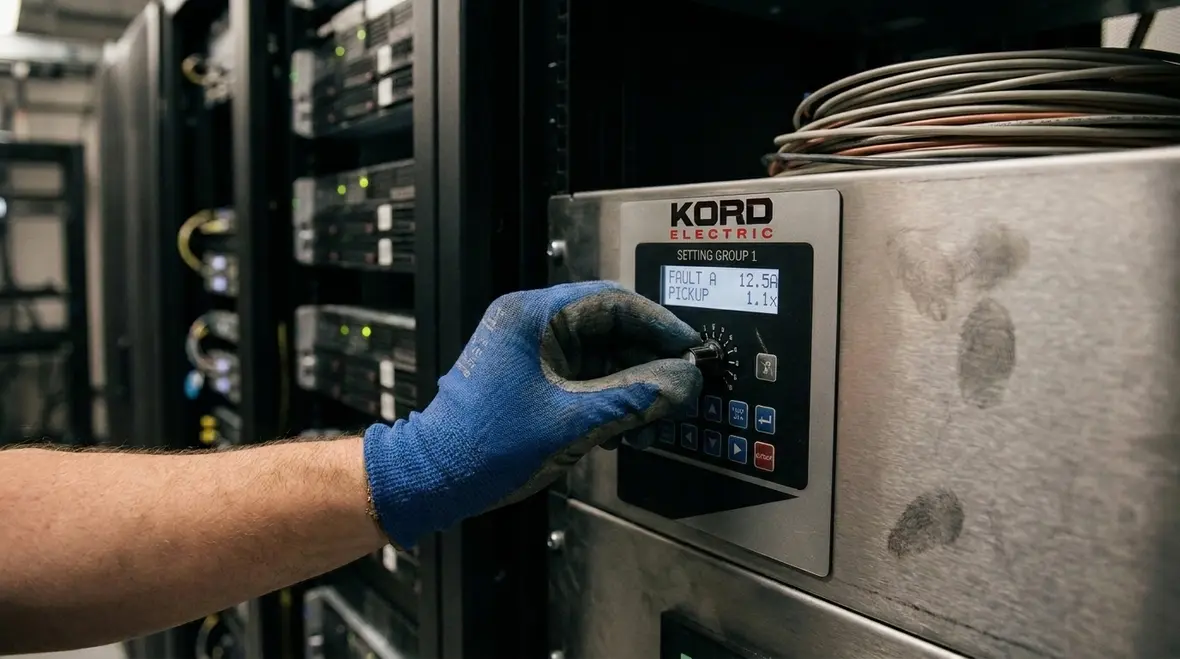
Protection is where reliability either becomes real, or it stays a slide deck. A distribution system needs protective devices that clear faults fast, while allowing unaffected parts of the system to keep operating. Therefore, selectivity matters. If every breaker trips when one problem happens, the building goes dark and everyone blames “bad luck.”
Kord Electric emphasizes coordination studies and realistic fault analysis. We review how breakers and protective relays behave in different fault locations. Then we tune settings so upstream devices do not trip before downstream devices have cleared the fault. This is the same disciplined approach highlighted in our related article on commercial electrical system uptime for critical facilities, where distribution protection and coordination are treated as uptime tools, not just compliance items.
In practice, this protects critical loads and reduces repair time. Moreover, it supports better service planning because fewer areas lock out for events they did not cause. Our technicians also consider arc flash safety and work with installation teams to ensure the protection design aligns with safe access procedures.
As the expert service staff explains during project walkthroughs, good protection is not just about clearing faults. It also improves recovery time. After all, power that trips is power that must come back, and restoration gets simpler when the cause is isolated clearly. When readers compare this guidance with Kord Electric’s blog on data center power reliability and uptime design, the shared theme is straightforward: selective protection and clear coordination keep systems running instead of rebooting the entire campus for a local fault.
5. Thermal and Loss Considerations in Power Distribution
Reliability also depends on heat, losses, and how components perform over time. When a distribution system runs near its limits, temperatures rise and insulation life can shorten. Therefore, Kord Electric evaluates load profiles, conductor sizing, and equipment ratings under expected operating conditions.
Also, the design must manage losses at multiple points, including busways, panels, switchgear, and transformers. When losses run high, energy bills rise, and the environment becomes harder on equipment. That is not “a future problem.” It is a present problem that tends to show up right when budgets get tight. This is why Kord Electric’s electrical design data center efficiency work ties efficiency and reliability together instead of treating them as competing goals.
Additionally, thermal behavior affects protection performance. Heat can shift operating conditions, and that can change how protective devices react. For this reason, our approach checks electrical and environmental assumptions together rather than treating them as separate topics. A design that looks “cool” on paper, but runs hot in real rooms, is not a design that will last.
Then, when others ask why a specific component size or layout was selected, the answer stays grounded. Our technicians and expert service staff explain the reasoning so decisions stay defensible during procurement, installation, and later maintenance. Over time, this clarity also supports better data management for distribution equipment, because teams know which components carry thermal risk and which ones anchor long-term reliability.
6. Planning for Growth, Maintenance, and Commissioning
A data center rarely stays the same size for long. Therefore, a distribution system should support planned expansion without forcing major rework. Kord Electric designs for future capacity by considering spare bus space, feeder headroom, and switchgear flexibility, so others can add load with less disruption. That same mindset appears in our planning guides for scalable EV charging infrastructure and other commercial loads, where distribution is designed as a platform for growth.
Meanwhile, reliability also depends on maintenance strategy. A facility team needs a way to service components while keeping critical loads alive. That is where the distribution arrangement, interlocks, and transfer logic matter again. If the system is built with maintainability in mind, scheduled work stays scheduled, instead of turning into late-night “all hands” events.
Commissioning is the last gate before operations. Here, Kord Electric emphasizes testing that verifies design intent. We help validate phasing, continuity, protection settings, and transfer behavior. Then our expert service staff trains facility personnel so the system stays understood after the project hands off.
To keep the tone professional and practical, we also remind teams of one simple truth: commissioning is where assumptions die. Better to find those assumptions early than after the first major startup event. When combined with a structured disaster recovery or outage recovery plan, this commissioning discipline gives commercial and industrial operators a calm, repeatable way to return to normal after stress events.
7. Best Practices From Our Experience in Commercial and Industrial Builds
Kord Electric supports commercial and industrial facilities and major property buildings. Because of that focus, our best practices aim at measurable outcomes: stable uptime, safer service work, and fewer surprises during upgrades. Data Center Electrical Distribution Systems: Design & Best Practices is not an abstract phrase for us; it is the checklist we use to judge whether a distribution plan will actually hold up when the building is busy.
First, we standardize documentation so field teams can follow the design quickly. Next, we coordinate early with mechanical and controls stakeholders, since power quality and switching behavior link to how the building runs. When the electrical, mechanical, and IT groups see the same story in the diagrams and operating procedures, response time drops and finger-pointing usually drops with it.
Then, we pay close attention to power quality considerations such as harmonics and grounding practices where the design calls for it. Clean power supports sensitive equipment and helps protect long-term reliability. That is why related Kord Electric articles on resilient electrical infrastructure and data center electrical solutions spend so much time on how distribution, grounding, and monitoring interact under load.
Finally, our team keeps communication direct. The expert service staff does not hide behind jargon. Instead, they explain the tradeoffs and confirm that the electrical distribution system matches the operational goals of the facility. When others see how the design supports their day-to-day needs, decisions feel less like guesswork and more like engineering. For sites in Southern California, that can mean aligning these best practices with region-specific offerings such as Kord Electric’s Los Angeles County electrical services, so local facilities benefit from both a strong design and a local service team that understands regional codes and utility behavior.
If you want an even deeper dive into how these best practices show up in real projects, Kord Electric’s article on data center electrical distribution design for reliability walks through distribution layouts, protection decisions, and scalability moves that keep critical loads quiet and online instead of starring in another outage report.
FAQ
Conclusion: Contact Kord Electric for a Distribution Design That Holds Up
Kord Electric helps commercial and industrial teams build data center power systems that stay reliable during normal operation, maintenance, and upset conditions. Others can chase checklists, but we focus on how the electrical distribution system actually behaves in the field. If your facility needs design support, protection coordination, or commissioning guidance, reach out to Kord Electric. Our technicians and expert service staff will explain the path forward in a clear, calm way, and we will build the system to match your uptime goals.
Whether you are planning a new data hall, refreshing aging infrastructure, or tying multiple commercial sites into a consistent reliability strategy, treating Data Center Electrical Distribution Systems: Design & Best Practices as a daily standard, not a one-time project slogan, is what keeps the lights steady and the servers quiet. Kord Electric’s data center electrical distribution work, combined with regional service coverage and related offerings like preventive maintenance and reliability audits, gives facilities a single, practical path from design concept to long-term operation.
If you would like to compare your current distribution layout and practices to modern, reliability-focused approaches, Kord Electric can review your one-lines, protection settings, redundancy strategy, and commissioning records, then recommend targeted upgrades. The result is not just more equipment on the floor, but a power system that behaves the way your business actually needs it to behave when things get loud.