California Title 24 Lighting Requirements Commercial Compliance Guide
Kord Electric delivers the California Title 24 Lighting Requirements: Commercial Compliance Guide you need for commercial and industrial facilities, and for major property buildings where lighting decisions affect budgets, schedules, and audits. We help teams understand what the code demands, how to document it, and how to avoid the kind of surprises that show up later like a pop quiz you never studied for. In this article, our expert service staff walks through the rules in plain language, so others can make confident choices during design, retrofit, and closeout. We also show you where common missteps hide, and how our technicians keep projects moving with clear guidance, careful checks, and a steady hand from plan review to commissioning.
What California Title 24 Really Targets in Commercial Lighting
California Title 24 Lighting Requirements: Commercial Compliance Guide for Busy Commercial Teams

California Title 24 does not aim to make lighting complicated for the sake of it. Instead, it targets energy use and overall system performance, especially for spaces that run long hours or stay lit by default. In commercial and industrial buildings, lighting systems often include many fixtures, controls, and schedules. Therefore, the code looks closely at how the lighting responds to occupancy, time of day, and daylight conditions. Kord Electric approaches this like a system, not a collection of fixtures. We explain it the way our technicians explain it on site: if the controls and settings do not match the space, the numbers will not pass, even if the fixtures look great.
At first, people sometimes treat compliance as a paperwork task. However, our expert service staff sees it as performance engineering. When we review layouts, control sequences, and product data, we connect the dots between how the building operates and what the code expects. And yes, we have heard the joke that “lighting is lighting.” That is like saying “wheels are wheels,” right up until the brakes fail. The code wants the whole story.
For owners and facility teams who want a broader primer before diving into project details, our existing California Title 24 Lighting Compliance Guide walks through how Title 24 changes lighting decisions and why documentation matters at every stage, from design to inspection.
How Our Technicians Map Requirements to Real Layouts
Commercial projects rarely follow a perfect script. So we start with how the space functions. We then map California Title 24 lighting requirements to the building’s actual use, such as office zones, corridors, warehouse areas, restrooms, and exterior entries. Next, we identify control boundaries, fixture types, mounting heights, and how occupants move through the area. After that, we verify schedules and overrides so the system behaves predictably.
Then we document the details that auditors and plan reviewers look for. This matters because compliance often comes down to traceable evidence: lighting power, control strategy, and how the system reduces energy while still meeting task needs. Our technicians explain the process step by step, and they do it in business casual language that teams can share internally without translating everything into code jargon. Meanwhile, others on the project can focus on design decisions, procurement timing, and commissioning.
In practice, we also check for mismatches that create rework. For example, the design may assume one occupancy pattern, while the facility operates differently. Consequently, the lighting may stay on longer than expected, or controls may not match the coverage zones. When that happens, teams do not just lose efficiency. They also risk failing the compliance path and losing time. We help prevent that with the same system mindset we use in our broader data-driven electrical design for commercial and industrial facilities, where design choices are always tied back to real-world operation.
Controls, Schedules, and Sensors That Actually Pass
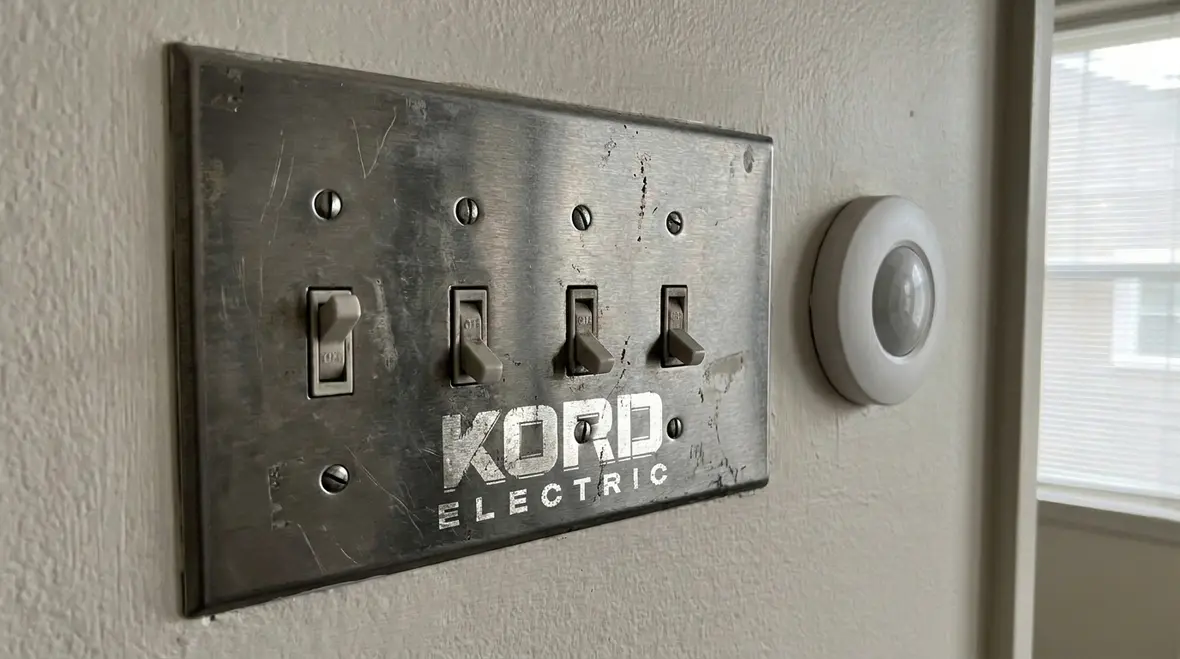
Lighting controls sit at the center of modern compliance because they reduce wasted light. Therefore, Kord Electric emphasizes control logic that supports both energy savings and occupant needs. We help clients understand common control elements and how they connect to code expectations. For example, occupancy sensors and time-based scheduling often work together. When configured correctly, lighting comes on when people need it, and it relaxes when the space empties.
However, controls must align with the space. High-bay warehouses and equipment areas can require different sensor placement and logic than open offices. Corridors and stairwells often call for reliable behavior that avoids flicker, false triggers, or delayed shutdown. Additionally, daylight strategies can matter in areas near windows, depending on how the building is designed.
Our expert service staff reviews the control plan and explains what to watch for during commissioning. We also help teams avoid a classic mistake: thinking a sensor is a sensor. In the real world, the coverage area, sensitivity settings, and mounting positions can make the difference between “works as intended” and “why is it turning off during checkout.” Kord Electric helps you get the configuration right the first time, using the same practical mindset we bring to projects that focus on industrial lighting control benefits like energy savings, safety, and long-term maintainability.
Building Types and Compliance Moves for Commercial and Industrial
Different commercial and industrial facility types bring different lighting behavior. A major property building has common areas, mixed tenants, and changing occupancy patterns. A warehouse has large open volumes, high ceilings, and a workflow that may include late shifts. An office building has desk-level tasks, meeting rooms, and zones that may operate on different schedules. Therefore, the compliance approach must fit the building, not just the fixtures.
During planning, we look at how lighting gets used across the day and how it gets adjusted by people. We then align that behavior with what the California Title 24 Lighting Requirements: Commercial Compliance Guide expects in system performance. Our technicians focus on practical details, including how zones are grouped and how overrides work for special events or maintenance. In addition, we account for project constraints such as tenant buildout timelines and phase schedules.
For major property buildings, we also consider long-term operations. A lighting system should remain stable through tenant turnover, minor renovations, and common-area changes. So we guide teams on documentation and verification steps that support future troubleshooting. That means when someone calls later about a control issue, the response does not turn into guesswork. It becomes guided, organized, and quick. For property managers who want a manager-focused overview, our California Commercial Title 24 Lighting Compliance Guide explains how these moves play out over the life of a building.
Commissioning and Documentation: The Part People Skip at Their Own Risk
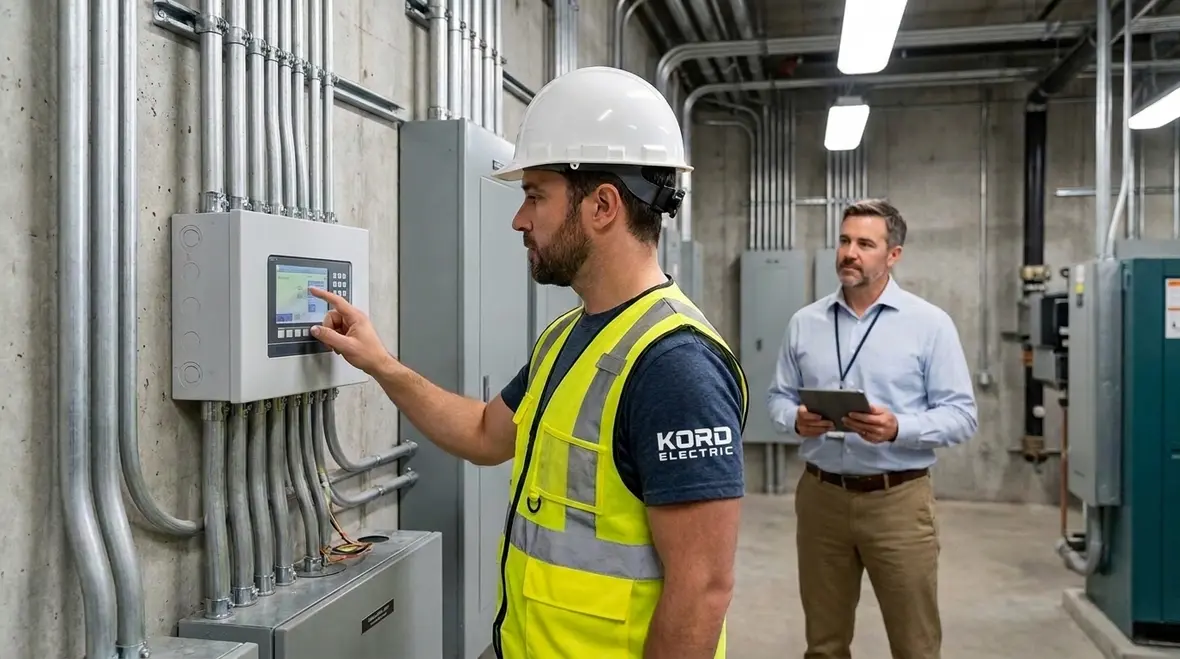
Many teams focus on equipment and installation. Then, when commissioning arrives, they realize the compliance story is incomplete. Kord Electric helps prevent that by treating commissioning as a core milestone, not a last-minute formality. We verify that controls respond as designed, that schedules match the intended mode, and that the system behaves under normal operating conditions.
We also help clients prepare for plan review and closeout needs. That includes organizing product cut sheets, fixture data, control descriptions, and any other evidence needed for compliance. Our expert service staff explains what documentation supports each part of the compliance path, so the file does not become a junk drawer. And look, we all have junk drawers. Some people keep cables, tape, and batteries that still “might work.” Compliance documents cannot operate like a junk drawer.
When commissioning confirms performance, teams gain a real advantage. They reduce the chance of costly rework, avoid delays, and protect the building’s energy expectations. Just as importantly, occupants feel better. Lights do not behave randomly. They behave like a system that understands the job, the same way our commercial lighting installation planning and best practices approach protects projects from unpleasant surprises at inspection time.
Common Field Problems We Help Clients Avoid
Even well-designed projects stumble when details slip. Kord Electric regularly sees the same trouble spots in commercial and industrial installations. First, controls get installed without the design intent, such as incorrect zoning boundaries or coverage gaps. Second, schedules stay in default modes and never get tuned to actual operating hours. Third, fixtures get swapped during procurement, and the compliance impact gets overlooked.
Additionally, teams sometimes miss how lighting interacts with the space. For example, reflectance and mounting height can affect perceived brightness and uniformity, which can lead to later “tuning” that changes the system behavior. Therefore, our technicians emphasize verifying the lighting strategy early, then protecting it through procurement and installation. We guide teams so later changes do not break compliance.
Finally, there is the human factor. People want fast installation, and contractors move quickly. That is understandable. However, when compliance details get skipped to save a day, they often cost weeks later. Our team keeps a calm pace, checks the right details, and communicates clearly. We make the process understandable without rushing it, whether the work is part of a focused lighting upgrade or a larger Los Angeles County electrical services engagement that includes power, controls, and ongoing support.
FAQ: Quick Featured Answers for Commercial Lighting Compliance
Ready to Get Lighting Compliance Right the First Time
When commercial and industrial lighting needs to meet strict energy and performance requirements, guessing is expensive. Kord Electric helps teams plan, install, commission, and document lighting systems so compliance does not become a last-minute emergency. Our technicians and expert service staff explain each step clearly, and we coordinate field details with the compliance intent. If you are working on a major property building or an industrial facility, contact us now. We will review your scope, answer your questions, and put your project on a steady path to approval.
For teams who are digging into the details of California Title 24 Lighting Requirements: Commercial Compliance Guide across multiple facilities, it can also help to review Kord Electric resources like our Title 24 Lighting Requirements for CA Commercial Buildings post, where we connect compliance strategy with real-world planning, inspections, and long-term operations.
Whether you are refreshing a single floor, coordinating tenant improvements across a portfolio, or aligning lighting upgrades with larger electrical work, our regional teams support projects through design review, field installation, commissioning, and post-occupancy adjustments so your lighting stays compliant and predictable instead of becoming a recurring problem on every capital plan review.