Industrial Lighting Control Benefits Explained
Beyond automation, what advanced lighting controls really deliver
Advanced Industrial lighting control benefits go far beyond simply turning lights on and off. At Kord Electric, we see how smart controls improve energy use, cut maintenance headaches, and support safer, more consistent lighting across commercial and industrial facilities. Others often treat controls like a “nice-to-have,” but we know better. We install systems that respond to real conditions, so buildings run efficiently without turning every shift into a scavenger hunt for the right switch settings.
To be clear, we do not sell upgrades for the sake of trends. Our technicians and expert service staff explain the plan in plain language, and then we help facilities operate with less waste and more control. And yes, sometimes the funniest part is when someone says, “It should be automatic,” right before we prove that it already can be.
How advanced controls reduce operational drag across shifts

When a facility operates all day, every day, lighting becomes part of the workflow. However, most buildings still manage lighting like it is stuck in the last century: schedules drift, people forget settings, and sensor placement gets blamed when the real issue is configuration.
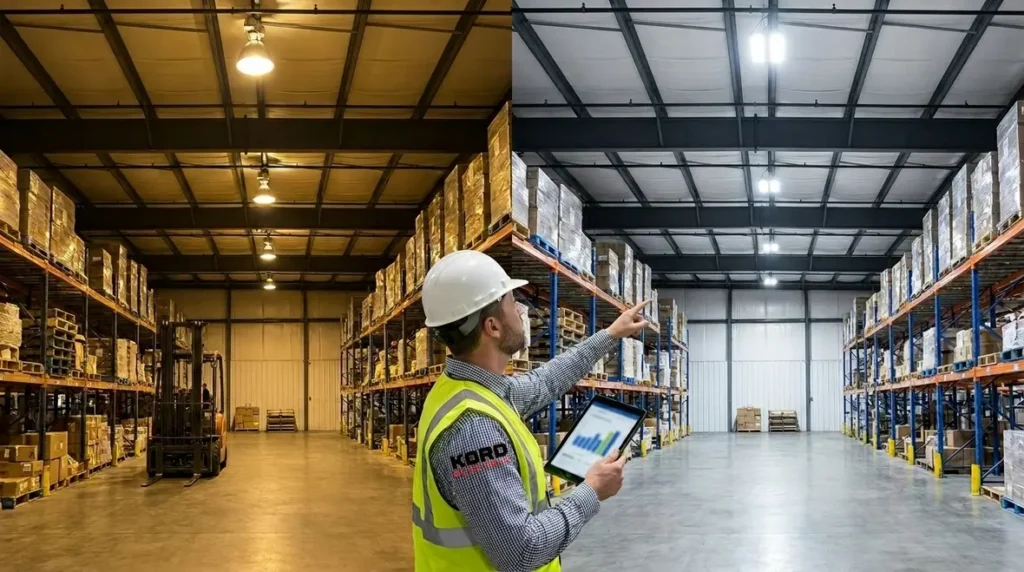
Industrial lighting control benefits show up operationally. First, our systems use occupancy sensing and logic that matches how spaces actually get used. In warehouses, motion does not lie. In corridors and stairwells, controls help reduce unnecessary run time while keeping illumination stable. Meanwhile, in larger production areas, advanced dimming strategies support a consistent visual environment, even when activity changes.
Furthermore, advanced controls help teams avoid “time guessing.” Instead of relying on fixed schedules that do not fit holidays, shift changes, or weekend events, facilities can adapt. As a result, building operators spend less time adjusting panels and more time handling the work that truly needs attention.
Why lighting consistency matters for safety, quality, and fewer complaints
Lighting affects more than comfort. It shapes visibility for workers, drivers, technicians, and visitors. It also influences how quickly people spot hazards, read labels, and complete tasks correctly.
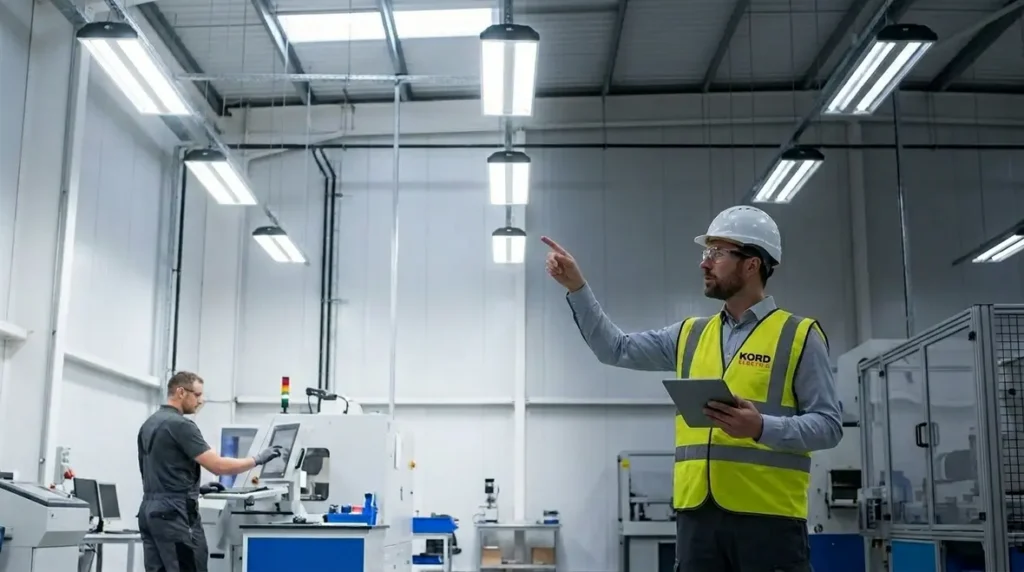
We design controls to protect consistency. When systems hold light levels steadily, teams waste less time squinting or stepping closer to inspect. Also, steady light reduces the frustration that often comes when brightness changes randomly, especially near loading areas or along routes where forklifts and pedestrians share space.
And because humans can be… let’s say “creative,” controls also reduce operator workarounds. People will sometimes override systems when they do not trust them. With thoughtful configuration and clear training from our technicians, that trust grows. Then the facility sees fewer complaints that start with, “The lights are acting weird,” and end with, “Can you fix it before the inspection?”
Operational savings you can measure without guesswork
Energy waste hides in plain sight. Lights left at higher output longer than needed can quietly inflate utility bills. Additionally, poor zoning makes it easy to over-illuminate spaces that do not require it.
That is why we focus on controllable zones, proper switching, and smart dimming logic. Over time, these choices create clear savings. For example, occupancy-based control reduces lighting time in areas that are not always in use. Dimming keeps output aligned with tasks, so spaces do not stay at maximum brightness when they only need a fraction of it.
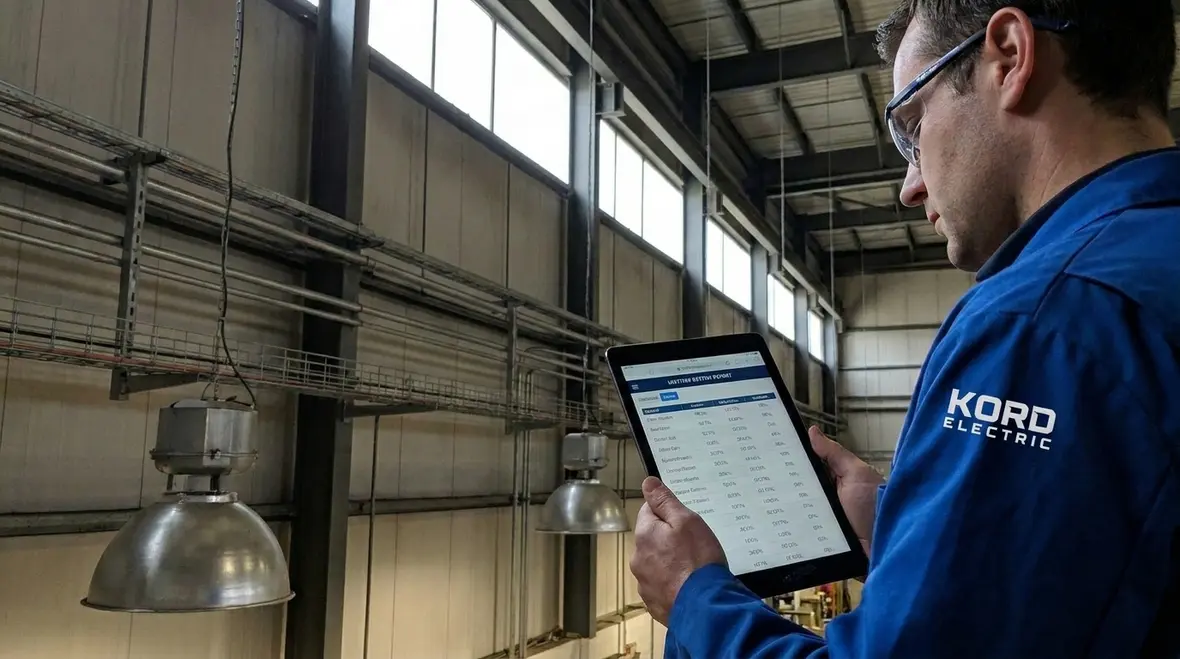
Moreover, advanced controls generate performance insights. Building teams can track patterns, identify areas that stay on too long, and correct issues before they become costly. We help facilities interpret what the system is telling them, and our expert service staff explain it without burying anyone in spreadsheets that look like they were designed to discourage understanding.
Advanced controls help prevent hidden risks in commercial and industrial buildings
Lighting systems can introduce risk when the electrical environment is not managed carefully. In fact, hidden issues often show up as flicker, nuisance trips, or unexpected heat. Those symptoms may look like “lighting problems,” but they can signal broader electrical concerns.
Our team at Kord Electric reviews the electrical health behind the lighting plan. In our blog on hidden electrical risks in commercial buildings, we highlight how overlooked conditions can escalate over time. Here is what advanced lighting controls help address in real operations.
- Reduced stress on electrical components: When lighting runs with smarter zoning and dimming, it can lower unnecessary load and help avoid overheating issues tied to constant full-output operation.
- Fewer troubleshooting events: Well-configured controls reduce “mystery behaviors” like random cycling that can lead to repeated calls and reactive repairs.
- Better coordination with building systems: Controls can integrate with other systems, which helps prevent mismatched behavior that can strain circuits and create unpredictable results.
Now, let’s be honest. No one wakes up excited to “check the electrical risk factors.” Yet when our technicians plan lighting controls with electrical safety in mind, we help facilities avoid the slow-burn kind of trouble that grows quietly until it shows up during peak operations.
What our technicians configure first for stable, reliable results
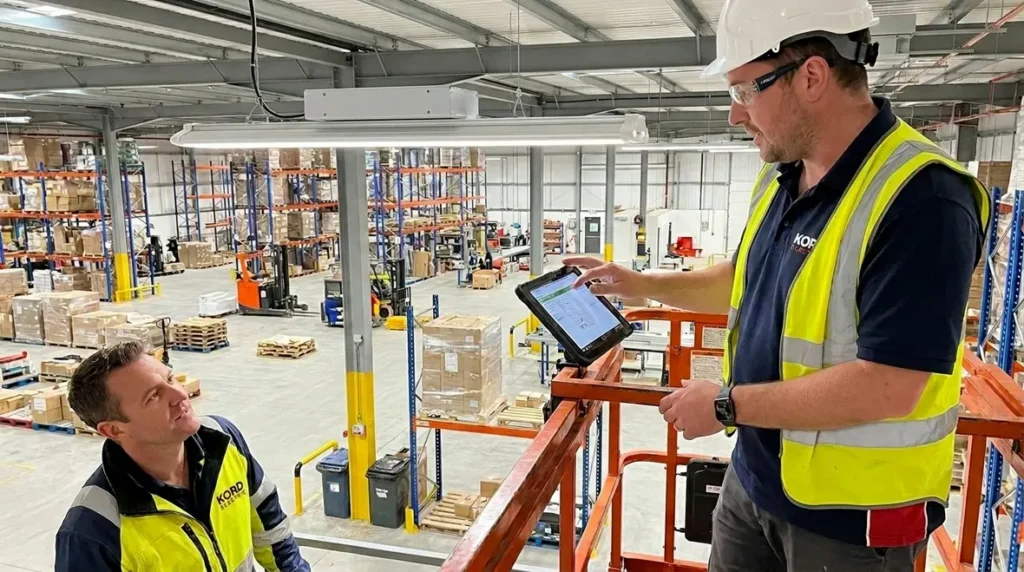
At Kord Electric, we do not treat installation like a plug-and-play chore. We configure for how a facility works, and then we verify how it performs after power is live.
First, our technicians map spaces and usage patterns. They consider where people move, where equipment creates shadows, and where glare can become a quality problem. Next, we set up sensor placement and control zones so the system responds without being overly sensitive. If a control reacts to every breeze, forklifts, or passing traffic, it will annoy the team. And nobody wants “lights-on mood swings” across a busy floor.
Then we tune dimming curves and time delays. In many facilities, the difference between “works fine” and “works great” is in these details. Finally, we train the facility team. Our expert service staff explain the logic and the operational choices so operators know what to expect, how overrides work, and when to call for help.
As a result, controls stay reliable instead of turning into a gadget that only makes sense to the person who installed it. We aim for systems that facilities can trust, season after season.
Choosing controls that match your facility, not a generic template
Different commercial and industrial environments need different control strategies. A one-size plan that fits an office will not fit a warehouse. Likewise, a plan that works for a clean manufacturing floor may not suit loading docks and outdoor-adjacent spaces.
When we discuss options, we help decision makers focus on their real goals: energy targets, operational flexibility, maintenance schedules, and lighting quality. Then we recommend the Industrial lighting control benefits that align with those goals, such as occupancy response, scheduled adjustments, and dimming where it supports tasks.
Additionally, we consider how the building changes over time. Construction phases, new equipment, and reconfigured workflows can shift lighting needs. Smart control systems can adapt when designed properly, and our service staff help maintain that stability during and after changes.
In short, we build for your operation, not for a brochure. If the facility runs multiple shifts, we account for that. If the facility has zones with different duty cycles, we separate them. And if the facility wants fewer outages and less reactive troubleshooting, we design the controls with reliability as a priority.
How advanced controls connect with broader lighting and electrical strategies
Lighting controls rarely live in isolation. They sit on top of real wiring, panels, and fixtures that have to be installed correctly and maintained over time. That is why we often pair advanced control upgrades with improvements to layout, installation quality, and preventive maintenance programs.
For example, when a facility is rethinking its lighting strategy, we may reference guidance similar to our California commercial lighting code resources or industrial layout optimization insights you would see in the Kord Electric blog. Those perspectives help ensure control choices match fixture placement, voltage, and code expectations instead of fighting them later.
We also consider how controls will interact with periodic electrical preventive maintenance. Facilities that schedule routine inspections, testing, and Title 24 compliance checks are better positioned to keep advanced lighting controls stable year after year. Instead of waiting for a lighting failure to reveal upstream electrical issues, they resolve problems early—before the controls start “misbehaving” for reasons that have nothing to do with software.
FAQ
Call Kord Electric for controls built for real operations
If a facility wants lighting that performs day after day, Kord Electric can help. Our technicians assess your space, design advanced controls for how you run, and explain the system so your team can operate with confidence. You get smarter Industrial lighting control benefits, reduced waste, and fewer operational surprises. Now is the time to stop guessing and start measuring. Contact Kord Electric to discuss a lighting controls plan for your commercial or industrial building.
If your project also involves new fixtures, upgrades, or large-scale retrofits, explore how Kord Electric’s lighting installation services support commercial and industrial facilities that need reliable, code-conscious lighting from the panel all the way to the production floor.
For properties that want lighting controls to stay reliable over time, planned maintenance is just as important as smart design. Kord Electric’s electrical preventive maintenance services help protect critical systems, verify Title 24 lighting compliance, and keep advanced lighting controls operating the way they were designed—without surprises during peak operations.
When you are ready to align lighting performance, safety, and energy use with the way your facility truly operates, Kord Electric is ready to help you design, install, and maintain industrial lighting controls that actually earn their keep.