California Title 24 Lighting Compliance Guide
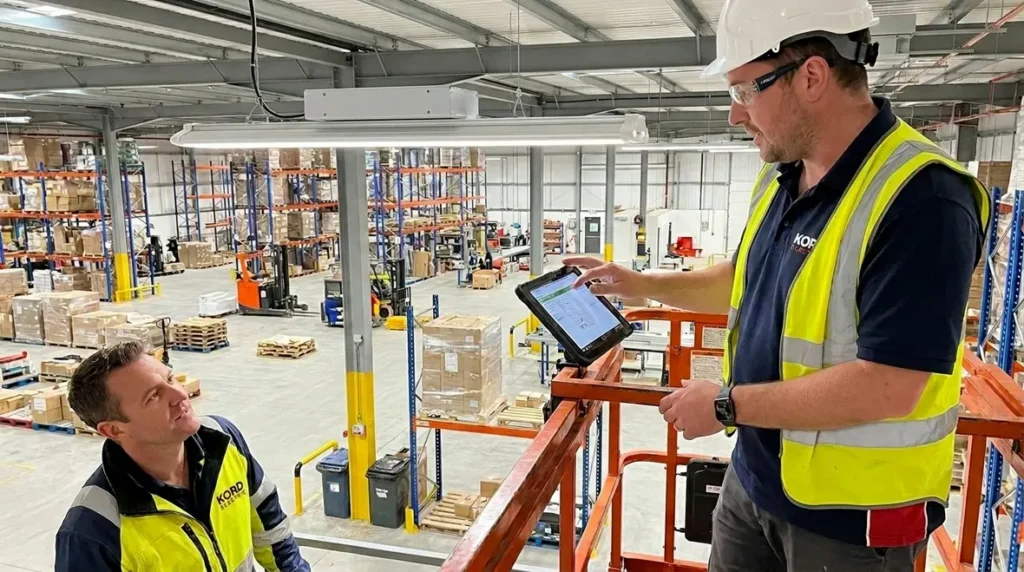
Navigating California Title 24 lighting compliance can feel like trying to read a rulebook written by three different people during a power outage. Yet businesses and industrial facilities in California still need to get it right, especially when they design, remodel, or update lighting. At Kord Electric, we help commercial and industrial teams meet the requirements without slowing the project down. In this guide, we explain how we approach California Title 24 lighting compliance, what the approval process typically involves, and how our expert service staff walks others through each decision. We do it with clear documentation, practical design reviews, and field knowledge that helps you avoid costly rework.
How Title 24 changes lighting decisions for commercial buildings
When people hear “lighting compliance,” they often picture a checkbox. In reality, California Title 24 shapes how a facility uses energy, which means it influences what gets installed, how it controls that equipment, and how the system performs over time. For commercial and industrial buildings, this matters because lighting is used heavily, schedules vary, and operational needs change throughout the day.
So, instead of choosing fixtures first and hoping the paperwork behaves later, we take a different route. We start with how your site actually operates, then we map that to code requirements. For example, we help others plan for occupancy patterns, task lighting needs, glare control, and effective controls that reduce energy waste. And yes, sometimes the best “fixture” is the one you do not install because the controls and layout already solve the problem.
For a deeper dive into how California codes shape lighting decisions across different building types, you can connect this guide with Kord Electric’s broader insights in their Commercial Lighting Compliance in California article, which explores how statewide rules interact with real-world facilities.
What compliance requires beyond picking fixtures
Most teams focus on luminaires. However, Title 24 looks at the entire lighting system. That means the process can involve more than simply selecting a compliant product. It can include control strategies, power levels, distribution, and verification steps that demonstrate the design meets the required performance.
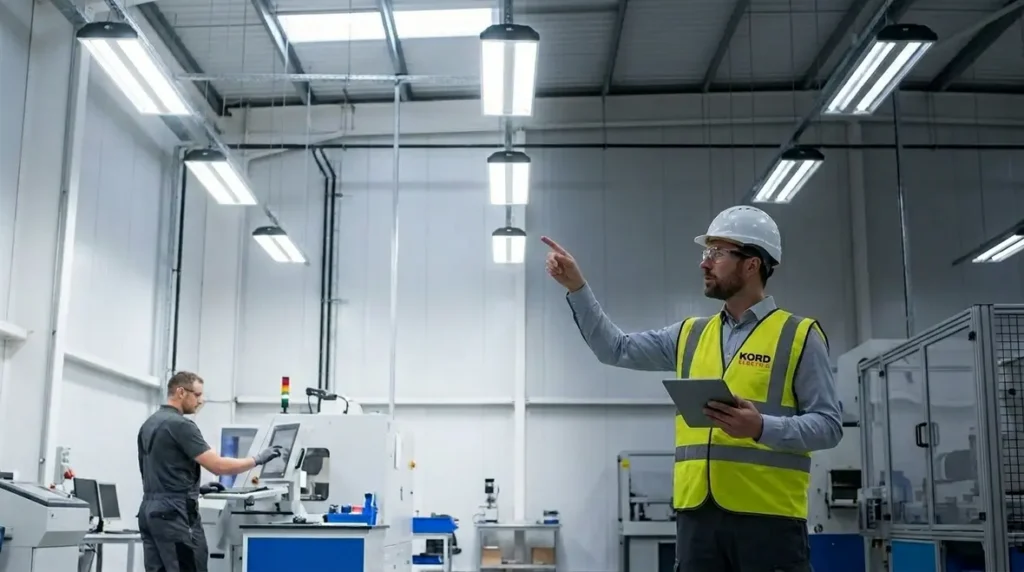
Our technicians, and our expert service staff, explain these factors in plain terms. They do not just say “it needs to comply.” Instead, they break down how the system must behave in real operation. For instance, controls should align with how spaces get used. If an area stays empty often, then motion sensing, scheduling, and proper setpoints can reduce unnecessary operating hours. Meanwhile, high-bay and industrial task zones require planning that maintains visibility without wasting energy.
To keep things moving, we also help teams organize information early. When designers, owners, and contractors coordinate from the start, the final review feels less like a surprise pop quiz and more like a smooth walkthrough.
If you are also evaluating the return on investment for upgrades, Kord Electric’s California Title 24 Lighting Retrofit ROI Guide can help you connect compliance decisions to long-term savings and payback expectations.
Design and documentation steps we help teams complete
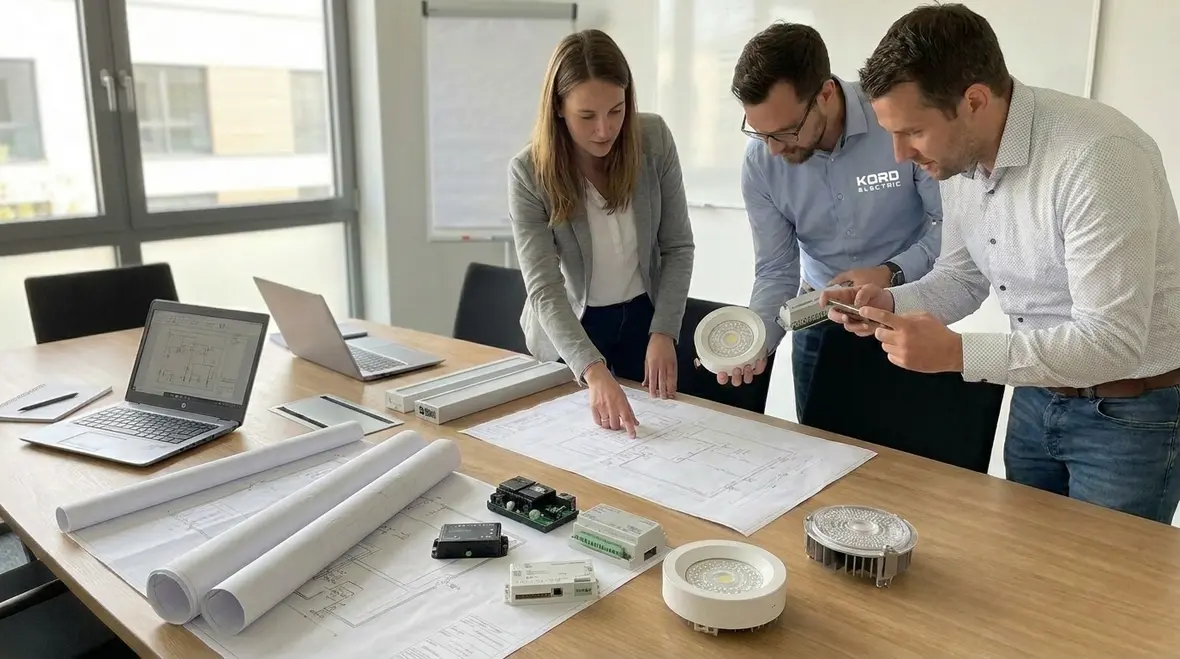
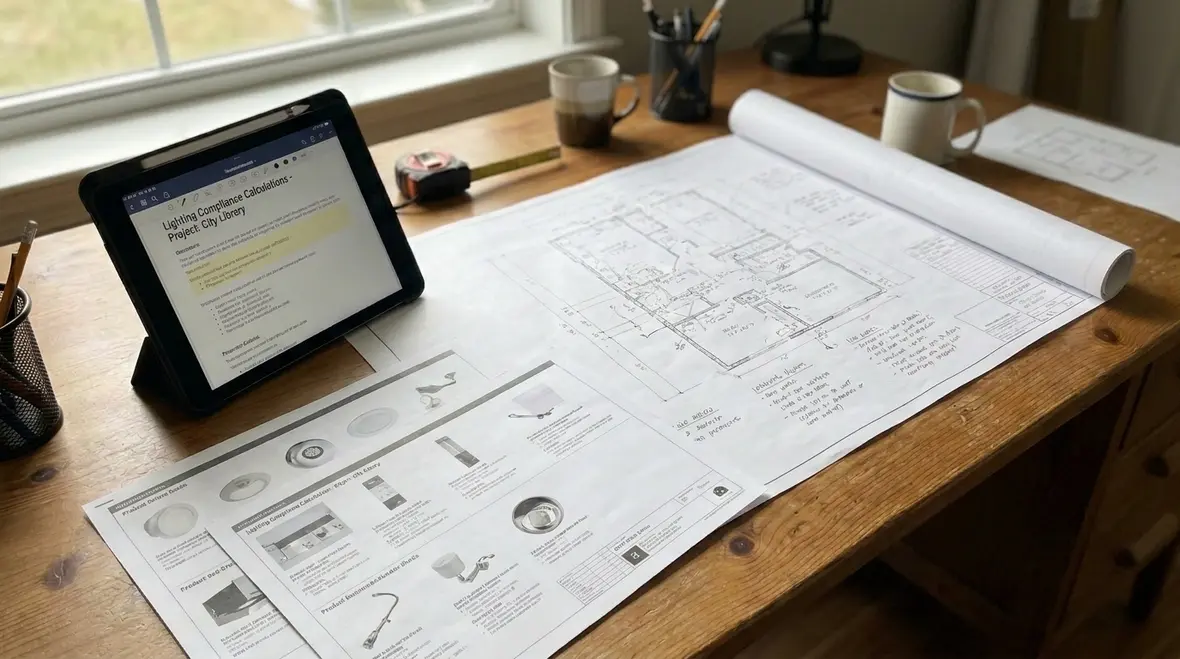
Here is the practical part. To meet California Title 24 lighting compliance, businesses need documentation that supports the final design. That usually means your drawings, equipment selections, control methods, and calculations must line up with the requirements.
At Kord Electric, we support this workflow by aligning electrical scope with lighting performance expectations. We work with others to confirm that the proposed equipment choices make sense for both the site and the compliance pathway. Then we help prepare the information needed for review and approval.
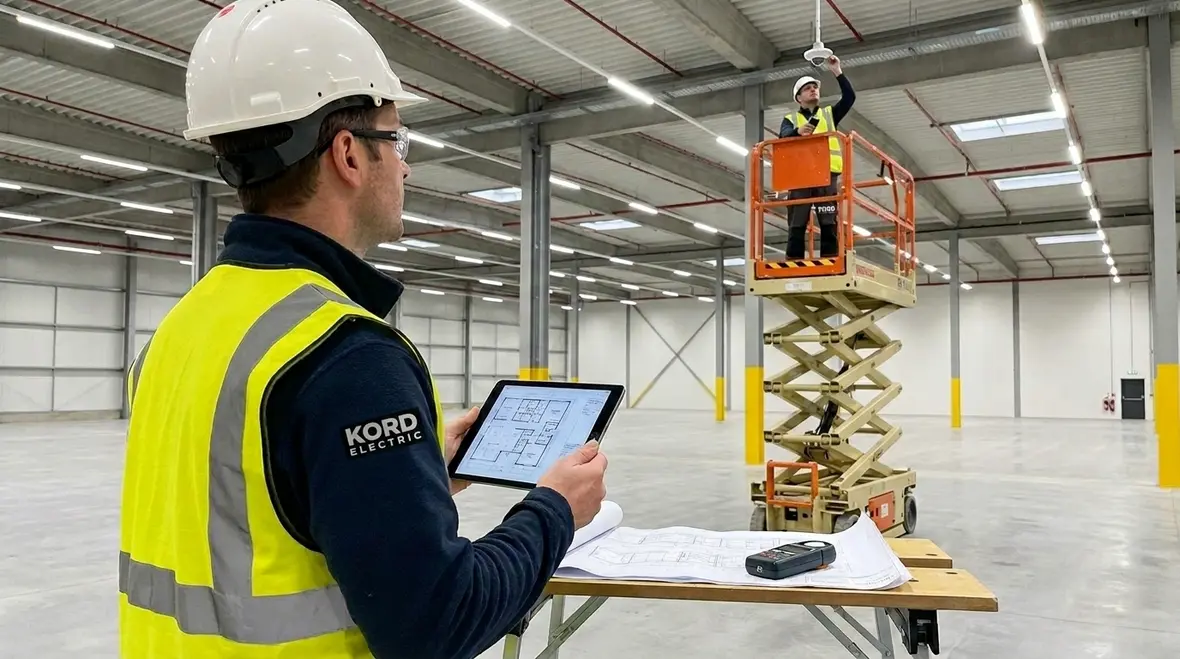
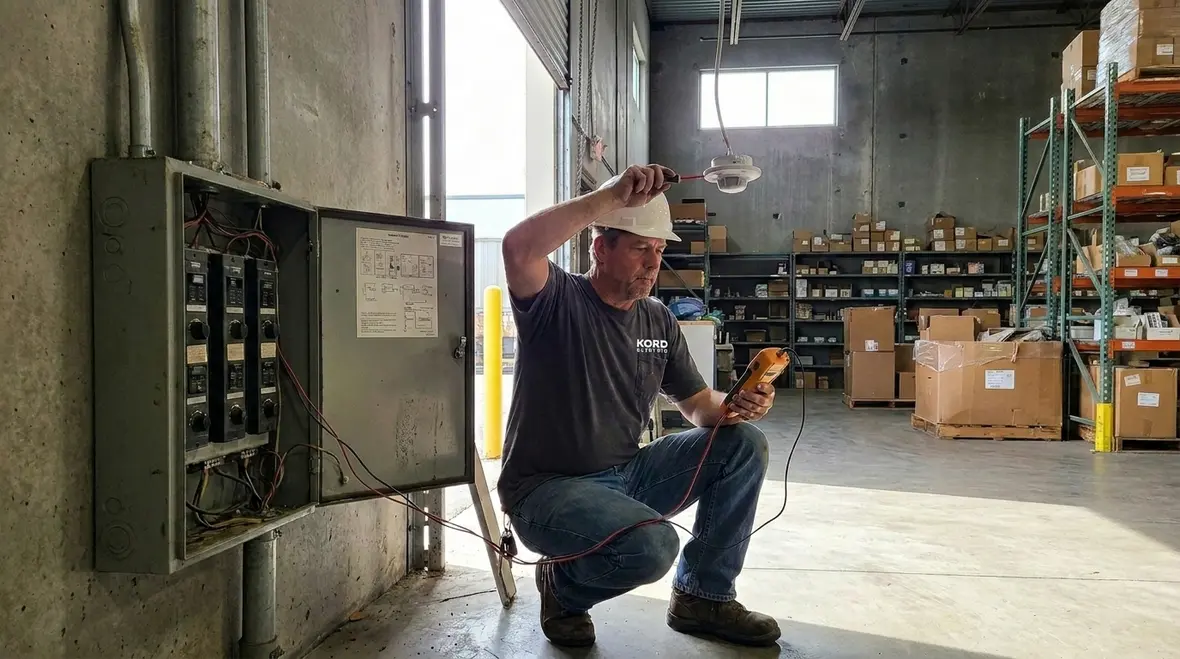
Our technicians also pay attention to field realities because that is where compliance either holds up or breaks down. For example, a design might assume a certain mounting height or aiming angle. If installation varies significantly, results can shift. Therefore, we plan installation details early and then we verify during commissioning steps.
In short, we help others close the gap between “on paper” and “in place.” When that gap shrinks, project timelines get calmer, and fewer issues show up late in the game.
For multi-facility portfolios or complex properties, pairing this process with the Lighting Installation Code Compliance Guide helps standardize how projects move from concept to closeout across different sites.
Controls and commissioning for real-world performance
Lighting controls often decide whether a project performs as intended. They also decide whether your facility wastes energy after handoff. So we treat controls as a core system, not an afterthought.
For many commercial and industrial environments, schedules, daylight response, and occupancy detection work together. However, the setup needs to match your operational workflow. If a warehouse runs different shifts than expected, then lighting schedules and sensor settings must reflect that. If an office has frequent meeting room changes, then controls must handle transitions without flicker or frustration.
Commissioning matters too. It is the stage where we confirm that controls, dimming behavior, and operational sequences function correctly. Our expert service staff walks others through what commissioning checks look for and how to interpret results. That way, decision-makers understand what “good” looks like and why it matters.
One more thing, because we all deserve a little humor in our lives. If your lighting control behaves like it is confused, the building will eventually treat it like that too. People will override it, ignore it, or worse, blame the wrong team. Commissioning prevents that.

If you are planning new controls alongside broader lighting changes, Kord Electric’s dedicated Lighting Installation Services page shows how design, installation, and commissioning come together for commercial and industrial properties.
Common compliance pitfalls we see during commercial installs
Based on what we see in the field, many problems start with assumptions. Teams assume equipment compatibility, installation practices, and control performance will match the design intent. Sometimes they do. Often, they do not. So we help others avoid the usual traps.
- Late changes: When lighting layouts shift after design approval, documentation can stop matching the real jobsite conditions.
- Control mismatches: Sensors placed where they “should” work can fail if coverage areas or mounting heights differ from the plan.
- Documentation gaps: Missing cut sheets, incomplete submittals, or unclear system descriptions can delay review.
- Field install variation: If mounting, aiming, or spacing differs from assumptions, performance can change.
- Commissioning skipped: If nobody verifies sequences and settings, the system can underperform even if components are correct.
We handle these issues by staying involved through the phases that matter most. Our technicians coordinate installation and then we help confirm the controls operate as intended. Meanwhile, our expert service staff explains the “why” behind each decision so stakeholders do not feel like they are being sold fog.
For industrial and warehouse environments that depend on consistent visibility, pairing Title 24 planning with resources like Kord Electric’s Industrial Lighting Layout Optimization for Efficiency can further reduce risk and improve day-to-day performance.
Choosing the right partner for Title 24 projects in CA
For a commercial or industrial facility, compliance needs consistency across planning, electrical scope, lighting layout, and commissioning. That is why Kord Electric focuses on the work that keeps facilities running safely and efficiently.
We recommend selecting a partner who understands both the code expectations and the practical build. When a team knows what inspectors look for, and what building operators will manage day to day, the results tend to hold up better.
Our approach also supports smoother communication with other project stakeholders. We help others clarify responsibilities, document key equipment selections, and align field work with the compliance pathway. So, when the project reaches final review, you are not scrambling for missing details or trying to explain why the controls act differently than expected.
If your Title 24 projects intersect with broader electrical reliability concerns, Kord Electric’s Electrical Preventive Maintenance services can support ongoing testing, documentation, and maintenance that keep facilities compliant long after the initial install.
FAQ: California lighting compliance and Title 24 essentials
CTA: Schedule a compliance readiness call with Kord Electric
If you are planning a new commercial or industrial lighting project, do not wait until the last minute to find out what your system needs. At Kord Electric, we help teams navigate California Title 24 lighting compliance with clear documentation, practical installation support, and commissioning checks that protect performance. Reach out today to schedule a compliance readiness call. We will review your scope, explain the key steps, and map a path that keeps your timeline steady and your lighting operating the way it should.
When you are ready to move from planning to implementation, you can also explore Kord Electric’s dedicated Lighting Installation Services to see how full-service design, installation, and commissioning support your California Title 24 lighting compliance goals.
For facilities that want ongoing oversight, integrating these projects with Electrical Preventive Maintenance can help keep documentation, testing, and performance aligned with evolving code expectations year after year.
To explore related topics like how code-driven lighting upgrades affect budgets and long-term savings, you can review resources such as the Commercial Lighting Upgrade Cost Guide, which connects real project costs to performance and compliance outcomes.
No matter where you are in the process, the goal is simple: a lighting system that satisfies California Title 24, supports daily operations, and stays reliable long after the project team has packed up their tools.
Ready to plan your next step? Connect with Kord Electric to align your project scope, timeline, and compliance path before the first fixture comes down.