California Title 24 Lighting Retrofit ROI Guide
How Kord Electric helps you estimate California Title 24 Lighting Retrofit ROI for big warehouse projects
When a large warehouse in California looks at lighting upgrades, the question usually lands in the same place: what does it cost, and what do we get back?
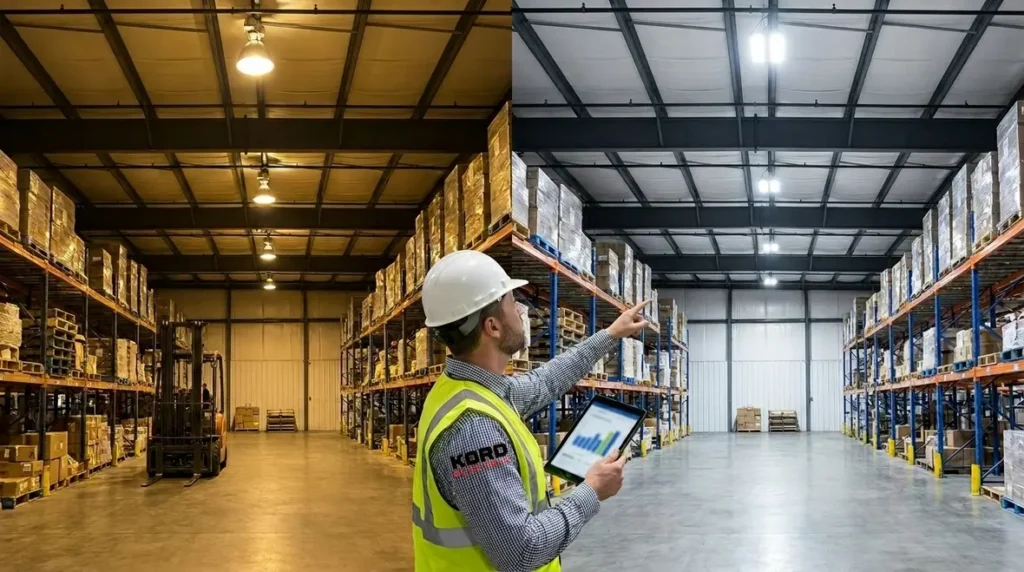
At Kord Electric, we guide teams through a practical California Title 24 Lighting Retrofit ROI model that ties together utility savings, energy code compliance, and the realities of running a busy facility. In the first pass, we focus on the numbers that move the needle: fixture output, controls strategy, operating hours, and your local utility rate structure. Then, we sanity check those assumptions with what our field technicians and expert service staff see on real docks, in aisles, and under real ceiling heights.
Because let’s be honest, nobody wants an ROI spreadsheet that behaves like a horoscope. It should predict like a calculator, not like a fortune teller.
Step by step: the calculation we use for warehouse ROI
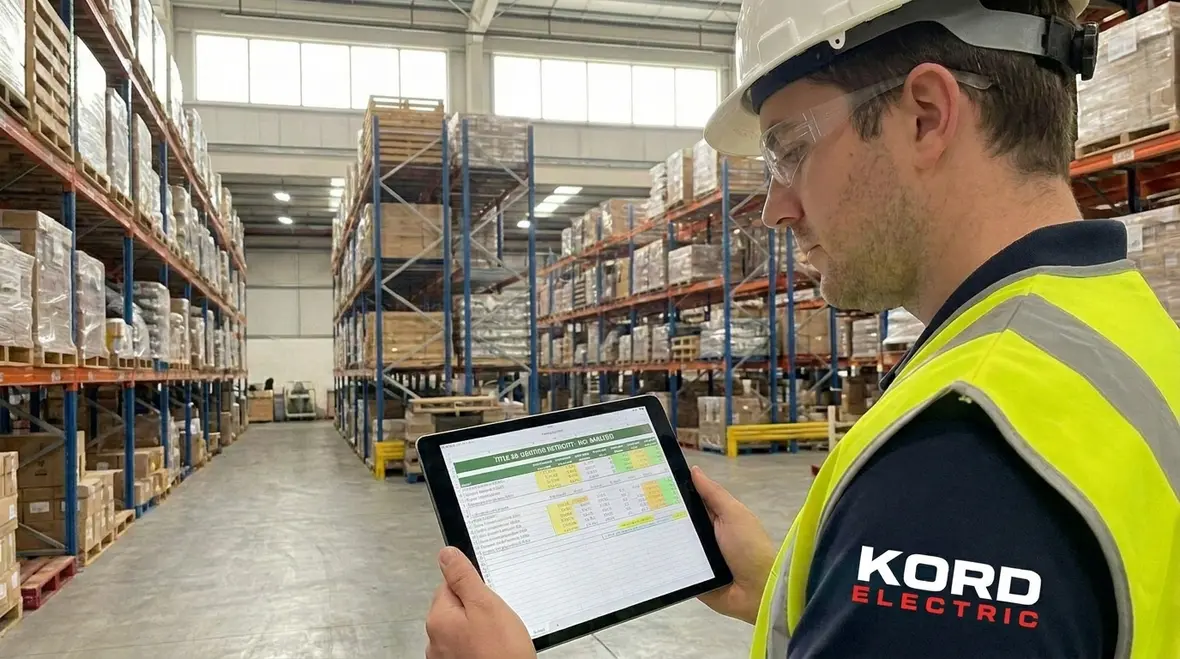
In our process, we start by building a simple baseline, then we layer in the retrofit plan. First, we confirm what you have today: fixture types, input watts, lamp configurations, and existing controls. Next, we estimate how much the space actually uses lights throughout a typical week.
Then we calculate savings using three components: lighting power reduction, control-driven run time reduction, and demand related impacts when your utility program credits that behavior. We also account for hours of use during stocking, pick and pack, shipping, and security modes. After that, we apply your current and projected electric rates and any incentives you qualify for.
Finally, we run the ROI outputs: annual savings, payback period, net present value style thinking when needed, and the sensitivity ranges. We do this because assumptions love to hide like shrinkflation in the snack aisle. If operating hours or wattage estimates wobble, ROI swings too. Our technicians explain each input clearly so your team can defend it internally.
If your team is still getting familiar with how Title 24 shapes retrofit math, you can also compare assumptions against resources like the California Commercial Lighting Code Guide for 2026, which breaks down current code expectations in plain language and helps you connect design choices to long term savings and compliance.
Baseline lighting audit: what we measure in the warehouse, not just on paper

To make the California Title 24 Lighting Retrofit ROI real, our experts begin with the lighting audit. We inspect layouts, fixture spacing, and reflectance conditions. We also note where glare and hot spots happen, because better lighting performance is not just a checkbox. Then we verify actual control behavior, including whether occupancy sensors work as intended in high-bay aisles and whether daylight or scheduling strategies land in the real world.
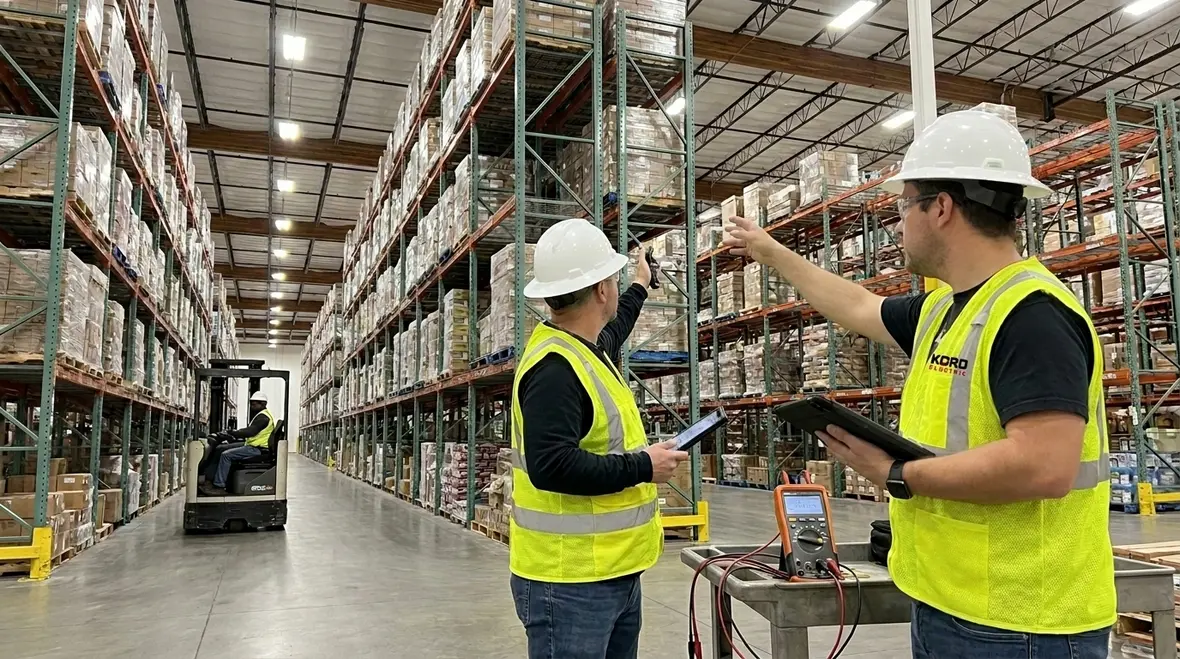
We typically pull input power data and compare it to the expected baseline from manufacturer information. However, we never treat labels as gospel. Instead, we cross check with field observations. For example, a warehouse might have “dimming” on the drawings, but the override logic might keep lights at full output longer than the team expects. When that happens, savings shrink fast.
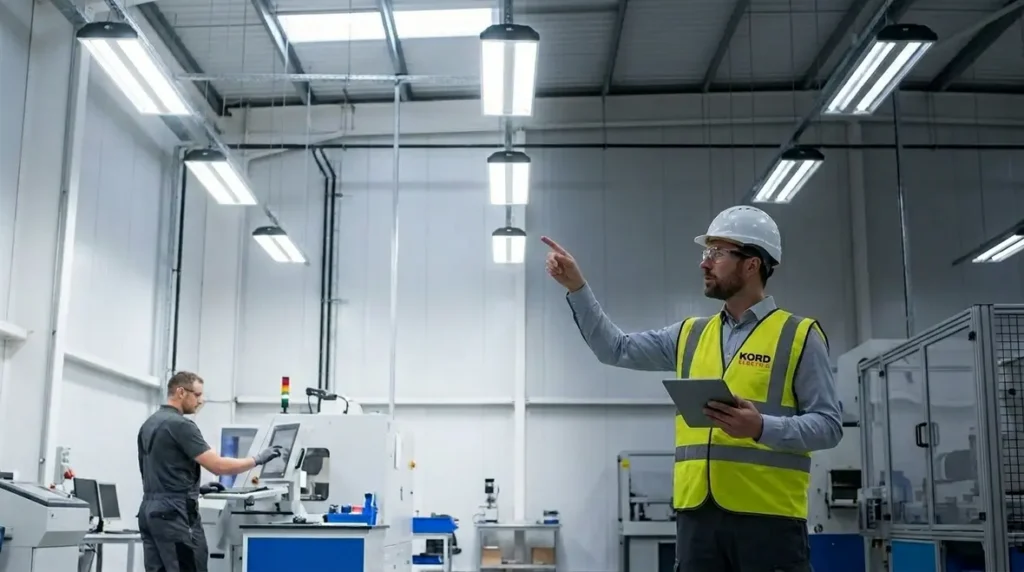
Our technicians and expert service staff explain these findings in plain language. That matters, because a warehouse manager needs an answer they can act on, not a confusing PDF with too many tabs and not enough trust.
In many large properties, this audit also surfaces broader code and reliability questions. If your team wants to zoom out and understand how day-to-day operations intersect with statewide rules, pairing the retrofit discussion with Kord Electric’s insights on commercial lighting compliance in California can help everyone stay aligned on both savings and inspection readiness before any fixtures come down.
Controls and dimming: where savings often grow faster than people expect
In most large warehouses, the biggest ROI drivers come from controls. Static lighting upgrades help, but control systems turn lights into a responsive tool rather than a constant overhead tax. For Title 24 oriented retrofits, we evaluate strategies like occupancy sensing for inactive zones, scheduled dimming for non peak shifts, and high bay lighting response that respects safety and visibility needs.
At Kord Electric, we help teams select a controls approach that matches how people actually move through the building. For instance, if forklift traffic and pick paths focus on certain areas, then local control zones can reduce lighting where it stays unused. On the other hand, if the building operates evenly all night, then the savings profile looks different and we adjust the model.
We also plan for commissioning and verification. Otherwise, you get the classic office prank: the software says it’s dimming, but the lights behave like they never learned the assignment. Our expert service staff walks your stakeholders through how the system should perform, and we confirm it in commissioning. That reduces surprises and protects the ROI assumptions.
For teams mapping out a larger campus or multi building plan, it can be helpful to compare controls strategies against broader lighting installation services from Kord Electric. That way, warehouse zones, exterior lots, and office areas all follow a unified approach to sensors, dimming, and code compliance instead of becoming a patchwork of disconnected systems.
Energy rates, schedules, and incentives: the levers that change your ROI number

Next, we connect your retrofit plan to your rate reality. Utility pricing in California can vary by tariff, demand structure, and time of use rules. When we build the California Title 24 Lighting Retrofit ROI estimate, we map anticipated reductions to how your utility calculates charges. In some cases, reduced demand can add another layer of benefit beyond energy use.
We also refine schedules. A warehouse that runs 24/7 with full occupancy in most aisles behaves differently from one that runs extended hours but has downtime zones. Therefore, we ask your operations team for practical shift patterns, and we validate them during site walk-throughs.
Then we layer in incentives and rebates. Programs change, so we treat them as a living part of the analysis. Even when incentives are uncertain, we produce a base case ROI and a conservative case ROI so decisions stay grounded. In other words, we help you avoid betting the company on the idea that every program will approve your paperwork on the first try. That’s not strategy, that’s wishful thinking, like hoping your streaming service forgets your password reset attempts.
For portfolio managers comparing lighting retrofits to other capital projects, Kord Electric’s Commercial Lighting Upgrade Cost Guide offers another lens on long term savings, capital planning, and how incentives can reshape payback timelines across different building types, not just warehouses.
Keeping ROI honest: costs, phasing, and downtime management
A retrofit plan in a large warehouse must survive the real constraints of operations. If the project causes downtime or creates safety risks, savings don’t matter as much as continuity. So we structure costs with precision: materials, labor, controls integration, electrical work, and commissioning. When needed, we plan phasing by zone so staff can keep working.
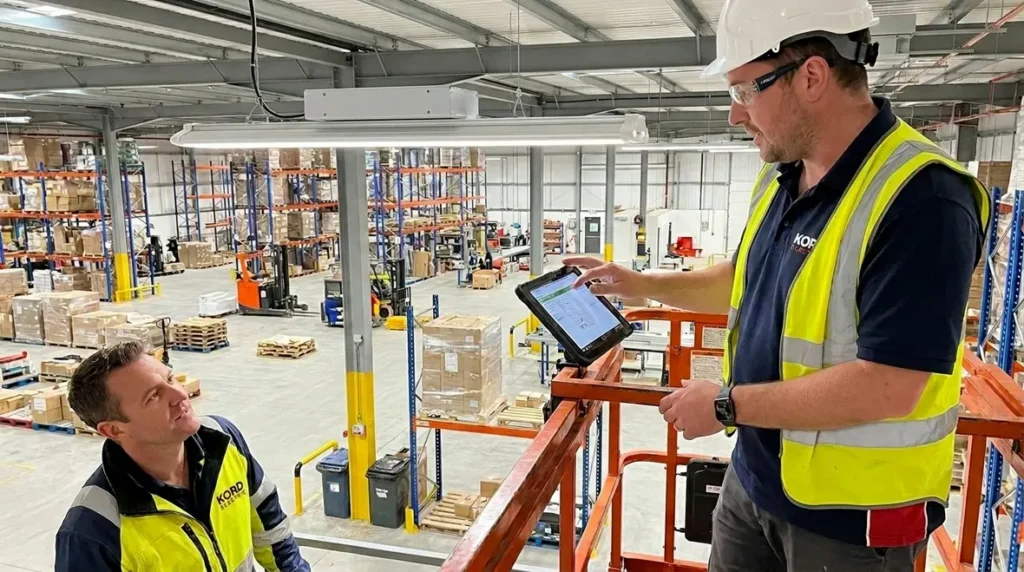
We also consider installation method, ladder and lift requirements, and the condition of the existing electrical infrastructure. If a warehouse needs panel upgrades or conduit repairs, then the ROI timeline changes. Our technicians identify those risks early and explain them clearly. That’s how we protect your investment: we prevent “surprise costs” that arrive like an unexpected bill from a late-night online shopping spree.
In our ROI model, we treat phasing and downtime as part of cost planning. For example, a carefully staged installation can reduce disruption and help keep operations stable during the retrofit window. As a result, ROI estimates stay credible across the project lifecycle, not just on day one.
If your retrofit scope overlaps with aging electrical infrastructure, combining lighting work with a structured plan based on Kord Electric’s Rewiring Cost Guide for Commercial Electrical Systems can tighten overall budgets and reduce multiple rounds of disruption, inspections, and lift rentals.
Dual outcome planning: compliance, performance, and measurable savings
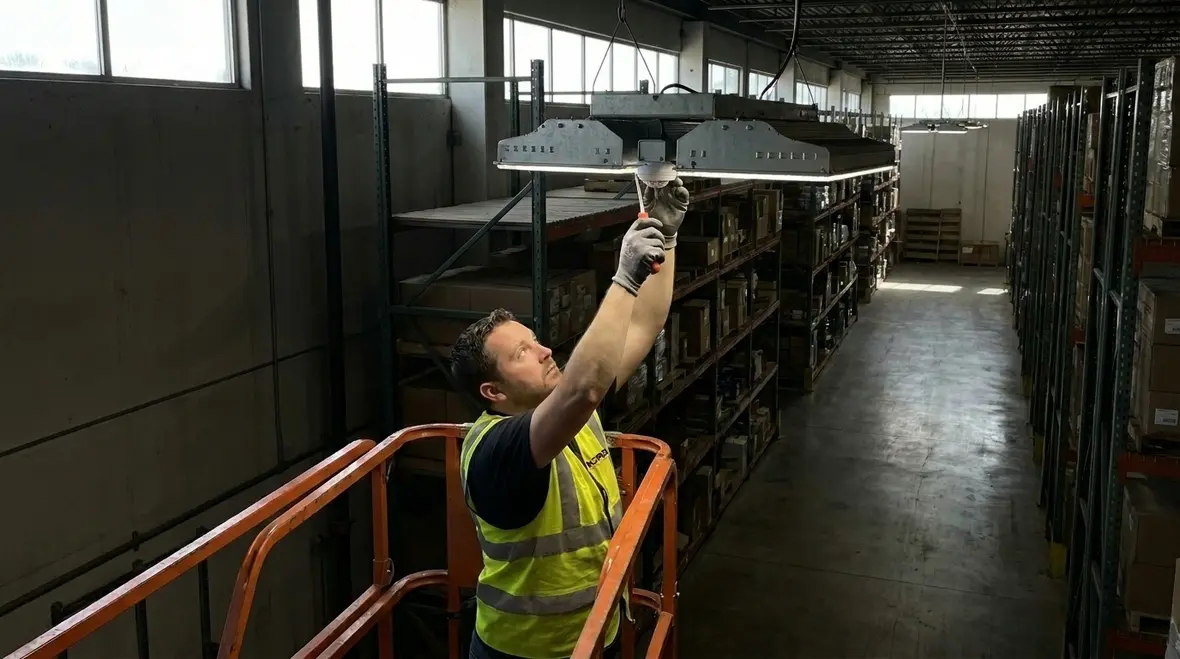
People often treat Title 24 compliance as a finish line. We treat it as a foundation. Lighting upgrades can improve safety, reduce maintenance cycles, and support better visual quality for warehouse tasks. Meanwhile, the same improvements drive energy savings and strengthen your California Title 24 Lighting Retrofit ROI case.
Here is how we frame the outcomes in a way your leadership can use:
|
What compliance delivers
|
What savings deliver
|
We then connect both streams to your ROI assumptions, so your decision-making stays consistent. And yes, we explain the “why” behind the math with our technicians and expert service staff, because confidence beats confusion every time.
As you sharpen your own internal model, it can also help to compare your warehouse plan with broader insights from Kord Electric’s Lighting Installation Code Compliance Guide, especially if you operate multiple facilities or are planning phased upgrades that touch both interiors and exteriors over several budget cycles.
FAQ: California Title 24 Lighting Retrofit ROI for warehouses
Conclusion: let our team build your ROI model and retrofit plan
If you want a retrofit decision that holds up under scrutiny, start with a clear California Title 24 Lighting Retrofit ROI estimate tied to your real warehouse schedule and control strategy. At Kord Electric, we bring our technicians and expert service staff into the process, so the assumptions match the field, not wishful thinking. Contact us for a site focused assessment and an ROI model your stakeholders can trust. Let’s upgrade your lighting, protect your operations, and turn compliance into measurable value.
When you are ready to translate that model into a construction ready scope, our dedicated Lighting Installation Services team can take your California Title 24 lighting retrofit from concept to final inspection, coordinating everything from fixture packages and controls integration to safe phasing and post project support.