
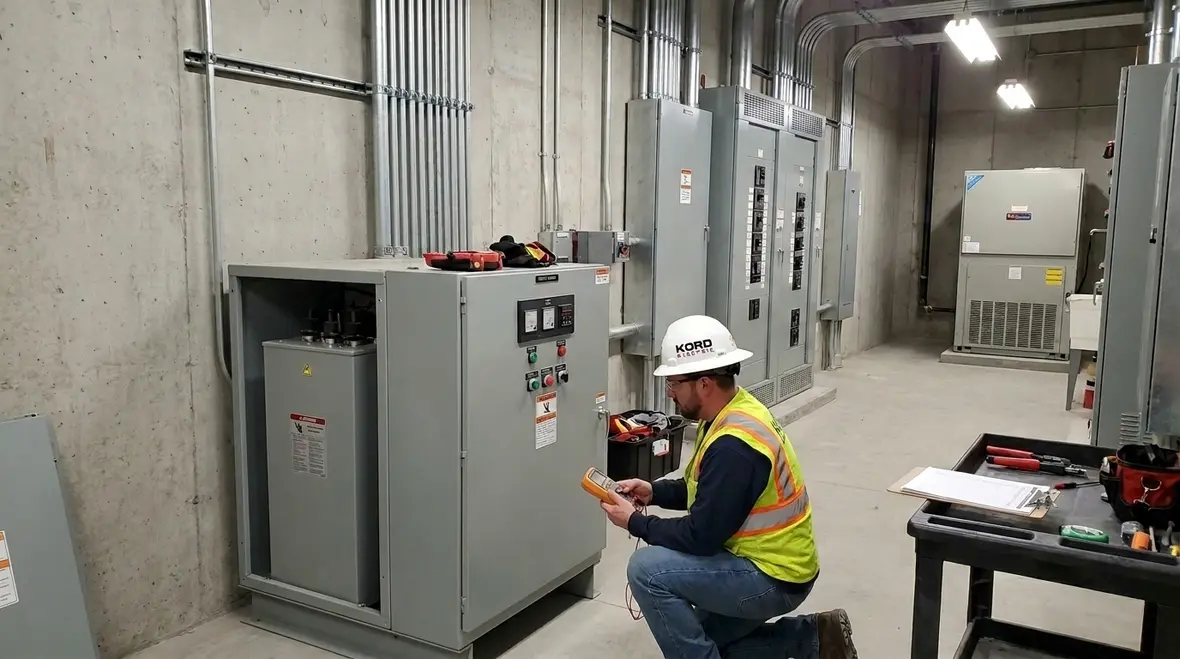
Commercial Power Factor Correction Benefits Guide
At Kord Electric, we focus on commercial, industrial, and major property buildings, because those sites pay the biggest price when electrical systems waste power. That is why Commercial Power Factor Correction Benefits matter. When power factor slips, utilities charge for the extra “reactive” power that never helps your motors, lighting, or HVAC do real work. However, when we improve power factor with proper correction equipment and smart controls, your bill typically drops, your demand charges get easier to manage, and your panels run calmer. In other words, you stop paying for electricity you cannot use, and we stop listening to your equipment complain like it just watched three seasons of a slow show.
What power factor really means for commercial sites
Power factor is a simple idea, but it shows up in your real costs. In a commercial building, loads like motors, transformers, and certain HVAC systems pull current that can be out of step with voltage. The result is reactive power, which creates current flow without producing useful work. Then, your facility still has to carry the current, and the utility still has to provide it.
So when a site runs with a low power factor, the utility effectively sees more load than the building actually needs. As a result, your power usage looks heavier, even if the processes remain the same. And this is where Commercial Power Factor Correction Benefits start making sense as more than a technical term. They become direct savings, clearer capacity planning, and steadier electrical performance across the distribution system.
How Kord Electric helps reduce reactive charges and demand spikes
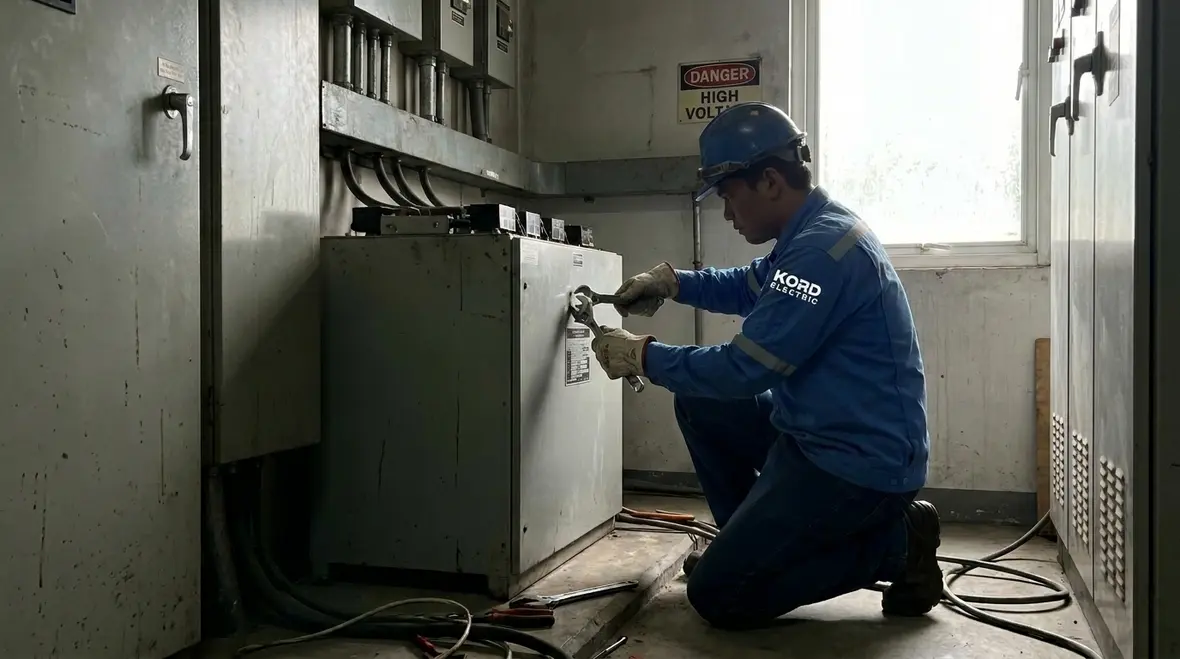
Most commercial electrical systems are designed around reliable service, but power factor problems creep in over time as equipment schedules change. A facility adds or replaces motors, updates pumps, modifies production lines, or brings new chillers online. If the building does not rebalance reactive loads, the electrical system keeps drawing current that the site does not need for useful output.
Now, utilities often use tariffs that include charges tied to kW, kVA, and sometimes specific demand measurements. When power factor drops, kVA rises for the same kW, which can push your demand higher. Then your bill feels like it went up without permission, like an unexpected pop-up ad that insists it is “helping.”
Our trained technicians and expert service staff at Kord Electric explain the situation clearly, then help the site install the right correction method. In many modern buildings, this includes engineering a solution that fits the system layout, load profile, and operating schedule, not just a generic kit tossed into a panel.
Where correction fits in modern commercial electrical systems
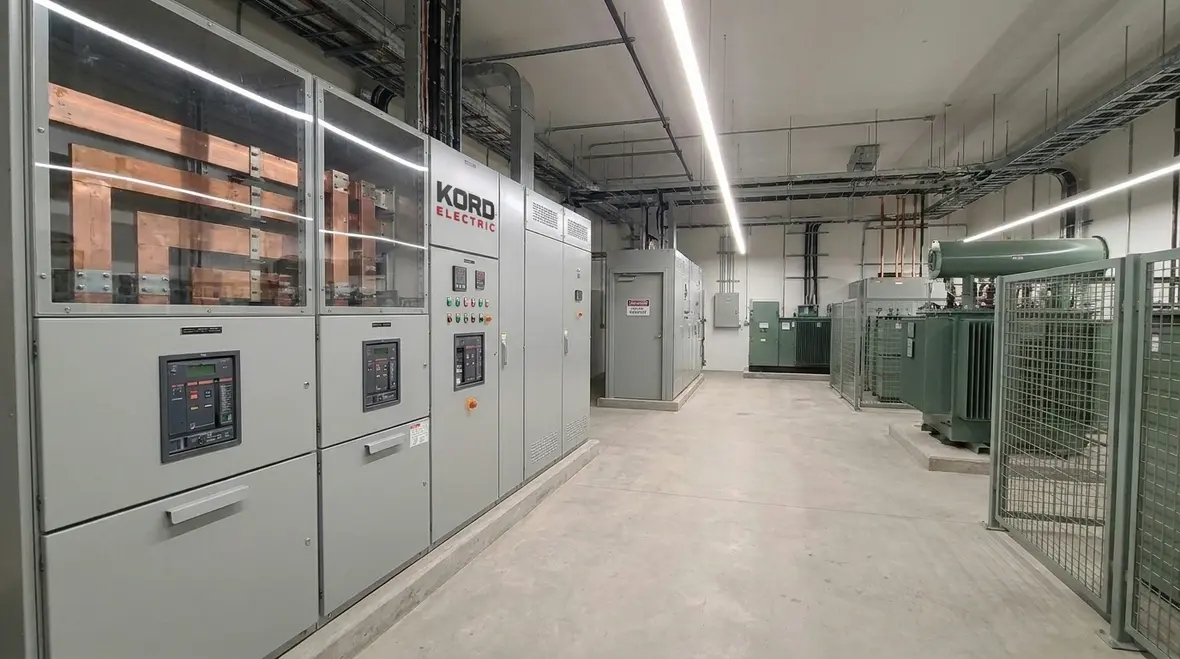
Commercial buildings rarely run a single, simple load. Instead, they run networks of distribution, transformers, switchgear, and panels that feed everything from air handling units to manufacturing equipment. In the blog covering commercial electrical systems for modern buildings, Kord Electric highlights how these systems link together for safety, control, and reliable power delivery. That same concept applies here: power factor correction must fit into the way the electrical system actually operates.
Therefore, we typically coordinate with existing gear, including how feeders distribute loads, how transformers handle reactive current, and how switchgear and controls respond during switching events. When correction capacitors are sized and placed properly, they reduce reactive current flow where it matters most. Consequently, you can lower system losses and keep voltage levels steadier during peak operation.
In other words, correction works best when it behaves like part of the building’s electrical “team,” not like a random new player showing up mid game. Our team plans the whole match.
If you want a deeper dive into how commercial distribution, panels, and controls all work together behind the scenes, explore Kord Electric’s breakdown in The Role of Commercial Electrical Systems in Modern Buildings. It pairs naturally with a power factor correction strategy for facilities that want efficiency and reliability, not just more hardware.
Dual-column view: savings you feel, performance you keep
Commercial Power Factor Correction Benefits
- Lower reactive current reduces utility charges tied to kVA and demand
- Better planning helps prevent sudden bill jumps during peak schedules
- Improved efficiency can reduce electrical losses across the distribution system
- Stabilized load behavior can support smoother operations for HVAC and motors
Operational results
- Reduced stress on transformers, cables, and bus bars
- Cleaner power flow supports sensitive controls and drives
- Fewer complaints from equipment performance, overheating, or nuisance alarms
- More usable capacity in panels and switchgear during expansion
Why proper sizing and control matter more than people think
Some facilities try quick fixes, and the results can be “meh,” like buying an appliance because it looks nice on the box. Power factor correction is not one-size-fits-all. The building’s load changes by time of day, season, and production or occupancy patterns. Then reactive demand can swing up and down.
If correction equipment is oversized, the site can run leading power factor, which causes its own set of issues. If it is undersized, it simply does not offset the reactive demand enough to lower charges. And if switching controls do not track the load profile, you can get unnecessary capacitor switching events, which increases wear and can create disturbances.
That is why our technicians and expert service staff typically start by reviewing electrical data, load behavior, and equipment characteristics. Then we design a correction approach that matches how the facility actually runs. Over time, this helps the system maintain a better power factor without creating new problems to solve later.

Pairing power factor correction with a structured maintenance program makes the results even more reliable. Through services like Electrical Preventive Maintenance for Commercial & Industrial Facilities, Kord Electric helps facilities keep panels, connections, and equipment in top condition so the correction system keeps doing its job quietly in the background.
Real-world examples in commercial and industrial environments
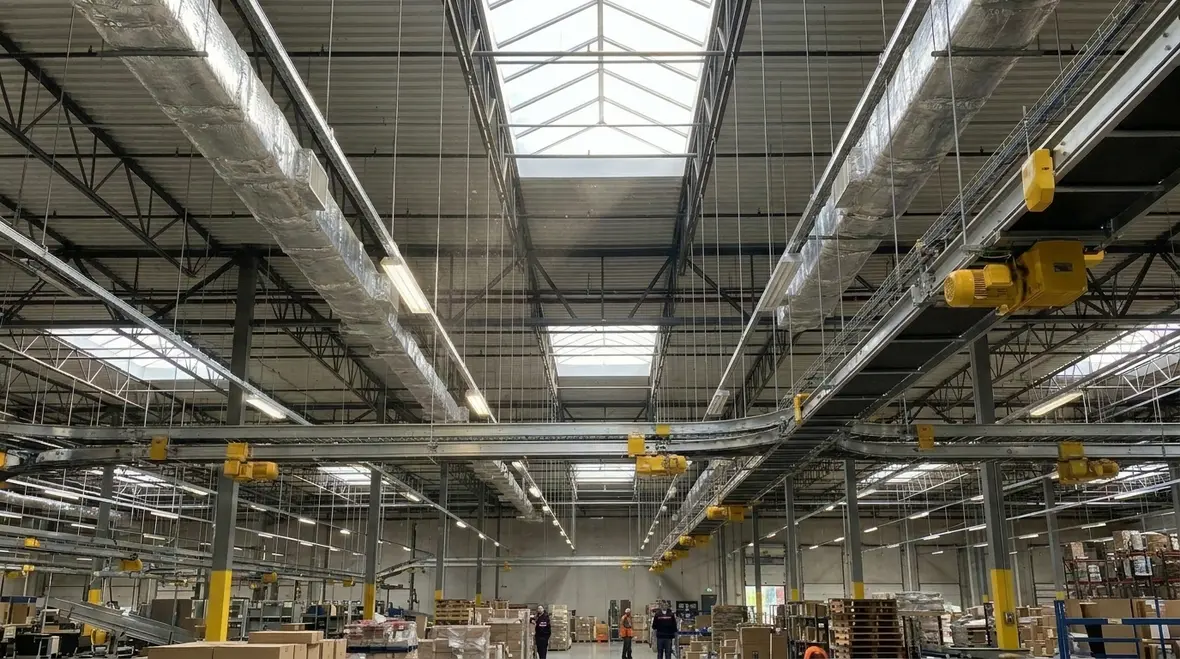
Let us talk about the kinds of buildings where we see these wins most often. In warehouses and distribution centers, motors drive conveyors, fans, and pumps that cycle with shifts. In manufacturing facilities, production lines bring large motor loads that fluctuate during start-up and changeovers. In office and mixed-use complexes, HVAC systems can dominate reactive demand, especially when older equipment or oversized chillers run at variable loads.
When a facility corrects power factor with a well matched system, the impact often shows up in the billing period after the adjustment. Utility charges that react to kVA or demand tend to soften. At the same time, the building team often notices fewer electrical issues during peak use, and maintenance crews spend less time chasing overheating panels or nuisance breaker behavior.
And yes, the equipment usually sounds calmer. Not quiet, because industrial life never becomes a library, but calmer in the way a building feels when its electrical system stops working harder than it has to. That is the practical side of efficiency, and it is what property owners expect.
FAQ: Power factor correction for commercial and industrial facilities
Closing CTA: Talk to Kord Electric before you “guess and hope”
If your commercial or industrial facility deals with utility charges that rise faster than your operational needs, Kord Electric can help you find the real cause and build a correction plan that fits your system. Our technicians and expert service staff review your electrical conditions, explain what they find, and install power factor correction with the right controls and sizing for how your building runs. Call Kord Electric today to schedule an assessment. Let’s turn reactive costs into actual value.
For facilities that want long term stability beyond just power factor, Kord Electric’s broader services — from Electrical Preventive Maintenance to Voltage Fluctuation Diagnostics and Repair — help keep panels, feeders, and sensitive equipment ready for whatever your next expansion or busy season brings.


