Commercial EV Charger ROI for Business Parks
Let’s talk about the Commercial EV Charger ROI for business parks, and yes, we will do it in a way that feels useful, not like a spreadsheet punishment. At Kord Electric, we help owners and property leaders calculate a clean return path by pairing the right charging design with smarter cost planning. ROI can mean more than one thing, too. It can include new tenant demand, higher lease stickiness, and sometimes even revenue from charging sessions. Now, rather than guessing, our team maps inputs like power availability, installation scope, and usage patterns. Then, we translate those inputs into outcomes the business side can actually read.
How we calculate Commercial EV Charger ROI for business parks
When our clients ask how to calculate the Commercial EV Charger ROI, we start with a simple principle: make the math match the real site. First, we list the one time costs. That usually includes site work, conduit, trenching, electrical distribution upgrades, charger equipment, software setup, and testing. Next, we add ongoing costs like maintenance, monitoring, and network fees if the chargers use cloud or payment services. Then we estimate benefits, which may include charging revenue, tenant retention, and increased leasing interest.

From there, we use three layers of ROI thinking. Layer one is pure financial return from charging fees. Layer two values operational and leasing advantages. Layer three covers risk reduction, like preparing for rising demand so the property does not scramble later. As our expert service staff likes to say, “Waiting costs money. Waiting also costs patience, and patience is not on your utility bill.”
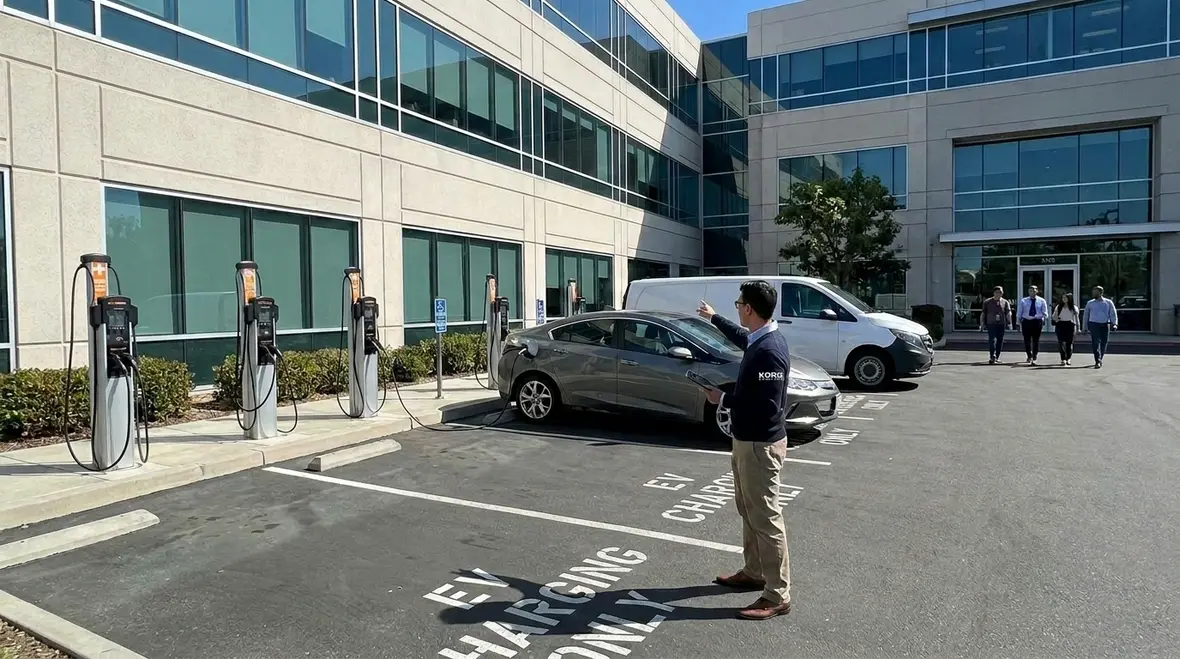
To estimate usage, we also look at driver behavior near the property and expected growth in fleet and employee charging. Additionally, we consider how parking layout affects access. For example, chargers placed where drivers can stop, plug, and move on without chaos can lift utilization. On the other hand, chargers that sit like an obstacle course reduce sessions. It is the difference between a smooth path and a “Mission Impossible” set.

What numbers we gather during the site assessment
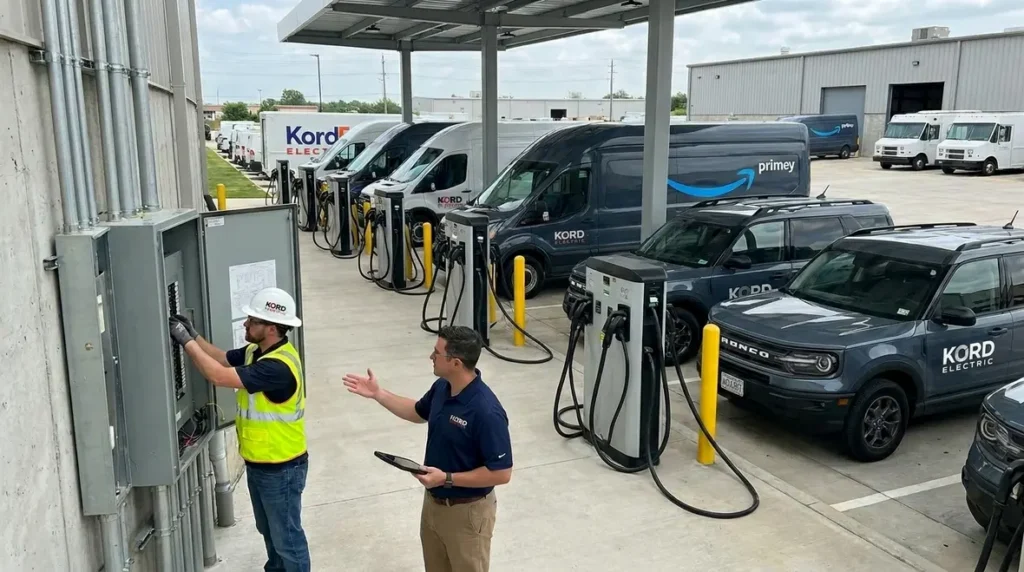
To make the ROI feel real, we gather data early. Our technicians work through the electrical reality on day one, not the marketing story. First, they confirm the service size and available capacity. Then they map existing panels, switchgear, and feeder routes, so the design avoids surprises. Next, they review load profiles. A commercial park does not run on one schedule, and neither does demand for charging. So we look at other major loads like lighting, HVAC, elevators, and any process equipment in industrial buildings.
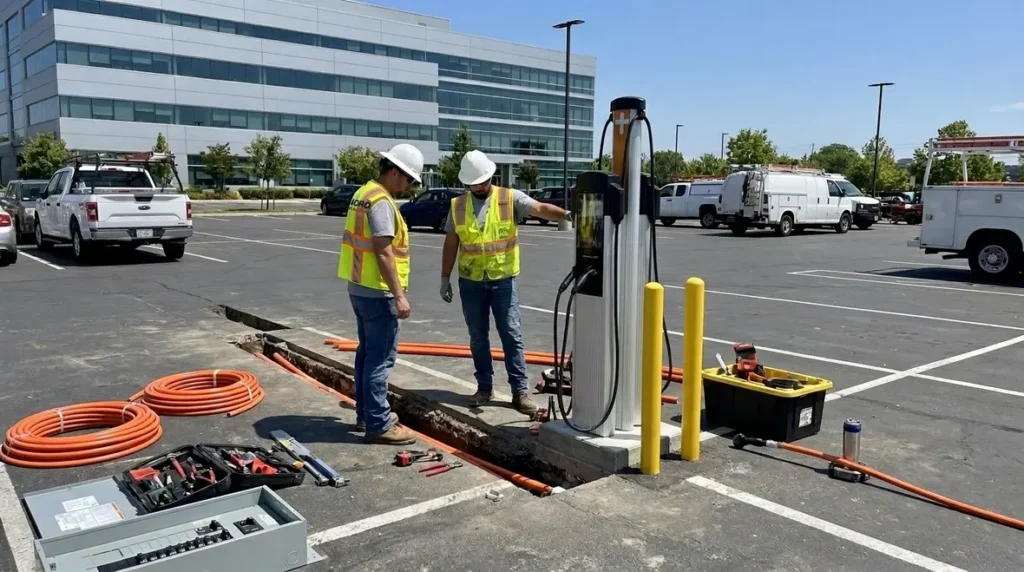
In parallel, we identify charger placement zones and parking patterns. We also check civil constraints such as available trench routes, conduit depth needs, and weather protection requirements. Then, we validate how property staff will manage the chargers day to day. Finally, we document the inspection, testing, and commissioning steps so the install stays compliant and durable.
If you want to connect ROI to electrical infrastructure in a clean way, our approach follows the same logic found in our electrical planning guidance for major facilities. For example, we emphasize how proper electrical distribution planning supports safe growth, which is a key theme in our data center electrical infrastructure essentials article. Although that reference targets data center needs, the underlying discipline applies to commercial EV infrastructure: we plan for reliability, capacity, and future expansion rather than patchwork upgrades.

Cost drivers that can make or break ROI
Not all installation scopes carry the same impact. Therefore, we break costs into buckets so owners can control risk. The biggest drivers usually include electrical upgrades, trenching and conduit, mounting hardware, and the design of distribution for safe operation. For instance, the ROI picture shifts fast when capacity exists versus when a new transformer or switchgear upgrade is required. Likewise, the scope expands when chargers must reach long distances across a park with limited trench access.
We also account for permitting and inspections. Proper permitting keeps timelines steady. Unstable timelines can damage the ROI because launch delays often postpone revenue and benefits tied to tenant interest. Additionally, we consider the charger count and power level per stall. Higher power can attract fleet usage and reduce session time, but it also can demand more distribution planning. Our technicians help clients select a charging model that matches the expected demand profile. That way, the business does not pay for power nobody uses, and nobody ends up saying, “We planned for everything except reality.”
Here is a quick way to think about it: your ROI gets better when installation costs stay controlled and utilization rises. So we focus on both. We streamline the path from electrical rooms to parking bays. Then we design smart charging controls, so load stays within safe limits without choking other building systems.

Benefits beyond charging revenue: what increases value
Many property owners start with one benefit: session fees. But in large facilities, charging also influences leasing and retention. When a business park offers reliable charging, tenants notice. Some tenants care because their staff and visitors want it. Others care because fleets need it, and fleets plan months ahead. Therefore, the charging program can reduce vacancy risk, improve lease terms, and support premium positioning.
There is also a practical brand advantage. A property that invests in clean infrastructure can attract sustainability oriented tenants. Yet we keep it grounded. The value does not come from a sign in the lobby. It comes from uptime, usability, and predictable costs. Our service staff supports that by explaining the operational choices upfront: network options, access control, and maintenance planning.
Think of it like buying a gym membership. If the machines work and the place stays clean, people show up. If not, the membership turns into a sad storage unit for regret. EV charging works the same way. Reliability and access create utilization, and utilization creates the kind of Commercial EV Charger ROI that lasts longer than a hype cycle.
Using projections that hold up to real operations
ROI estimates often fail because they use best case usage assumptions. So we build projections with ranges instead of fantasy numbers. First, we consider baseline usage. We estimate early adoption, since most parks do not reach full utilization overnight. Next, we project growth tied to fleet expansion, tenant onboarding, and employee behavior changes. Then we factor seasonal demand patterns. Finally, we model different scenarios for power sharing and queue management.
Our technicians also help clients plan for upgrade timing. If the site needs staged capacity expansions, we align charger growth with electrical readiness. This protects the ROI because you avoid paying for full build out before demand proves it. In other words, you earn your next step rather than ordering it blind.
We also recommend measuring performance once the chargers go live. When we monitor utilization and session duration, you can adjust pricing, access settings, and even stall placement strategy if the layout supports it. As our team puts it, “We do not just install chargers. We help you manage a system.” That shift keeps ROI accurate over time, not just on day one.
Dual column: Electrical readiness and ROI math at a glance
Below is how we connect electrical planning to the financial story without drowning you in technical jargon. We do it once, clearly, then we build the final model in your project language.
| Electrical readiness factor | ROI impact on the project |
| Available service capacity and panel headroom | Reduces upgrade scope, improves launch speed, and lowers upfront costs |
| Feeder route length and trench complexity | Controls civil costs and timeline risk, helping the first benefit period arrive sooner |
| Distribution design and load management | Improves utilization by keeping chargers reliable and available under normal building loads |
| Commissioning, testing, and compliance steps | Protects uptime, reduces rework, and supports stable maintenance costs |
FAQ: Commercial EV Charger ROI for business parks
Conclusion: Get a ROI plan built for your property
If a business park wants EV charging that pays off, it needs a plan that connects electrical capacity, site conditions, and realistic usage. At Kord Electric, we bring our expert service staff and technicians into the process early, so the Commercial EV Charger ROI story stays grounded in your actual site, not a fantasy dashboard. Schedule a consult with us, and we will map costs, benefits, and staging options clearly so you can move forward with confidence. Let’s build charging infrastructure that earns its keep.
To move from ROI theory to a buildable plan, explore how our dedicated commercial EV charger installation services bring design, permitting, and installation together for business parks, campuses, and large facilities.