Emergency Electrical Panel Repair Guide for Businesses
Commercial electrical problems do not wait for business hours, and neither do we. In the Kord Electric Emergency electrical panel repair guide, we tell building managers to act fast, stay calm, and protect people first. Shut down affected equipment when it is safe to do so, keep water away from the area, and listen for unusual sounds like buzzing or crackling. Then we escalate for Emergency electrical panel repair when there are clear danger signs. Our technicians, who have seen every “it was fine yesterday” scenario, explain what they find in plain language and keep your operations moving.
Now, let’s talk about when commercial facilities should call for immediate repairs, and why waiting can turn a manageable issue into a full production interruption. Yes, electricity is dramatic. It just needs the right pro to show up.
Emergency electrical panel repair guide: what to do before we arrive
When an electrical panel problem appears in a commercial facility, the first priority is always people. Before our technicians arrive, designate someone on your team to control access to the affected area. Keep staff and visitors away from the panel, exposed conductors, or any equipment that is behaving unpredictably. If you can safely shut down nearby machinery or sensitive equipment without crossing in front of a sparking or smoking panel, do so. Reducing load can limit further damage while help is on the way.
Next, control environmental hazards. Keep water, cleaning supplies, and sprinklers away from the immediate panel area whenever possible. If you notice roof leaks, condensation, or standing water nearby, communicate that clearly when you call. Moisture and electricity are a fast track to shock risk and further equipment failure. Your goal in these first few minutes is not to fix the issue; it is to freeze the situation so it does not get worse.
While you wait, rely on your senses—without getting too close. Listen for buzzing, crackling, or popping sounds. Step back and carefully look for flashes, smoke, or visible arcing. If you detect any strong burning smell or see active sparks, move people farther away and be prepared to evacuate that area of the building. When you call Kord Electric, describe exactly what you see, hear, and smell. Those details help our emergency electricians determine how urgently they need to respond and what equipment to bring to stabilize the panel.
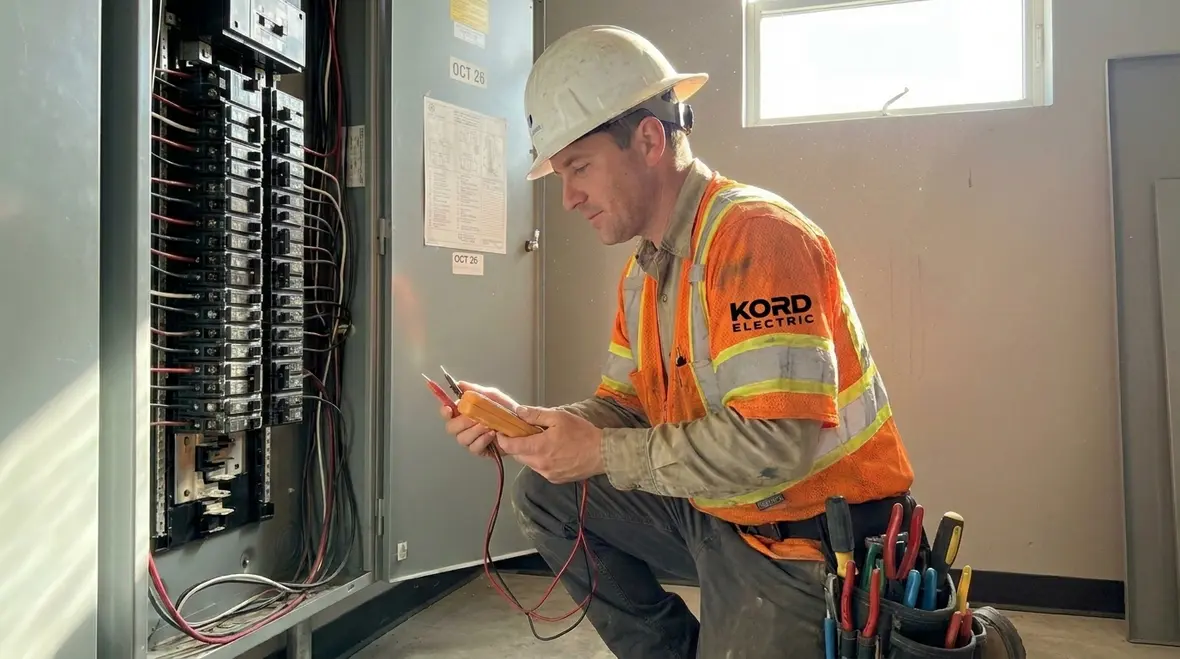
If your facility already works with Kord Electric on electrical preventive maintenance, panel inspections, or voltage troubleshooting, pull up the most recent reports or drawings before we arrive. Those documents, along with any panel schedules, can help our technicians navigate your equipment faster. Even if you only have partial documentation, having it available at the panel or control room can shave valuable minutes off the diagnosis phase. In an emergency electrical panel repair guide for busy facilities, every saved minute counts.
Red flags that signal urgent commercial panel damage
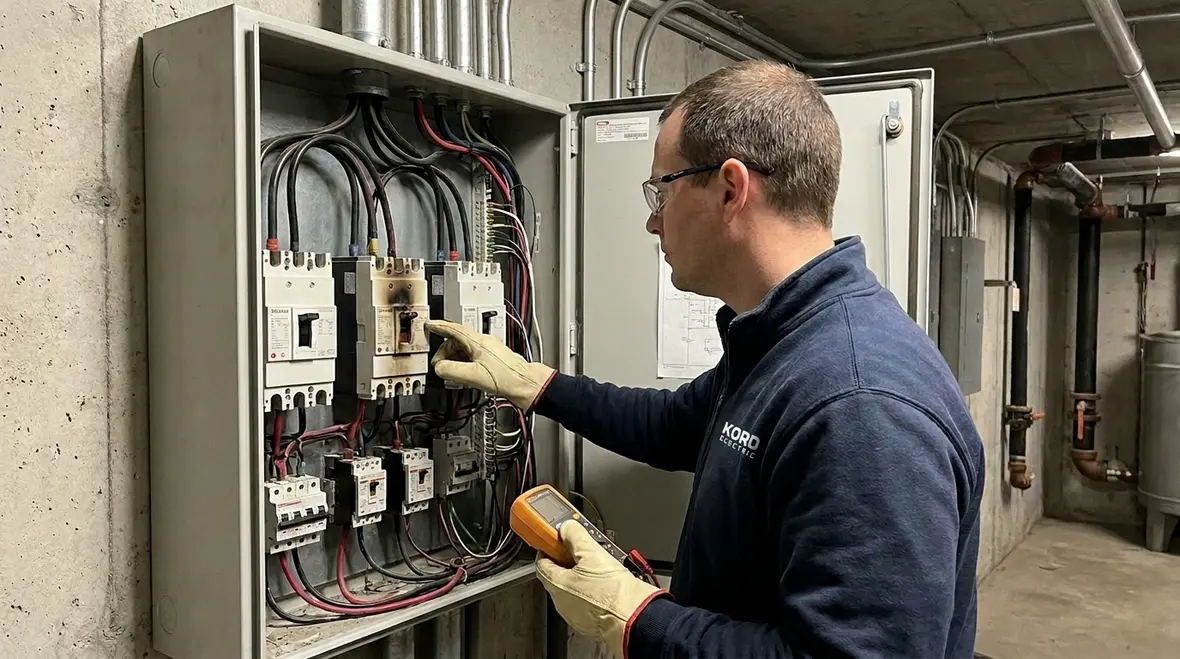
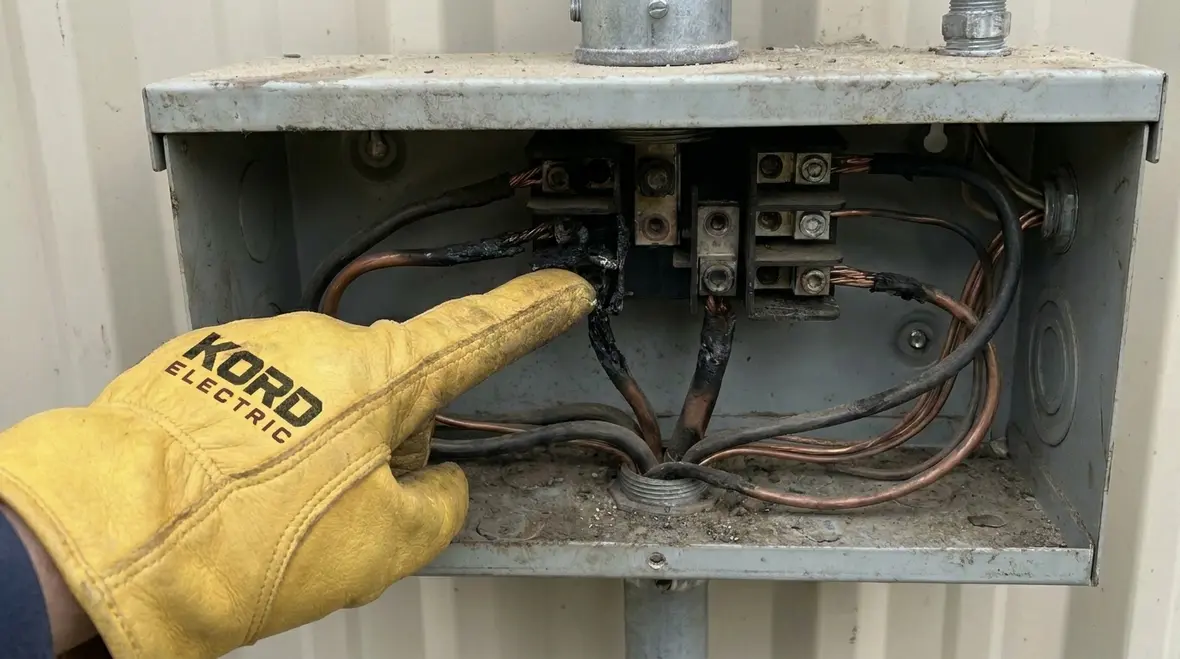
When power distribution fails in a commercial or industrial setting, small symptoms can become big risks. First, watch for repeated breaker trips that happen more than once in a short period. Next, notice any burning smell, visible scorching, or melted insulation around the panel, feeders, or terminations. If you see discoloration or hear crackling, buzzing, or arcing, treat it as urgent.
Additionally, look for signs of overheating that show up under normal load, such as panels that feel hot to the touch or components that vibrate. In many facilities, these warnings appear during peak demand, when a panel is already stressed. Therefore, the safest response is to call immediately so our expert service staff can inspect and stabilize the system before it escalates.
It is tempting to keep operations running and “see if it comes back.” However, that is like pressing snooze on a smoke alarm. The clock is still counting.
If your facility has been dealing with unexplained voltage swings, dimming lights, or sensitive equipment that resets without clear cause, consider those early warning signs. These issues often overlap with the same underlying problems that lead to full emergencies—overloaded circuits, loose terminations, or aging components. Kord Electric’s voltage fluctuation repair and emergency electrical services work together to uncover these hidden problems before they evolve into full outages or panel failures.
When a safety issue turns into an emergency
Safety issues drive urgency. If your panel shows signs of active arcing, live sparking, or melting, the situation can create fire risk within minutes. Moreover, if you notice smoke, soot, or a sudden drop in power to critical loads such as refrigeration, lighting in egress routes, or control systems, you need immediate assistance.
We also see emergencies when grounding or bonding appears compromised, especially in industrial and major property buildings where equipment and conductive structures rely on stable protection. If ground fault indicators flash repeatedly, or if personnel report tingling sensations near equipment, do not assume it is harmless. You should treat it as a potential fault condition.
Our technicians handle these calls with a clear sequence: verify conditions, isolate affected circuits, and assess damage without guessing. Then we explain the root cause and the fastest safe path back to stable service.
In some cases, the safest option is to shut down portions of the facility or even evacuate an area until the panel is secured. That decision is never taken lightly. Kord Electric’s emergency electrical services team evaluates life safety systems, egress lighting, and interconnected equipment to determine whether operations can continue during the repair. The goal is to protect people first, preserve equipment second, and restore productivity as soon as it is safe to do so.
Loss of power, partial outages, and what they mean
Not every outage is the same. For example, a complete loss of power can point to a main disconnect failure, service interruption, or a severe bus issue. On the other hand, partial outages often involve specific breakers, phases, or branch circuits. Still, in a commercial environment, partial power can be just as dangerous. Why? Because some systems may continue operating in an unstable state while others fail.
Call for immediate commercial electrical panel repairs when you see patterns that do not behave like normal breaker trips. If the same breaker trips every time a specific process starts, the panel may be dealing with a short, overheating connections, or failing components. If voltage changes are visible in sensitive equipment, such as drives, compressors, or lighting controls, the panel may be supplying unstable output.
Furthermore, if you experience nuisance alarms in your monitoring system, or you see inconsistent readings from energy meters, that can signal loose connections or failing contact points. Since our team supports commercial and industrial facilities, we treat these issues as operational risks, not minor annoyances. Our expert service staff walks your team through what each symptom usually indicates, then we validate it with on site testing.
Partial outages can also mask deeper infrastructure problems. A failing neutral connection, deteriorating feeder, or overloaded panelboard may only show up when certain equipment cycles on. Without trained investigation, those intermittent symptoms can be misread as simple “equipment glitches.” The Emergency electrical panel repair guide mindset says the opposite: patterns matter, and patterns deserve a licensed electrician on site.
Why burning smells, heat, and noise demand fast action
Heat, smell, and sound are the panel’s way of “telling you something is wrong.” Burning odor often comes from overheated terminations, overloaded circuits, or failing components. In older gear, this can accelerate when loads shift, when maintenance changes happen, or when new equipment gets added. Therefore, even if the system is still “working,” the conditions may be turning up stress inside the enclosure.
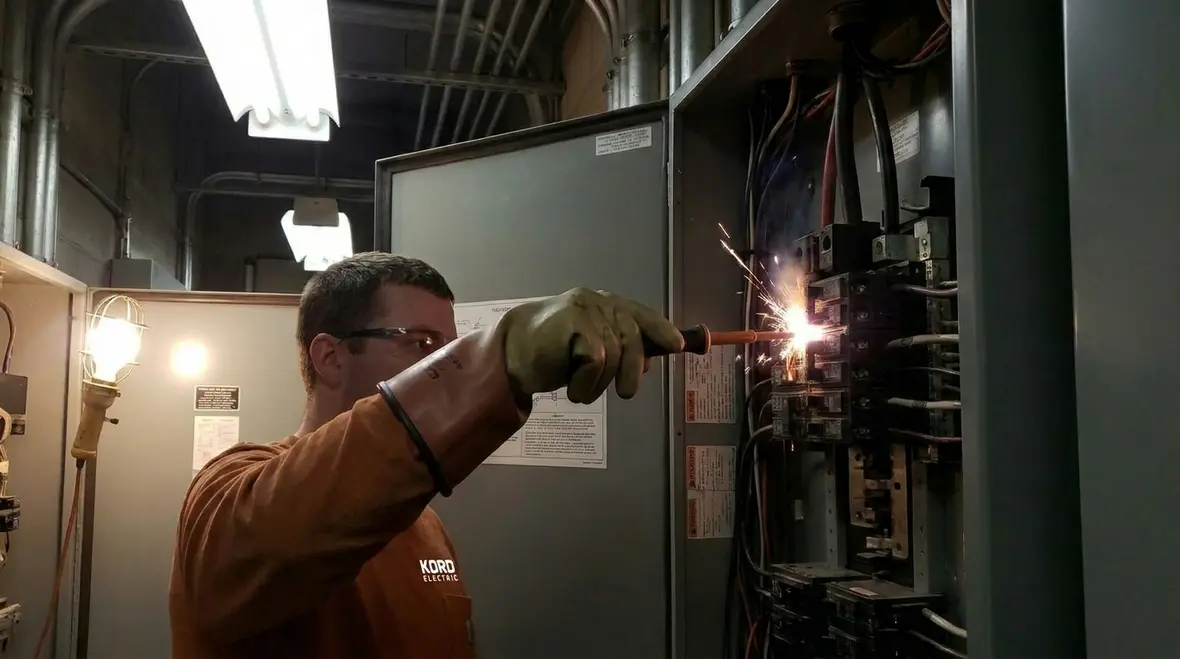
Noise matters too. Buzzing can come from loose hardware, poor contact, or arcing under load. Crackling is more severe and may indicate active arcing, which can damage the panel and create fire risk. Additionally, popping sounds can occur when protective devices react to fault conditions, but they can also reflect internal failures that need immediate diagnosis.
When these signs appear, we do not rely on guesswork. Kord Electric technicians inspect with a safety-first approach, check connection integrity, verify breaker performance, and assess the bus and internal components. Then we explain the findings clearly. We keep it business casual, not “electrical poetry.” You get facts, options, and next steps.
Sometimes our team arrives to find a panel that still looks fine from the outside but tells a very different story once it is opened under controlled, de energized conditions. Discolored bus bars, warped plastic, or carbon tracking between phases are all evidence that the warnings were trying to get someone’s attention. If this Emergency electrical panel repair guide helps you do one thing, let it be this: when your nose and ears say something is off, listen and call before the damage spreads.
Industrial and major property settings: call sooner, plan better
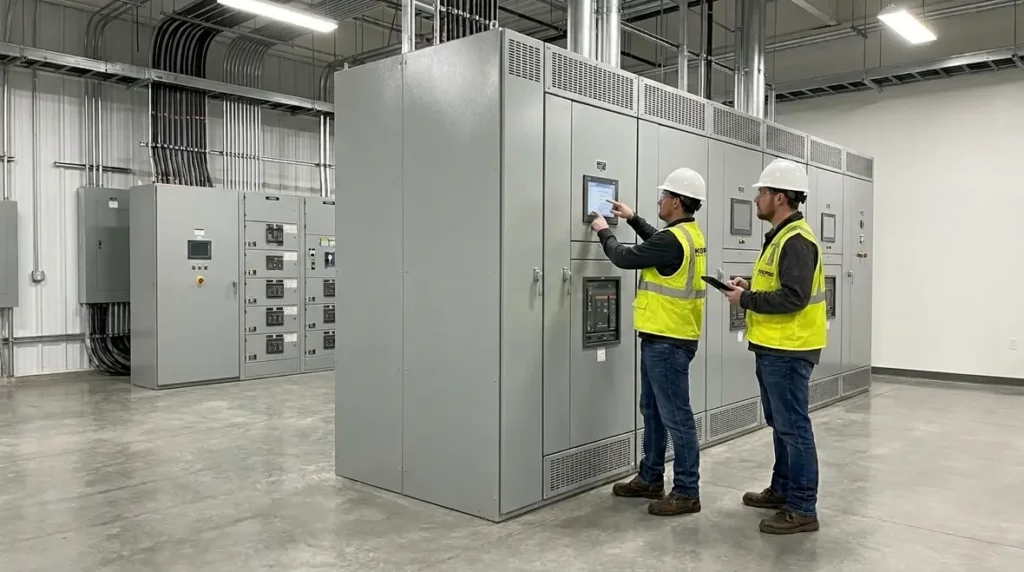
In industrial plants and major property buildings, electrical panels serve more than one purpose. They power production equipment, life safety systems, and building services that keep people safe and operations stable. Because of that, urgency increases when the facility runs on tight schedules and continuous uptime.
For facilities with high motor loads, welding equipment, or variable frequency drives, panels face more thermal cycling and more frequent load changes. As a result, connections can loosen over time, and protective devices can degrade. Similarly, in large mixed-use properties with multiple tenants, panel capacity and demand patterns can shift quickly. When a new tenant adds load, the electrical system may show stress before it fails completely.
That is why our expert service staff recommends planning for panel inspections and maintenance, especially after major upgrades or process changes. Still, if you see danger signs in these environments, you should call right away for emergency support. Kord Electric focuses on commercial and industrial facilities and major property buildings, so our response is built for the pace and risk level those sites carry.
Preventive strategies, like structured electrical preventive maintenance and scheduled panel inspections, complement any Emergency electrical panel repair guide you follow in the field. By combining regular thermal scans, torque checks, and system evaluations with a clear plan for how to respond when something fails, facility managers reduce both the frequency and severity of emergencies. When something does go wrong, documented history gives our technicians a head start on finding the source.

In major properties with complex lighting systems, large mechanical equipment, and life safety loads, Kord Electric often pairs emergency electrical services with upgrades to distribution equipment, lighting installation services, or targeted rewiring projects. The goal is to make sure that the next unplanned event is less disruptive than the last one, and that each response moves your infrastructure closer to current code and best practices.
How Kord Electric responds during emergency repairs
When you call, we respond with a structured process that protects people, equipment, and operations. First, our technicians evaluate the site conditions and identify which parts of the panel and connected loads are affected. Then they isolate the unsafe sections to stop further damage. Next, we check for common failure points like loose terminations, damaged breakers, overheating bus bars, and compromised insulation.
After the immediate hazards are addressed, we move into repair and stabilization. Depending on what we find, the solution may include tightening or replacing components, correcting wiring issues, upgrading parts that can no longer handle the load, or recommending broader panel improvements. We document the results so your operations team has a clear picture.
Most importantly, we explain what we are seeing while we work. Our expert service staff speaks in practical terms, so your team understands why the issue happened and how to prevent a repeat. And yes, sometimes the fix feels like a scene from a detective show, except nobody gets cuffed. Just the faulty connection.
In many cases, an emergency visit also reveals opportunities for long term improvements. If your facility struggles with chronic voltage fluctuations, overloaded circuits, or outdated panels, our technicians can recommend follow up services ranging from targeted upgrades to full rewiring projects. The same team that stabilizes your system when things go wrong can help design a roadmap that keeps future emergencies from starting in the first place.
FAQ: emergency panel repairs for commercial buildings
Facility managers and property teams often ask similar questions when a panel problem appears. The Emergency electrical panel repair guide below focuses on the most common concerns we hear during urgent calls.
Call Kord Electric for emergency panel repairs today
If your commercial facility shows heat, burning odors, buzzing, crackling, or repeat trips, do not gamble with uptime or safety. Contact Kord Electric now so our technicians can respond quickly, stabilize the panel, and guide your team through repairs that fit real building operations. We serve commercial and industrial sites and major property buildings, and we explain our findings without delays or confusing jargon. Make the call today, and keep your electrical system from turning into tomorrow’s fire drill.
For facilities that want to stay ahead of the next outage, combine this Emergency electrical panel repair guide with a broader strategy. Explore services like electrical preventive maintenance and hidden electrical risk assessments for commercial buildings. When you pair emergency response with planned upgrades and inspections, your panels, switchgear, and distribution systems are better prepared for whatever your production schedule throws at them.
And if your facility is expanding, adding new loads, or updating infrastructure, Kord Electric’s dedicated emergency electrical services team is ready to back up every project with fast, compliant response when unexpected problems surface. From voltage fluctuation troubleshooting to full commercial rewiring, our licensed electricians build solutions that reduce downtime and keep people safe.
Whether you are dealing with a live emergency right now or building a proactive plan for the next five years, Kord Electric is ready to help you protect your panels, your equipment, and your people.