
Data Center Electrical Reliability Audit Guide
Kord Electric steps in when a mission critical building needs the kind of calm, proven certainty that only a Data center electrical reliability audit can bring. In the first phase, we look at how your power system behaves under real stress, not just on paper. Then we verify what your UPS, switchgear, generators, ATS gear, and distribution paths do when the lights decide to “get dramatic.”
Now, we are not here to sell fear. We are here to measure risk, explain it in plain language, and help operators keep power steady for business, not for headlines. Our technicians and expert service staff walk you through what they find, and we translate the technical details into decisions your team can actually act on.
What a Data center electrical reliability audit actually examines
In a Data center electrical reliability audit, we do not simply review documents and call it a day. We examine electrical reliability as a system, because one weak link can turn a well designed chain into a chain of regrets. First, our team maps the end to end power path from utility intake through redundancy layers. Next, we verify coordination of protection devices so faults get cleared fast and safely, without taking out more than necessary.
Then we focus on how power quality shows up in the real world. Voltage sags, harmonics, and transient events can stress IT loads and cooling controls. As a result, the risk is not only “will the power fail.” The risk is “will the power behave badly enough to cause downtime, alarms, and expensive retries.”
We also verify operational readiness by checking the interfaces between systems. For example, ATS logic, generator start parameters, transfer times, and parallel operation settings. If the controls speak different languages, the building might still run, but it will run like a TV showing a buffering wheel. That is not reliability.
Because we only target commercial and industrial facilities and major property buildings, we align our methods with the realities of large loads, strict uptime goals, and multi stakeholder environments.
For operators who want to zoom out and see how electrical reliability fits into the broader design of mission critical power, Kord Electric’s data center electrical distribution design for reliability article walks through how upstream choices affect real world uptime.
Field testing, load behavior, and what the numbers should prove
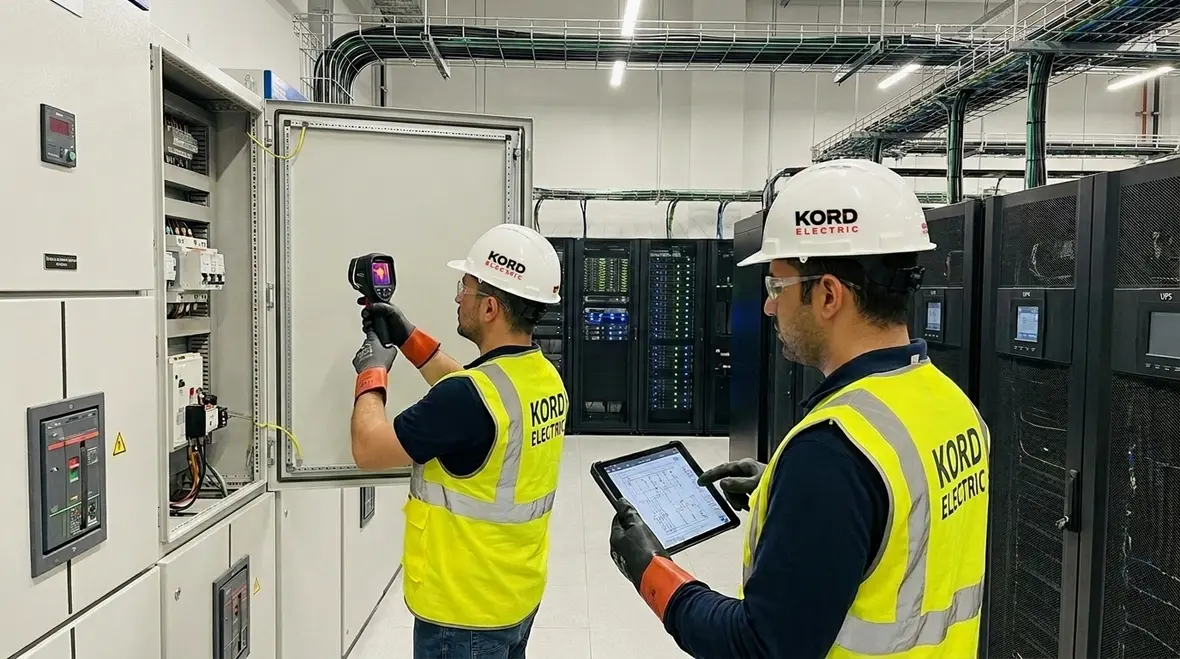
At Kord Electric, our technicians take real measurements where theory meets smoke. So, we perform field testing to confirm insulation health, breaker performance, torque integrity, and contact conditions where accessible and safe. After that, we verify settings that protect your equipment and keep fault events from cascading.
When we test, we look for evidence of degradation. That can appear as abnormal resistance, inconsistent breaker operation, or patterns that hint at overheating or contamination. Even when everything “seems fine,” data often tells a different story. And yes, buildings can be like people at a party, smiling while quietly running on low battery.
Next, we evaluate load behavior. We compare expected load sharing, generator ramp performance, and UPS transfer behavior against what actually happens during events. Then we validate that redundancy modes work as intended under practical conditions. We want to know how the system reacts during the moment power transitions, because that is where reliability either earns trust or loses it.
Finally, we consider measurement traceability and documentation. We help your team understand what matters, what trends matter, and which actions should be scheduled first so you do not pay for repeated troubleshooting later.

If your facility is building a long term maintenance strategy around these numbers, pairing a Data center electrical reliability audit with a structured electrical preventive maintenance program helps keep issues from reappearing between audits.
How we review single points of failure without guessing
Many audits rely on assumptions. We do better. First, we build a clear dependency view that connects equipment, rooms, distribution paths, and controls. Then we identify single points of failure based on actual topology and operating logic, not on “tribal knowledge.”
Then we test for how the system behaves during transitions and edge cases. For example, what happens if maintenance blocks a panel feed, or if a standby source starts slower than planned. We also review how bypass systems, break outs, and interlocks are used. If interlocks are bypassed with the “we will fix it later” mindset, we flag that for immediate action.
Our expert service staff explains each finding in a way operators can use. So instead of vague statements like “redundancy needs attention,” we point to the specific path, device, and control condition that makes the risk real. And because we work with commercial and industrial facilities, we tailor recommendations to uptime windows, staffing realities, and the level of access equipment teams actually have.
We also look for hidden dependencies. Cooling systems, monitoring platforms, and communications links can fail and trigger incorrect decisions. In modern buildings, reliability is not only a power story. It is also the ability to detect trouble early and respond correctly.

For teams comparing electrical risk to fire and life safety dependencies, Kord Fire’s data center fire prevention strategies for modern facilities article shows how electrical, mechanical, and fire systems interact when things get stressful.
UPS, generators, and transfer schemes we stress and validate
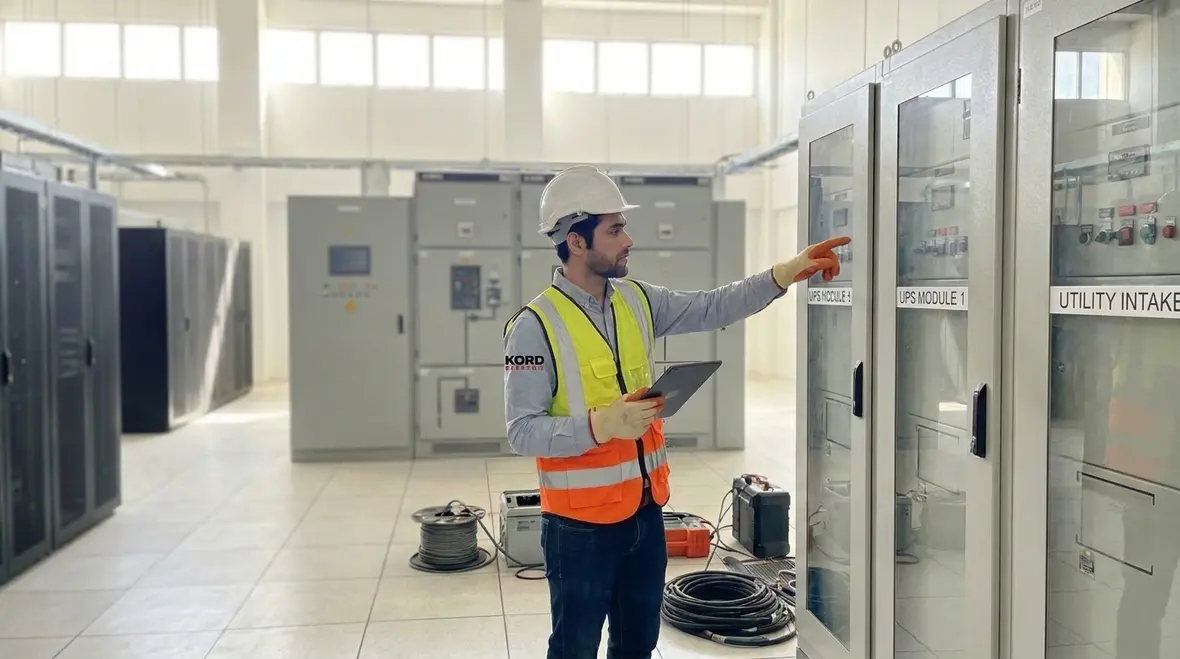
Our clients often ask, “Is the UPS enough?” They usually mean, “Can it keep things alive while other sources start?” We answer with evidence. We review UPS architecture, maintenance bypass design, and battery management practices. Then we verify that the UPS output stays within acceptable tolerances during normal and event conditions.
For generators, we confirm start reliability, fuel system health, and operational readiness. We examine configuration choices that affect parallel operation and load sharing. We also validate that the transfer scheme supports safe, fast transitions. If the building has to wait, the UPS will cover that gap. However, if the gap is too long or too inconsistent, the batteries pay the bill.
Then we validate transfer logic and timing across ATS equipment and interlocks. This includes checking whether transfer sequences can handle control failures without triggering a shutdown chain. Our technicians approach this step carefully, because transfer testing requires planning, safety coordination, and correct permissions.
When it comes to reliability, we treat every “small” setting as big. A slightly slow transfer timer can become a domino when combined with load levels, temperature, and aging equipment. So we make sure the full scheme holds together.

If your facility is planning upgrades or new construction, combining this audit with Kord Electric’s guidance on data center electrical requirements for uptime helps ensure UPS and generator choices match the loads they support, not just the drawings.
Why power quality and protection coordination decide real uptime
Power quality issues rarely announce themselves with a dramatic crash. More often, they show up as nuisance alarms, overheating, or premature component wear. Therefore, we evaluate harmonics, voltage regulation, and disturbance patterns that can stress sensitive loads, especially in high density environments.
Then we review protection coordination. This includes verifying time current curves and ensuring the right devices clear a fault quickly and selectively. If coordination fails, a local fault can trip upstream gear, which means a bigger outage. And no, the outage rarely stays “local.” It migrates across the distribution tree like a rumor in a meeting.
We also check how protective devices interact with automation and monitoring. When protective events occur, monitoring must capture the right data so teams can act fast. In addition, we evaluate whether alarms translate into clear operator steps or just extra noise.
Category What we confirm
Power path integrity Switchgear, feeders, redundancy paths, and transfer interfaces
Reliability behavior UPS support during events, generator start and ramp, transition timing
Protection health Coordination, breaker performance, fault clearing selectivity
Quality indicators Harmonics, voltage stability, disturbance impact on equipment
In environments where electrical disturbance also ties into fire protection performance, Kord Fire’s data center clean agent fire suppression guide shows how detection, controls, and power quality all influence whether suppression systems respond correctly.
Clear recommendations that your team can execute
After testing and review, Kord Electric delivers recommendations that your leadership and field teams can use. First, we prioritize actions based on risk, impact, and feasibility. Then we separate urgent safety and outage prevention items from improvement tasks that can be scheduled during planned maintenance.
We also explain each recommendation through the lens of outcomes. So when we recommend maintenance, setting updates, or replacement, we connect it to what could fail, how it could fail, and what reliability result you gain. Our goal is to reduce uncertainty, not add paperwork.
Our technicians and expert service staff share practical guidance for how others in your organization should respond. For example, how to interpret alarm patterns, what to check first during abnormal events, and which maintenance activities prevent repeat failures.
And because commercial and industrial facilities often run on tight schedules, we provide action planning that respects access constraints and operational downtime limits. That is how we keep the audit from becoming a “great report, shame about the follow through.”
FAQ: Data center electrical reliability audit
Get your power reliability back on track
If your facility depends on steady power, it deserves more than “looks good” checks. Kord Electric can perform a Data center electrical reliability audit that measures real risk, validates transfer behavior, and improves protection coordination for commercial and industrial buildings. Our technicians explain every finding in clear business language, and we deliver a prioritized plan your team can execute during practical maintenance windows. Reach out now to schedule an assessment, and let us help you keep uptime boring in the best way.
If your team also needs to align electrical reliability with life safety and code compliance on the fire side, Kord Fire’s data center fire code compliance explained guide pairs naturally with this audit, giving you a single, practical playbook for both uptime and safety.
To turn these insights into an ongoing reliability program instead of a one time event, consider combining your Data center electrical reliability audit with Kord Electric’s electrical preventive maintenance services so findings become scheduled fixes, not recurring trouble tickets.


