Commercial Lighting Automation Benefits and ROI
At Kord Electric, we build Commercial lighting automation benefits into the way we design, install, and maintain lighting for commercial and industrial facilities and major property buildings. That focus matters, because the goal is not just “cool lights” or a fancy control panel. Instead, we help property teams reduce waste, stabilize operating costs, and make energy use behave like it should, even when your building does not. And yes, it also means fewer late night phone calls that start with, “Hey, the lights are acting weird.”
How Commercial Lighting Automation Benefits Cut Energy Waste
When we talk about ROI, we start with what drives cost every single day: unnecessary run time and inconsistent lighting levels. Traditional systems often treat the building like it is always the same, even though people, schedules, and daylight change. As a result, you pay for light when no one needs it. Then you pay again through higher demand charges and higher energy consumption.
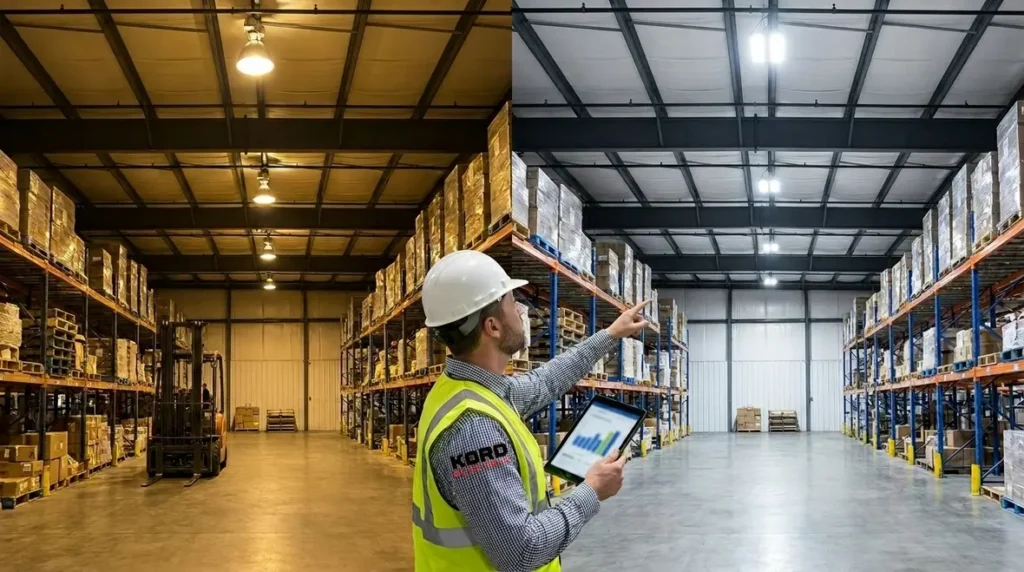
With lighting automation, we coordinate lighting output with real conditions. In practical terms, your system can dim or shut off lights when spaces are unoccupied, scale brightness with daylight, and adjust settings by time and activity. Consequently, the building uses less energy without leaving employees in dim corners like it is a film set for a thriller.
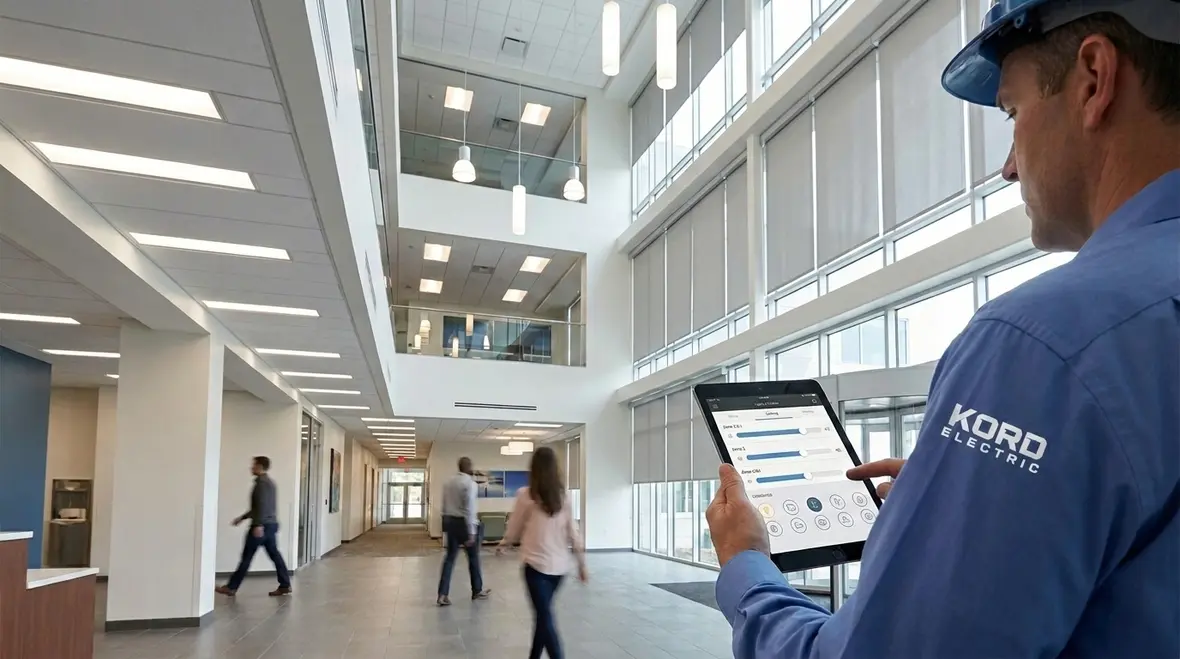
Additionally, commercial spaces gain control granularity. We can treat zones, floors, and even room types differently. For example, a warehouse with varying aisle activity does not behave like an office with steady work patterns. Therefore, our designs prioritize where savings actually happen, not where a brochure says they should.
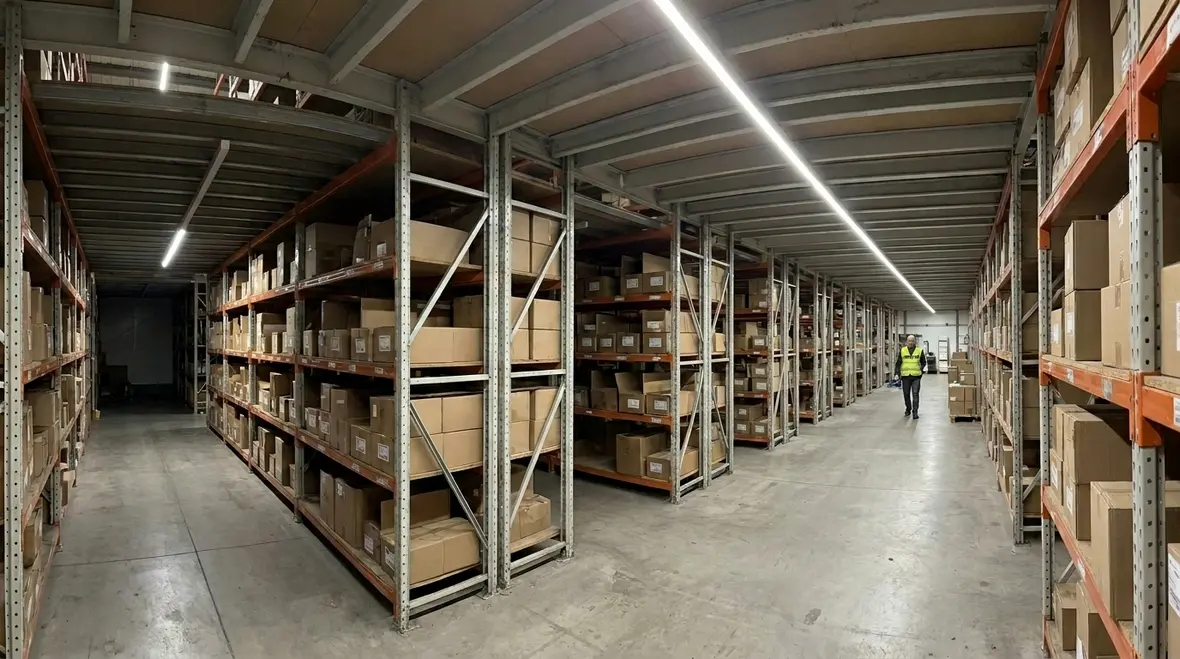
When commercial lighting automation benefits are designed around real building behavior, energy waste stops being an unsolved mystery. Instead of guessing why lights stay on for hours in barely used corridors, property teams can see exactly which zones respond to occupancy, daylight, and schedule logic. Over time, that visibility lets owners refine each setting, from conference rooms and training areas to loading docks and high bay warehouse aisles.
Automation also supports broader building strategies. For example, a property that already invested in an LED retrofit can layer controls to capture additional savings. Rather than running every fixture at 100 percent output from open to close, the system can trim levels in over lit areas, reduce output near windows, and apply gentler lighting during cleanup or stocking shifts. In other words, you do not have to rebuild your entire lighting system to get smarter about how it runs; you just have to make sure the controls and layout cooperate instead of competing.
That cooperation is where Kord Electric leans in. Our technicians evaluate how light levels look on the floor, how long areas stay occupied, and how schedules stack across tenants or departments. Then we build control logic that matches reality instead of a generic diagram. The result is an automation plan that feels intuitive for building teams and almost invisible for occupants, because it just works.
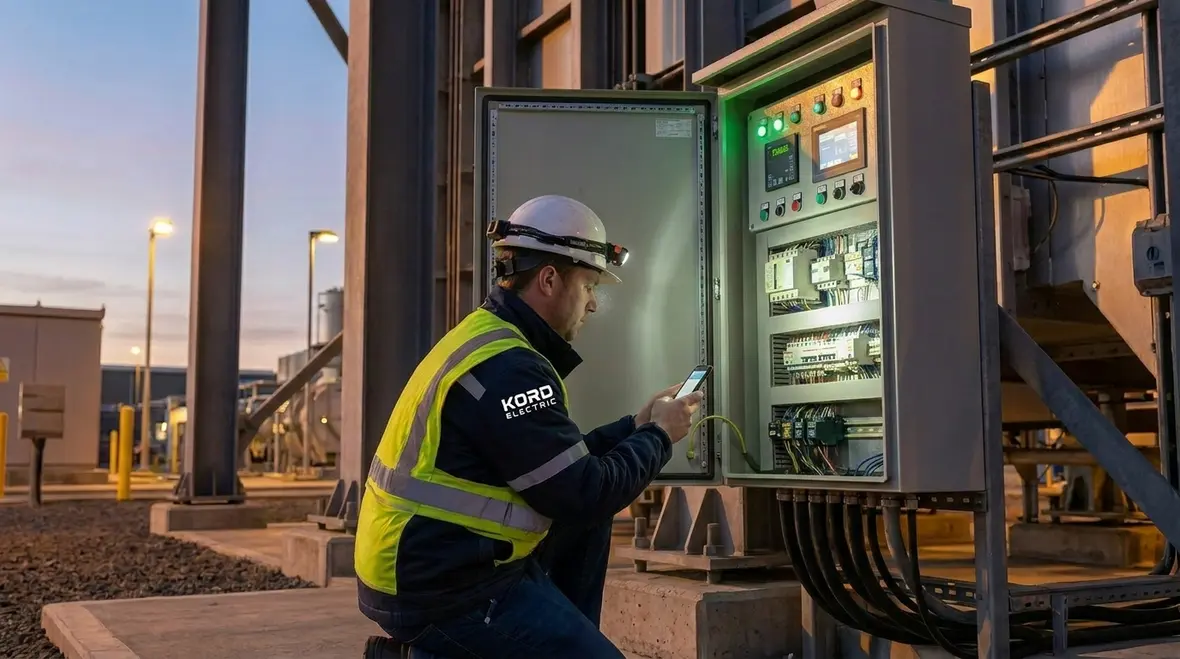
If you are still planning your upgrade path, pairing control automation with a lighting modernization strategy can unlock even more savings. For example, many owners start by evaluating fixture type, layout, and code requirements for commercial properties. Resources like Kord Electric’s Commercial Lighting Upgrade Cost Guide walk through how LED retrofits and control layers work together across large buildings. When you understand how fixtures, layout, and automation interact, you can prioritize upgrades in the zones that pay back fastest.
ROI Planning That Actually Fits Commercial Buildings
People love big numbers, so we keep ours grounded. First, we help owners and facility managers map expected savings to your building reality. Then we align those savings with your schedule, your usage patterns, and your upgrade path.
When others estimate ROI, they often stop at “lights get more efficient.” That is only one piece. Instead, we count three major levers that compound over time: energy reduction, peak demand control, and maintenance savings. Then we consider how your tenants and operations will adapt to the system, because adoption drives performance.
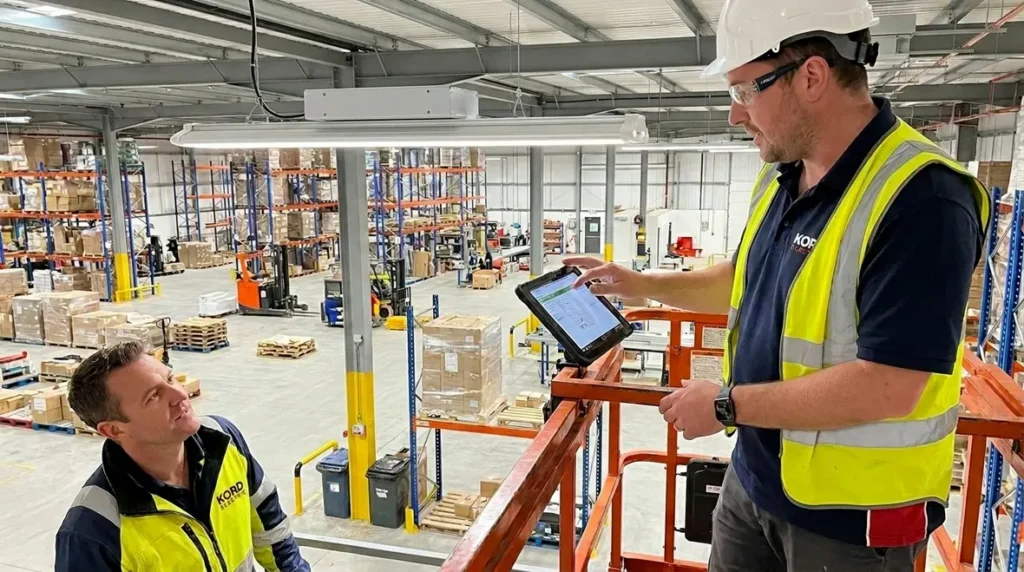
At Kord Electric, our technicians and expert service staff explain the plan step by step. We show what sensors and controls do, why zoning matters, and how commissioning helps the system meet targets after installation. In other words, we do not just hand you a controller and hope for the best. We make sure it works like you were promised, even after the first busy week.
A practical ROI roadmap also accounts for compliance. In California, for example, Title 24 and related energy codes shape what a “good” lighting upgrade looks like for commercial and industrial buildings. That is why many of our clients review automation plans alongside resources such as Kord Electric’s overview on California commercial lighting code requirements and the in depth guide to commercial lighting compliance in California. When your automation strategy supports both ROI and code requirements, you avoid surprise retrofits and approval delays later.
We also look beyond a single building. Many portfolios include multiple facilities with different ages, tenants, and layouts. Our team helps owners standardize where standardization makes sense while allowing each site to tune automation to its own patterns. That way, you can track ROI consistently without forcing a warehouse to behave like a law office or a training center to mimic a manufacturing plant.

Finally, ROI is not just a spreadsheet. It is a lived experience for your facility managers, operations staff, and tenants. If the system is confusing, if schedules are hard to adjust, or if documentation is missing, theoretical savings quickly vanish. That is why our automation projects always include owner training, clear labeling, and written sequences of operation. When your team understands what “normal” looks like, they can spot issues early and keep your ROI on track.
Scheduling, Occupancy, and Daylight Control That Stays Reliable
A lighting automation project fails for one of two reasons: it does not meet real usage, or it becomes unreliable due to poor tuning. We prevent both. First, we design for your building’s patterns, then we tune for them during commissioning.
Scheduling works best when the system matches how your property runs. For example, a multi shift manufacturing site needs different schedules than a training center. Occupancy sensing helps prevent lights from burning during breaks, meetings that move rooms, and after-hours checks. Daylight harvesting trims output near windows, which reduces energy and helps keep lighting levels comfortable as the sun changes through the day.
However, the secret sauce is the way we tune the system. We adjust sensitivity, set fade rates, verify timeout settings, and confirm that transitions feel smooth. That is where our technicians earn their pay. They test behavior in the real environment, not just in the lab, and they document the settings so the system stays stable when maintenance happens later.
And if someone asks, “Will it annoy people?” our answer is calm and direct. We set the response to be predictable, so the lights do not flicker like a cheap sci fi prop. Predictability protects comfort, productivity, and tenant trust.

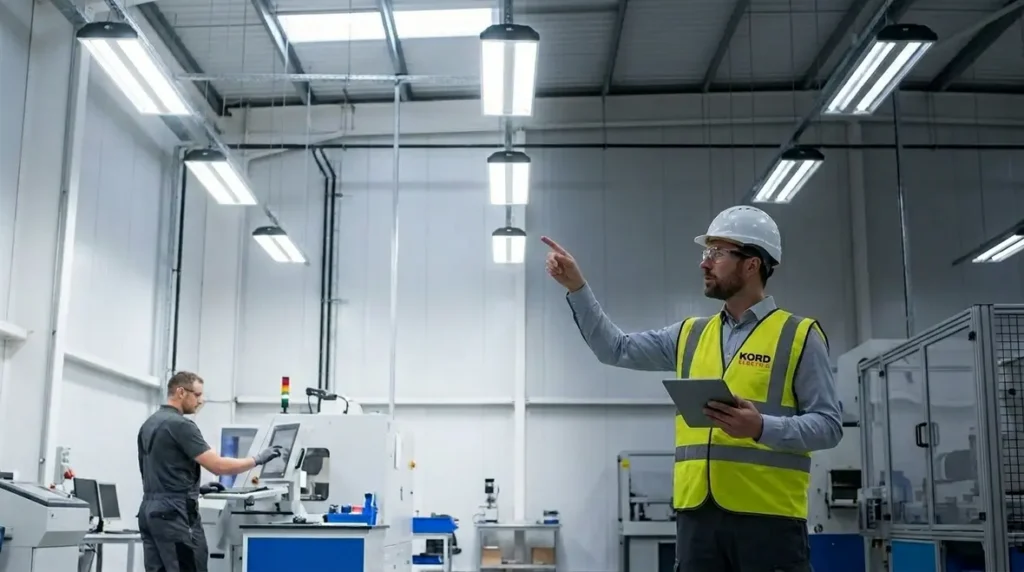
Reliable control also depends on thoughtful sensor placement and layout, especially in complex facilities. Our technicians draw on the same field experience they use in projects like industrial lighting layout optimization, where sightlines, tasks, and movement all affect how lighting should behave. That mindset carries into automation: we look at how people actually move through spaces, how doors, partitions, racks, and equipment block sensor views, and how daylight changes throughout the day.
In offices and training spaces, we often combine scheduling with occupancy “sweeps” that confirm areas empty before lights stay off for the night. In warehouses and industrial buildings, we pay careful attention to timeouts, so forklift traffic or infrequent aisle visits do not trigger constant full output. Each of these details adds up to a system that feels natural for occupants but still delivers measurable commercial lighting automation benefits on your utility bill.
Demand Charge Reduction and Peak Load Timing
Commercial and industrial facilities often feel energy cost pressure most during peak periods. Even if total monthly usage looks manageable, demand charges can quietly bully your budget. Lighting automation helps in two ways: it reduces overall connected load and it can shift light levels to avoid peak waste.
We plan controls with peak timing in mind. When your facility reaches peak demand windows, the system can apply strategies such as coordinated dimming schedules, staged startup, or zone level control. As a result, your building uses less power at the times that cost the most.
Still, this is not a magic switch. We evaluate electrical capacity, existing fixtures, and control hardware so the system supports your demand goals without creating lighting drop-offs where they do not belong. That is why we focus only on commercial and industrial facilities and major property buildings. Those sites require careful integration, and we treat integration like a craft, not a checklist.
For some properties, demand control ties directly into broader electrical preventive maintenance programs. Kord Electric’s electrical preventive maintenance services help large facilities coordinate Title 24 lighting compliance, breaker settings, and critical equipment checks. When automation projects are aligned with preventive maintenance, building teams gain a clearer picture of how lighting, HVAC, and process loads interact during peak hours.
Because demand charges often follow a “worst fifteen minutes of the month” pattern, even small improvements in peak behavior can have an outsized effect on ROI. A 10 or 15 percent reduction in lighting load during those windows—achieved through dimming, staggered start up, or task based zoning—can change the entire payback profile of an automation project. We help you identify where those realistic reductions live in your facility and design controls to hit them without undermining safety or operations.
Maintenance Savings and Lower Service Calls
Let us be honest: ROI is also about what you do not have to deal with. With better controls, lighting behaves consistently, which reduces the “mystery outage” issue that leads to repeated troubleshooting. Furthermore, automation systems can support status visibility, helping service teams locate problems faster.
When our expert service staff supports your property, they look at more than failed lamps. They also verify sensor performance, check communication health, confirm control logic, and review runtime patterns. Then we recommend targeted maintenance rather than blanket replacement.
Here is a real world truth: a system that is easy to understand gets supported quickly. That means less downtime for operations and fewer interruptions for tenants. And yes, we like fewer interruptions. If you have ever tried to chase an intermittent control fault at 6:00 PM, you understand why.
Those same maintenance principles apply to other building systems as well. In facilities where our teams manage both lighting and broader electrical preventive maintenance, we see the best results when automation, inspections, and documentation work together. Instead of reacting to outages, property managers can plan service windows, schedule upgrades, and address emerging issues long before they trigger after hours calls.
Even the best designed controls need occasional adjustment as tenants change, new equipment arrives, or building use shifts. That is why our projects include clear documentation, including control maps, naming conventions, and recommended maintenance intervals. When you know where devices live, how they are grouped, and what “good” behavior looks like, you can maintain performance without starting from scratch every time a sensor blinks.
Design, Installation, and Commissioning That Protects Performance
Even the best control technology can underperform if the design and installation do not match the building. Therefore, we treat the project like a complete system, from layout to wiring to verification. We design with zoning logic that fits the way people move, how equipment operates, and how spaces change through the day.
Next, we install with care and then commission with discipline. Commissioning checks that sensors report correctly, schedules run as expected, daylight response behaves smoothly, and occupancy settings match the space. It also confirms that control settings survive the transition from “new project” to “real operations.”
Our technicians stay involved through testing, because we know performance is not just a promise. It is a measurable outcome. Then, we help property teams understand what they see and how to adjust settings safely over time. In other words, we do not leave you holding the remote control like it is a loyalty card to confusion.
We also coordinate automation with core lighting design decisions. For instance, on projects that involve new lighting installation or significant retrofit work, we often work alongside the design team responsible for services like Lighting Installation Services. When fixture layout, wiring, and controls are planned together, the finished system uses fewer components, reduces installation complexity, and gives building teams a cleaner, more intuitive interface.
Commissioning is not a one button event. It is a process of testing, adjusting, and documenting. Our technicians walk through each zone, confirm sensor coverage, verify timeclock logic, and check emergency and egress lighting operation where required. We also simulate real world scenarios—shift changes, lunch breaks, weekend occupancy, and cleaning schedules—so the system responds correctly when real people start using the space.
What Kord Electric Delivers for Major Properties
Large buildings need consistency across sites and clarity across teams. We help commercial and industrial facilities and major property buildings implement lighting automation that scales. That includes standardized strategies where it makes sense, while still allowing customization for unique zones and usage patterns.
We also focus on communication. Property owners want predictable results and clear reporting. Facility managers want systems that do not create extra work. Operators want lighting that supports the day without surprises. We align those goals through structured planning, clean documentation, and expert service support.
As time goes on, our customers often find that automation makes energy behavior easier to manage. Instead of guessing why lighting costs changed last month, they can see how controls respond. Then they can refine settings with confidence.
For multi facility owners, automation becomes a common language across properties. A distribution center operator in one city can share settings, lessons, and improvement ideas with a sister facility somewhere else. Because the underlying control strategy is consistent, those insights travel well. The result is a portfolio that keeps improving its commercial lighting automation benefits year after year, instead of relearning the same lessons one building at a time.
Many of these properties also juggle other electrical priorities: emergency power, large HVAC loads, process equipment, and detailed compliance requirements. Kord Electric’s broader experience with code compliance, preventive maintenance, and industrial projects means your lighting automation does not get treated as a gadget. It is part of the core electrical infrastructure that keeps your business open, safe, and profitable.
FAQ
Ready to Improve ROI With Commercial Lighting Automation?
If you are operating a commercial or industrial facility and you want lighting costs to behave, not guess, talk with Kord Electric. We help you design, install, and commission lighting automation that supports your real schedules, your zones, and your peak demand goals. Then our technicians and expert service staff make sure the system stays tuned after go live. Reach out now for an assessment and we will map a practical ROI path for your property, with clear next steps you can act on.
For property teams planning broader lighting work—whether that means a fresh installation in a new building or a deep retrofit in an aging facility—our dedicated Lighting Installation Services help ensure fixtures, circuits, and controls all pull in the same direction. When you combine thoughtful design, disciplined commissioning, and ongoing support, commercial lighting automation benefits stop being a buzzword and start becoming a reliable line item in your long term ROI.