

Industrial Power Quality Solutions for Uptime
Kord Electric helps commercial and industrial facilities protect uptime with Industrial power quality solutions built for real jobsite conditions. When we monitor voltage stability, manage harmonics, and keep sensitive loads fed with clean power, we reduce nuisance trips, lower downtime, and help equipment last longer. And yet, many plants and major property buildings still treat power quality like background noise. It is not. We can identify the early signals before they turn into expensive problems, and our technicians explain what they see in plain, steady terms. As our expert service staff often tells clients, “Power quality issues do not announce themselves with a marching band. They sneak in, like a sitcom plot twist you definitely did not ask for.”
What counts as poor power quality in industrial power systems
Third person observers often think power quality means “the lights are on or off.” However, in a facility, power quality means the stability and cleanliness of electrical supply. It covers how voltage behaves under load, how frequency stays within range, how harmonic currents distort waveforms, and how sudden events affect drives, PLCs, motors, HVAC controls, and power supplies. When these things drift, equipment can misread signals, waste energy, overheat, or fail early.
To make this practical, Kord Electric staff looks for signs across the facility, not just at one panel. So, while one department may “feel fine,” another may run critical processes on equipment that responds badly to disturbances. Therefore, good Industrial power quality solutions treat the whole system like a coordinated team, not a set of isolated machines.
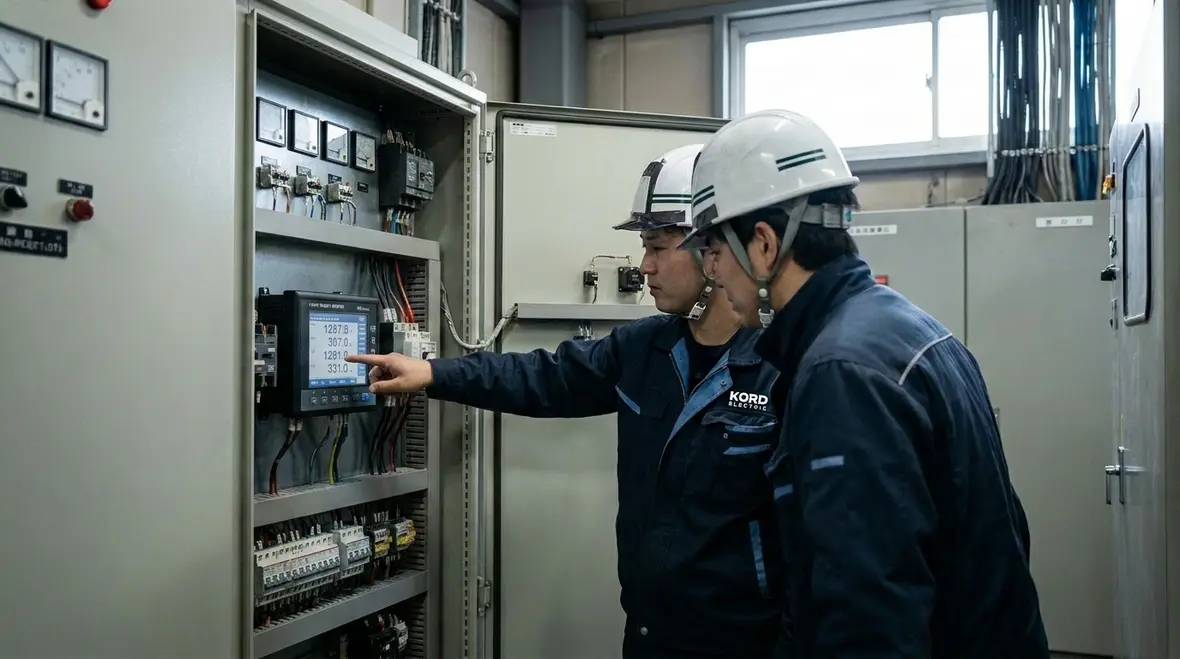
In many ways, industrial power quality is like the rhythm section of a band. When it holds steady, everyone else can perform. When it drifts or stutters, even the best equipment starts missing beats. That is why our field teams combine measurements with on-the-floor observations instead of relying on a single test point.
For facility managers who want a deeper look at how hidden issues build over time, we often connect our power quality assessments to broader risk patterns we see in large buildings, including the kinds of problems outlined in our article on hidden electrical risks in commercial buildings. Those same underlying issues often shape power quality long before an outage grabs anyone’s attention.
Why voltage sags and short interruptions cause big trouble
Voltage sags and brief interruptions can be tiny on paper and massive in operations. These events happen when a large motor starts, a feeder gets overloaded, or a utility disturbance transfers through the electrical system. Even when power returns in a fraction of a second, many modern controls do not reset cleanly. Drives can fault, relays can chatter, and manufacturing steps can drop out of sync.
At Kord Electric, our technicians often see the same pattern. A facility reports sporadic downtime, then later connects it to product changeovers or specific shifts, when motor loads kick up. That is when we explain the timeline: a sag may last only a few cycles, yet it can trigger protective devices or cause control power issues. As transition happens from monitoring to action, we map which loads ride through and which ones do not.
And yes, the plant can look like it is running normally, until you notice the “random” alarms. Random is rarely random. It usually means the power has a rhythm you have not measured.
These are the moments when “the lights did not even blink” becomes the most misleading sentence on site. Sensitive controls, drives, PLCs, and data systems can stumble long before a human eye notices anything. That is why our monitoring focuses on what equipment experiences, not just what people see.
When voltage fluctuations keep showing up around key production windows, we pair our Industrial power quality solutions with targeted services like our dedicated support for voltage fluctuations in commercial and industrial facilities, so disturbances get treated as a solvable problem instead of a mystery that teams simply “work around.”
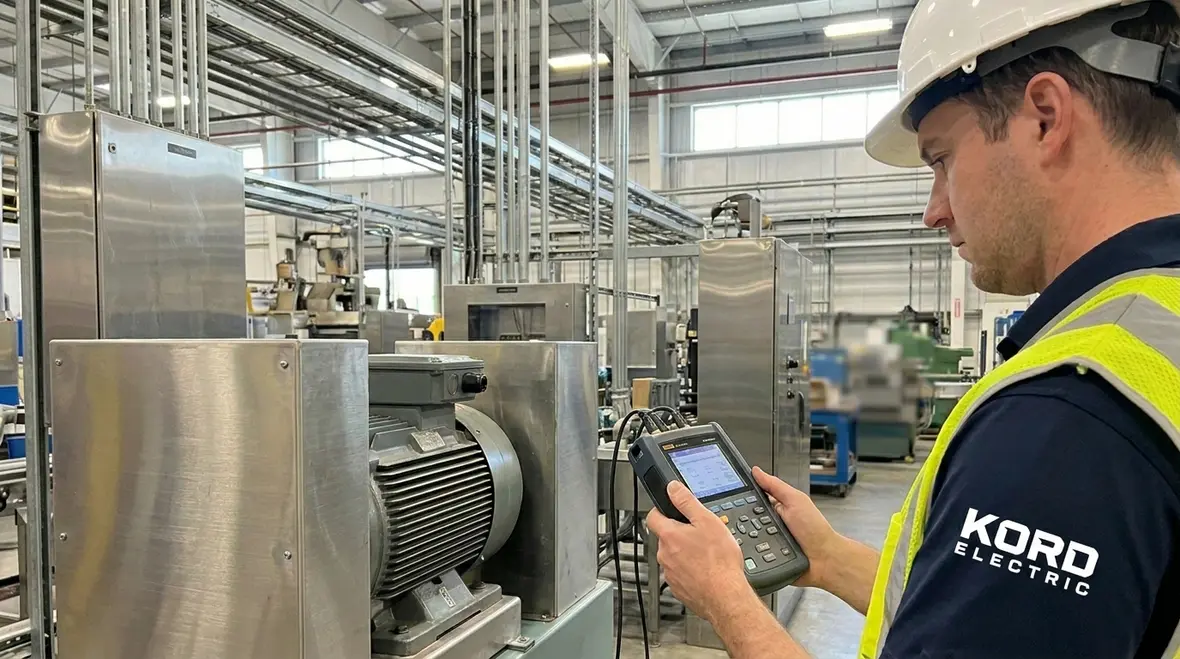
In practice, that means we log events during motor starts, line transitions, and changeovers, then overlay those events with your actual operating schedule. The result is a clear map of which circuits and processes feel every small sag and which ones ride through without complaint. From there, we can design fixes that actually match your reality.
Harmonics: the invisible load that heats everything
Harmonics come from nonlinear equipment such as variable frequency drives, rectifiers, switching power supplies, and certain types of lighting and UPS systems. These loads do not draw current in a clean sine shape. Instead, they push distorted current into the system. As a result, you can see overheating in transformers, nuisance breaker trips, elevated neutral currents, and noisy operation in equipment that should run quietly.
In many commercial and industrial facilities, harmonics also reduce power factor and increase losses. Therefore, you may feel the impact as higher operating costs, faster insulation aging, and more frequent maintenance calls. Our expert service staff explains it using simple cause and effect. If the current waveform is distorted, the system experiences extra stress. Then, the stress shows up as temperature, vibration, and premature component wear.
For major property buildings, harmonics can also interfere with grounding performance and communications equipment. So, while the problem may start in power electronics, it can spread into the broader electrical environment.
One of the most frustrating aspects of harmonics is that they often ride along with otherwise efficient equipment. Variable frequency drives, LED lighting, and modern power supplies bring real benefits, but if they are not integrated thoughtfully, they quietly tax transformers, feeders, and neutrals. We frequently uncover panels that “look fine” yet run hotter than they should, solely because distorted currents never got a proper mitigation strategy.
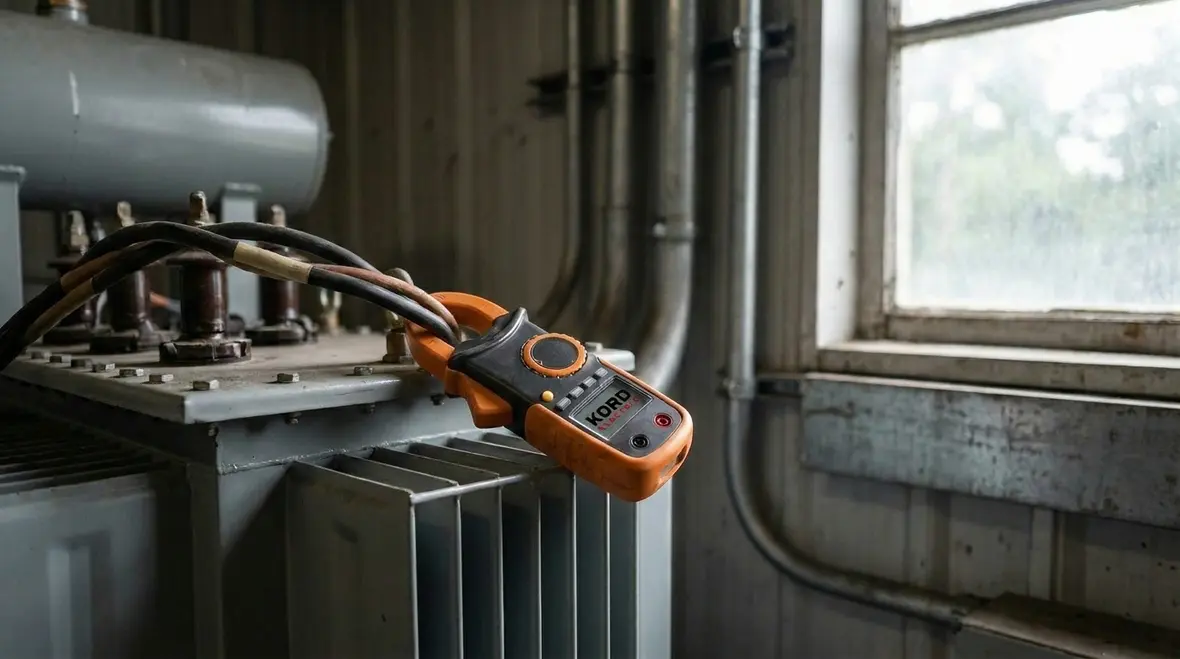
Good Industrial power quality solutions do not treat harmonics as an abstract math problem. They focus on concrete outcomes: cooler equipment, fewer unexplained trips, quieter operation, and longer life for assets that cost real money to replace. That is where data, field experience, and maintenance history all converge into a practical plan.
Watch for overheating, flicker, and recurring nuisance trips
Some of the clearest signs of poor power quality appear where people can feel them. Overheated panels, warm neutral conductors, browned bus bars, and equipment that runs hotter than expected are practical clues. In addition, lighting flicker can point to voltage instability or harmonics. Even when the flicker seems minor, it can reflect waveform issues that also affect sensitive controls.
Nuisance trips also matter. If breakers or protective devices trip at odd times, or if they trip after equipment starts and stops, the electrical system likely struggles with transient conditions. Meanwhile, motor drives may report faults, and power monitors may show events that do not correlate to any one machine.
Kord Electric helps teams connect these dots. Our technicians do not stop at a single symptom. Instead, they trace conditions back to source loads, distribution paths, and the way the facility manages grounding. Then, we explain how fixes fit the actual problem, not a generic template. Because replacing a component without correcting the power issue can feel like changing a smoke alarm while the stove keeps catching fire.
We also encourage facility leaders to pay attention to patterns in maintenance tickets and operator comments. A line that “just runs hot,” a breaker that “occasionally trips for no reason,” or a section of lighting that “has always flickered a little” are not personality traits for equipment. They are early warnings that the electrical system needs attention before a small annoyance turns into a full outage.
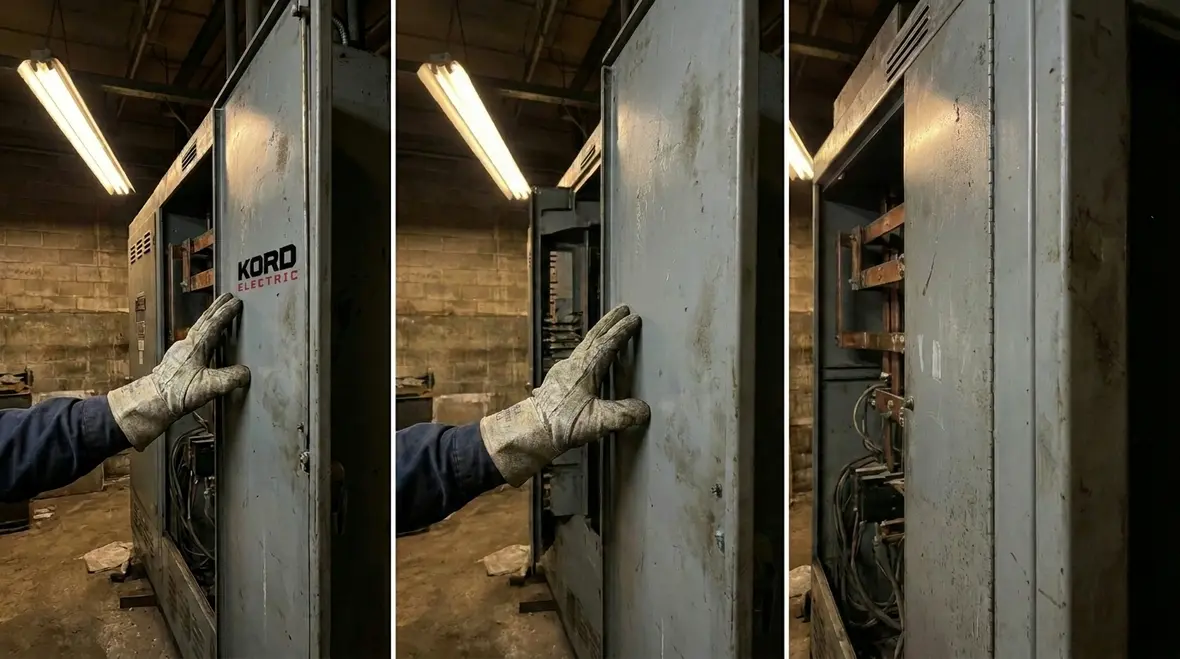
When we pair those field observations with structured inspection programs like the ones outlined in our commercial and industrial electrical maintenance plans, power quality stops being an afterthought and becomes a normal part of how the facility protects uptime.
How we spot hidden electrical risks inside major facilities
Some risks hide in plain sight. We often reference what we have published about hidden electrical risks in commercial buildings, because the same patterns show up in industrial environments once you look closely. For example, undersized conductors, poor terminations, and overlooked maintenance can turn normal operating cycles into repeated stress events. Likewise, when facilities use aging panels, they sometimes miss how connection quality impacts voltage stability and transient behavior.
Our approach combines field observations with measured data. First, our team checks for signs like loose lugs, worn insulation, and uneven temperature patterns. Next, we evaluate how the electrical system handles load changes. After that, we review the distribution architecture and protective settings that can amplify disturbance rather than contain it.
Then, we step back and talk about the “why” in a calm, clear way. Many facility leaders ask why a power issue shows up only during certain production windows. The answer usually ties back to load stacking, start sequences, or how distributed assets share feeders. In other words, the facility is not failing randomly. It is responding to physics.
In some facilities, that explanation also includes how power quality interacts with data centers, building systems, or specialized equipment. When a site has mission critical loads, we extend the same disciplined thinking we use in our work on data center electrical requirements for uptime, so those sensitive systems are treated as part of the bigger industrial picture, not as separate islands of risk.
Industrial power quality solutions we recommend for measurable results
When Kord Electric designs Industrial power quality solutions, we focus on what you can verify after the work: fewer faults, less downtime, stable voltage behavior, and reduced stress on equipment. We also prioritize solutions that match the facility’s load profile, utility interface, and criticality of equipment.
Typically, we consider a layered strategy. First, we address voltage quality with monitoring and event analysis so we understand how sags, swells, and interruptions behave across the system. Next, we manage harmonics with targeted mitigation approaches designed around the specific sources. Then, we strengthen system resilience for sensitive loads through proper protection and power conditioning where it matters most.
Because different parts of a plant carry different risk, we do not treat the facility as one uniform circuit. Our technicians help others see where to spend first and why. That means our expert service staff often recommends upgrades that reduce the root cause, not just the symptom. In plain terms, we help you stop paying for problems that you can actually prevent.
If someone says, “We already have breakers, so we should be fine,” our staff smiles. Breakers protect from overcurrent, yes. They do not magically clean up distorted current or eliminate the brief disturbance that causes a drive fault. Power quality needs its own tools.
From there, we align corrective work with structured service programs, including offerings like electrical preventive maintenance for commercial and industrial facilities. That way, improvements to Industrial power quality solutions do not stand alone; they become part of an ongoing plan that keeps your system strong as loads, tenants, and operations evolve.
FAQ about industrial power quality signs
Conclusion: let us help your facility run on clean power
When industrial power quality issues grow quiet, they rarely stay small. They hide in nuisance trips, overheating, and “random” downtime that steals production and frustrates teams. Kord Electric helps commercial and industrial facilities and major property buildings identify the real signs, then apply Industrial power quality solutions with measurable goals. If you want fewer faults and calmer operations, we invite you to contact us for a power quality assessment. Let us turn mystery outages into clear data and reliable performance.
If your facility also needs coordinated support beyond power quality—such as system-wide upgrades, targeted troubleshooting, or structured maintenance—we can connect your assessment to related services like our dedicated electrical preventive maintenance programs. Together, they create an uptime strategy that protects your operations instead of simply reacting when something breaks.


