Data Center Medium-Voltage Distribution: Design, Safety & Reliability
Data Center Medium-Voltage Distribution: Design, Safety & Reliability is where power goes from “available” to “reliable,” especially when a data center cannot afford downtime. At Kord Electric, we guide commercial and industrial facilities through MV distribution planning that supports redundancy, clean protection, and practical safety. Then we back that planning with field work led by our technicians and expert service staff, who explain what they see, why it matters, and how the system will behave in real life. In this article, we walk through how MV distribution gets designed for stability, how protection coordination gets handled like grown up engineering, and how safety gets built into every step. And yes, we do tell a joke now and then, because even serious electrical rooms deserve a little humanity.
1) Why MV distribution sets the tone for uptime
In a data center, power does not fail politely. It fails fast, and it fails under stress. That is why the Data Center Medium-Voltage Distribution: Design, Safety & Reliability approach starts with the basics that actually prevent chaos: proper voltage levels, correct feeder layout, and a switchgear lineup that can isolate problems without killing the whole facility. Our team builds plans that align with how the load changes over time, not just how it looks on day one.
To keep reliability high, we focus on distribution paths that reduce single points of failure. Then, we coordinate protective devices so the system clears faults in the right order, at the right time, with the right selectivity. If you have ever watched a stack of dominos fall, you understand the goal. We want the fault to be the one domino that falls, not the entire line.
2) How we design MV distribution for redundancy without waste
Most commercial and industrial owners want redundancy. However, they also want to avoid paying for redundancy they cannot use. So we design around practical redundancy targets, based on your utility interface, generator strategy, and the critical load tiers your facility requires.
In many modern designs, engineers use multiple MV feeders and sectionalizing schemes that let sections operate independently. That way, a maintenance event stays contained. Meanwhile, protection settings and bus arrangements help the system ride through abnormal events without unnecessary trips. As our expert service staff explains during commissioning, you do not just build a one-time design. You build a system that must work through monitoring, testing, and future expansion.
Then we account for growth. Data centers expand quickly, and the MV distribution should not become an obstacle. We evaluate spare capacity, physical routing, and future reconfiguration paths so the electrical plant can evolve without disruptive rebuilds every time the workload scales up.
3) What “safety first” means in MV substations and distribution
Safety does not happen at the end. It gets built into layout, labeling, and operating procedures from the start. When we support a data center, we treat MV distribution as a system that people will operate under pressure, during emergencies, and during routine switching. So we design for safe access, clear boundaries, and dependable interlocks where they belong.
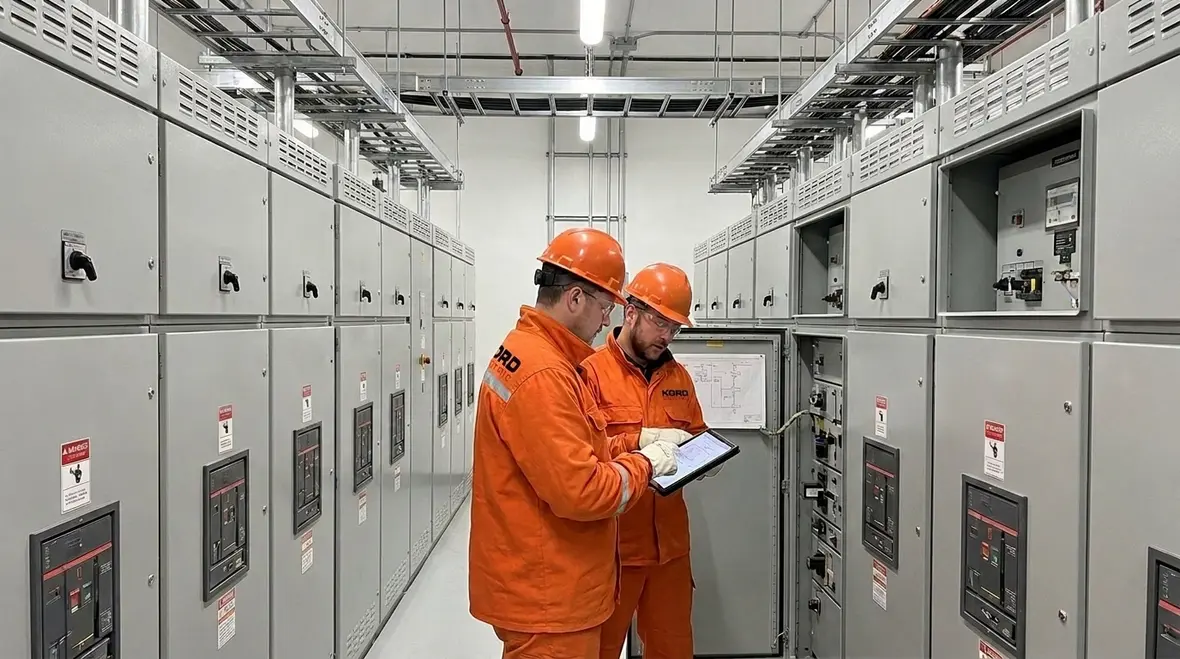
Our technicians and expert service staff also emphasize operational clarity. We help teams understand switching sequences, proper lockout and tagout practices, and the way protection devices behave during faults and isolation. In other words, safety becomes a shared language, not a printed policy no one reads.
We also pay attention to arc flash considerations and how equipment layouts influence incident energy risk. Then we support compliance with practices that reduce the chance of unsafe surprises. If your facility is a high-stakes environment, the electrical design should behave like a well-trained guard dog: calm, ready, and not eager to bite.
4) Protection coordination: the invisible choreography that matters
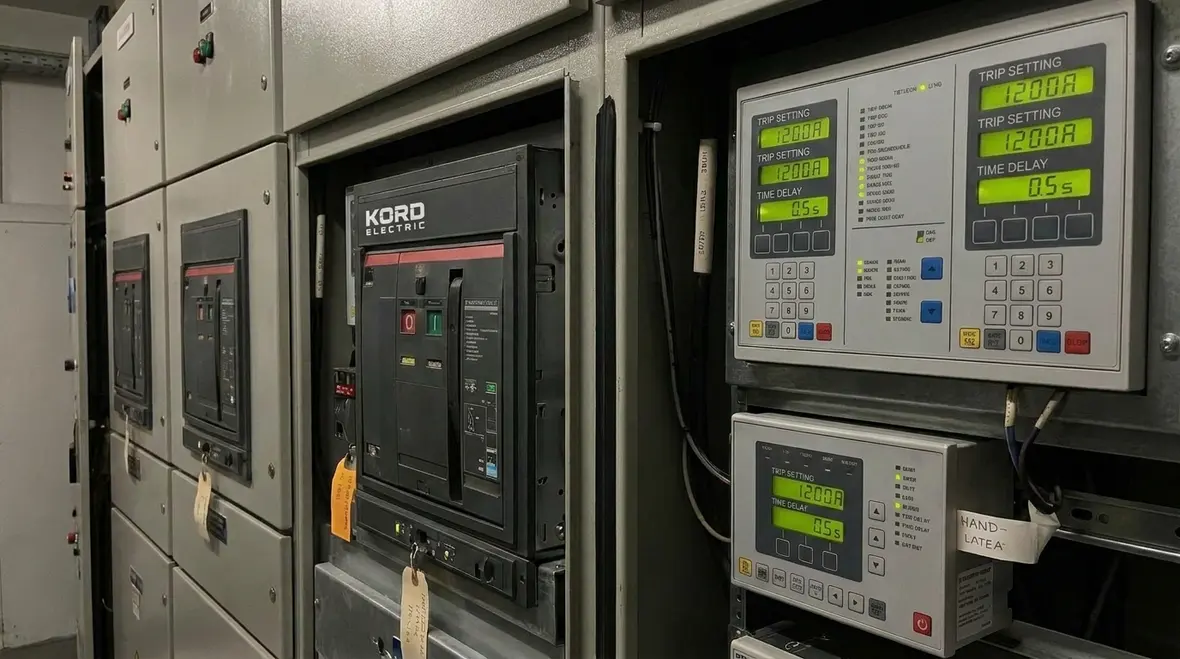
Protection coordination is where reliability either gets earned or lost. An MV system needs clear, predictable response to faults: detect the event, isolate the faulty section, and keep power flowing to healthy loads. When coordination fails, a small fault can cause a wider outage. That is why we spend time on settings and studies that map fault behavior across the network.
In our process, we help align protective devices across the MV system, including feeder breakers, bus protection schemes, and upstream/downstream coordination with utility interface points. We also evaluate how protection behaves for different fault types and locations. Then we verify that the sequence of operations matches the design intent.
Our expert service staff often explains this in a down-to-earth way during commissioning. They do not just say “it is coordinated.” They show how the time curves and pickup logic work, and how selective clearing limits the outage footprint. And yes, sometimes the best explanation includes a metaphor, because if you cannot picture it, you cannot trust it.
5) Bus design, switchgear strategy, and maintainable layouts
Once the protection philosophy is set, the physical system must support it. Bus configuration, breaker arrangements, and switchgear selection all affect how the MV network can operate under normal load, under maintenance, and during faults. At Kord Electric, we look at how the layout supports isolation without forcing complete shutdown.
That means we think through practical maintainability. Can a section be isolated safely? Can you test equipment without taking the entire distribution system offline? Can you reconfigure for maintenance while still feeding critical loads? These are questions that owners often ask once, after a project starts. We encourage them early, because it saves time and money later.
We also consider equipment lifecycle realities. Components will need inspections, testing, and sometimes replacement. So we design routes, clearances, and access patterns that support safe service. Our technicians appreciate this mindset because it makes the field work smoother, safer, and more predictable.
If you are comparing options or planning a larger electrical backbone for your facility, our companion article on data center electrical distribution design for reliability goes deeper into how topology and layout choices shape real-world uptime.
6) Reliability testing, commissioning support, and what our teams verify
Design is only half the story. Commissioning proves whether the MV system behaves the way the studies predicted. During commissioning and pre-energization, we focus on the details that prevent future headaches: verification of settings, correct device labeling, functional checks for interlocks, and confirmation that protective schemes operate as intended.
We also test operational sequences tied to safety. That includes correct breaker operations, correct annunciation behavior, and verification of control schemes used during abnormal conditions. Our expert service staff then trains facility staff so they can run the system with confidence.
To make the process calmer and more controlled, we document results and help owners maintain a clear record of what was tested and when. Then we support service planning so the facility can run inspections and maintenance using schedules tied to actual equipment conditions, not guesswork. Because in a data center, “we will see later” becomes “we regret now.”
If you want to see how this commissioning mindset connects with broader upkeep in critical environments, you can pair this perspective with Kord Electric’s guides on electrical maintenance and system uptime for commercial facilities, which extend the same thinking to panels, feeders, and distribution at building scale.
7) Thermal, load planning, and future expansion in commercial and industrial buildings
Electrical reliability involves heat as much as it involves logic. MV distribution must handle load growth while staying within safe operating temperatures for switchgear, bus structures, and associated components. We review thermal behavior and consider the impact of fan systems, ventilation, ambient conditions, and load profiles that change across the year.
Then we plan for expansion. Many data centers add racks, upgrade power density, and shift load patterns. So the MV distribution design should leave room for future feeders, additional transformers, and reconfiguration steps. Our team helps owners plan those changes so the facility does not rely on expensive “stop the world” upgrades every time capacity rises.
As we explain during design reviews, you should treat expansion like a roadmap, not a surprise detour. When the MV distribution is prepared, growth becomes a series of planned steps rather than emergency moves that feel like late season teleportation in a sci-fi show.
For facilities that span multiple buildings or campuses, this Data Center Medium-Voltage Distribution: Design, Safety & Reliability mindset also aligns well with Kord Electric’s broader Los Angeles County electrical services, which support panels, switchgear, lighting, and emergency response under one coordinated umbrella.
8) Quick FAQ for featured snippets
Below are quick answers to common questions that come up when teams start focusing on Data Center Medium-Voltage Distribution: Design, Safety & Reliability and how it shapes uptime.
9) Final thoughts, service coverage, and a call to action
If your data center needs MV distribution that supports uptime, safe operation, and reliable protection, Kord Electric is ready to help. We design with redundancy in mind, coordinate protection for predictable fault clearing, and support commissioning with technicians and expert service staff who explain the system in plain language. Then we help commercial and industrial facilities plan for growth without turning power upgrades into emergency events.
For organizations operating across Southern California, our broader Los Angeles County electrical services bring the same reliability mindset to panels, lighting, emergency response, and long-term maintenance. That way, your Data Center Medium-Voltage Distribution: Design, Safety & Reliability strategy stays aligned with how the rest of your electrical infrastructure is built and supported.
Reach out to Kord Electric today and let us map your next MV distribution project from design to safe, confident operation. Whether you are planning a new data hall, upgrading aging switchgear, or aligning your electrical plant with a higher uptime target, our team can help you design, test, and maintain medium-voltage systems that stay steady when everything else gets noisy.
To take the next step with a team that focuses on large facilities and critical operations, explore our dedicated commercial and industrial service offerings and schedule time to review your current MV distribution one-line, protection settings, and future expansion plans. A thoughtful design today becomes the quiet, reliable backbone that keeps your servers, staff, and customers connected tomorrow.