Industrial Electrical Breakdowns: Common Causes & How to Prevent Them
Industrial electrical breakdowns rarely arrive with a dramatic soundtrack. They usually show up quietly at the worst time, then demand attention like a celebrity insisting on “special treatment.” At Kord Electric, we deal with industrial electrical repair for common issues in commercial and industrial facilities and major property buildings, and we have seen the patterns that lead to outages, damage, and downtime. In this guide, we lay out the most common causes of industrial electrical breakdowns and the practical ways to prevent them, so your systems stay stable when production, security, and safety matter most.
To be clear, we do not guess. Our technicians and expert service staff inspect, test, and explain what they find in plain language. Moreover, we help facilities plan repairs and upgrades before problems grow teeth. So, let us get methodical, calm, and a little humorous where the situation allows.
Signs an Electrical Problem Is Brewing in Your Facility
If a facility experiences repeated tripping, unusual heat, or sudden voltage dips, the issue often starts earlier than anyone admits. First, equipment can run “just fine” while quietly aging, and then it fails fast once stress stacks up. Next, you may notice flickering lights in corridors, sluggish motors, or breakers that feel warm to the touch. However, the real clue is usually in the system behavior, not in one dramatic event.
Our technicians often compare these clues to a warning light on a dashboard. It is not always the final disaster, but it tells you the car is about to become expensive. Therefore, we focus on consistent symptoms such as:
- Frequent breaker trips, especially at predictable times
- Burn marks, discoloration, or a persistent electrical odor
- Motor performance changes, like slower starts or overheating
- Panel or disconnect cabinets that run hot
- Voltage imbalance across phases
Once we identify patterns, we move to the next step: determining what kind of industrial electrical breakdown you are facing and why it is happening. For many facilities, the cause is not random. It is rooted in design limits, wear, or maintenance gaps that slowly build up.
Why Industrial Electrical Breakdown Causes Repeat Themselves
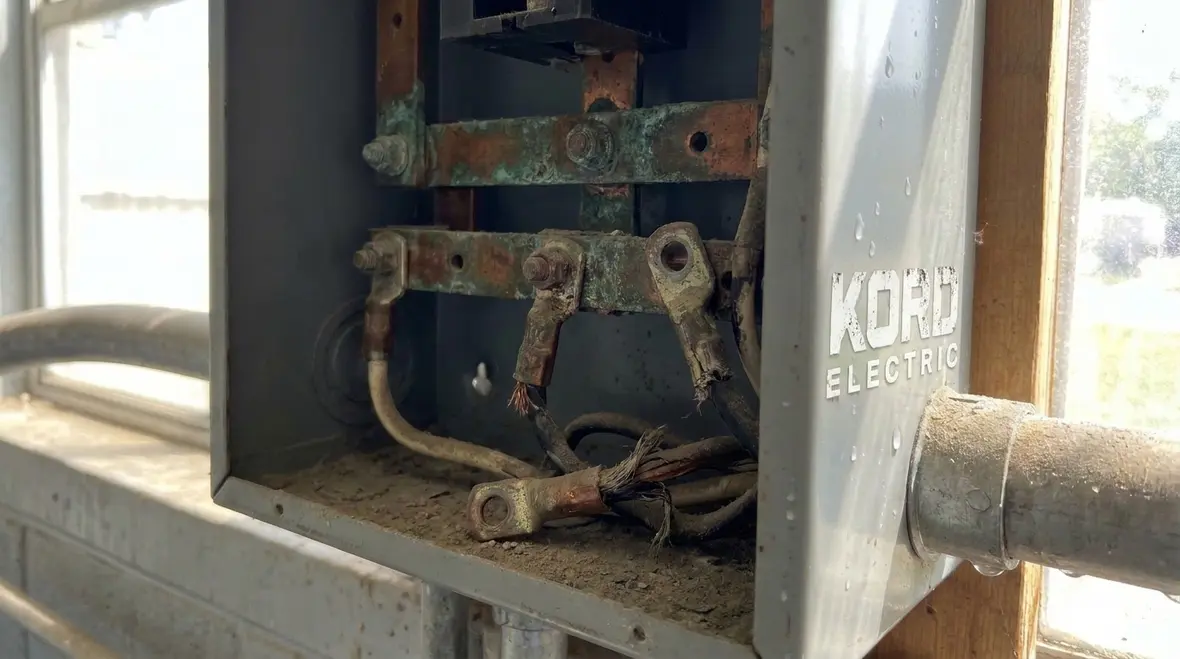
When breakdowns repeat, we treat it like a story with the same plot twist. The characters change, but the cause stays familiar. In many commercial and industrial settings, the breakdown triggers fall into a few buckets: overloading, poor connections, aging components, water and dust intrusion, and wiring defects. Also, power quality issues like harmonics can create extra heat and stress even when loads seem normal.
Here is what we commonly see in the field. First, equipment draws more current than the system was designed to handle, sometimes due to process changes. Second, a loose connection creates resistance, and resistance creates heat. After that, the heat damages insulation and leads to failure. Third, environmental factors like moisture or condensation accelerate corrosion in enclosures and terminations.
Now, add electrical noise to the mix. For example, drives, HVAC controls, and modern electronics can introduce harmonics that strain transformers and neutral conductors. Then the system becomes a crowded room where every guest talks at the same time. You can run the event, but the noise eventually causes problems.
Our expert service staff explains these dynamics clearly. Instead of vague statements like “the electrical looks bad,” we show the findings, connect them to the failure mode, and recommend actions that match the facility’s risk level and operating schedule.
Top Failure Sources We Test First
Even when customers report a “mystery outage,” the system usually gives us a trail. Therefore, we start with tests that reveal the health of power delivery before we touch expensive equipment. For industrial electrical repair for common issues, the order matters, because testing saves time and prevents unnecessary part swapping.
In practice, our team often checks the following high impact sources:
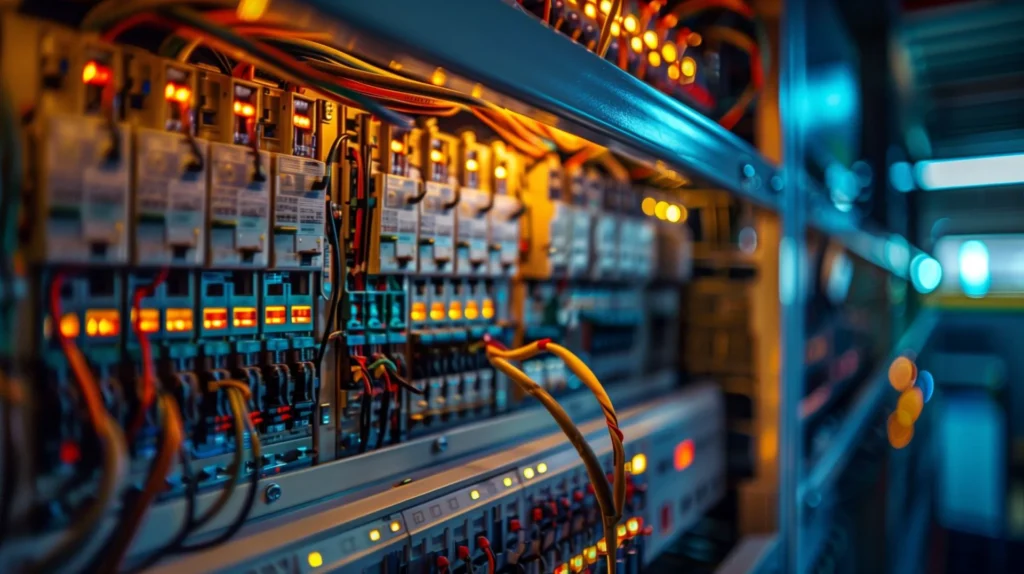
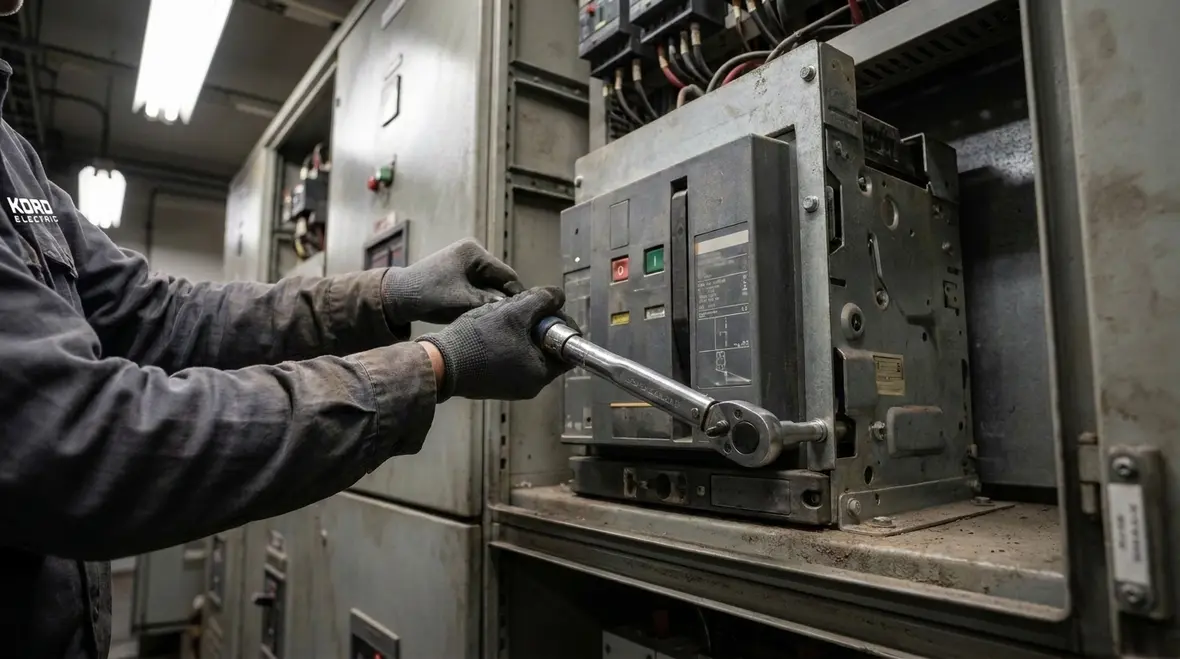
- Switchgear and panels
We verify breaker condition, torque integrity, and signs of arcing or contamination. - Terminations and bus connections
We look for heat damage and measure where resistance is building. - Motors and starters
We inspect for insulation breakdown, bearing issues, and abnormal current draw. - Transformers
We evaluate load condition, temperature rise, and symptoms tied to power quality. - Grounding and bonding
We confirm the path that protects people and equipment during faults.
Then we narrow it down to the root cause. For example, a recurring breaker trip may not originate in the breaker at all. It may start at a connection, a cable fault, or a motor control failure upstream. Meanwhile, a heating issue could come from overload, harmonics, or a term that tightened imperfectly long ago.
To keep things business casual but honest, we tell facilities what the data says and what it does not say. That approach helps owners make decisions with confidence, not guesses.
How to Prevent Industrial Electrical Breakdown Failures Before They Hit
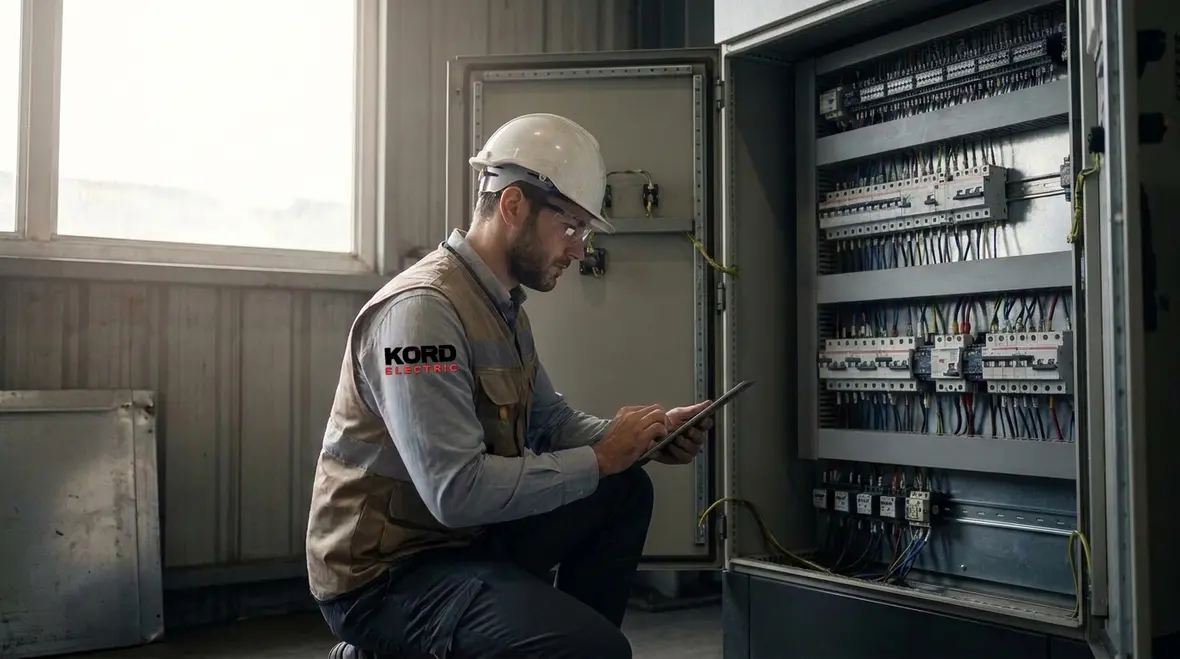
Prevention works, because most failures do not appear overnight. However, prevention requires consistent habits, not random heroics. At Kord Electric, we help facility managers reduce risk through planned inspection, targeted testing, and smart maintenance that fits commercial and industrial operations.
First, we recommend routine electrical inspection schedules that match the load profile and environment. High dust, humidity, or vibration locations need more attention. Next, we emphasize torque checks and connection integrity, because looseness grows quietly and heat follows. Then, we incorporate power quality monitoring when harmonics or sensitive processes exist.
Also, we encourage load planning. If production increases or equipment changes, the electrical system should be evaluated. Otherwise, you end up in the classic situation where “we did not think it would draw that much.” That phrase has started more than one costly fire drill.
Practical prevention steps include:
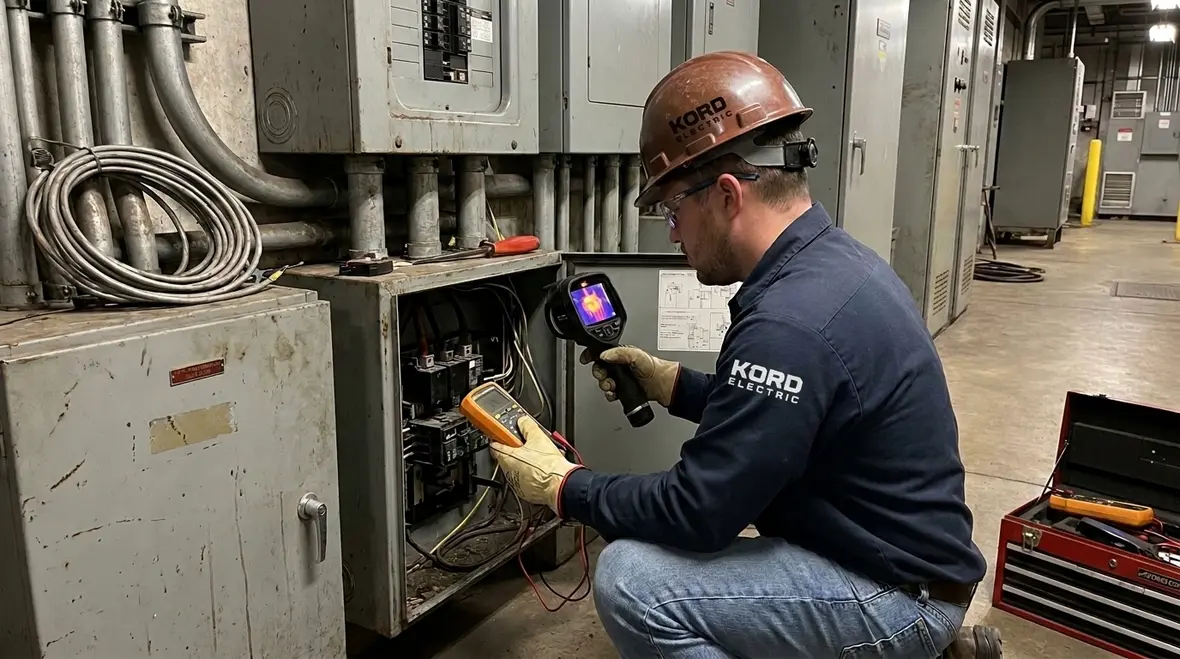
- Thermal imaging during scheduled conditions to find hot spots early
- Trend monitoring for current, voltage, and power factor
- Periodic breaker maintenance and verification
- Moisture control measures in enclosures
- Correct labeling and verification for wiring paths and phases
- Updates to panels and components when they reach service life limits
Our technicians document findings, explain what matters, and recommend the next action. Moreover, we coordinate work so facilities keep running. We respect production schedules, tenant needs, and safety requirements because downtime never stays cheap.
What Industrial Electrical Repair Looks Like When We Arrive
When a problem escalates, facilities need fast response without shortcuts. We show up with a process. First, we contain the risk, then we gather data, then we repair or replace with the correct approach. So even if the outage feels urgent, our plan stays calm and deliberate.
Our expert service staff starts by reviewing the event timeline and related maintenance history. Then they perform on site checks, including visual inspection, electrical measurements, and component evaluation. After that, they explain the failure chain in straightforward terms and outline the repair scope. If parts require procurement, we provide a realistic schedule and backup planning.
In many industrial electrical breakdowns, the repair includes more than fixing what failed. We also address the conditions that caused the failure. For example, if overheating came from a connection issue, we repair the connection properly and then verify the environment, torque settings, and load conditions. If moisture contributed, we fix the termination and improve sealing or drainage methods.
And yes, sometimes we find that the system is not “broken,” but it is operating in a way that guarantees future trouble. In those cases, we recommend proactive corrections. That is less dramatic than an emergency call, but it is usually far less painful.
Power Quality, Overload, and Heat: The Hidden Culprits
Many facilities focus on visible damage, like a burned component or tripped breaker. Yet industrial electrical breakdown prevention often depends on hidden culprits that build up over time. Power quality problems such as harmonics can raise transformer temperatures, increase losses, and stress neutral conductors. Overload, even moderate overload, can reduce component life faster than most teams expect.
Then heat becomes the main character. Heat accelerates insulation aging, loosens connections, and increases the chance of arcing faults. As a result, a system that seems to “work” can still be in a slow decline. Moreover, heat can transfer through enclosures, raising temperatures even in parts that are not directly overloaded.
Our team uses measurements and inspections to separate symptoms from causes. For example, if a building experiences nuisance tripping, we evaluate both fault conditions and steady state load. If a motor repeatedly overheats, we inspect mechanical load and electrical supply quality. In short, we treat the electrical system as a connected network, not a collection of isolated parts.
When we explain results, we connect them to the facility’s operations. That means we talk about the equipment that drives the load, the periods when the issue repeats, and the upgrades that match the building’s future needs.
Digging Deeper into Industrial Electrical Breakdowns: Common Causes & How to Prevent Them
Industrial Electrical Breakdowns: Common Causes & How to Prevent Them is not just a catchy phrase. It sums up what we see across commercial and industrial facilities when electrical systems are pushed hard, upgraded in pieces, or left running past their intended service life. The underlying causes stay remarkably consistent: overloaded panels, under-sized conductors, loose terminations, contaminated enclosures, aging insulation, and power quality problems that get shrugged off until they turn into a shutdown.
Preventing those issues starts with knowing how your system is actually used today, not how it was drawn on a one line years ago. When new conveyor lines, HVAC upgrades, EV chargers, or process equipment are added, the current paths, fault levels, and thermal loading across your infrastructure change. That is why pairing inspections with a focused assessment, like an industrial electrical system troubleshooting review or a capacity check, makes such a difference. It turns vague concern into specific, prioritized actions.
From there, the prevention side is about discipline, not drama: keeping connections tight and clean, verifying protective devices operate as intended, correcting load imbalances, addressing harmonics where drives and sensitive electronics live, and planning panel or feeder upgrades before growth corners you. When these habits become routine, Industrial Electrical Breakdowns: Common Causes & How to Prevent Them stops being a warning and instead becomes a quiet checklist that your team stays comfortably ahead of.
Frequently Asked Questions
Call Kord Electric When Downtime Threatens Your Operations
If your facility shows warning signs or you want to prevent the next outage, Kord Electric is ready. Our technicians and expert service staff explain findings clearly, test the right components, and complete repairs with a plan that fits commercial and industrial needs. Instead of reacting after failure, we help you act early through inspections, power quality evaluation, and targeted corrections. Contact us now to schedule an assessment and protect your electrical system before it turns into a production problem.
For facilities across the region, especially those operating in and around Los Angeles, pairing this kind of preventive mindset with dedicated regional support makes a measurable difference. When you need a team that understands industrial timelines, shift work, and real-world load demands, explore how our Los Angeles County electrical services support commercial and industrial sites through troubleshooting, upgrades, and long term reliability planning.
If your equipment has already started acting up and you are facing nuisance trips, overheating panels, or unexplained shutdowns, do not wait for a full outage. Connect this guide with focused troubleshooting and repair support by reviewing our dedicated resource on industrial repairs here: industrial electrical repair for common issues. Together with the strategies in this article, it gives your facility a practical playbook for getting back to stable, predictable operation.