Data Center Mining Electrical Design: Power Distribution & Infrastructure
Data Center Mining Electrical Design: Power Distribution & Infrastructure is the backbone that keeps a modern mining focused data center running with speed, safety, and control. At Kord Electric, we plan and build electrical systems for commercial and industrial facilities and major property buildings, and we do it with the same mindset whether the load is a server farm, a high density rack, or a power hungry mining hall. That is why we place reliability first, then we size distribution paths, protect equipment, and manage redundancy so the lights stay on when reality gets loud. In fact, we tell clients the same thing our expert service staff says in the field: power design is not a one time purchase, it is a daily promise, and promises get tested.
If you are comparing mining focused builds with broader data center strategies, you can also look at how we handle upstream reliability in our companion article on data center electrical distribution design for reliability, where we walk through how commercial distribution choices support uptime before the first rig spins up.
What a reliable mining power plan must include
When others treat mining power as an afterthought, we treat it like a mission critical system from day one. Data center mining electrical design cannot be guesswork because the loads are dynamic, the equipment is sensitive, and downtime costs real money. Therefore, we start by mapping the full power path from utility intake to final distribution, and we confirm how loads change across the day, across seasons, and across expansions.
Next, we define key reliability targets. Then we match those targets with real design choices: how we split feeders, how we route cabling, what level of redundancy makes sense, and how we protect against faults without creating nuisance trips. In other words, we do not build a system that just survives a test. We build one that survives the long shift.
To keep the design practical, our technicians and expert service staff explain the plan in plain language. One of our people will stand beside the one line diagram and calmly say, “This is where a failure would happen, and this is how we prevent it from turning into a disaster.” And yes, we make sure everyone understands it, because confusion is the only thing that should be put on mute.
Designing power distribution for uptime and safe fault control
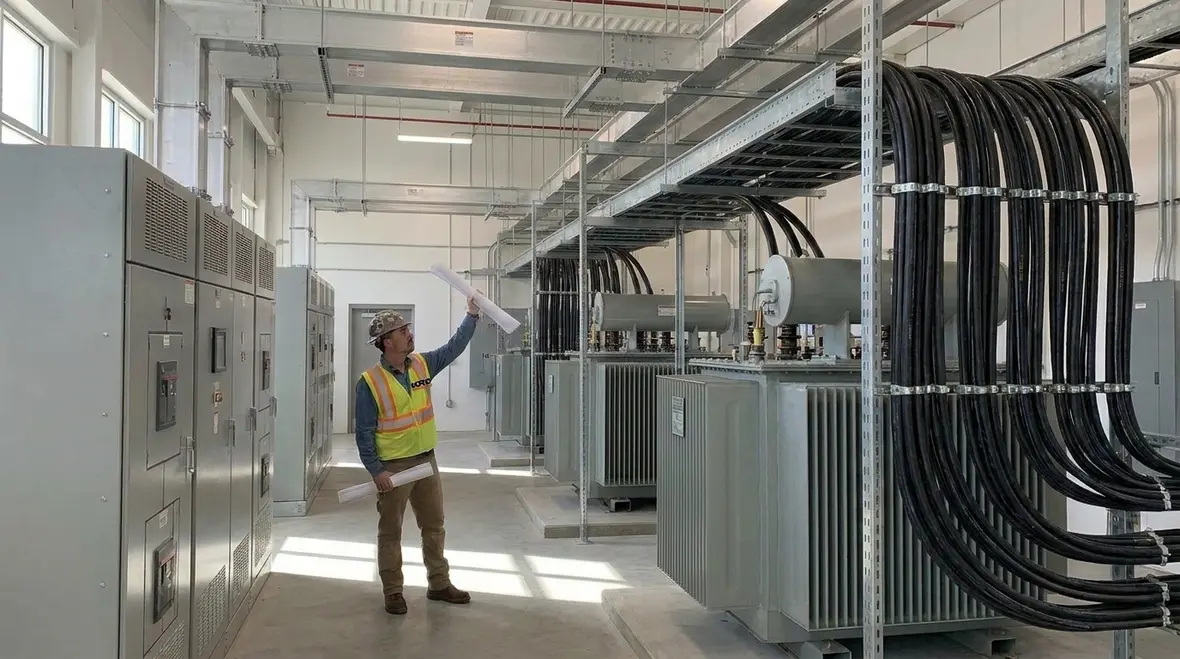
Distribution design is where reliability becomes real. We build power distribution & infrastructure around selectivity, coordination, and stable voltage. That means protective devices work in the right sequence and in the right zone. As a result, a fault clears fast and local, instead of spreading through the building like a rumor at a conference.
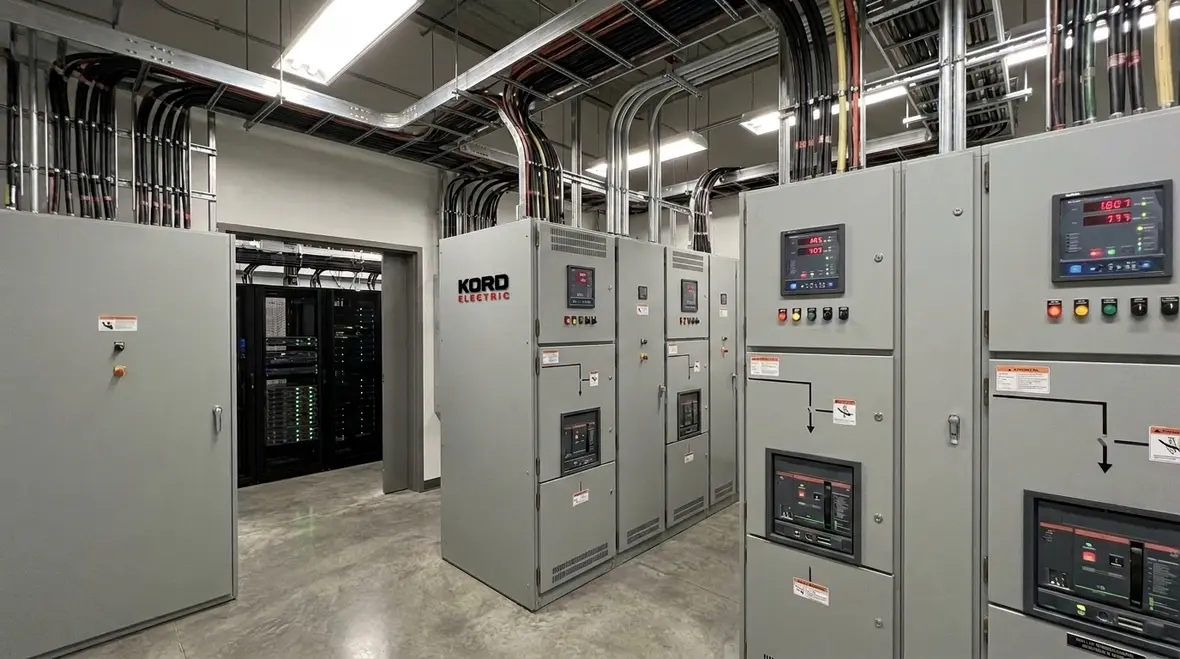
At Kord Electric, we focus on architecture that supports continuous operation. We evaluate the intake gear, the transformer setup, and the switching strategy, and we choose distribution modules that fit both current loads and future growth. Then we verify conductor sizing and derating factors so the system can run within safe temperature limits.
Importantly, we plan for harmonic effects and power quality. Mining equipment and high density compute loads can create distortion, and that can stress equipment that was never meant to feel like it is trapped inside a rock concert. Therefore, we study loads, confirm power factor, and select protections and filtration where needed.
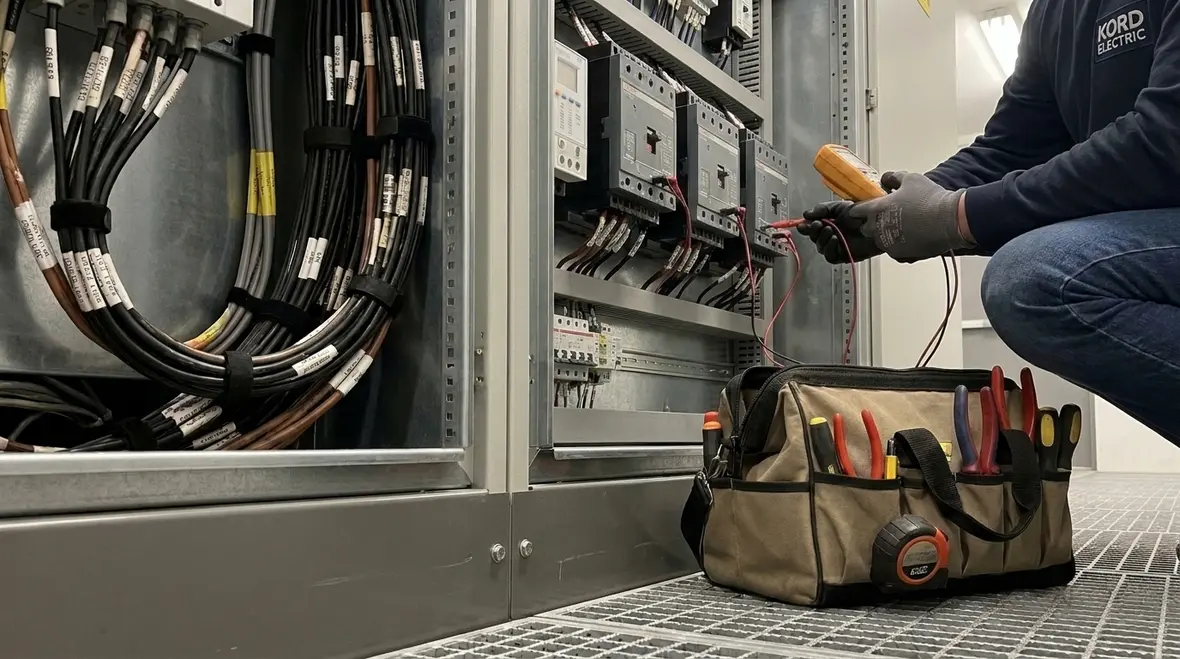
Redundancy choices that match how commercial sites actually run
Some teams talk about redundancy like it is magic. We handle it like engineering. In commercial and industrial facilities, redundancy should match the business risk and the operational plan, not just the marketing slide. Therefore, we discuss which components must be fully backed up and which components can be handled with failover or hot replacement.
Our approach includes clear decisions about system paths, transfer methods, and how we handle maintenance windows. For example, we plan switching so a scheduled service activity does not turn into an unexpected outage. Also, we confirm how fast loads must be restored, and we coordinate with generator and UPS strategies when the site requires them.
Then, our expert service staff explains the “what happens if” scenarios in plain terms. They walk through normal mode, transfer mode, and contingency mode so the site team can respond without panic. In a real building, calm beats chaos, and our technicians know that.
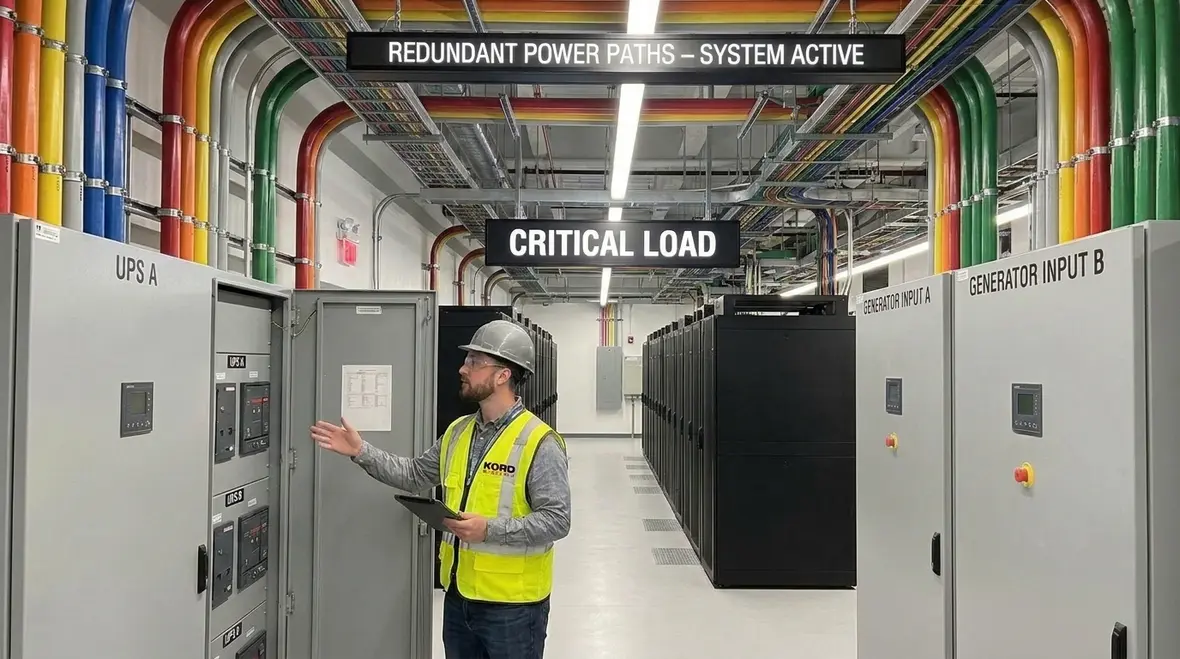
Rethinking busways, transformers, and feeder routes for growth
Expansion is not a future event in mining focused projects. It happens while the building is already busy, and the electrical system must keep up without turning every upgrade into a demolition episode. So we plan the physical layout with load growth in mind, including how busways and feeders are arranged and where they are accessible.
We also pay close attention to transformer strategy. For some sites, multiple smaller units provide better flexibility. For others, larger units with a careful switching plan make more sense. Either way, we size transformers for steady operation, then we confirm performance during peaks and during partial redundancy states.
Next, we validate feeder routing and segmentation. We consider cable tray fill, heat rise, proximity to cooling systems, and the practical realities of how crews run conduits in existing structures. Then we specify labeling and documentation so facility teams can maintain the system without relying on guesswork. Nobody wants a scavenger hunt when the alarm panel starts talking.
Power quality, grounding, and heat management that protect equipment
Even when the system stays on, poor power quality can shorten equipment life. That is why we treat grounding and bonding as a first class design item, not a last minute checkbox. We build grounding schemes that support protective device operation and stable reference points, and we coordinate with bonding practices across the site.
From there, we handle heat and load density. Data halls often pack power into tight spaces, and that creates thermal stress on conductors, switchgear, and bus systems. Therefore, we align electrical design with the site’s cooling strategy. We verify loading limits, check ventilation needs, and confirm that equipment placement supports safe operation.
In the field, our technicians also look at installation quality and workmanship. We guide on torque verification, routing practices, and termination standards because a “theory perfect” design can fail if execution gets sloppy. And to be fair, sloppy installs are fun for exactly nobody once the building goes live.
Commissioning, testing, and documentation that stand up in audits
A strong electrical design deserves strong proof. We build commissioning and testing into the project plan so the owner gets verified performance, not just hopeful spreadsheets. We coordinate tests for protective devices, insulation integrity, continuity, and operational sequences. Then we confirm that system behavior matches the design basis.
Also, we deliver documentation that is ready for handoff. For major property buildings and industrial facilities, audits and maintenance cycles happen whether the team is ready or not. Therefore, we provide updated one line diagrams, protective device settings, as built routing details, and maintenance guidance that the facility staff can actually use.
Our expert service staff supports the transition after startup. They explain what to watch, how to interpret alarms, and when to schedule service. In other words, we do not vanish after turn over, because “we hope it stays fine” is not an electrical plan. It is a prayer, and we prefer engineering.
Steps to plan a Data Center Mining Electrical Design: Power Distribution & Infrastructure project
If a team wants a clear path, we give them one. Here is how we structure planning for commercial and industrial builds, especially where mining focused loads behave like a living system.
- Load and growth review to define current demand and realistic expansion steps.
- Single line development to map the electrical path from intake through distribution.
- Protection coordination so faults clear locally and power quality stays stable.
- Redundancy strategy matched to business risk and maintenance needs.
- Thermal and routing checks to support high density spaces safely.
- Commissioning plan that verifies sequence, protection, and performance.
- Owner handoff package with documentation, settings, and service guidance.
And yes, we keep the process steady. The goal is not to impress people with complicated jargon. The goal is to deliver a system that keeps working, and that is a simpler kind of impressive.
For facility teams planning across multiple properties, it often helps to pair this mining focused view with broader guides like our data center electrical infrastructure articles and our work on data center electrical requirements for uptime, so the same reliability mindset shows up in every room that matters.
FAQ
CTA: get a reliability first plan for your facility
If you are building or expanding a commercial or industrial mining focused data hall, Kord Electric can help you get to a power design you can trust. We work with your team to map loads, coordinate protection, plan redundancy, and support testing and documentation that holds up in the real world. Reach out to us for a review of your current one line, your growth plan, or your commissioning approach. Then we will help you move forward with calm confidence, not guesswork.
If your facility is in Southern California, you can also explore our broader Los Angeles County electrical services to see how the same reliability mindset carries across critical commercial and industrial systems beyond the mining hall itself.
For sites where mining, data center workloads, and other critical systems share the same backbone, aligning your Data Center Mining Electrical Design: Power Distribution & Infrastructure with a reliability focused service plan can turn “we hope it works” into “we know what it will do when things get loud.”