Data Center Power Distribution Design: Architecture, Redundancy & Safety
Data Center Power Distribution Design: Architecture, Redundancy & Safety sits at the core of reliable uptime. At Kord Electric, we build electrical systems for commercial and industrial facilities, and for major property buildings where downtime becomes expensive fast. In our approach, we plan the power path before we touch a single cabinet, and we treat every switch, breaker, and bus like it has a job to do. Next, we design redundancy that does not just sound good in a slide deck, but holds up under real load. Finally, we add safety features that protect people and equipment, because the only “surprise outage” we want is the kind that happens during a birthday party.
How we plan a dependable power path for data centers
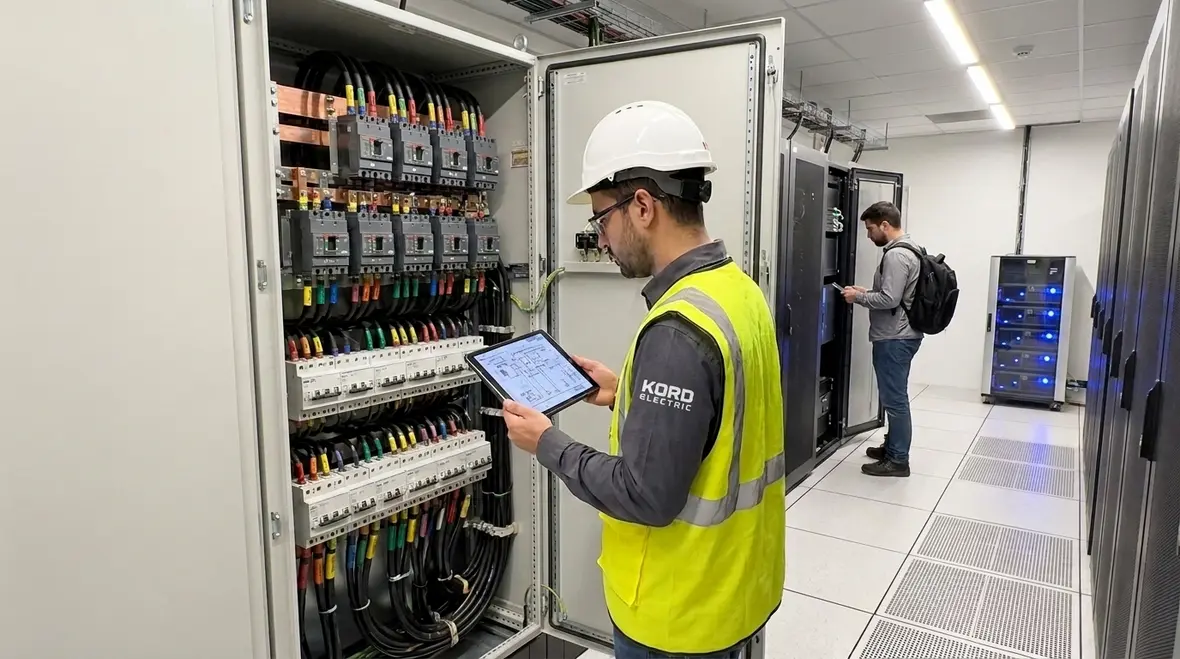
In practice, Data Center Power Distribution Design: Architecture, Redundancy & Safety starts with a clear map of how energy moves, from utility or generator to critical loads. Others may rush the diagram and hope the field team can “figure it out.” We do it differently. We plan in layers, and our technicians and expert service staff explain the logic as we go, so stakeholders understand the why, not only the what.
First, we define load categories and fault tolerance levels. Then we route power with disciplined segregation so a fault in one area does not cascade into the rest. After that, we select distribution equipment and cable routes based on heat, voltage drop, and maintainability. Also, we coordinate with mechanical design teams, because heat and airflow affect cable performance and breaker longevity. If you have ever seen a server room run hotter than it should, you already know that electricity and temperature do not negotiate.
To keep reliability high, we also set up measurement points and monitoring. Because when something changes, we want alerts early, not after the alarms have already been doing a long monologue. Our team documents the power flow, and we align labeling and schematics so that service work stays fast and clean.
Why architecture matters more than people think
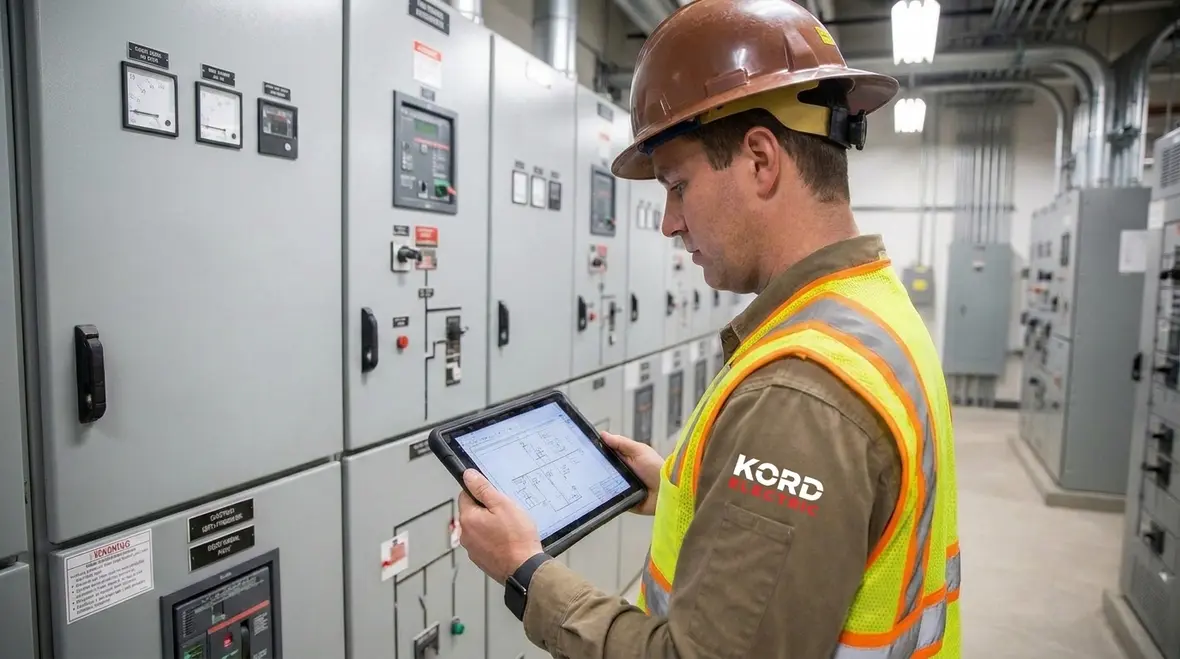
Electrical architecture is not a fancy word for “wiring stuff neatly.” It shapes how the system behaves during normal operation, maintenance, and faults. Therefore, we use a structured design that supports safe isolation and quick restoration. For commercial and industrial facilities and major property buildings, this means we plan for multi-tenant needs, future expansion, and practical access during service windows.
We typically define key components in a hierarchy, such as utility interfaces, transformers, switchgear, UPS systems, and final distribution. However, the structure does not stop at equipment names. We also plan bus topology, transfer paths, and short circuit withstand ratings. That is how we prevent the system from behaving like a chain reaction. A well-built architecture keeps faults local and helps operators restore power with fewer steps.
Meanwhile, we address maintainability from day one. For example, we consider how technicians will test protective devices, replace modules, and isolate sections without risking the entire critical load. Our experts walk clients through service concepts using plain language, and we make sure the facility team knows what can be shut down safely and what must stay energized.
Redundancy design that stays useful during real failures
Redundancy should do more than reduce theoretical risk. It should keep uptime meaningful when something actually fails. So, we design with redundancy in mind at the component and system level, and we match it to the facility’s critical load needs.
We evaluate how power transfers occur during utility disturbances and generator events. In addition, we consider common causes of failure such as maintenance errors, shared paths, and physical damage. Then we structure the distribution so that a problem in one branch does not take down unrelated loads.
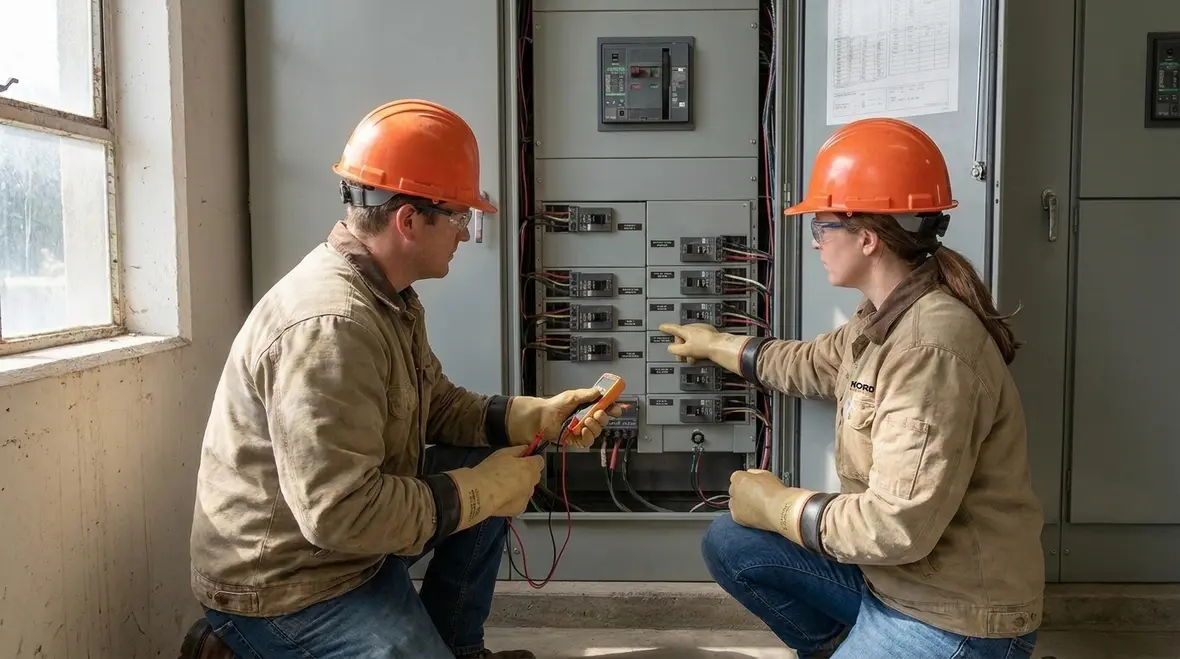
Our approach also includes diversity of support systems. For instance, if two critical subsystems rely on the same bus, a fault or maintenance action can still affect both. Therefore, we reduce shared dependencies where it matters. Our technicians explain this clearly on site, because clients often understand redundancy best through scenarios, not just diagrams. And yes, sometimes a simple story helps: the goal is to avoid having both backups living in the same “backup drawer,” so to speak.
We also design for stable operation during transfer. That means we coordinate protective settings, selectivity, and timing so the system clears faults without unnecessary shutdown. When these parts align, the system “knows what to do,” and the operators get fewer surprises.
Safety and protective coordination with a calm, practical mindset
Safety features must work when stress is high, not when everything looks normal. Our team designs protective coordination so protective devices clear faults quickly while keeping downstream equipment safe. Therefore, we focus on arc risk awareness, safe access, and proper ratings.
Protective device selection and coordination matters because the worst-case scenario is when the wrong device trips, cutting power to a wider area than needed. So, we apply coordination studies and verify that the system maintains selectivity. We also consider ground fault behavior, cable insulation stress, and fault energy exposure.
In parallel, we design for safe maintenance. That means we plan isolation points and switching procedures that align with how technicians actually work. Our expert service staff helps translate those plans into field-ready procedures. If you have ever watched a team struggle with unclear labeling, you know why this step matters.
And since this is a data center, we treat safety as part of uptime, not a separate checklist. When protection works, operations stay stable. When it does not, everyone gets to become an amateur electrician for a few terrifying minutes. We prefer you skip that plot twist.
Load planning, voltage drop, and thermal reality checks
Designing for reliability also means designing for physics. Load planning, voltage drop, and heat all influence how equipment performs. So, we collect operating data and future growth assumptions, then we size conductors, bus connections, and distribution components accordingly.
We evaluate voltage drop so critical loads receive acceptable voltage under both steady-state and transient conditions. Additionally, we account for cable ampacity and installation conditions. Heat is not optional in a data center, so we confirm that thermal assumptions match actual airflow and room conditions.
To keep the system dependable over time, we also plan for aging. Circuit components drift with use, and protective device performance depends on correct settings and maintenance. Therefore, our design includes clear maintenance intervals and practical access for testing.
Our technicians and service staff bring this work to life by connecting the calculations to real installation constraints. They also explain how design choices affect operations, such as which sections can be serviced during limited windows and how monitoring helps catch issues early.
Monitoring, testing, and service readiness for commercial uptime
Even the best Data Center Power Distribution Design: Architecture, Redundancy & Safety needs ongoing verification. That is why we include monitoring, commissioning, and service readiness in the design process. First, we decide what data matters, including switchgear status, breaker operations, transformer health indicators, and power quality signals.
Next, we design the system so testing can happen without chaos. We consider test points, interlocks, and safe procedures for verifying protective coordination. Then we align documentation with field work, so technicians can trace circuits quickly and service parts without guesswork.
We also plan for operational workflows typical of commercial and industrial facilities, where downtime windows may be tight and responsibilities may move across teams. Our expert service staff stays focused on practical outcomes: safe switching, clear alarms, and repeatable maintenance steps.
Finally, we build a service mindset into the project closeout. We deliver training and help the facility team understand how to respond when monitoring shows abnormal conditions. In other words, we do not just install the system and disappear. We make sure others can run it calmly, even when the schedule gets busy.
If you are exploring how this kind of design thinking plays out across the broader facility, you can also review Kord Electric’s companion article on Data Center Electrical Distribution Design for Reliability, which dives deeper into topology, protection, and scalable layouts.
FAQ: Data center power distribution design basics
Final thoughts and next steps with Kord Electric
If you want a dependable power system, you need a plan that connects architecture, redundancy, and safety to real field service. Kord Electric designs and supports Data Center Power Distribution Design: Architecture, Redundancy & Safety with a practical mindset for commercial and industrial facilities and major property buildings. Our technicians and expert service staff explain decisions clearly and build systems that hold up under stress.
If you are reviewing your broader electrical strategy, it can be helpful to pair this design focus with a deeper look at data center electrical distribution design for reliability, where we explore redundancy, power quality, and scalable layouts across the full facility.
For property owners and operators across the region, Kord Electric’s dedicated Los Angeles County electrical services bring these design principles into day-to-day projects, upgrades, and maintenance plans.
If you are ready to review your current design or plan a new build, Kord Electric can help you connect Data Center Power Distribution Design: Architecture, Redundancy & Safety with a service strategy that fits your commercial or industrial facility.