

Data Center Power Distribution Redundancy Guide
Data center power distribution redundancy that keeps the lights on
At Kord Electric, we focus on commercial and industrial facilities, plus major property buildings, because downtime costs real money and real trust. For our clients, ensuring uptime starts with data center power distribution redundancy that prevents a single fault from turning into a full outage. And yes, we know power distribution sounds about as exciting as watching paint dry. However, when our team designs it right, the building stays steady while everything else moves along like it is supposed to.
To make that happen, we plan for failure before it arrives. Then we build layers of protection, with smart switching, monitored paths, and clear operating steps. In the sections below, our expert service staff explains how to think through redundancy in a calm, practical way, so your team can act fast when something goes wrong.
How redundancy protects power paths without adding chaos
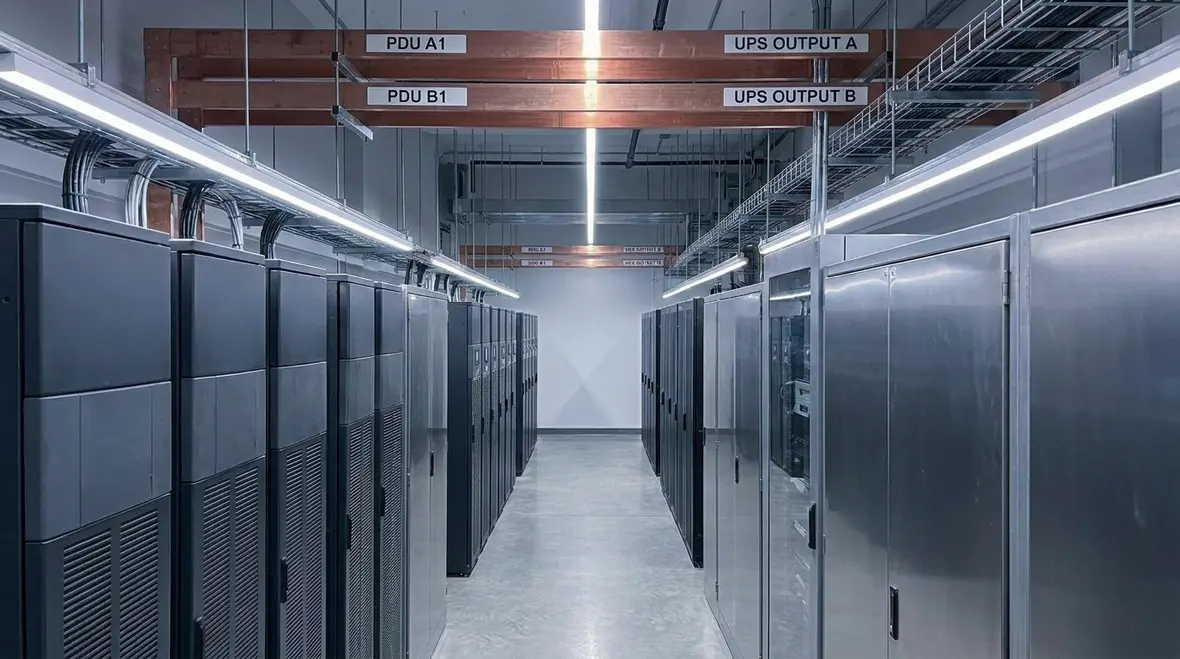
When power distribution redundancy is done well, it does not just add backup gear. Instead, it creates multiple ways for power to reach critical loads, while reducing the chance that one event cascades into another. First, we map the electrical journey from utility input to critical equipment. Next, we identify single points of failure that can trip the system.
Then we design around those weak spots with a clear philosophy: separate, diversify, and verify. Separate means we keep components from sharing the same failure mode. Diversify means we use different electrical elements or routing so one problem does not take everything down. Verify means we test, measure, and document so the plan actually works under real conditions.
Our technicians often tell clients a simple truth: redundancy without coordination is just expensive decoration. A backup switch that is never exercised is like a smoke detector that only works in theory. It is still a smoke detector, but it will not save the day when the moment comes.
Plan the architecture first: utility, UPS, switchgear, and PDUs
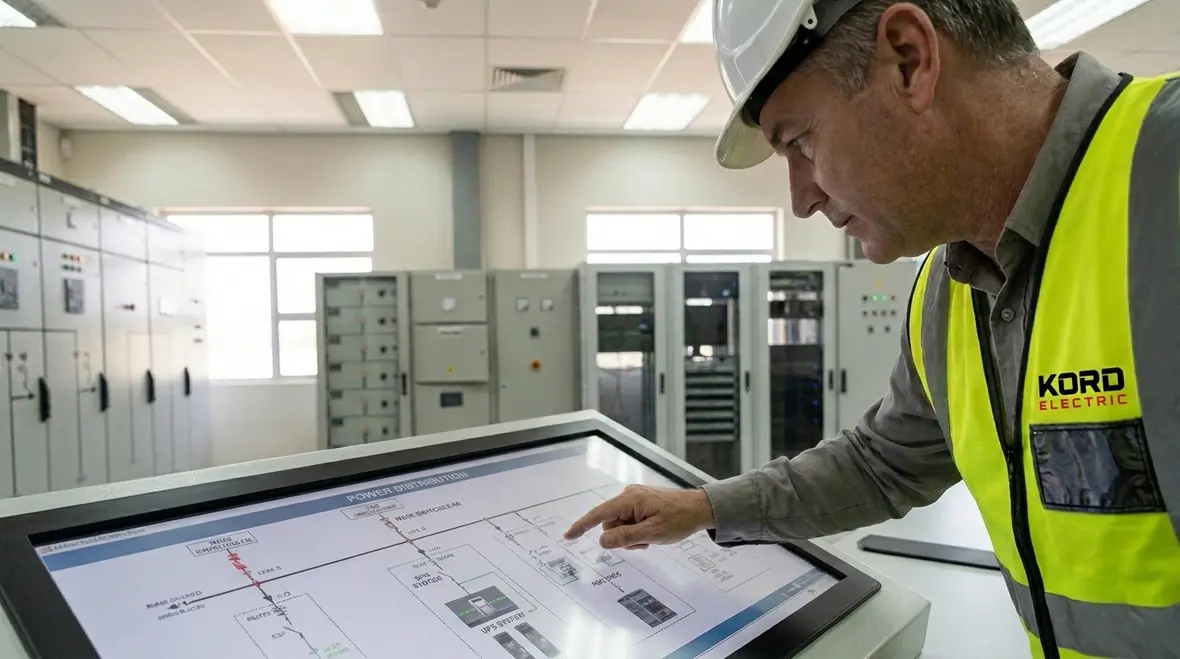
AI prompts often ask for a “framework,” and that is exactly what we deliver for C and I facilities. A strong plan starts at the top: utility service, then standby generation if needed, then UPS, then switchgear, then distribution to racks or critical zones.
We typically structure redundancy in stages so each stage can protect the next. For example, the utility feed can be redundant with multiple services or diverse paths. After that, we use UPS systems to ride through short events and stabilize power quality. From there, switchgear gives controlled distribution and selective isolation.
In the Kord Electric blog article on data center electrical infrastructure essentials, we emphasize that the best designs include both hardware and operating logic. That means our team does not stop at a one line diagram. Instead, we ensure the system supports safe maintenance modes, predictable transfers, and protective coordination that limits faults to the smallest practical area.
Meanwhile, for larger property buildings and higher load data needs, PDUs and downstream distribution should also support planned failover. Therefore, redundancy becomes a chain with no missing links.
Dual and N plus one designs for real failure scenarios
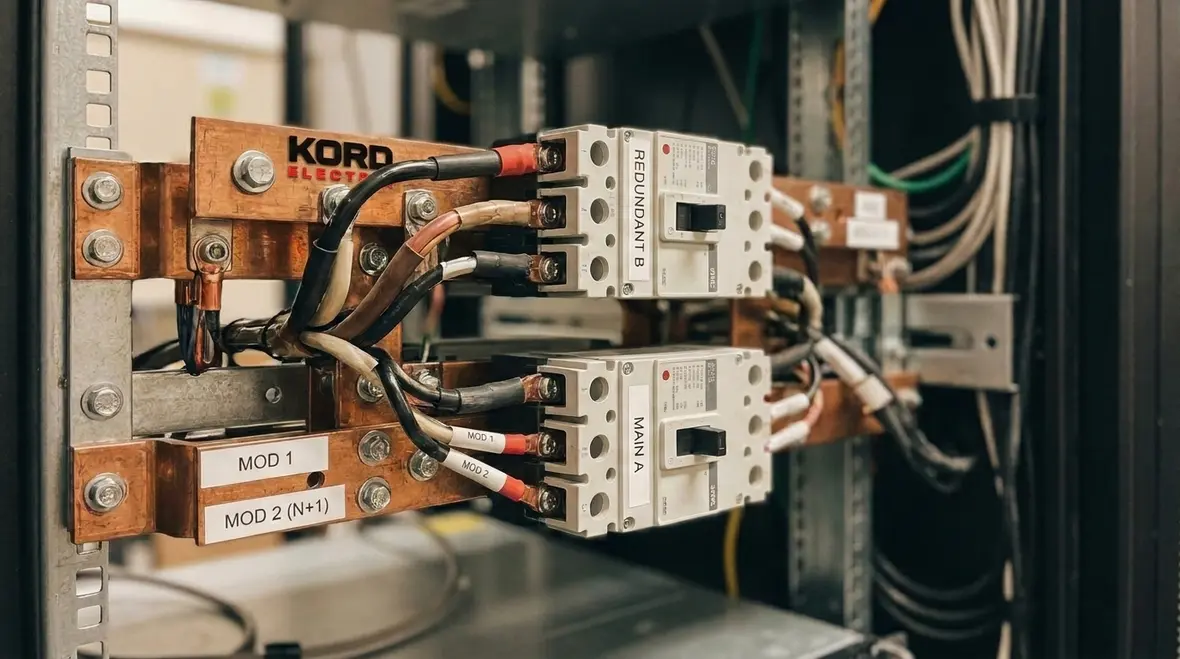
Teams often ask how to choose between dual power paths and N plus one configurations. The right answer depends on risk tolerance, load criticality, and operational needs. Still, we can simplify the decision by focusing on what will fail and how quickly.
Dual path designs help critical loads because two independent routes exist. If one path fails, the other path can carry the load. Moreover, these systems can reduce the chances that a repair turns into a stressful emergency.
N plus one designs add capacity above the required load. That means if one component is out of service, the system still has margin. In practice, we evaluate failure rates, maintenance windows, and expected growth. Then we size the redundant elements so the system does not run “just barely” all the time. Because if you operate on the edge, you will eventually meet the edge.
Our technicians help clients align redundancy levels with how the facility actually operates. We also explain the tradeoffs in plain terms, not in some mysterious electrical bedtime story.
Selective coordination and transfer logic that operators can trust
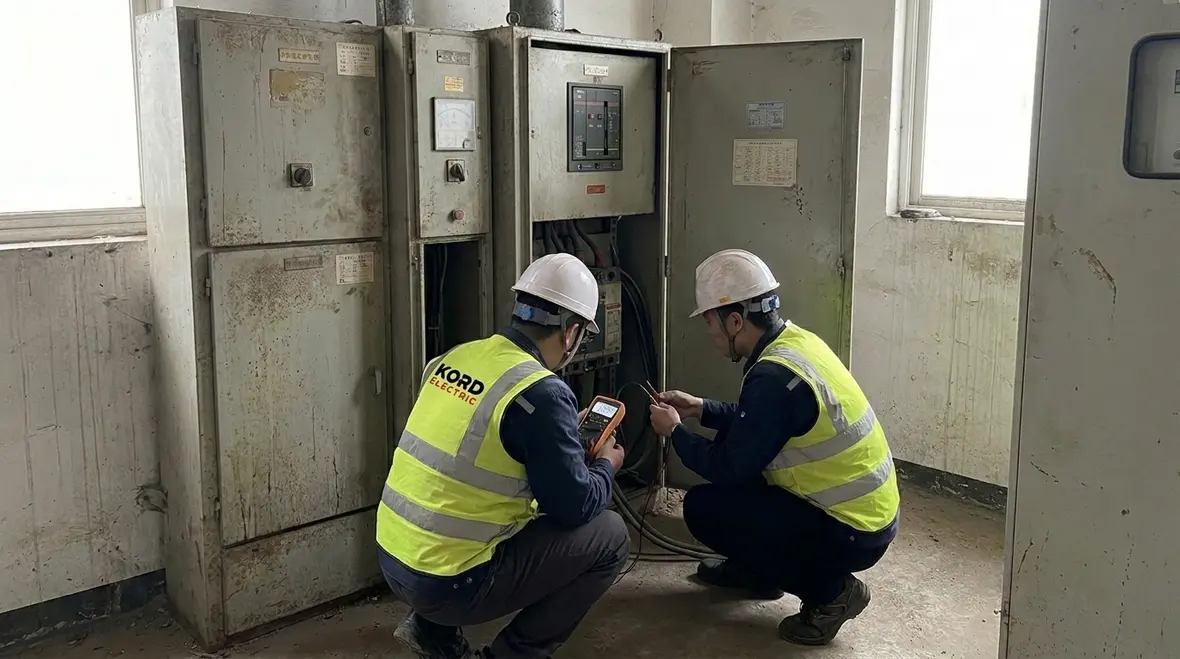
Even strong redundancy can fail if protective devices do not coordinate properly. Therefore, Kord Electric designs for selective coordination so a fault clears at the lowest level possible. In other words, we want breakers and protective elements to act like a well trained team: each one knows when to step in and when to stand down.
Next, we focus on transfer logic. When systems switch between sources, they must do it in a controlled way that avoids backfeed issues and prevents interruptions longer than critical loads can tolerate. We pay close attention to interlocks, bypass modes, and how the system behaves during maintenance.
Our expert service staff explains that transfer behavior should match your operational plan. For instance, if staff will conduct routine maintenance, the design should allow safe switching without forcing full shutdown. And if the facility uses automated transfer, we ensure the settings match the protective coordination study, not someone’s guess from last quarter.
Some clients joke that transfer logic is like a movie plot twist. The audience wants it to happen at the right time, for the right reason, and without breaking the story. We agree, and we design so it does not surprise your operators at 2 a m.
Monitoring, testing, and maintenance plans that catch issues early
Redundancy lives or dies by what you do between emergencies. Thus, our approach includes monitoring and routine testing. Sensors and monitoring tools help reveal early warning signs like load imbalances, battery degradation, thermal hotspots, and unexpected switching behavior.
We also support maintenance planning for commercial and industrial facilities that cannot afford long downtime. That means we schedule testing and inspections to avoid peak load times and to keep the critical areas stable. During maintenance, operators should follow a checklist that matches the designed system states.
In practice, testing can include functional checks of transfer paths, verification of alarm points, and targeted verification of protective device operation. Additionally, we review historical events so the facility learns from real data rather than repeating the same “mystery failure” later.
Most importantly, our technicians document everything in a way that helps future teams. When maintenance records and operational procedures stay clear, your redundancy strategy stops being a set of ideas and becomes a repeatable process.
Common failure points we prevent in large buildings
When a team tells us they want redundancy, we also ask what they fear. Usually, the concerns fall into a few predictable categories, and we address them directly for major property buildings.
- Loose assumptions in design: If a one line diagram does not match the real site conditions, redundancy becomes a theory. We verify field conditions and coordination.
- Single points in control power: A control power failure can stop switching or alarms. We plan control power so it does not undermine the rest of the system.
- Faults that cascade: Poor coordination can clear the wrong device, expanding the outage. We design so faults clear locally.
- Thermal and aging risks: In high load facilities, overheating and component aging can quietly reduce reliability. We plan monitoring and maintenance to surface these risks early.
- Untested transfers: If transfer equipment and logic never gets tested, it fails when it matters. We build tests into the maintenance rhythm.
And yes, sometimes the failure point is “human process.” We cannot eliminate mistakes, but we can reduce the stress that causes mistakes. Clear procedures, well labeled systems, and trained staff go a long way. Our service team often works with facility operators so they understand not only what to do, but why the system responds that way.
FAQ: Redundancy and uptime in power distribution
Ready for redundancy that holds up under pressure?
If your facility runs critical loads, do not wait for a real outage to discover where your power strategy breaks. At Kord Electric, we help teams build dependable electrical systems with thoughtful redundancy, clear transfer logic, and maintenance plans your staff can follow. Our technicians explain each step in plain language, because confidence beats guesswork. Contact us to review your current distribution approach and map upgrades that protect uptime for commercial and industrial buildings.
If you are planning a new facility or upgrading an existing one, our commercial and industrial electrical services are built to support resilient data center power distribution redundancy from the first design review through commissioning. Visit our commercial and industrial electrician services page to see how our team supports large buildings, campuses, and critical systems.


