Commercial Facility LED Lighting ROI Guide Long Term Savings
Commercial facility LED lighting ROI: the upgrade that keeps paying after the lights go out
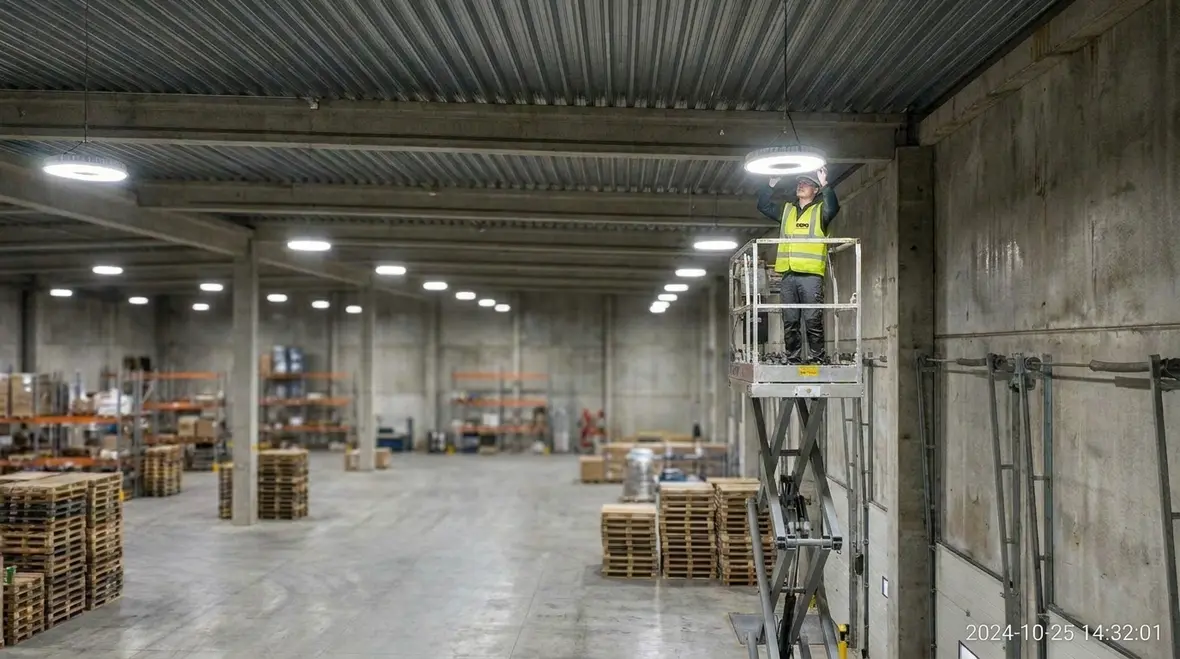
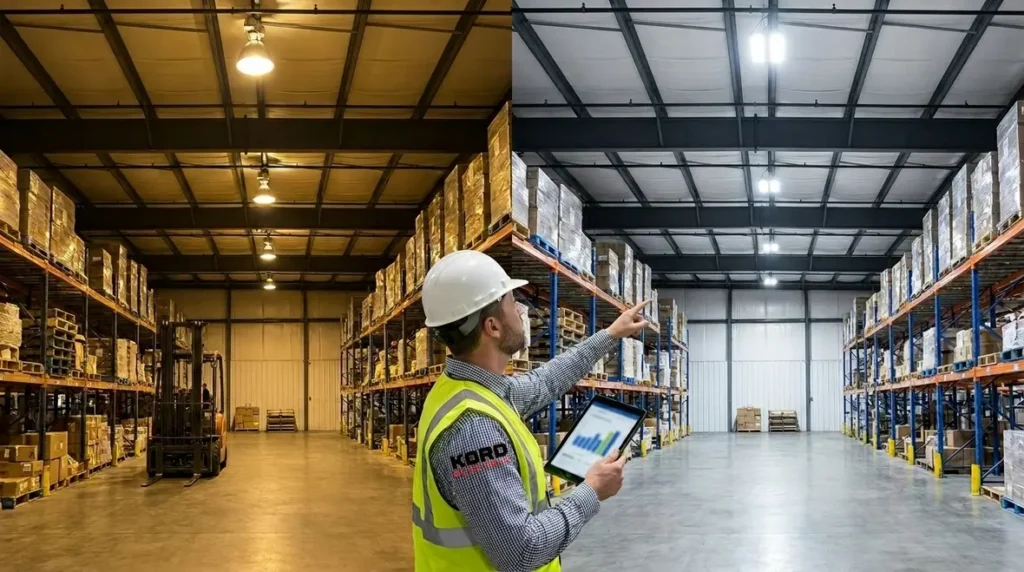
In most commercial facilities, the first thing people notice about a LED upgrade is the glow. However, the commercial facility LED lighting ROI shows up in a quieter way: months later, when energy bills drop, maintenance stays lighter, and the building feels more reliable. We have seen it in offices, warehouses, manufacturing floors, and multi building campuses, where lighting is not just decoration. It is infrastructure. And when the numbers work, the upgrade stops being a “someday project” and becomes a controlled, planned investment. That is where Kord Electric steps in, because our technicians and expert service staff do more than change fixtures; they explain what is happening and why it matters. Unlike the latest sitcom twist, the ROI usually does not happen off screen.
Why the payback is bigger than energy savings
Many teams start with a simple goal: reduce kWh costs. Yet commercial and industrial spaces tend to pay more over time than just through lower energy use. First, LED fixtures often last longer than older lighting, which reduces relamping and labor. Then, that reduced maintenance keeps operations running. After all, a dark bay or an interrupted shift costs more than people expect. So while the energy portion matters, the full ROI includes downtime avoidance, fewer service calls, and steadier lighting output.
Additionally, LEDs help buildings maintain consistent light levels. In practical terms, that consistency reduces the “it looks dim over here” complaints that lead to rushed fixes. And when lighting stays stable, cleaning and visual inspections become easier. We also guide property teams to avoid oversizing or under designing, because bad layouts can erase gains and create glare or hotspots. Our approach focuses on the real world, not the brochure version.
Model the full ROI with a maintenance and operations view
At Kord Electric, we help others build a real ROI model for major property buildings, not a wish list. To do that, we consider several cost drivers that often hide inside “energy savings” spreadsheets.
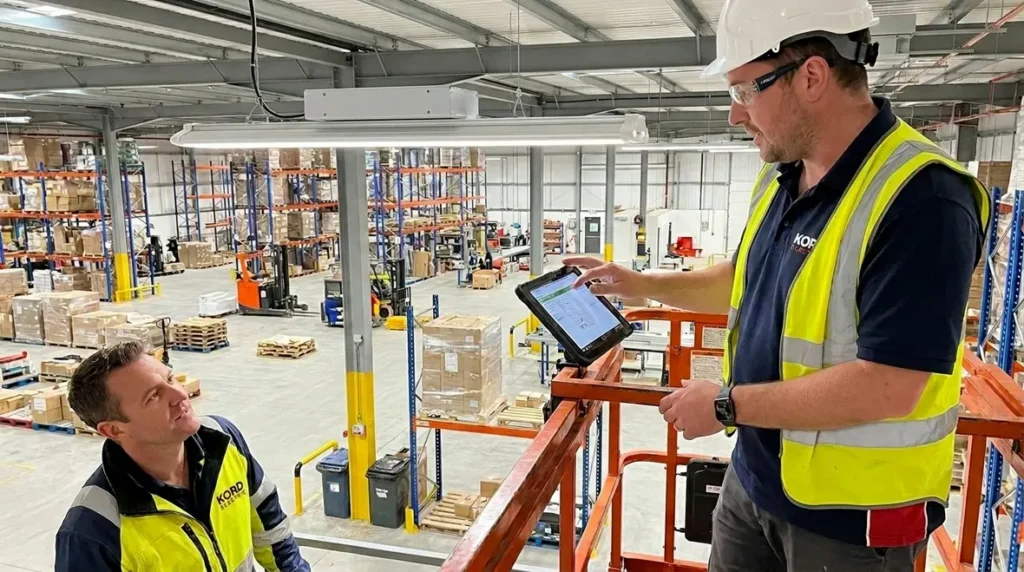
Our technicians review how lighting is used across zones, including occupancy patterns and shift schedules. Then, we map fixture life, access needs, and likely replacement intervals. After that, we account for labor and disruption costs, especially where ceilings are hard to reach or where outages trigger safety procedures.
To keep it simple, we separate the investment into categories:
- Energy: reduced wattage, smarter controls, and fewer losses
- Maintenance: fewer lamp changes, fewer emergency service calls
- Operations: less downtime, smoother work flow, safer lighting
- Serviceability: easier replacement strategy across the building
Meanwhile, we tie these factors to the building’s electrical reality. If a facility already has a stable distribution plan, the ROI can land faster. If the electrical system needs updates, the ROI still holds, but the timeline may shift. Either way, our team explains the tradeoffs so decision makers can move confidently.

How LED upgrades interact with electrical infrastructure
LED performance does not live in a vacuum. It depends on the power quality, switching strategy, and how the electrical system supports modern loads. That is why our work on lighting connects with broader electrical infrastructure planning. In our blog section on data center electrical infrastructure essentials, we outline how system planning, redundancy, and electrical distribution details matter for reliability. While that article targets data center needs, the mindset applies to commercial and industrial lighting too.
For lighting projects, we look at key items that can impact ROI:
- Driver and dimming compatibility: proper control pairing prevents flicker and early failures
- Circuit loading and panel capacity: we avoid overloading and unexpected thermal issues
- Surge protection and grounding: these protect components and stabilize long term performance
- Controls strategy: occupancy sensors and scheduling reduce wasted run time
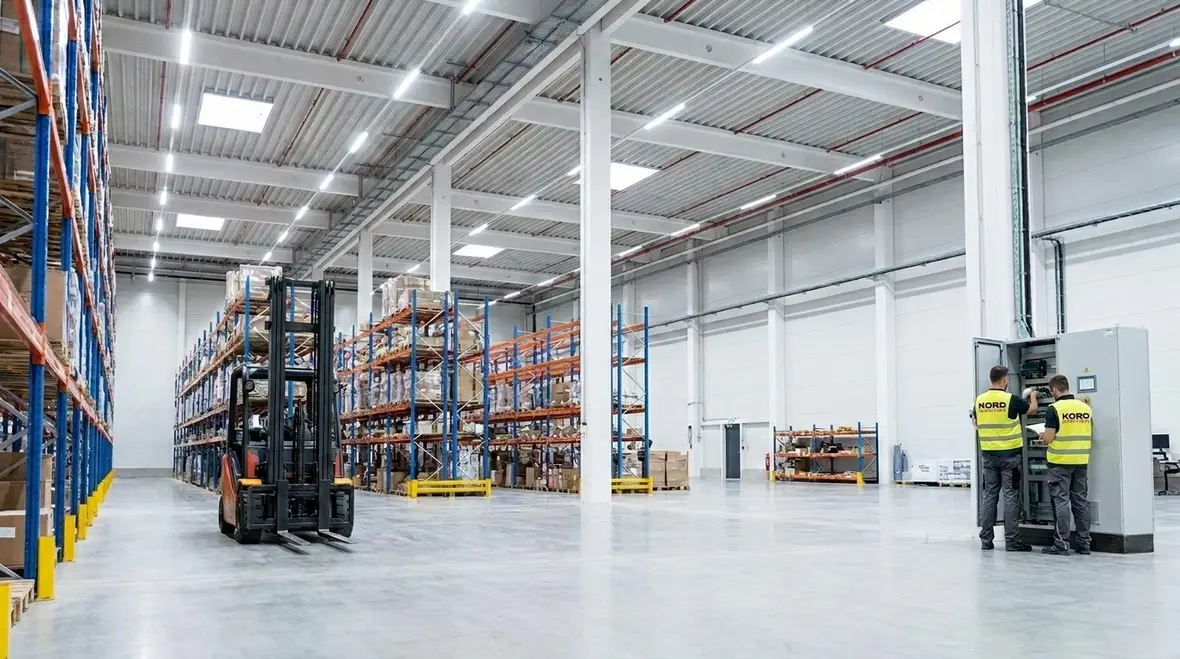
In other words, when teams upgrade fixtures but ignore the electrical context, they sometimes pay again later. Nobody wants a lighting job that turns into “lighting plus mystery problems.” We keep it clean and clear. Our technicians verify what exists, then match the upgrade to the facility, not the other way around.
Controls and zoning: where long term ROI accelerates
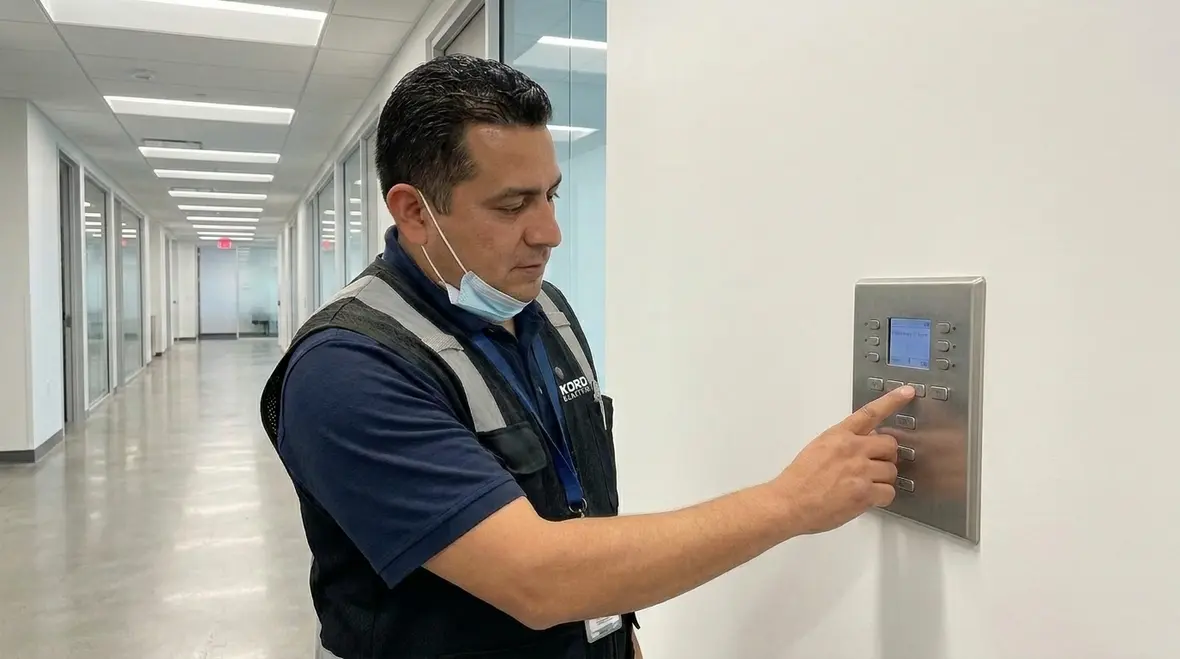
Energy savings feel immediate, but controls often decide whether the ROI stays strong year after year. In large facilities, lighting demand varies by zone and schedule. Therefore, smart zoning and occupancy based control cut wasted light when areas sit idle. However, the key is precision. Sensors placed poorly can create the “lights off at the worst moment” problem, which is funny until it becomes a safety issue.
We help others design control zones that match how people actually work. Then we coordinate switching and dimming levels so they deliver comfort without over lighting. This is one of the most reliable pathways to a stronger commercial facility LED lighting ROI because it reduces runtime, and it does so without sacrificing visibility.
Also, well designed controls reduce wear on the equipment. When lights are not cycling randomly, the system behaves better. That calmer behavior shows up later as fewer service events. In a commercial setting, fewer service calls means fewer interruptions and less expense. It is like having a well behaved HVAC unit, except the building feels it every time someone walks into a bay.
What our expert service staff explains to property teams
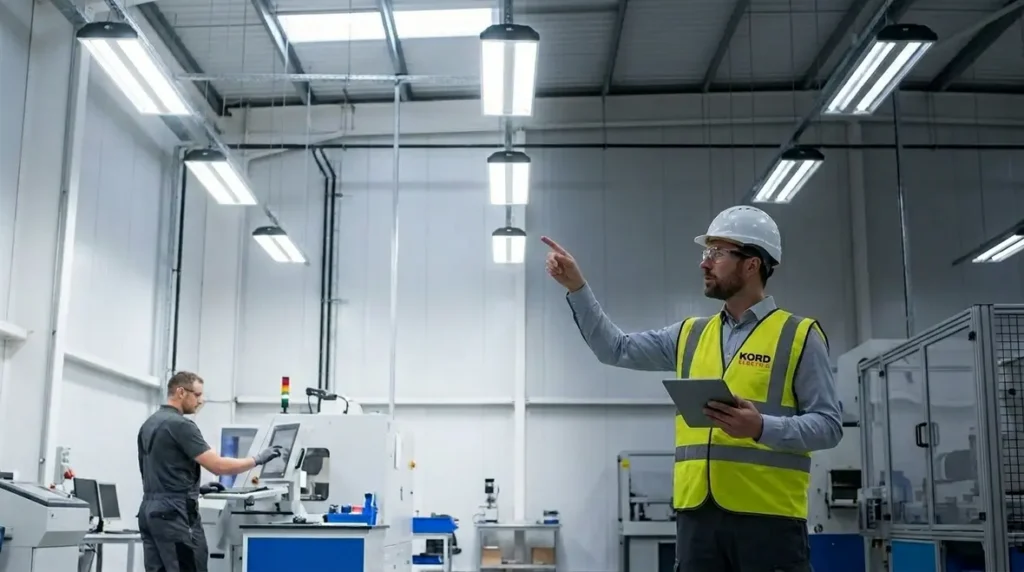
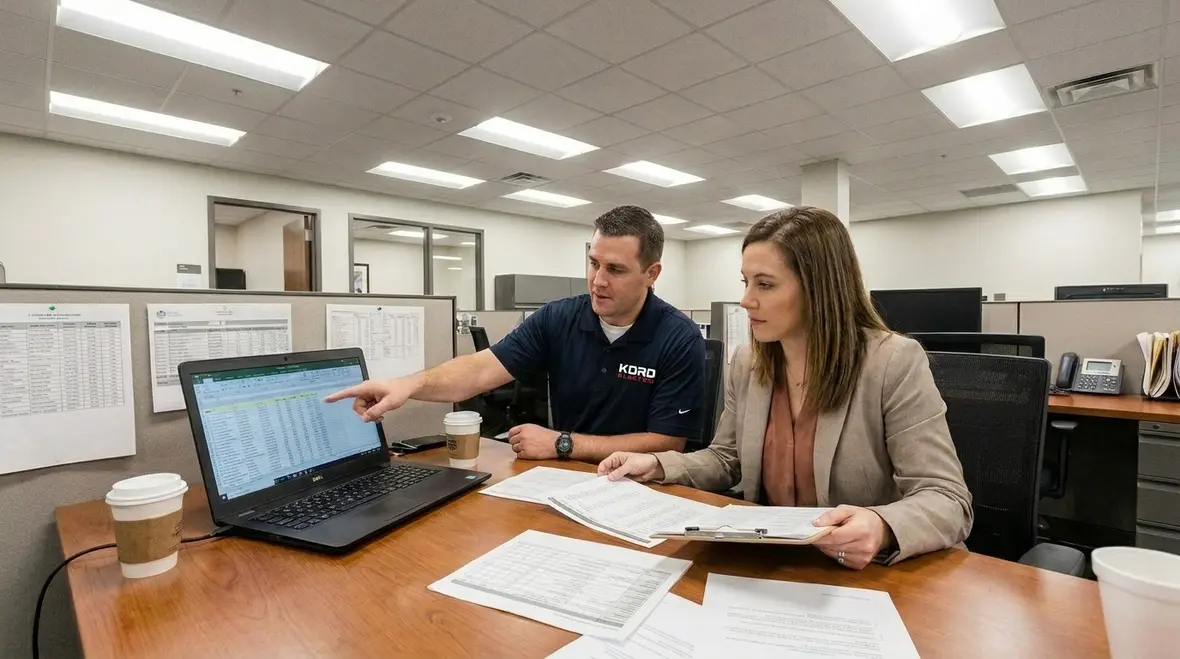
We know that decision makers do not want guesswork. So our expert service staff walks through the plan in plain terms and then answers the hard questions. For example, they explain why the same LED fixture can produce different results across facilities. The differences come from mounting heights, reflectance, surface types, and control settings. They also explain why lumen targets and glare control matter, especially in work areas where accuracy and safety rely on clear sight lines.
During these conversations, our team often helps others avoid a common trap. Some teams chase the cheapest fixture and then blame “LED technology” when results fall short. That is like buying tires for looks and then being shocked they do not grip. Quality matters, but so does installation and system integration.
Additionally, we help property managers plan for ongoing service. We outline which components typically last longest, which ones require monitoring, and how future changes can be handled. Then, when new tenants or operational changes come along, the lighting system can adapt without a full rebuild.
Long term performance: reliability, warranty, and fewer surprises
LED fixtures have improved, and many include long warranties. Yet the real measure for commercial and industrial facilities is dependable operation over time. Therefore, we pay attention to installation details that affect long term performance, such as secure mounting, correct drivers, and safe wiring practices. We also consider the building environment. Dust, vibration, and temperature swings can reduce effective lifespan if the design does not account for it.
When a facility experiences fewer surprises, it protects the ROI. For example, fewer emergency replacements mean fewer night and weekend callouts. That reduction supports consistent operations and reduces the cost of “rush logistics.” Over time, that reliability becomes as important as the upfront energy numbers.
And yes, LEDs also support healthier work conditions when designed well. Better uniformity can reduce eye strain. While that does not show up as a line item on a bill, it affects productivity and safety. For major property buildings, that human factor matters.
If you are actively comparing options and want deeper cost detail, you can pair this ROI view with our commercial lighting upgrade cost guide, which walks through typical LED retrofit cost ranges and the variables that shift project budgets for large facilities.
FAQ: LED upgrade ROI for commercial and industrial facilities
Ready to strengthen the long term ROI on your lighting?
If your commercial or industrial facility needs lighting that pays for itself and keeps paying, Kord Electric is ready. Our technicians and expert service staff assess your site, coordinate with your electrical infrastructure, and build a practical LED upgrade plan with real ROI logic. Then we keep the work clean, reliable, and easy to maintain. Call Kord Electric today, and let us help you turn lighting from a cost into a long term asset for your major property buildings.
When you are ready to take the next step, you can explore our dedicated lighting installation services page for more detail on how we handle large scale LED retrofits, new lighting systems, and control upgrades across commercial and industrial facilities.
For facilities where lighting ties into broader electrical health, pairing an LED upgrade with a structured electrical preventive maintenance program can further protect your investment, reduce downtime, and keep systems performing as designed over the long term.
If you are navigating complex power conditions, including fluctuating loads or sensitive equipment, our perspective on power quality and infrastructure planning in the voltage fluctuations in commercial and industrial facilities guide pairs well with any commercial facility LED lighting ROI discussion.