
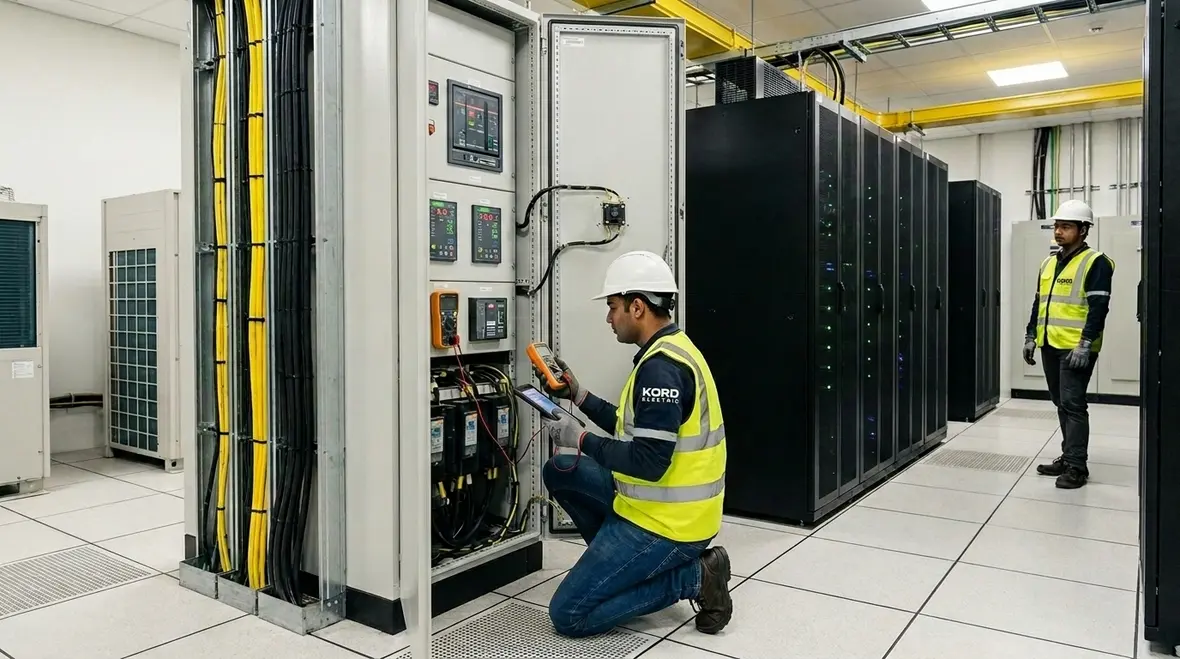
Data Center Power Redundancy and Reliability
At Kord Electric, we build our thinking around data center power redundancy because uptime is not a “nice to have” for commercial and industrial facilities and major property buildings. It is the difference between steady operations and expensive chaos. In this article, we lay out the essential strategies that help owners and operators keep power reliable when systems age, loads change, or faults try to sneak in. We do this with a practical approach, and we explain it clearly through our technicians and expert service staff, the people who actually stand on the floor, test the gear, and then tell you the truth without the bedtime-story fluff.
Why power reliability breaks in the real world
In theory, redundancy sounds like a locked door. In practice, reliability fails in the messy places. First, power chains get stressed by real operating conditions. Then, hidden wear shows up in switchgear, batteries, transformers, and transfer devices. After that, human processes can lag behind equipment needs. And yes, sometimes a component “passed last year,” so everyone assumes it will pass forever, like a Netflix show that never gets cancelled. (It always does.)
We have seen the most common causes of trouble across commercial and industrial sites. Utilities can have events, load inrush can surprise equipment, and thermal issues can slowly drift out of tolerance. Meanwhile, cabling routes, grounding, and lugs can age in ways that no dashboard fully reveals. Therefore, our strategy starts with understanding how power moves from source to critical loads, and then we design a path that still works when one part stumbles.
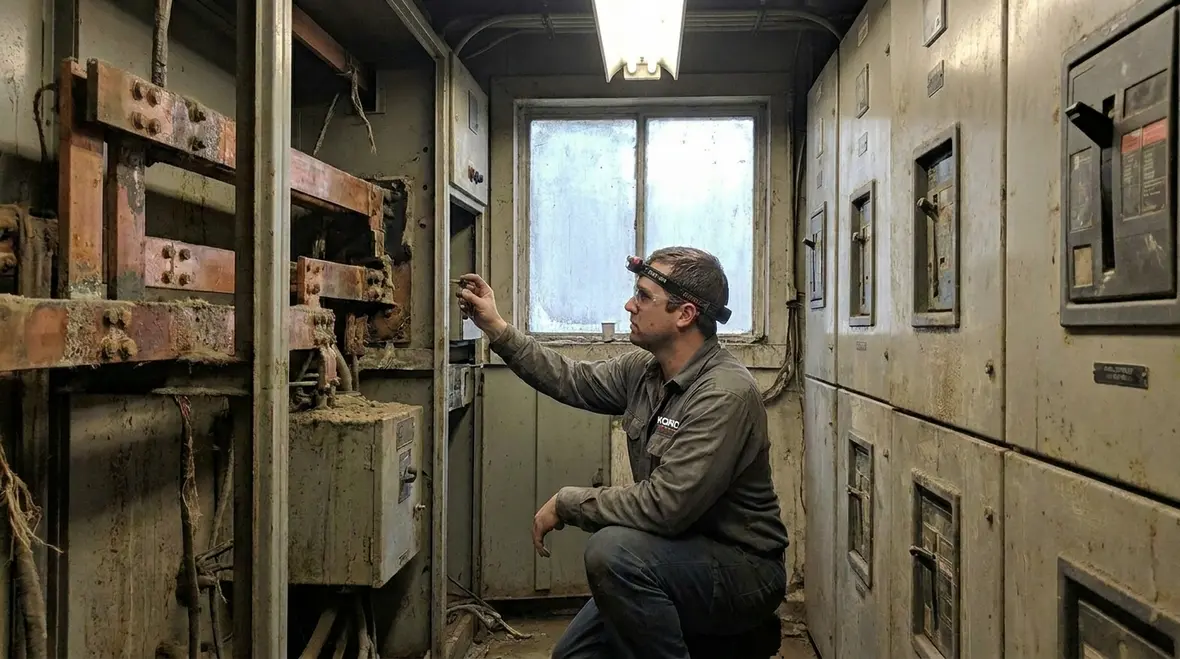
Design redundancy that actually supports critical loads
When our team evaluates a facility, we do not treat redundancy as a checkbox. Instead, we map the electrical one line, then we align it with how the building truly operates. That means identifying the critical loads, their tolerance for interruptions, and their starting patterns. A data heavy room with sensitive controls behaves differently than a facility that mainly runs motors and drives.
We typically help owners think through common architectures and their intent, such as N, N plus 1, and configurations that reduce single points of failure. We also pay attention to transfer schemes, including how quickly loads move and what happens during maintenance. In other words, we design so the system does not depend on perfect conditions during planned outages. Because in the real world, planned work is when unexpected work shows up.
Our expert service staff also focuses on distribution balance. When loads concentrate on one feeder or one bus section, redundancy becomes theoretical. By contrast, when we distribute load logically and check phase balance, the system runs more evenly and reduces the chance of nuisance alarms that turn into bigger problems.
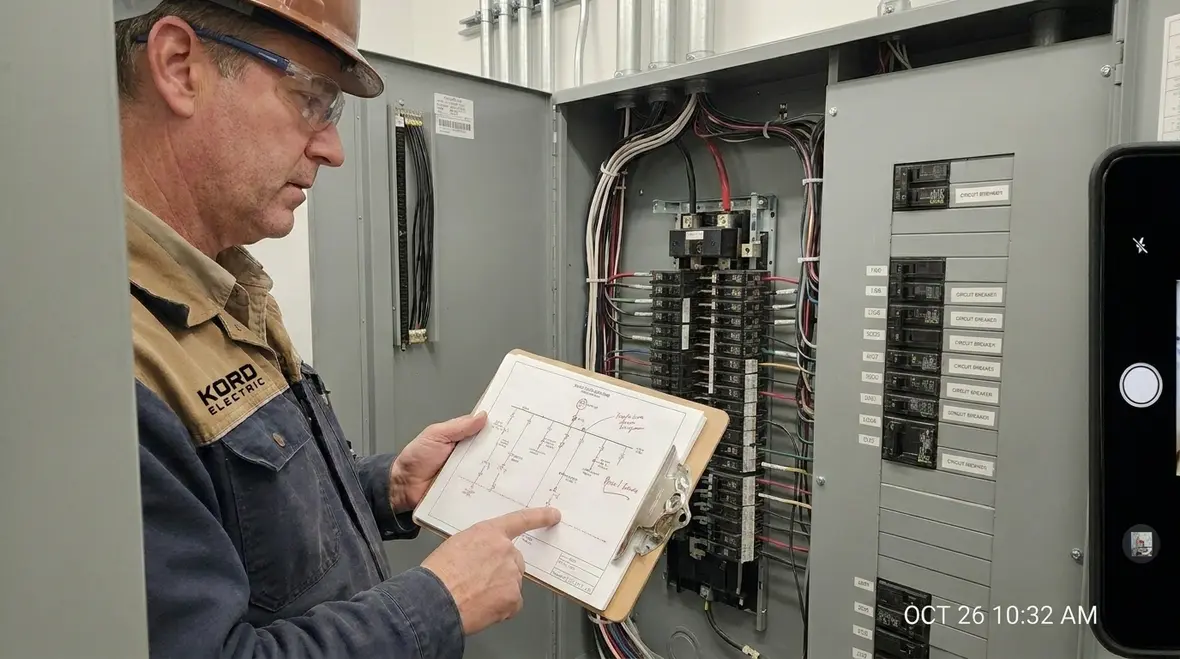
Preventive maintenance that keeps redundancy from becoming decoration
Redundancy fails when it only exists on paper. That is why we align our plans with proven preventive maintenance practices. Kord Electric supports customers with an approach like the one described in our electrical preventive maintenance program, where we inspect, test, and verify performance so the system can carry load when it matters.
For commercial and industrial facilities and major property buildings, the maintenance goals are straightforward. We check reliability of transfer mechanisms, verify protective device settings, and confirm that critical components behave within spec. Also, we inspect terminations, bus connections, and insulation condition where heat can quietly build over time. Then we test emergency power paths under controlled conditions so the system does not learn during an actual emergency.
We also look for what people usually ignore. That includes cleaning and tightening where dust and vibration have changed contact resistance, confirming battery health for DC systems, and reviewing alarm history to spot repeated events. And when we explain this work, our technicians do it in plain language. They show owners what we found, what it means, and how it affects the facility’s ability to ride through disturbances.
Because if redundancy is a suit, preventive maintenance is the tailoring. One keeps it sharp. The other keeps it from ripping at the worst time.

How to test load paths without gambling on uptime
Testing is where reliability becomes measurable. However, many facilities either test too rarely or test in a way that does not reflect normal operations. Therefore, we help clients build test plans that confirm the entire power path from source to load, not only a single device.
Our process often includes coordinated checks that confirm the transition behavior, verify that protective devices act as expected, and ensure that critical loads remain stable. We validate control logic, check interlocks, and confirm that relays and monitoring systems respond correctly. Then we review results and compare them to prior baselines. When a trend shifts, we act before performance drops.
Even when the facility uses stable systems, testing still matters because conditions change. For example, expansions increase load. Seasonal temperature swings stress components differently. And software updates can impact control behavior. So we keep testing practical, scheduled, and aligned with operations to avoid downtime surprises that no one can afford.
Protect against common failure points in the power chain
Power redundancy can look strong, yet a few weak links can still bring the whole system down. So we focus on the typical trouble spots we see in commercial and industrial environments and major property buildings.
- Switchgear and bus connections: We check for overheating signs, inspect connections, and verify that isolation functions work as intended.
- Transfer and switching devices: We confirm timing, control logic, contact integrity, and proper operation under realistic load conditions.
- Transformers and distribution components: We watch for insulation stress and verify that load behavior stays within design assumptions.
- UPS and battery systems: We assess battery health, run relevant tests, and confirm that power quality stays within tolerance.
- Grounding and bonding: We verify paths that support fault clearing and stable operation for sensitive equipment.
Next, we look at protective coordination. If protective devices do not clear faults correctly, operators get bigger outages than necessary. Also, if settings drift or coordination changes during upgrades, redundancy loses effectiveness. Our technicians review these elements carefully so the system protects itself without taking out critical loads.
Smart maintenance planning and clear communication
Maintenance becomes stronger when planning and communication stay consistent. Therefore, we help facility teams create schedules that match usage patterns and avoid unnecessary downtime. We also help define roles, so operations, facilities, and electrical teams know what to expect and when.
Our expert service staff focuses on documentation that supports decision making. After we complete work, we share findings in a way that supports action. Then we recommend next steps based on risk, not guesswork. In addition, we help owners understand how changes to loads and systems should trigger maintenance updates.
And look, there is nothing wrong with being busy. But if your electrical systems receive the same attention as a forgotten gym membership, you will eventually pay for it. We prefer a calmer approach: planned work, measured testing, and clear reporting that keeps the facility ready.
For facilities working through broader reliability strategies, it also helps to connect redundancy planning with structured programs like Kord Electric’s commercial and industrial electrical maintenance plans and services that address issues such as voltage fluctuations in commercial and industrial facilities. When data center power redundancy is paired with disciplined maintenance, the entire system is more likely to perform as designed, even when conditions shift.
FAQ for data center power redundancy and reliability
Below are quick answers suitable for featured snippets.
Talk to Kord Electric for a reliability plan that fits your facility
If your commercial and industrial facility or major property building depends on uninterrupted operations, we can help you protect it with sound redundancy strategies and disciplined preventive maintenance. Our technicians and expert service staff explain what they find, test the right things, and support you with practical next steps. Reach out to Kord Electric to review your power architecture, maintenance approach, and reliability gaps, and let us help you keep critical loads steady when conditions change. That calm, confident uptime is the goal, always.
If you manage facilities across the region and need a partner who understands large scale electrical infrastructure, Kord Electric’s Los Angeles County electrical services support everything from targeted troubleshooting to long term reliability planning. Connecting those services with a structured approach to data center power redundancy and reliability helps keep your operations ready for growth instead of reacting to the next surprise outage.
For specialized needs such as unstable supply conditions or sensitive equipment, you can also align your redundancy strategy with focused offerings like voltage stability and power quality support. When redundancy design, preventive maintenance, and corrective services all point in the same direction, your electrical system becomes a quiet asset rather than a loud liability.


