Calculating Commercial Smart Lighting ROI
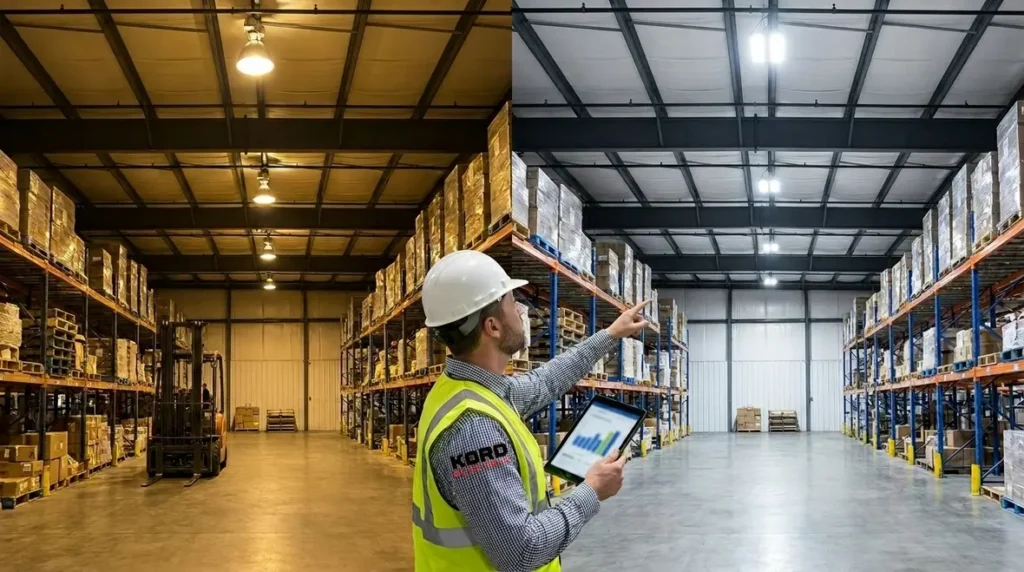
Calculating the ROI of Smart Lighting Systems in commercial spaces starts with a simple truth: lights are not just “on” or “off.” They influence energy use, comfort, safety, and even how long a space stays productive. At Kord Electric, we help facility owners and property teams build a commercial smart lighting ROI case that holds up in the real world, not just on a slide deck. We use our expert technicians and service staff to explain each number, each control strategy, and each payback path in plain language. And yes, we still laugh when someone calls it “lighting theater.” In a way, they are right. Done well, smart lighting turns performance into a quiet, steady advantage.
What makes commercial smart lighting ROI different for property teams?
ROI calculations for commercial and industrial facilities are not like comparing two office lamps. Lighting sits inside a system of schedules, occupancy behavior, building automation, and electrical design. Therefore, the baseline matters. If a facility already has LED fixtures but uses outdated controls, the savings will come mainly from smarter switching and dimming. If the facility also has aging drivers or inconsistent maintenance, the ROI story shifts again, because the project affects more than electricity.
At Kord Electric, we ask our clients about usage patterns first. Then we map expected control changes. For example, our technicians often see spaces where lights run at full power longer than people stay in them. When we add occupancy sensing, daylight harvesting, or timed scenes, we reduce that “wasted on” time. Next, we translate those reductions into energy savings and operational benefits. Even better, we make the process measurable, so others in the organization can sign off without needing a magic spreadsheet.
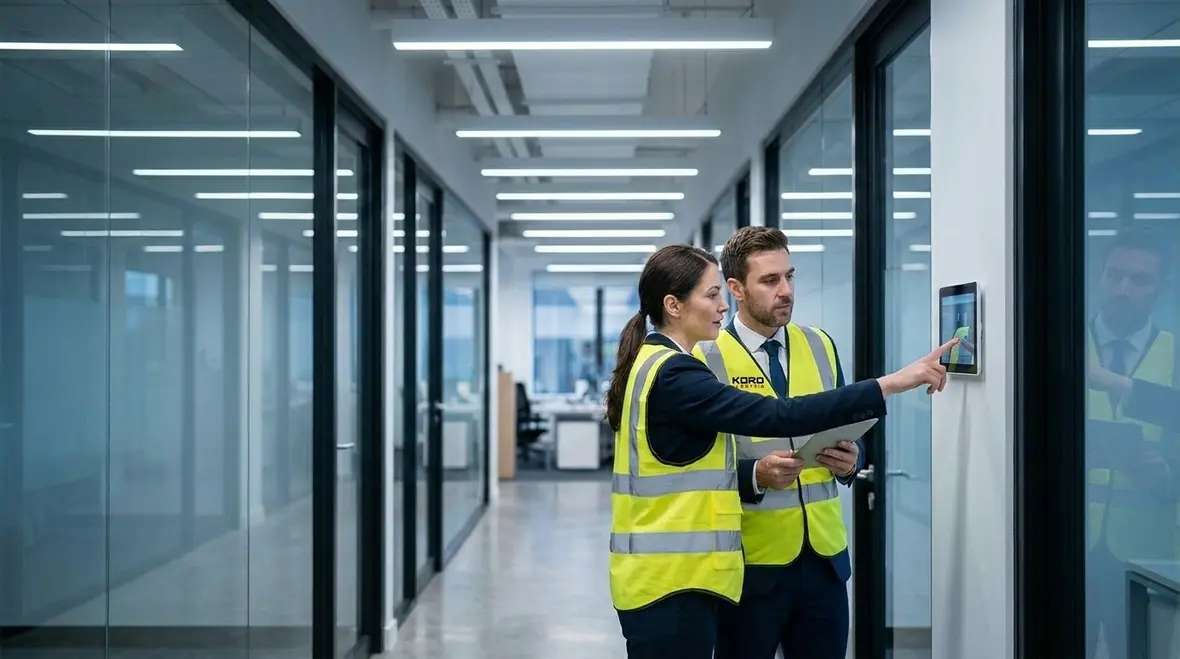
Step by step: how we calculate savings without guessing
To compute ROI, we start from energy and then layer in reliability and service impacts. Specifically, we build a forecast in a structured order. First, we review current lighting load, hours of operation, and fixture type. Second, we estimate how new controls reduce light output when space conditions do not require full brightness. Third, we incorporate local utility rates and any demand related effects, if applicable.
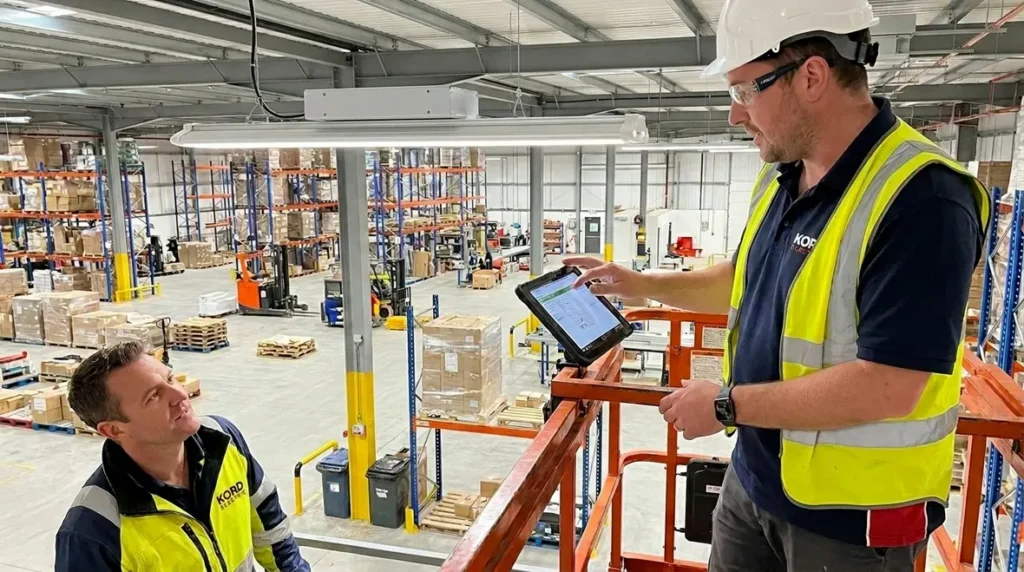
Here is how our expert service staff typically breaks it down during a walkthrough:
- Baseline energy: We calculate current kWh using connected load and operating hours.
- Control driven reduction: We model dimming levels, occupancy shutoff, and daylight strategies.
- Transition time: We account for fade rates and setpoints so comfort stays consistent.
- Maintenance savings: We include less relamping and reduced service calls where applicable.
- Commissioning and tuning: We estimate time and cost to verify performance after install.
Then we roll it into a ROI view. We use the same logic across major property buildings because the math should be consistent. However, we adapt assumptions to your occupancy, your schedule, and your building’s electrical distribution realities. In other words, we do not just “estimate.” We explain the logic so the numbers can survive internal review.
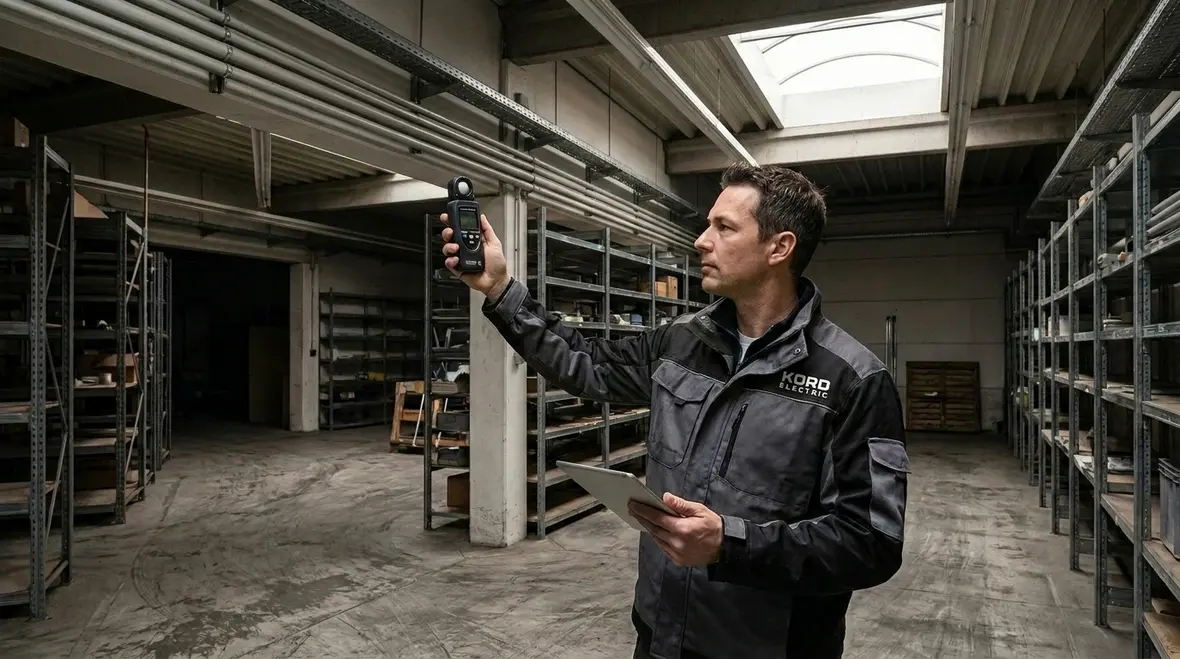
Energy savings: dimming, occupancy, and daylight that actually holds up
Energy savings usually drive the ROI headline, and for good reason. Still, it only holds if the strategy fits how people use the space. Therefore, we avoid generic settings that look great during testing and fail during week two.
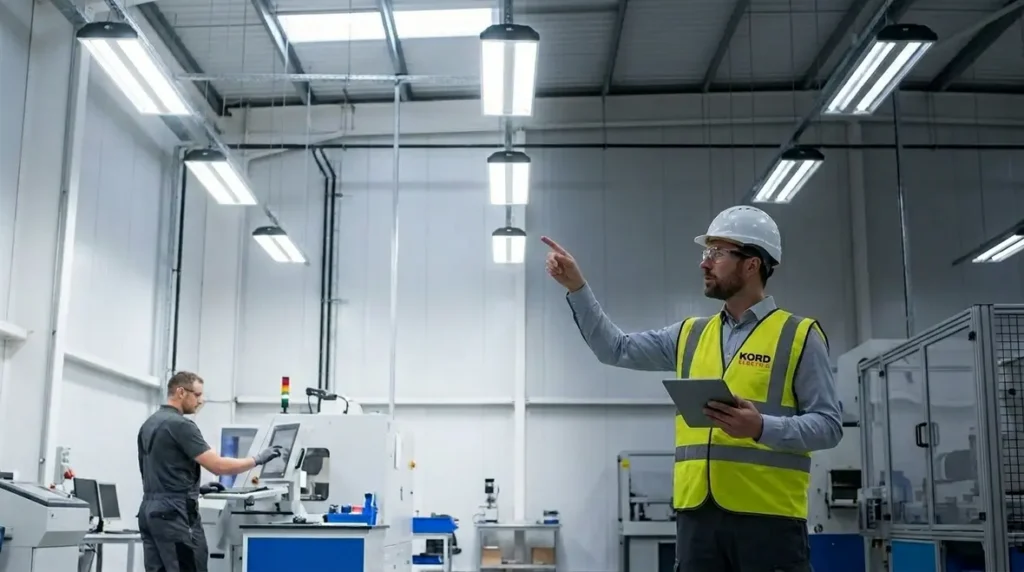
For commercial and industrial areas, we focus on three control paths.
- Occupancy control: Sensors reduce runtime. We also tune “hold time” so lights do not snap off during normal workflow.
- Dimming control: We reduce output while maintaining target illuminance. This works best when tasks stay within predictable brightness needs.
- Daylight harvesting: We coordinate photocells with sun exposure patterns. That way, windows contribute to savings without making spaces feel like a mood ring.
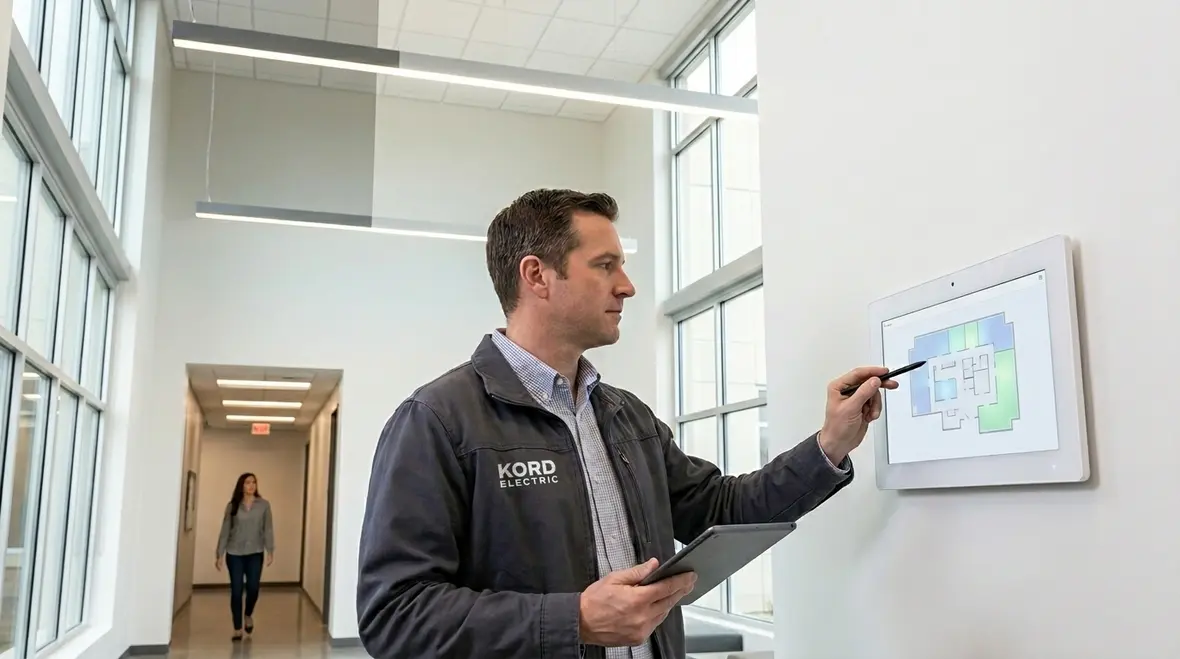
Moreover, Kord Electric treats control design like electrical distribution design. If power reliability and proper configuration matter upstream, then controls must integrate cleanly downstream. Our team often references reliability principles similar to what we discuss in our work around data center electrical distribution design for reliability, because the idea is the same. Control systems must operate as intended, and they must not create new failure points or nuisance issues.
So, while the ROI math starts with kWh, the ROI survives because controls stay stable. And stable controls mean fewer calls, fewer adjustments, and fewer meetings that begin with, “Why did the lights do that?”
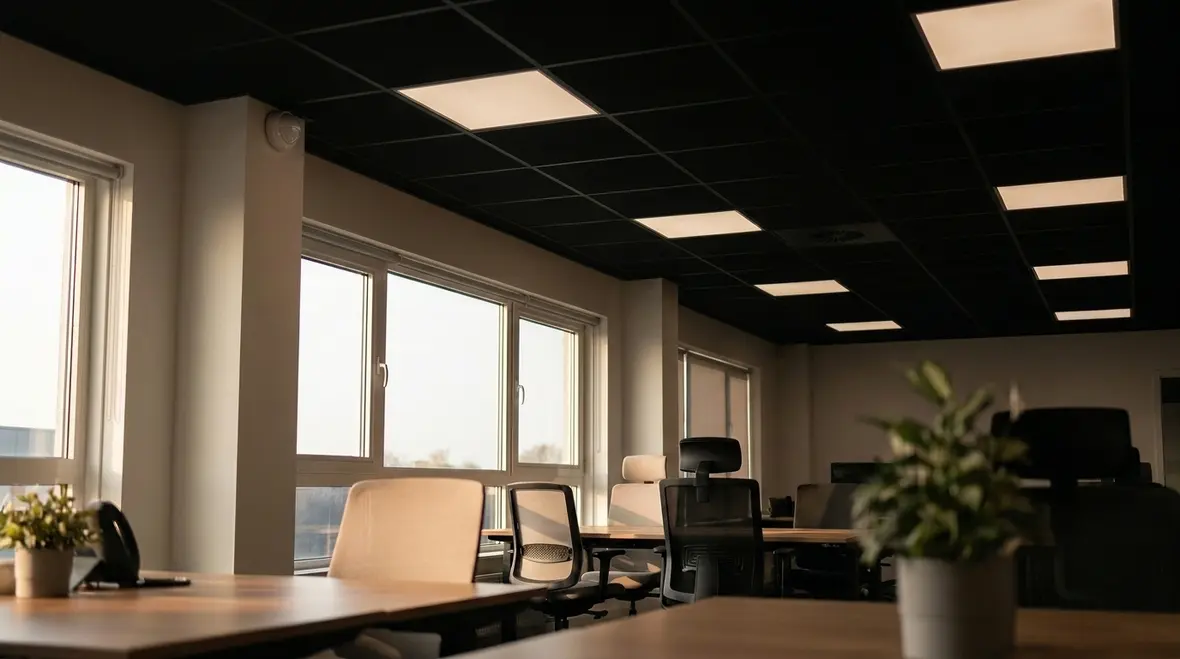
Reliability, uptime, and the cost of “lighting drama”
Smart lighting ROI should include risk and reliability, not just utility bills. A facility can save energy and still lose money if controls cause downtime, staff frustration, or production disruption. That is why our technicians do more than install equipment. They also verify performance, check communication paths, and tune scenes to match real use.
In many major property buildings, lighting systems interact with building automation networks and power quality conditions. Therefore, we pay attention to how controllers and power supplies behave under normal operating conditions. We also consider how the system will operate during off hours, during reoccupancy, and during maintenance events.
Here is where our expert service staff earns their coffee. They explain how fail-safe behavior works. They clarify what happens if a sensor goes offline. They also outline the service steps so your team can plan downtime instead of guessing. And yes, we still get the occasional request to “just make it brighter all the time.” That request usually comes from someone who has never stared at a production floor during shift change. We handle it calmly, like a baritone guiding a choir, and then we show why targeted control works better.
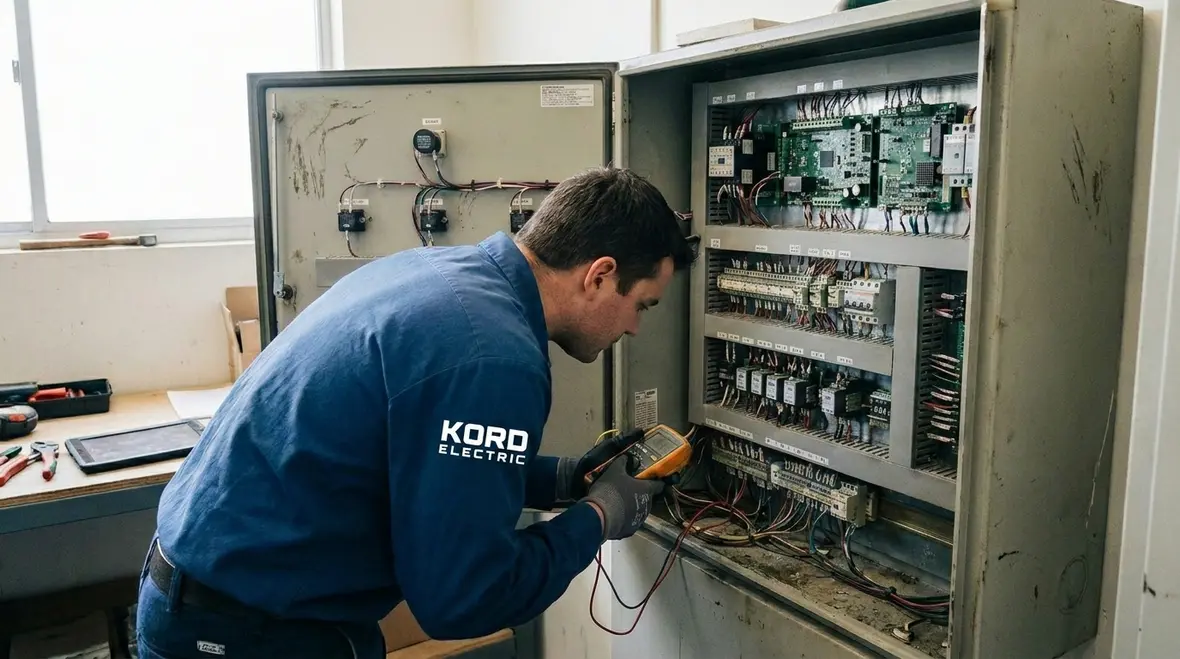
Incentives, project cost, and payback timelines that executives can accept
When clients ask about ROI, they usually want one number: payback time. Yet payback time depends on project cost and incentives. So we structure proposals to include not only hardware and installation, but also commissioning, integration, and training. Next, we identify potential incentives or utility programs that may apply in your service territory and building type.
At Kord Electric, we separate costs into clear categories so decision makers can understand tradeoffs. For example, LED replacement can create quick wins. However, controls can extend savings across larger areas and operating schedules. Therefore, we compare multiple scenarios:
- Controls only: Lower upfront cost, faster payback where fixtures are already efficient.
- Fixture plus controls: Higher upfront cost, stronger savings when lighting output or drivers need upgrade.
- Phased rollout: Reduce disruption and spread cost over time while still capturing gains.
Then we express ROI in practical terms. We show the projected savings range, the assumed hours, and how the control strategy drives those results. In commercial environments, assumptions must be defendable. So we document them, and our technicians explain them in plain language during handoff.
How we tailor ROI for warehouses, retail back-of-house, and industrial offices
Different commercial environments use lighting differently. And when usage differs, the ROI changes. For industrial spaces, we consider shift patterns, aisle layouts, and task lighting needs. For back-of-house retail areas, we consider access timing and how often areas stay “half occupied.” For office-like industrial zones, we consider daylight exposure near perimeter zones and meeting space usage.
We also account for safety and comfort. Dimming still needs to support visual tasks. Therefore, we set target lighting levels and ensure controls do not reduce illumination below operational needs. Next, we coordinate with facility teams about how quickly spaces should respond when people enter.
Because Kord Electric focuses only on commercial and industrial facilities and major property buildings, we keep our approach aligned with those realities. We do not water down the plan for a one-off residence. Instead, we build systems that support consistent operations across teams and shifts.
And yes, we also consider the human factor. If occupants feel like the lights behave like they have a personality, they will bypass the system. So we tune the behavior for smooth transitions, and we train staff so usage matches the intent.
ROI checklist: questions we answer during a site review
Before anyone talks payback, we verify the basics that drive performance. These items determine whether the commercial smart lighting ROI stays on track after install.
- Operating schedules: We confirm hours and shift changes.
- Space types: We separate production, corridors, storage, and office areas.
- Current fixture condition: We check LED health, drivers, and maintenance history.
- Control targets: We choose occupancy, daylight, or time scenes by zone.
- Integration needs: We plan network or building system interface requirements.
- Service access: We confirm how technicians will reach sensors and panels.
Our expert technicians walk through these items with your team. Then, they explain the effect each decision has on energy use and reliability. That is how we turn ROI from a guess into a plan. Not flashy. Not complicated. Just solid.
FAQ
Conclusion: let Kord Electric build your ROI plan
If your team wants a commercial smart lighting ROI that stands up to real operations, we help you map savings, tune controls, and protect uptime. Our technicians and expert service staff explain every assumption and control strategy in plain language, so decision makers can move with confidence. Ready to see what smart lighting could change for your commercial or industrial facility? Contact Kord Electric today, and we will schedule a site review built for your building, not for generic assumptions.
For facilities that also need broader reliability support, you can connect your lighting upgrades with regional services that understand your operating reality. Kord Electric’s dedicated Los Angeles County electrical services help commercial and industrial sites coordinate lighting, distribution, and maintenance so your ROI story extends beyond a single project.
If you are already planning electrical improvements or exploring new control strategies, aligning your commercial smart lighting ROI with a clear service plan keeps your facility prepared for growth, code changes, and new technology. That way, your investment in smart lighting becomes one part of a calm, coordinated electrical roadmap instead of a one-off experiment.
Whether your priority is energy savings, uptime, or tenant comfort, Kord Electric can connect the dots from controls to distribution design, maintenance, and future upgrades. When you are ready to move from “what if” to “what’s next,” our team is ready to walk the space, run the numbers, and build a lighting and controls plan that fits your building, your people, and your long term goals.
To explore how lighting controls can work alongside other reliability upgrades, our service staff can also show you how to phase projects, coordinate scheduling, and keep operations stable while work is underway. The result is simple: an ROI plan that works on paper, in the field, and across every shift.
If you want your next lighting project to feel less like a test run and more like a proven upgrade, Kord Electric is ready to help you design, install, and maintain a system that quietly pays you back day after day.
When you are ready to connect commercial smart lighting ROI with a complete electrical strategy, reach out to our team, and we will help you line up the technical details, schedule, and incentives so you can move forward with clarity.
From first walkthrough to final tuning, our technicians and expert service staff stay focused on performance that holds up in the real world, not just in a presentation. That focus is how we treat every project, whether we are refining lighting controls, troubleshooting electrical systems, or helping you plan the next stage of your facility’s growth.
If you are considering how smart lighting might pair with other upgrades, such as new process loads, EV charging, or reliability work across your portfolio, our team can help you prioritize where the biggest combined ROI lives, and how to phase changes without overloading your schedule or your staff.
In short, when you are ready to see how commercial smart lighting ROI connects to the rest of your electrical story, Kord Electric is ready to build that story with you, one practical decision at a time.
To take the next step, connect with our team and we will align your lighting goals with your electrical system realities, so your next upgrade feels like a confident move, not a gamble.
If your site operates across multiple shifts, tenants, or production lines, our regional team can also help you coordinate work windows and communication so your upgrade feels predictable to your staff, and invisible to your customers.
And when you need a partner who understands both smart controls and the power system that feeds them, Kord Electric is here to support you from first question to final sign off.
If you would like to review how smart lighting efficiency, reliability, and safety all play into your next round of capital planning, our team can help you map the options clearly before you commit to a path.
For every commercial smart lighting ROI discussion, we stay focused on one outcome: making sure the numbers and the experience line up, so your building runs smoother, not stranger, after the upgrade is complete.
When you are ready, reach out, and we will start by listening to how your facility runs today, then we will build the smart lighting story that fits it.
Because at the end of the day, the best smart lighting systems are the ones your team barely notices — except when they read the savings and uptime reports.
Let’s build that kind of system together.