Business Power Outage Recovery Planning Guide
At Kord Electric, we start business power outage recovery before the lights ever flicker. In the first moments of an outage, we help our commercial and industrial clients protect sensitive equipment, keep critical loads running, and restore power in a way that reduces downtime and costly surprises. Then, we document what happened, so the next outage does not repeat the same mistakes. And yes, we also explain the plan in plain language, because nobody should need an engineering degree just to understand why a building goes dark.
In the sections ahead, our expert service staff walks through practical steps for preparing electrical systems for power outages, from backup power and transfer switches to safer monitoring and smarter maintenance. We will keep it grounded in real building needs, not textbook fantasies.
How business teams prepare electrical systems for real outages
Commercial facilities do not fail the way a household does. When power drops in a hospital wing, a warehouse cold storage area, or a multi-tenant office, the building responds like a living system. Therefore, the preparation has to be coordinated. First, a qualified electrical evaluation identifies the loads that matter. Next, the team designs a response that matches the risks, runtime needs, and operational priorities.
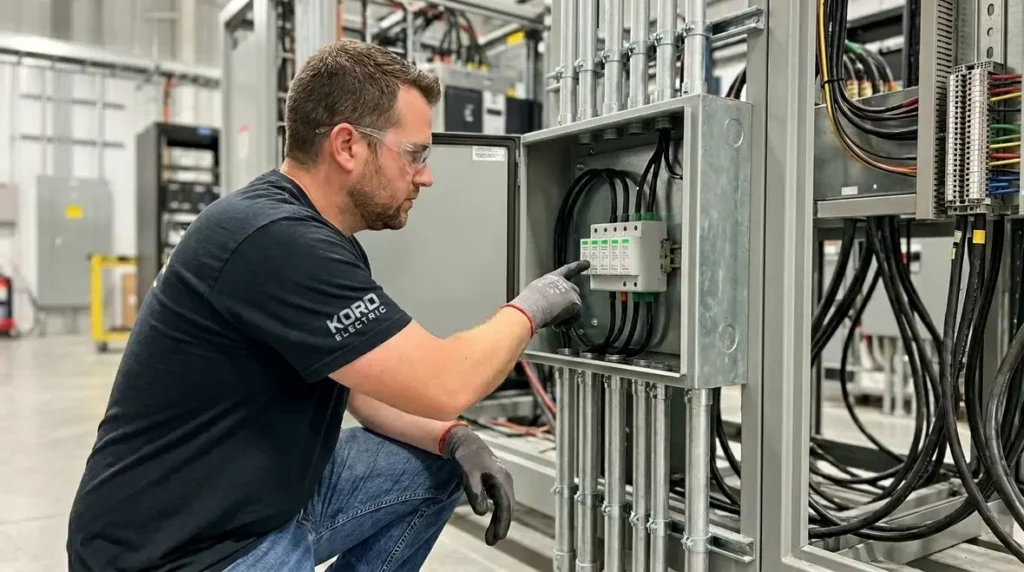
Our technicians approach this methodically. They review how the facility uses power across shifts, during maintenance windows, and during peak demand. Then, they map critical circuits to a backup plan. After that, they confirm the protection devices and wiring can handle the transfer and re-energizing cycle without damage.
We also help facilities avoid a common mistake: treating backup as a box you buy once and forget forever. In reality, backup power behaves differently as equipment ages, batteries age, fuel delivery changes, and loads shift over time. So, we plan for changes, not just emergencies.
Which loads keep running when power stops

To build a strong outage response, we separate loads into categories. Critical loads often include life safety systems, controls for critical processes, refrigeration, IT and networking, and essential lighting for safe evacuation and security. In addition, some facilities need partial operation to avoid complete shutdown. For example, a data center might keep cooling running while other services reduce.
Our expert service staff works with facility managers to define priorities clearly. We ask, what has to stay alive, what can wait a short time, and what can shut down safely. Then, we design the system so the right circuits receive power at the right time, without overloading backup sources.
Here is a simple truth that still surprises people: if you do not plan the load sequence, you can accidentally make the outage worse. During reconnection, simultaneous startup surges can trip protective devices or strain the generator. Therefore, we coordinate load shedding and staged restart so recovery starts smoothly.
Transfer switches, generators, and UPS in a practical plan
When power fails, the building must transition fast and clean. Transfer switches, standby generators, and UPS systems each serve a role. However, the best design depends on the facility’s runtime needs and criticality.
UPS protects sensitive loads during the switch-over and provides short-term power while the generator starts. Generators then carry longer runtime needs. Transfer switches manage the switch from utility to backup and back again.
Our technicians explain the workflow in a calm, straightforward way. For instance, we show how instantaneous interruption impacts drives, control panels, and communications gear. Then, we align UPS capacity with actual load measurements, not guesses. Also, we validate the generator starting method, fuel assumptions, and acceptance testing so the system performs under stress.
And because even serious work needs a moment of relief, we tell clients this: a generator that is “probably fine” is like a smoke alarm that only works during daylight. It is not confidence. It is a scheduling error.
Business power outage recovery hinges on commissioning and testing
Prepared systems do not rely on hope. They rely on commissioning, documentation, and repeatable testing. Business power outage recovery starts with knowing the system will switch, start, and run as designed. So we verify the electrical system on day one, then we verify it again as the building changes.
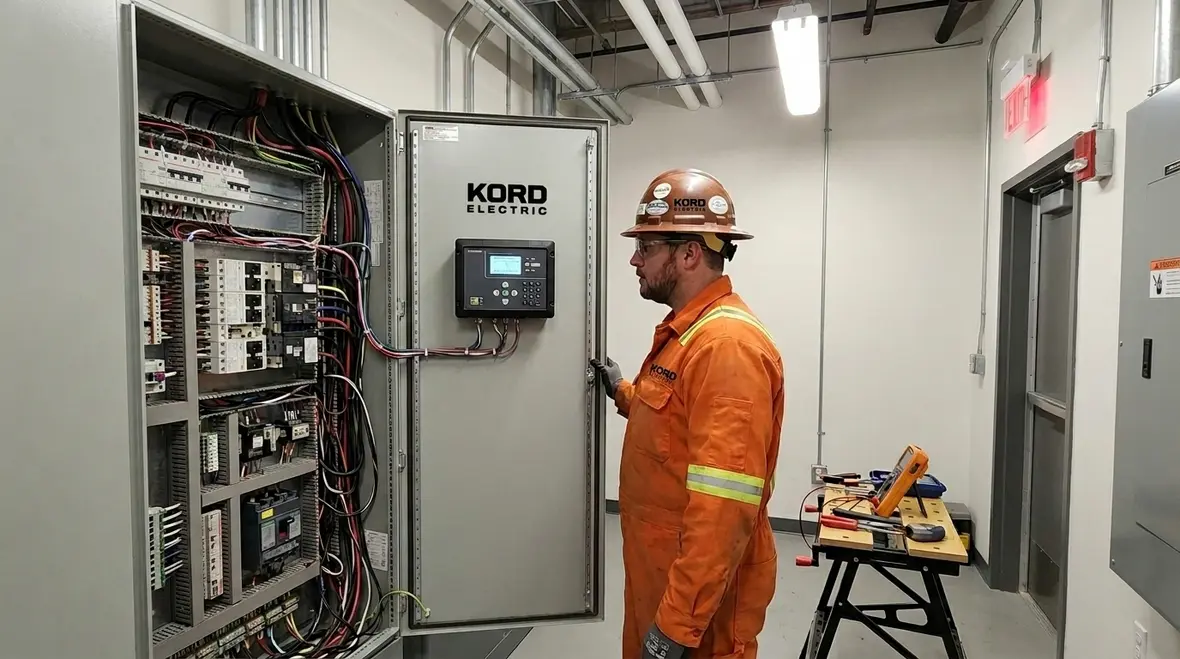
We follow a testing approach that includes simulated outages and functional checks of the transfer path. Additionally, we confirm protective device settings and verify load behavior during startup. If the facility includes sensitive controls, we confirm signal integrity, alarms, and communications. When UPS is involved, we evaluate runtime, battery health, and charging behavior after restore.
Our expert service staff also creates a practical maintenance cadence. Instead of vague reminders, we recommend specific inspections at intervals that match component wear and operational cycles. As a result, the facility reduces the chance of a hidden failure showing up only during a crisis.
Finally, we encourage facilities to practice the response plan. Electrical readiness matters, but people matter too. Therefore, we coordinate training with maintenance teams and operations leaders so everyone knows who does what when the panel alarms, the lights dim, and the building moves to backup.
Smart monitoring and alarms that help staff act faster
Even the best electrical setup needs visibility. Without monitoring, teams find out about an issue after it becomes an incident. Therefore, we design monitoring so facility staff can understand what happened and what to do next.
This can include status signals on transfer equipment, generator runtime and fault indicators, UPS health data, and alarms tied to critical circuit states. Moreover, we help clients set up alarm thresholds that make sense for their operations. If alarms trigger too often, staff ignore them. If alarms trigger too rarely, staff never catch early warnings.
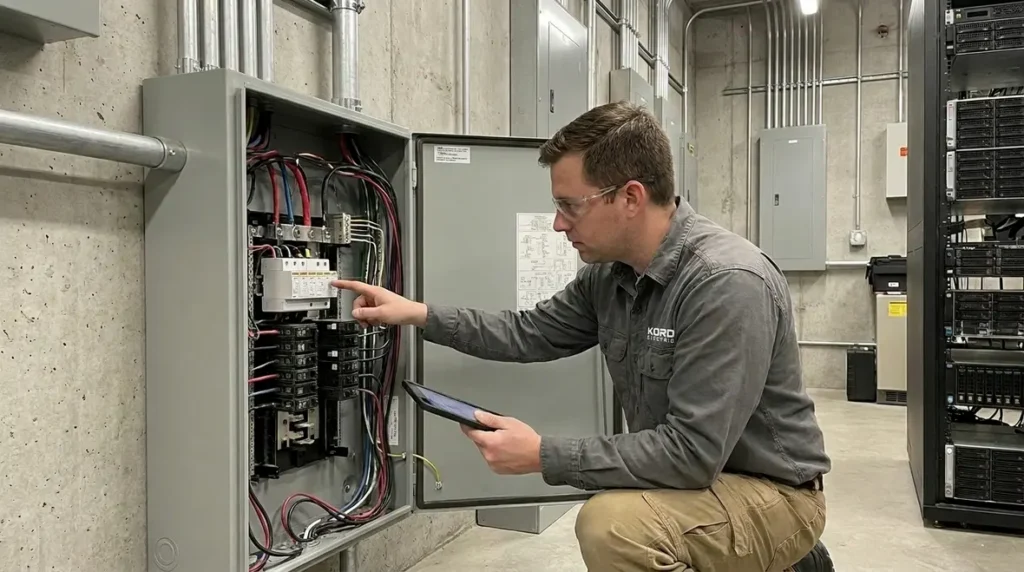
Our technicians often recommend structured reporting. For example, they can help capture events and maintenance logs so the facility tracks trends over time. Consequently, a small recurring issue gets treated as a pattern instead of a mystery.
Pop culture analogy time, in a business appropriate way: monitoring should act like a good detective, not like a dramatic TV cliffhanger. We want clear evidence and a clear next step, not suspense.
Integrating solar, building power, and protection for resilience
Many commercial and industrial facilities now add solar generation, battery systems, or hybrid energy setups. That integration can improve resilience, but it also adds complexity. Therefore, the electrical design must respect switching behavior, protection coordination, and energy flow in both utility and backup modes.
When solar exists, we reference a practical integration mindset similar to the approach we share in our commercial solar panel electrical integration guide. The key idea stays the same: the system must communicate and behave predictably across operating states, including outages. Accordingly, the design should address anti-islanding requirements, inverter behavior, and safe isolation during maintenance and fault conditions.
Our team coordinates with stakeholders so solar does not become a “power when it feels like it” situation. Instead, we align the solar output with backup strategy and ensure the facility uses the energy safely. Also, we verify how protective devices react when power reverses direction or when backup mode begins.
In short, we make sure every part of the system plays its role during the outage, not just during normal daylight operations.
Maintenance schedules that prevent the next outage surprise
Most failures do not arrive out of nowhere. They develop quietly. Therefore, maintenance has to focus on the parts most likely to fail under outage conditions: transfer switches, relays, battery banks, charging systems, generator components, and connection points.
Our expert service staff creates service plans that fit a facility’s operating schedule. We recommend checks that include visual inspections, electrical testing, and functional exercises. Additionally, we confirm that wiring terminations stay tight and that protective devices remain correctly calibrated.
We also help clients manage changes. When a business adds new equipment, changes HVAC schedules, expands warehousing, or upgrades computing systems, the electrical load profile changes too. So we reassess critical loads and confirm the backup system still matches the real-world demand.
Because, let’s be honest, if someone installs a new production line and nobody tells the electrical team, the building learns the lesson the hard way. We aim to save everyone that learning experience.
For facilities that want a structured, proactive path to reliability, pairing outage planning with dedicated commercial and industrial electrical maintenance plans keeps both everyday operations and backup systems ready for the unexpected.
If your organization operates in Southern California, aligning outage readiness with regional support can also help. Our team regularly supports projects connected to broader Los Angeles County electrical services, so your facility’s response plan stays matched to local codes, grid behavior, and building needs.
Frequently asked questions
Final word: build readiness with Kord Electric
Power outages do not ask permission, and they do not care about your schedule. That is why we help commercial and industrial facilities strengthen their electrical readiness with business power outage recovery planning that actually holds up under pressure. If your building runs critical processes, protects people, or supports essential systems, contact Kord Electric. Our technicians and expert service staff will review your loads, confirm your protection strategy, and set a maintenance and testing plan designed for smooth restoration. Let’s get your resilience in place before the next outage arrives.
For organizations investing in broader energy resilience alongside outage planning, our team can also coordinate with projects that follow the practical thinking in our commercial solar panel electrical integration work, so your backup strategy and your long-term energy goals move in the same direction.
And when you are ready to take the next step from planning into implementation, our commercial and industrial electrical maintenance and emergency response capabilities are designed to keep your facility prepared for both everyday loads and the rare, unscheduled outage that truly tests your system.