
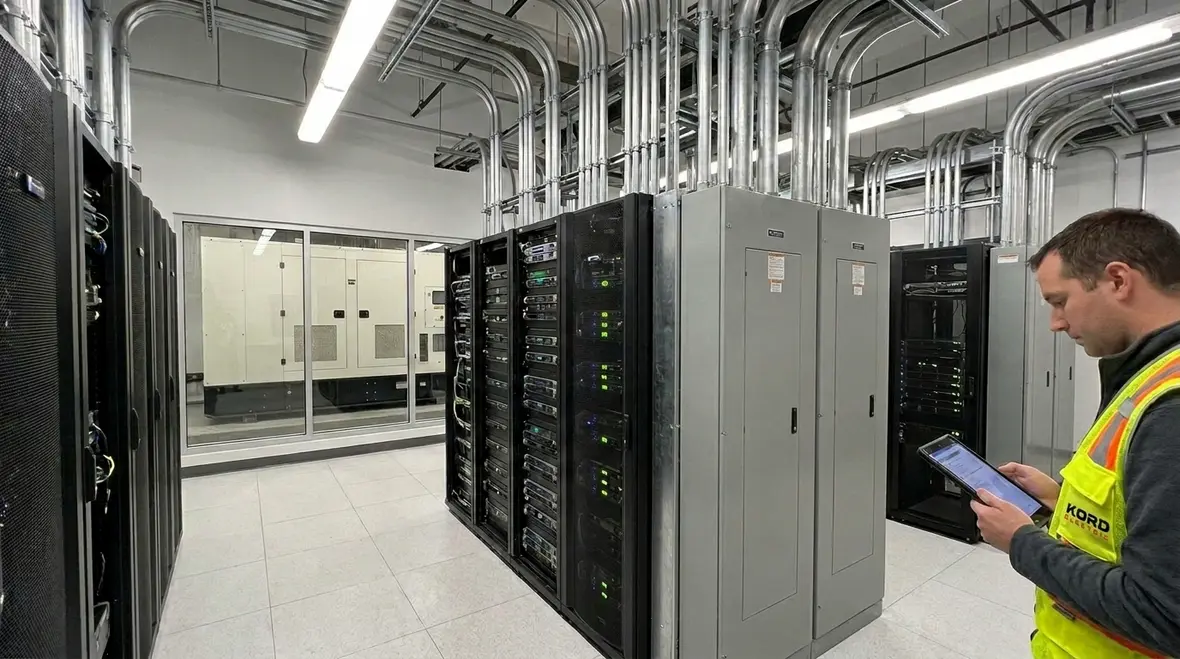
Data Center Power Redundancy Beyond UPS
Beyond UPS: Essential Power Redundancy Strategies for Data Centers in Southern California
When people think about power, they usually stop at the UPS. However, in Southern California, we see how quickly “just a UPS” can turn into a long night for operators. That is why Kord Electric focuses on data center power redundancy strategies that go beyond backup batteries and cover the full path from utility to critical loads. First, we help facilities design layered reliability, then we support it with clean testing, smart maintenance, and well-managed switchovers. Meanwhile, our technicians and expert service staff explain each step in plain language, so others do not have to guess why a system behaves the way it does. And yes, we have heard the joke that a UPS “stands for” something else. In the field, though, the letters mean business.
For teams planning new facilities or modernizing older sites, redundancy now touches everything from utility entry to panel schedules, monitoring platforms, and emergency response. It is no longer enough to say “we have a UPS and a generator somewhere out back.” Today’s operators want to know how each piece behaves during a real event, how quickly failures isolate, how fast backup sources assume the load, and how clearly the system communicates under stress.
That is where structured design and disciplined field work matter. Kord Electric helps Southern California data centers and major properties turn theoretical redundancy into real, dependable uptime. We walk through the infrastructure step by step, identify subtle single points of failure, and help teams replace guesswork with clear, tested pathways.
Why redundancy fails when the design stops at the UPS
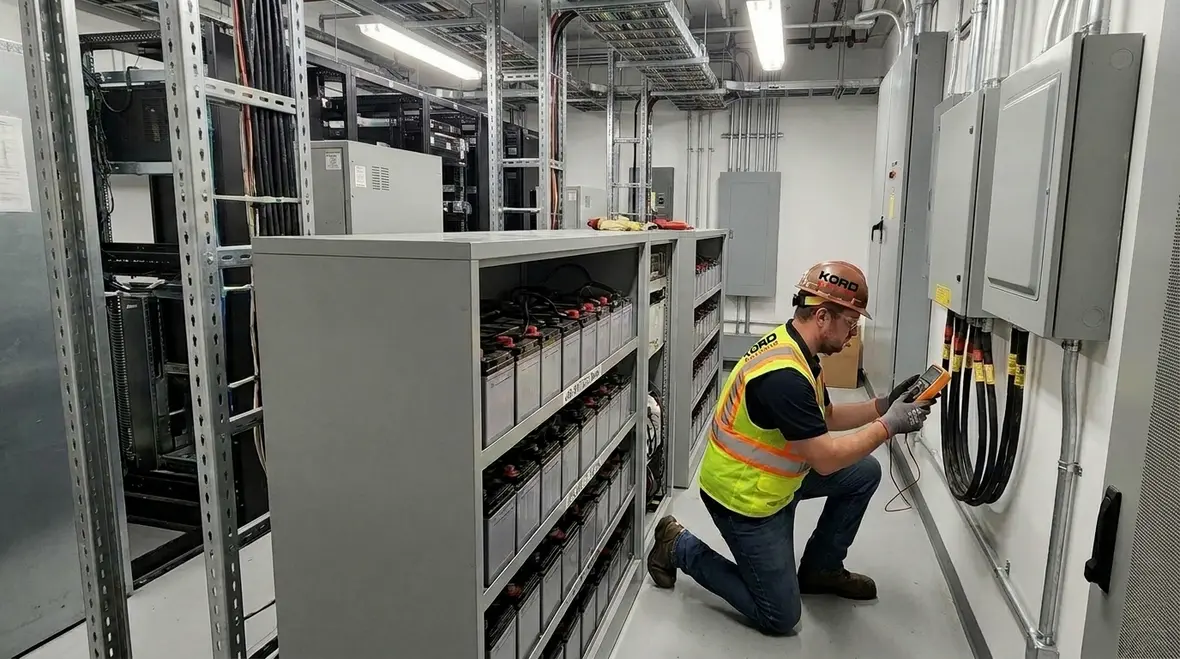
Most data centers start with good intent. Yet, even a high grade UPS cannot protect everything by itself. For example, a UPS mainly bridges short interruptions. If the upstream components stumble, the UPS may carry the load for a while, then it runs out of runway. That is where data center power redundancy strategies must include utility feeds, distribution paths, and control logic, not just battery energy.
In addition, Southern California conditions add real pressure. Utilities can face events, and equipment can age in tight mechanical rooms. As a result, facilities need redundancy that holds under stress, not just under ideal conditions. Our expert service staff often tells operators a simple truth: reliability is a system, not a single device. Then we help teams map every possible failure point and build a plan that keeps critical servers online.
Transitioning from concept to practice, we also see that many sites lack clear runbooks for what happens during a switch. Therefore, the design must include both hardware and operating procedures that match how people actually respond.
We frequently review facilities where the UPS looks impressive on paper, but upstream breakers, transfer devices, or utility interfaces remain fragile. In those cases, the UPS only delays an outage instead of preventing one. When alarms sound and lights flicker, operators suddenly realize that the power story above the UPS was never fully written.
This gap becomes even more obvious when team members change. If institutional knowledge lives in one person’s memory instead of in documentation and training, those “we thought it would work like this” moments show up at exactly the wrong time. Our goal is to replace that uncertainty with tested paths, documented expectations, and control logic that supports the way real people think under pressure.
Design for N+1 and separation, not just “more gear”
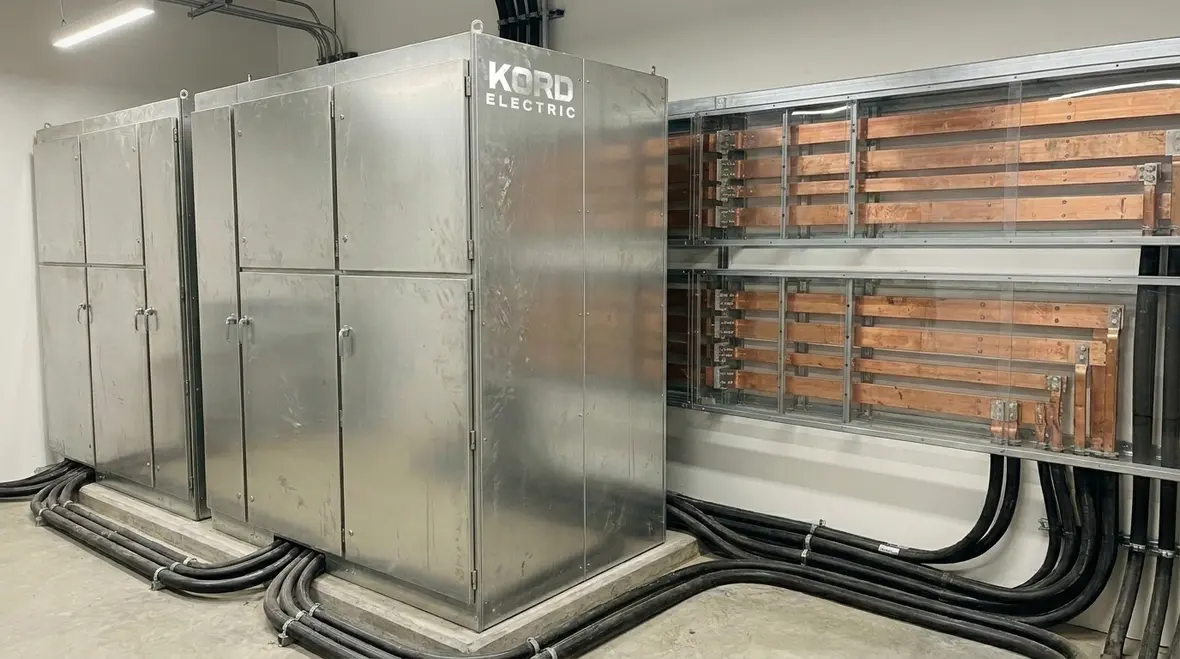
Redundancy sounds simple, but it is not magic. We build it with structure. One strong approach uses N+1 capacity, where one extra unit supports the required load. However, we also stress physical and electrical separation. In other words, two “redundant” paths that share the same bottleneck still behave like one path.
As we work with commercial and industrial properties, we often help teams establish separate feeders, distinct switchgear sections, and independent power conversion where needed. Then, we coordinate busbar arrangements so a single fault does not collapse multiple downstream systems. Meanwhile, technicians verify that load sharing logic does not create surprises during transfers.
Here is the real value: when a fault happens, the facility should isolate it quickly and continue feeding critical circuits. That reduces downtime and protects data integrity. Also, it limits smoke, heat stress, and cascading failures that can turn a minor event into a full emergency.
True separation is often less glamorous than a new piece of equipment, but it is where resilience earns its reputation. Split bus designs, independent distribution paths to separate IT rooms, and segregated auxiliary systems all protect against “common mode” failures.
For facilities planning larger upgrades, we frequently recommend pairing N+1 architecture with a phased approach to separation. That can mean shifting some loads onto a secondary path, adding a new section of switchgear, or introducing a second UPS plant in a different room. Over time, the site moves from “everything on one spine” to a design that can take real hits without losing the mission.
Many of these design discussions connect naturally with broader planning around electrical infrastructure. For deeper context on how distribution, switchgear, and protective devices support uptime, you can review Kord Electric’s article on Data Center Electrical Infrastructure Essentials, which walks through the backbone that supports these redundancy decisions.
Utility interface and transfer schemes that hold under real events
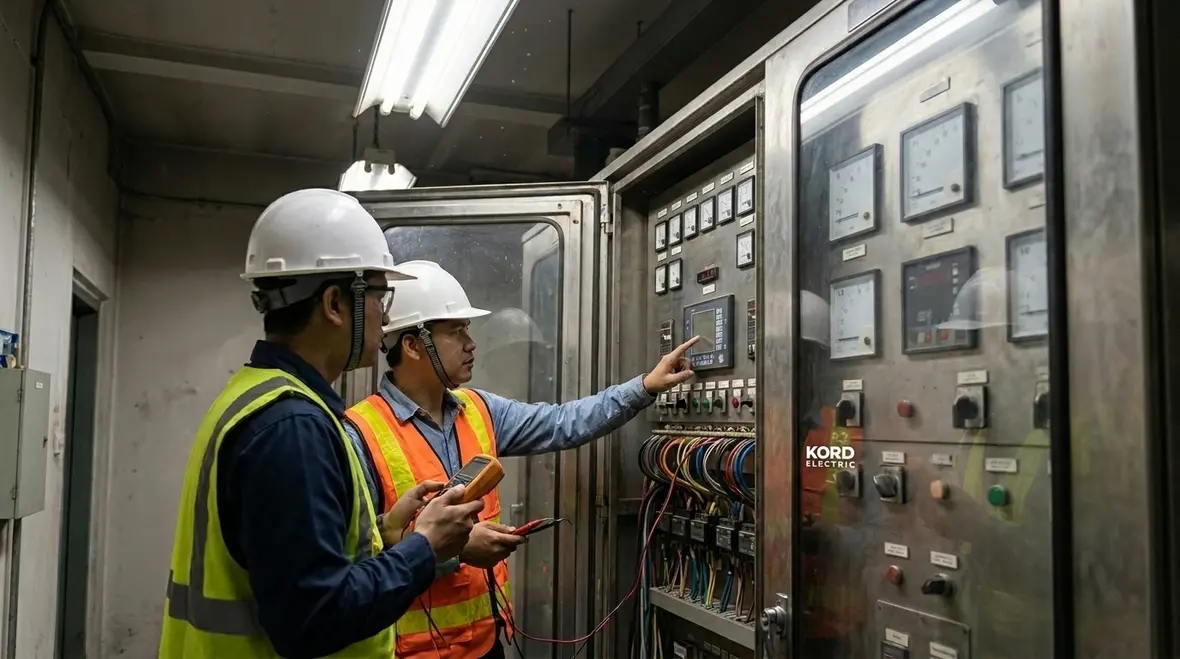
Next, the utility interface deserves attention. Data center power redundancy strategies must account for the moment utility power changes. We help teams define transfer schemes that match the site’s utility service and its critical load needs.
That often includes properly engineered transfer switches, well planned tie and bypass methods, and clear coordination between upstream and downstream protection. If the system transfers too early or too late, it can cause nuisance alarms or even drop loads. Therefore, engineers and field teams must coordinate settings, timing, and protective device behavior.
At Kord Electric, our service staff explains these schemes in a way operators can use. So instead of a slide deck that gathers dust, the team gets practical guidance on what the controls should do, what crews should watch, and how to confirm proper operation during test windows.
Additionally, we recommend designing for safe maintenance. After all, the goal is not only to survive a grid event. The goal is also to keep service during planned work, without bypassing safety or creating hidden single points of failure.
For Southern California facilities that experience utility disturbances, wild weather, or regional load shedding, the interface strategy becomes even more important. Transfer sequences must be robust enough to ride through irregular events but refined enough to avoid unnecessary generator runs or disruptive re-transfers.
We work with both operations and engineering teams to tune these schemes on live sites, validate performance during controlled testing, and document clearly what should happen during an unplanned outage. Over time, operators stop fearing the transfer and start trusting it.
Distribution architecture and protection coordination that prevent cascading outages
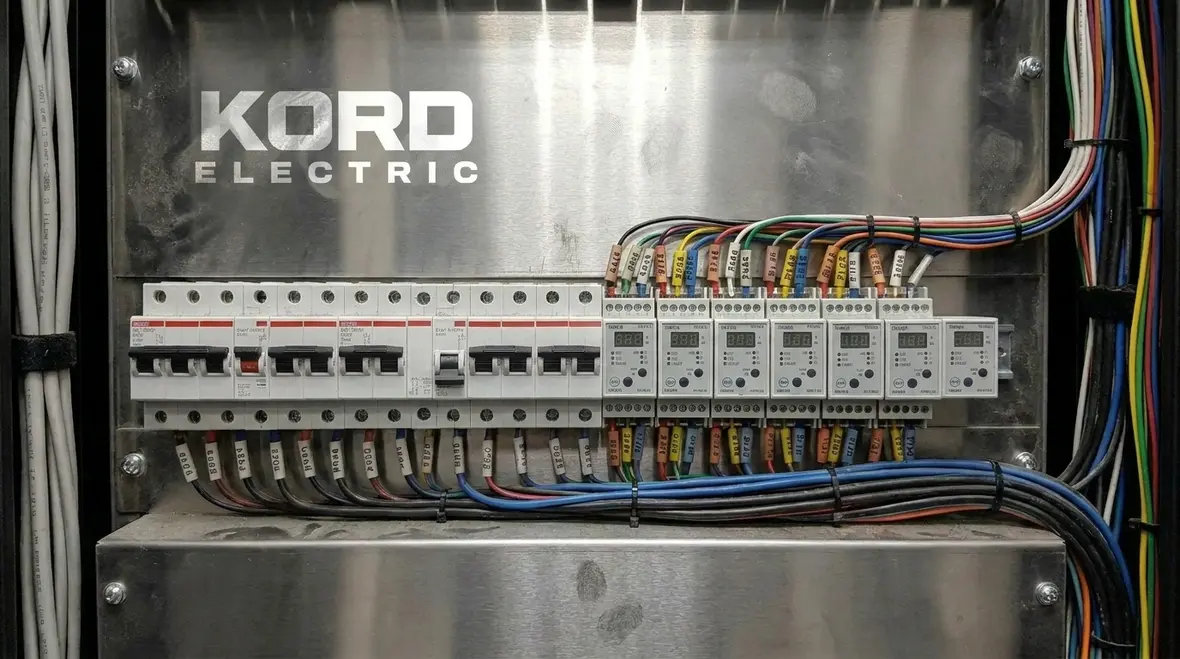
Once power leaves the main interface, distribution becomes the place where reliability succeeds or fails. In practice, we see that many issues trace back to protection coordination and the way distribution sections interact. For instance, if protective devices do not coordinate, a downstream fault can trip more upstream than necessary. Then the data center loses more than it should.
To prevent that, we help clients coordinate breakers, relays, and protective settings across the system. We also focus on selectivity, so fault isolation happens at the smallest possible segment. At the same time, we ensure the distribution architecture supports critical loads while maintaining safe paths for non critical circuits.
Meanwhile, metering and monitoring play a role too. If teams lack visibility, they cannot verify what happened during an event. Consequently, we support better instrumentation and alarms so operators can trace events quickly and restore service confidently.
And yes, we have met systems where the alarm language sounded like it came from a sci fi movie. When that happens, we tune the experience: clearer signals, better logic, and field friendly documentation that reduces confusion under pressure.
Effective coordination also feeds into preventive maintenance. Periodic testing of breakers, review of relay settings, and validation of arc flash studies all help ensure that the system reacts as designed, even years after installation. This is where electrical preventive maintenance programs stop being a “nice to have” and become part of the critical path for uptime. Facilities that want a structured approach to keeping these systems healthy can lean on Kord Electric’s Electrical Preventive Maintenance services to support that long-term reliability.
Emergency power, generator sequencing, and keeping transfers smooth
Backup generators remain a key part of many facilities, but smooth operation depends on details. Generator sequencing must start at the right time. Fuel systems must stay ready. And transfer timing must match the UPS and distribution logic.
Therefore, we work with facility teams to plan generator startup behavior, load pickup strategy, and transfer order. Some sites use staged loading to reduce inrush and control voltage behavior. Others rely on defined steps so the most critical loads come first. Either way, we help confirm the system acts consistently when events happen, not only when someone tests it once a year.
Transitioning to the operational side, our technicians also support service procedures that keep reliability high. They explain how to inspect key components, how to confirm controller states, and how to evaluate the health of the overall power chain. That is how teams avoid “it should work” thinking and move toward “we know it works” confidence.
Then, after switching to generator power, the system must stabilize and remain stable. Voltage and frequency behavior, harmonics, and load interaction all matter. Our goal is simple: keep critical loads online while the site transitions safely.
For sites with 24/7 operational demands, pairing robust generator design with a clear emergency response plan is essential. When an event escalates beyond planned tests, teams may also rely on dedicated response services. In those cases, Kord Electric’s Emergency Electrical Services help restore stable conditions quickly while keeping safety and compliance front and center.
Maintenance, testing, and documentation that keep redundancy honest
Hardware does not care about intentions. It cares about condition. So even the best design needs ongoing maintenance, testing, and documentation. When we support data centers and major property buildings, we emphasize routine verification of transfer pathways, breaker operation, and UPS health within safe schedules.
Our expert service staff helps teams set test plans that support real operational goals. That includes staged tests that confirm controls, verify alarms, and validate that interlocks work as intended. It also includes reviewing what people do during an event, because if the plan exists only on paper, it will not save anyone when the lights flicker.
Additionally, documentation should guide crews. We encourage clear single line diagrams, transfer procedure checklists, and updated contact lists for service response. When those documents match the field, troubleshooting becomes faster and less stressful. And that reduces time in troubleshooting mode, which is the last thing a facility needs.
Ultimately, strong data center power redundancy strategies remain strong only when teams keep them that way. We treat maintenance as part of the system, not a separate task.
We also encourage facilities to align their redundancy testing with larger infrastructure planning. When an organization reviews rewiring, panel upgrades, or major expansion work, it is the perfect time to revisit runbooks, alarm behaviors, and maintenance intervals. That way, upgrades do not introduce new blind spots. For owners considering bigger modernization projects, Kord Electric’s guides on topics such as commercial rewiring and lighting upgrades provide useful context on how capital projects and reliability planning fit together.
FAQ for data center power redundancy strategies
Conclusion: Let’s build redundancy you can trust
In the end, power reliability comes from layered design, careful protection coordination, and disciplined testing. Kord Electric helps commercial and industrial facilities in Southern California strengthen data center power redundancy strategies from utility entry to critical load behavior. Our technicians and expert service staff guide teams with clear explanations, then they support real world maintenance that keeps redundancy honest. If you are planning upgrades, evaluating risk, or modernizing a legacy power setup, contact us now and let’s map your next dependable path to uptime.
For facilities that rely on always-on infrastructure, the next step is turning curiosity into a concrete plan. A focused assessment of your existing power paths, transfer schemes, and maintenance program can uncover both quick wins and long-term projects. From there, you can prioritize changes that deliver the most resilience per dollar and align those upgrades with your broader data center strategy.
Whether you are tuning an existing power chain or planning a new deployment, Kord Electric can help design, install, and maintain the electrical backbone that keeps your workloads running. Explore our Electrical Preventive Maintenance services to support long-term reliability, and reach out when you are ready to turn redundancy plans into proven performance.


