
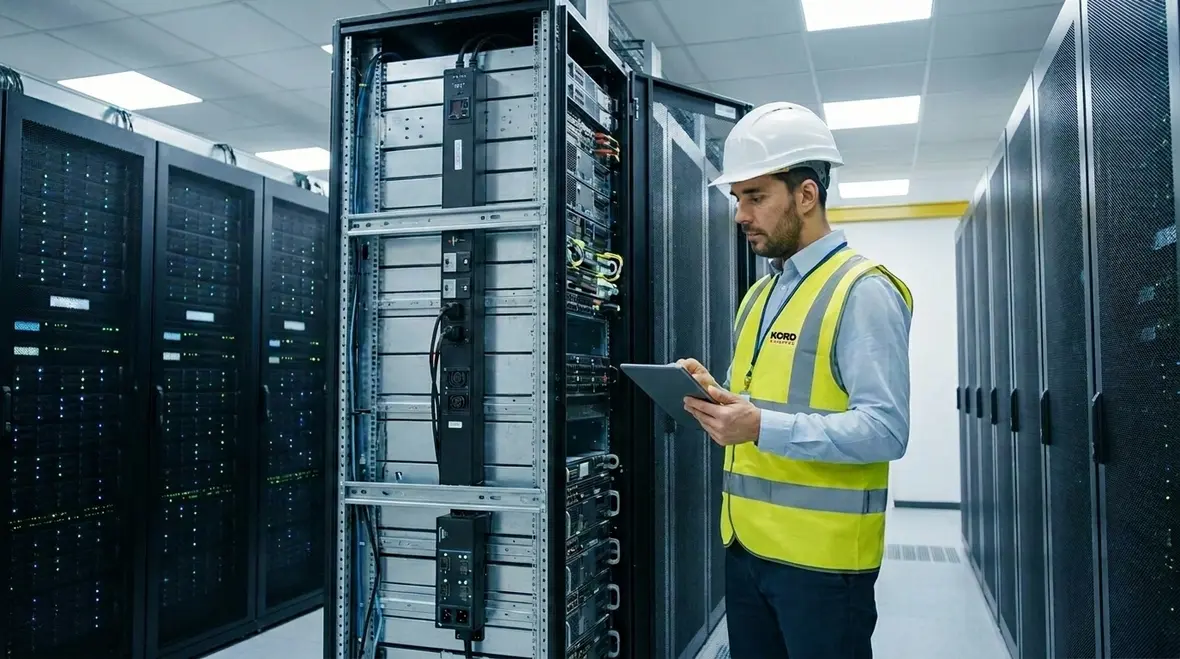
Data Center Power Redundancy for 99.999% Uptime
Kord Electric designs data center power redundancy that helps commercial and industrial facilities stay online when other systems start to sweat. In our approach, we build power paths that can take over without drama, so critical loads keep running through planned events, equipment faults, and ugly surprises. In other words, we plan like we are already living in the outage you are trying to avoid.
And yes, we keep the process calm. Our technicians explain things step by step, so decision makers do not have to guess what will happen at 2 a.m. when alarms go off. After all, nobody wants the “trust me” strategy. We prefer the “we modeled it, tested it, and documented it” strategy. It is less action movie, more engineering thriller.
Why mission critical redundancy targets 99.999% uptime
In commercial and industrial buildings, uptime is not a nice to have. It becomes the difference between normal operations and expensive downtime. Therefore, we plan redundancy with a clear goal: 99.999% uptime, which translates to very little tolerated downtime. That tight margin forces good decisions early, not “fix it later” thinking.
We treat redundancy like a chain, not a pile of parts. If one link is weak, the whole chain fails. So we map where power must stay stable, then we design multiple layers of support for each critical load.
Next, we set expectations with owners and operators. We explain that high reliability is not magic, and it is not just more generators. It involves switchgear design, load paths, control logic, maintenance planning, and how you handle transfers during abnormal events.
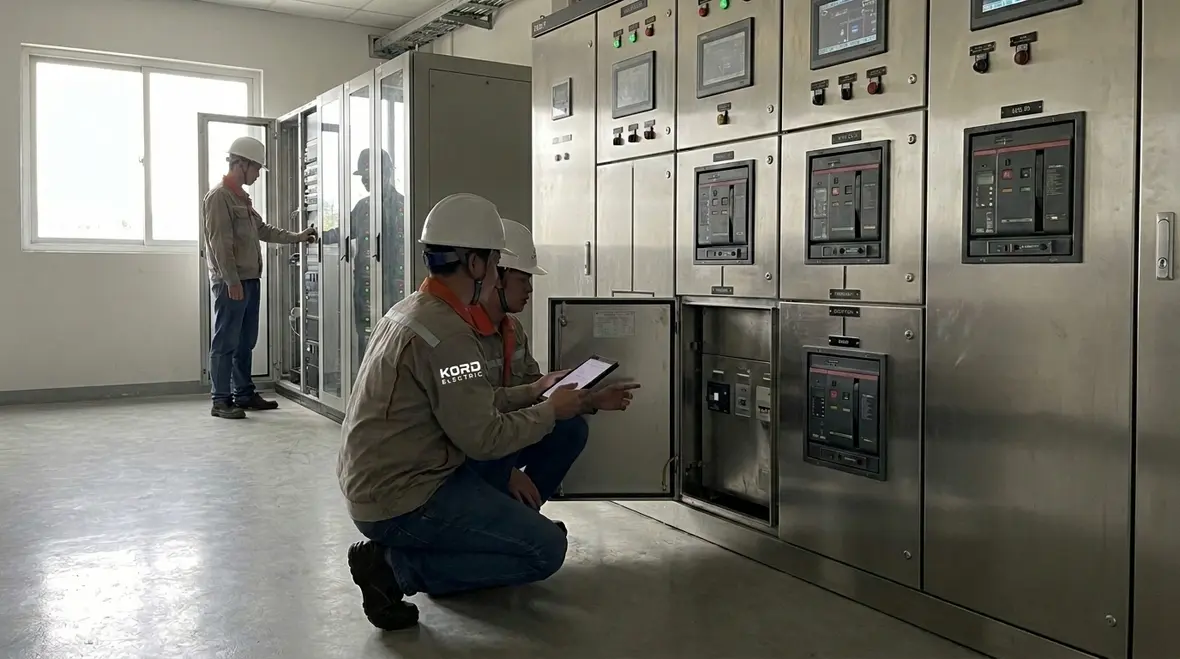
When you treat uptime as a measurable target, the whole conversation changes. You stop asking, “Do we have a generator?” and start asking, “Can this system ride through the failures we know will happen?” That shift is what turns backup equipment into a real strategy instead of a comfort purchase.
How we engineer layered power paths for continuous service
We build power systems so that a single fault does not turn into a full shutdown. For many commercial and industrial facilities, this means maintaining parallel paths and using automatic transfer where it makes sense. At the same time, we protect equipment so it can handle abnormal conditions without cascading failures.
Our expert service staff walks clients through the logic in plain terms. For example, they explain how each component communicates, how signals coordinate, and how the system prevents backfeed or unsafe switching. We also review how loads are grouped, because not every load needs the same level of support.
Then we move into the practical details. We confirm that power ratings match actual demand, that feeder sizes align with voltage drop limits, and that protective devices clear faults without knocking out healthy areas.
- We define critical loads and separate them from non critical loads
- We design protected feeders and switchgear coordination
- We plan automatic transfers that minimize interruption
- We verify controls so startup and synchronization stay predictable
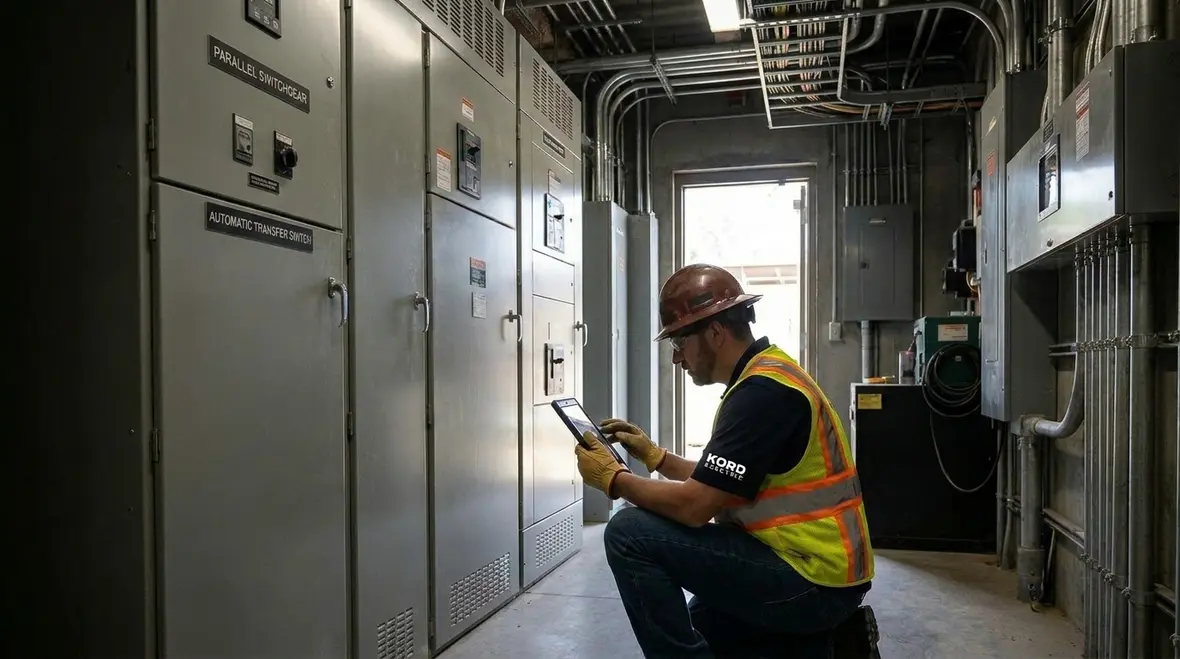
At Kord Electric, we prefer to show the path in diagrams and walk through it like a route plan. Nobody wants to find out in the field that the “quick detour” was actually a wall. When people can trace the route on paper, they are far more confident when real alarms light up.
Layered power paths also set the stage for future growth. When you plan for additional loads, expansions, or new data and communications areas, a well-designed redundant backbone can scale without forcing you to rebuild everything from scratch.
What voltage fluctuations reveal about system weak points
Even when the system has redundancy, power quality can still ruin your day. Voltage fluctuations can stress motors, sensitive electronics, and control circuits. So we evaluate how commercial and industrial facilities respond to real world conditions, not just nameplate behavior.
Our team references voltage behavior for practical design decisions. In our article on voltage fluctuations in commercial and industrial settings, we outline why variations can occur, what damage they can cause, and how system design choices affect stability. In short, voltage issues do not always come from one culprit. They often come from the combined effect of load changes, impedance, and switching events.
Therefore, we do more than “add backup.” We align redundancy with voltage regulation strategy. That may include transformer choices, coordination of protection settings, and dynamic response methods depending on the facility’s electrical profile.
And when our technicians explain these points, they do it with context. They connect the theory to what the building experiences during peak demand or during transfer sequences. That is how we keep the conversation grounded, and it helps clients make confident decisions.
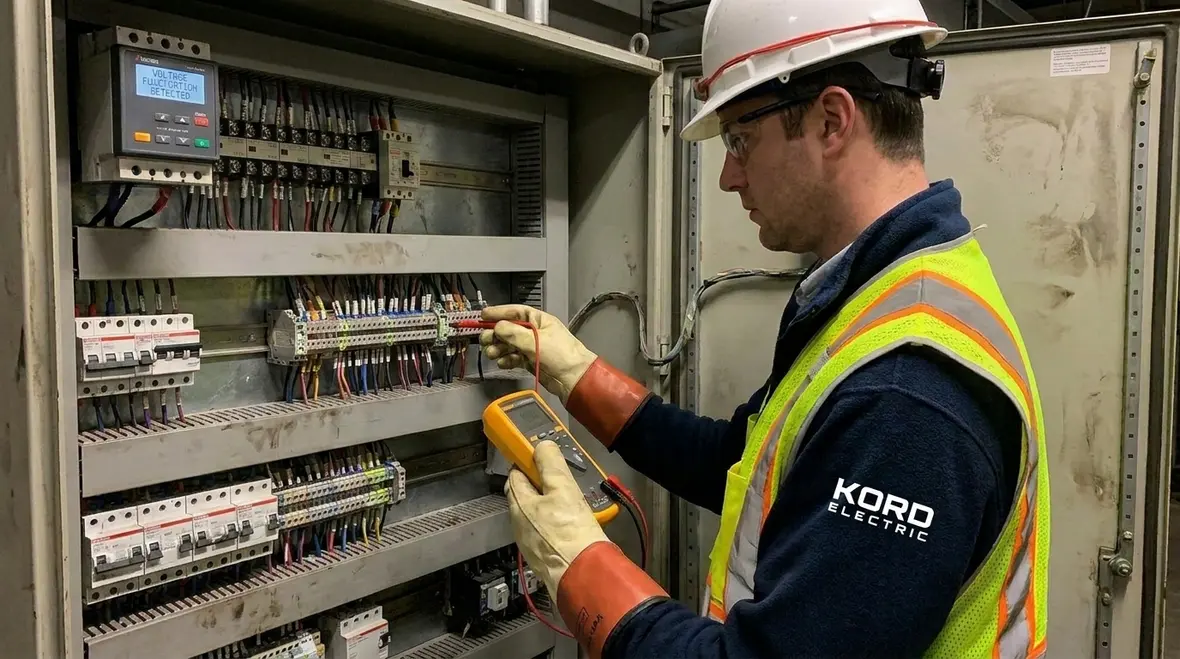
Voltage behavior also exposes weak spots you might not notice on a normal day. A feeder that looks fine under light load can start to sag when the plant hits peak demand. A transfer sequence that seems smooth at commissioning can show rough edges when a real fault pushes everything at once. Watching how the system behaves under stress is how we refine data center power redundancy into something you can rely on at 2 a.m., not just during a demo.
Planning for failures, maintenance, and real field conditions
A high reliability system must survive both emergencies and routine work. So we plan how your teams will maintain equipment without breaking continuity. If you cannot take a component offline for service without hurting uptime, the design will fail under real schedules.
We help clients plan maintenance access and switching sequences. Additionally, we review how test modes operate, how alarms behave, and how a maintenance outage differs from a real fault.
Because outcomes matter, we also discuss failure modes. What happens if a breaker fails to operate? What happens if a control module misreads a signal? What happens if a generator needs time to stabilize? We plan so the system falls back in a controlled way, not a chaotic way.
At Kord Electric, our approach stays practical. Our expert technicians explain what operators will see, what the system will do automatically, and what actions people must take. That clarity reduces the chance of human error, and it prevents the system from becoming a “standby comedian” that only performs when the audience is loud.
We also fold maintenance thinking directly into the design. Clear labeling, accessible equipment, and thoughtful sequencing mean your teams are not crawling behind gear or improvising switching orders just to test a generator. When uptime and maintenance share the same plan, both become easier to manage.
Redundancy design for commercial and industrial buildings
Commercial and industrial facilities often have different risks than typical office buildings. They may run process equipment, data and communications hardware, medical or lab systems, or high load motors. Therefore, we tailor redundancy to the electrical profile and the operational reality.
We also consider the building’s criticality zones. Instead of treating the entire site as one block, we focus on what must remain powered and how long. Some areas can tolerate short interruptions. Others cannot. Once we understand that, we design load prioritization and protection coordination accordingly.
- Data and communications areas need clean transfers and stable voltage
- Process and production loads need protection that avoids unnecessary trips
- Life safety and control systems require strict dependability
We build with the expectation of high demand cycles and equipment loads. As a result, we size systems for real power use, not best case scenarios.
And because clients have deadlines, we help coordinate schedules and clarify what needs to happen during commissioning. We keep the plan organized so your project team does not spend more time arguing over sequence than maintaining uptime.
For facilities spread across a region, reliable support matters as much as the design itself. That is why many operations pair their internal teams with dedicated Los Angeles County electrical services that understand industrial timelines, shift work, and real-world load demands. Local response, combined with a solid redundancy plan, keeps uptime from depending on luck.
Commissioning, testing, and documentation that staff can trust
Reliability does not end with installation. It continues through commissioning, testing, and clear documentation. If the paperwork is unclear, the system becomes hard to operate under pressure.
We support structured testing that verifies coordination, transfer behavior, protective device function, and control logic performance. This is where the design proves itself. We also validate that the system behaves as modeled when conditions change.
Meanwhile, our expert service staff explains outcomes in a way that helps operations. Instead of drowning teams in jargon, we cover what matters: what will happen, what alarms mean, and how staff should respond. We keep the guidance usable, so your team can act fast when seconds count.
Also, we document in a manner that helps future technicians. That reduces confusion later and supports safe maintenance planning. In the end, good documentation is like a good map. You do not need it until the moment you really need it.
When data center power redundancy, power quality planning, and commissioning all line up, you get more than a neat one-line diagram. You get a system that behaves predictably when components fail, utilities misbehave, or maintenance needs attention. That predictability is what turns a power system into a dependable asset instead of a recurring plot twist.
How data center power redundancy supports facility-wide reliability
For many organizations, the data center is not an island. It is tied into plant controls, communications, production scheduling, and safety systems. Designing redundancy around that hub means thinking about how loss of the data center would ripple through the rest of the operation.
We look at upstream and downstream dependencies: which breakers, UPS systems, and feeders keep the data center alive, and which downstream loads would be stranded if those links failed. Then, we align data center power redundancy with the wider electrical system, so you do not protect one room while leaving the surrounding infrastructure exposed.
This approach also helps with future digital initiatives. Whether you are adding monitoring, analytics, or more automation, a resilient electrical backbone lets those upgrades plug into a stable platform. You avoid the irony of an “intelligent” system that goes dark because nobody planned enough reliable power to keep it breathing.
Integrating troubleshooting, upgrades, and regional support
Even the best-designed redundant system will eventually need upgrades, retrofits, and troubleshooting. We connect those phases instead of treating them as separate stories. When our technicians respond to an issue, they look at what the failure says about the design and maintenance history, then fold that insight back into future improvements.
Sometimes that means refining protection settings. Other times it means resizing feeders, reorganizing criticality zones, or updating the way generators, switchgear, and UPS systems share responsibilities. Our goal is simple: each service visit should leave your system not just fixed, but smarter.
When you pair that mindset with consistent regional support and disciplined maintenance, your data center and the rest of your facility start to behave like a coordinated system instead of a stack of independent projects. That is where real reliability lives.
FAQ
Final word from Kord Electric
When a commercial or industrial facility depends on uptime, we do not treat redundancy as a purchase. We treat it as a plan, built around real loads, power quality, maintenance needs, and tested performance. Kord Electric helps your team understand the design, then we support commissioning and documentation your staff can trust. If you want mission critical reliability without guesswork, reach out to us today. We will review your electrical setup and recommend a redundancy path that fits your operation.
If you are ready to connect data center power redundancy with the rest of your electrical strategy, our team can also coordinate with broader service offerings so troubleshooting, upgrades, and maintenance work in the same direction. That way, every change you make strengthens uptime instead of adding another moving part.
To take the next step, you can explore regional support and related services that keep your systems steady during growth, retrofits, and new projects by visiting our main services hub for the area. From there, we can align design work, maintenance, and future expansions into one clear roadmap.
Whether your priority is tightening existing redundancy, planning a new mission critical space, or integrating smarter monitoring into your electrical backbone, Kord Electric treats reliability as something you design on purpose, not something you hope for when the weather turns ugly.


