
Data Center Power Redundancy Strategies Guide
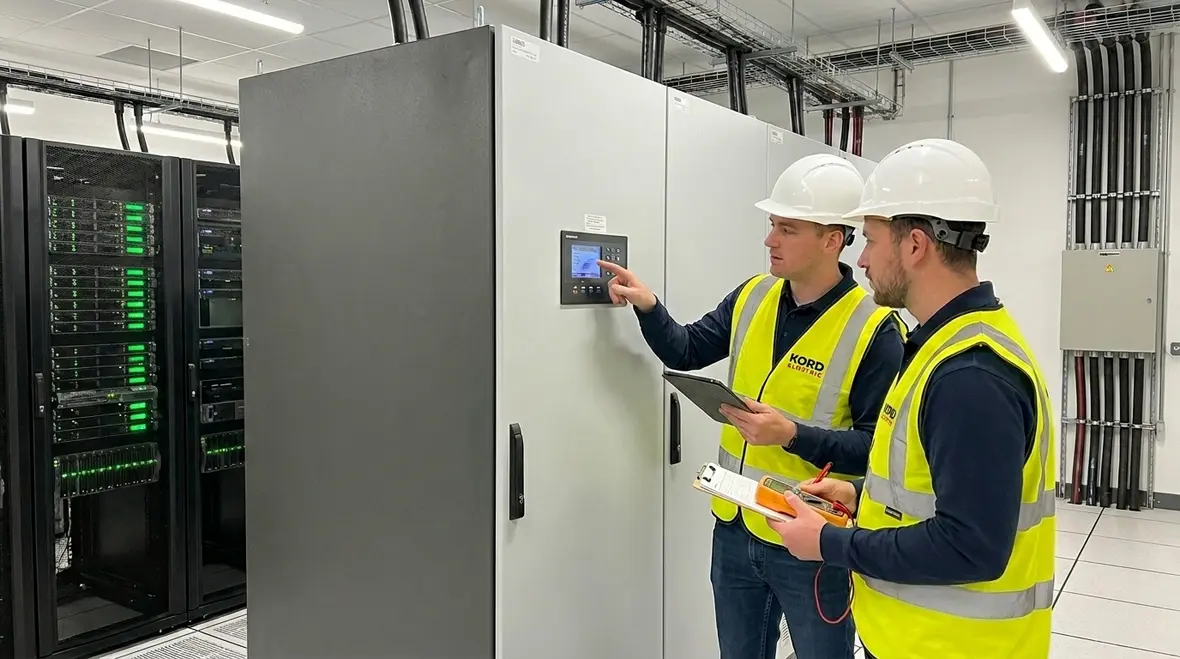
At Kord Electric, we build and support data center power redundancy strategies that keep critical equipment fed with clean, reliable electricity even when something goes wrong. Instead of betting everything on one path, we help commercial and industrial facilities use layered backups, failover planning, and smart maintenance so uptime stays steady. Technicians from our team explain each decision in plain language, and others on our expert service staff verify that the system you installed still meets real world needs. In this article, we walk through how redundancy protects power infrastructure in data centers, large commercial sites, and major property buildings, with practical details that teams can actually use. And yes, we will keep it calm, even if your current alarm panel sounds like a horror movie.
Why redundancy matters for data center power infrastructure
In a data center or major commercial facility, the power system does not just “supply electricity.” It supports cooling, storage, networking, and operations that businesses depend on. Therefore, a single failure can trigger cascading downtime. To prevent that, data center power redundancy strategies build multiple ways for power to reach mission critical loads.
As our technicians explain, redundancy is not only about having extra gear. It is also about designing the full route, from utility entry to distribution, transfer, and protection. Then it is about making those routes work together when conditions change, such as maintenance mode, component aging, or a brief upstream disturbance.
And when people hear the word redundancy, they sometimes think it means “expensive insurance you will never use.” That is not the real story. The real story is that redundancy reduces risk, shortens recovery time, and keeps critical systems stable when the unexpected shows up. The unexpected always shows up. It is basically the favorite character of electrical problems.
How N+1 and parallel paths reduce single point failure
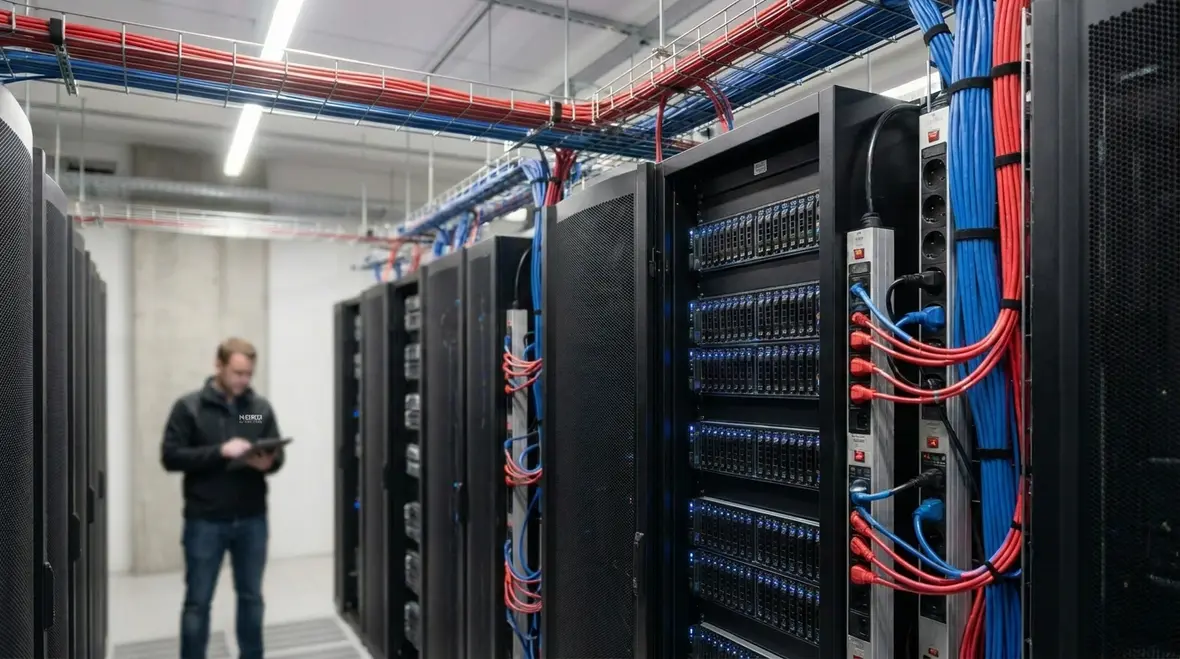
One of the clearest ways we protect uptime is by reducing single point failure. In practice, many facilities use an N+1 concept for critical equipment. That means there are enough active units for the required load, plus at least one extra unit that can carry the load if another unit fails. We see this approach used for generators, UPS modules, and sometimes transfer capability depending on the architecture.
Next, teams often create parallel power paths. This design ensures that if a breaker, bus section, or feeder fails, the load still has a working route. In other words, the system does not rely on one cable run or one bus bar to keep everything alive. Instead, the facility can keep running while maintenance teams handle repairs.
Our expert service staff typically walks through the logic with facility managers and electrical contractors. They explain where the “breaks” would occur in a simpler design. Then they show how redundancy strategies replace those breaks with alternative paths. This method builds confidence and helps teams plan maintenance without surprise downtime.
UPS, switchgear, and transfer systems that keep power steady
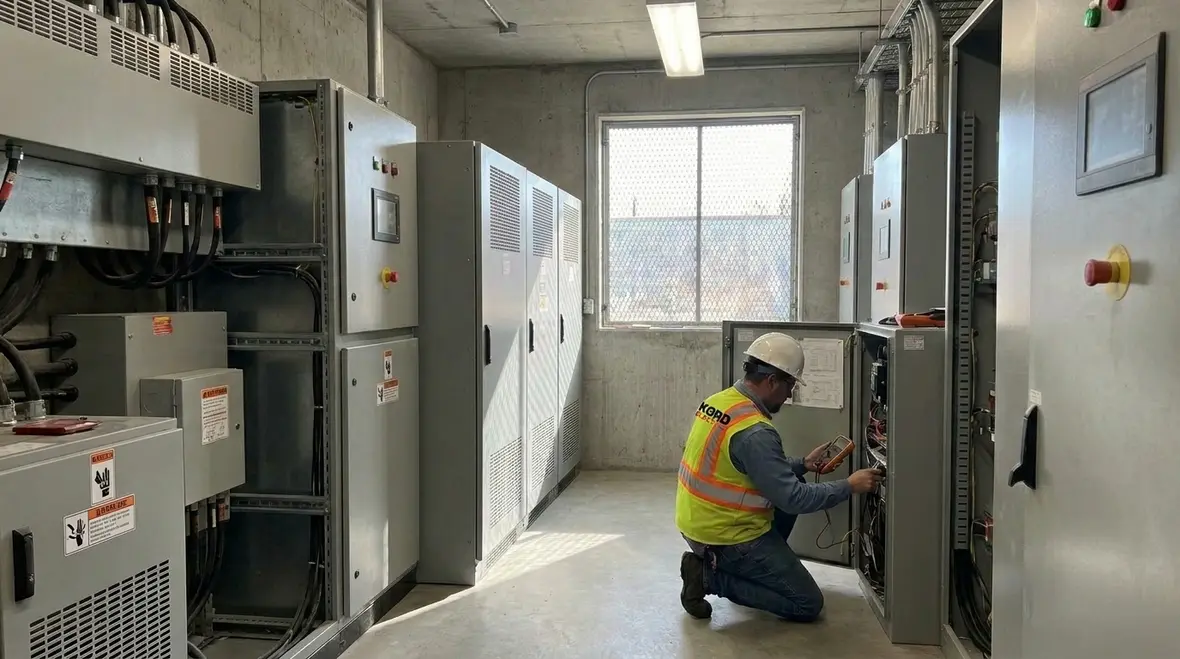
Redundancy does not stop at generators. It must extend into switching and power conditioning. Many facilities use UPS systems to bridge the gap between an upstream power event and generator start. Meanwhile, switchgear controls distribution and isolates faults. Transfer equipment then selects the correct source so critical loads do not experience power loss longer than allowed.
However, the protection layer matters just as much as the source layer. If a protective device trips incorrectly, the system can lose power even when backup sources are available. Therefore, we help commercial and industrial facilities review coordination settings, monitoring points, and sequence of operation.
In our field work, we also check how transfer logic behaves under different conditions, such as short events, manual bypass, or load step changes. We do not treat this as theory. We treat it as operational reality, because facility staff often need to move from one power mode to another without confusion.
Our technicians explain these steps carefully, using diagrams and simple language. Then they verify the wiring, labeling, and interlocks so the transfer works the way the plan says it should. If you have ever seen a “label” that actually points to the wrong breaker, you already understand why this matters. We keep that from happening.
Designing for maintenance mode without losing uptime
Many failures happen during maintenance, not during normal operations. That is why redundancy strategies must account for service access. Our approach focuses on keeping critical loads energized while technicians inspect, replace, or reconfigure equipment.
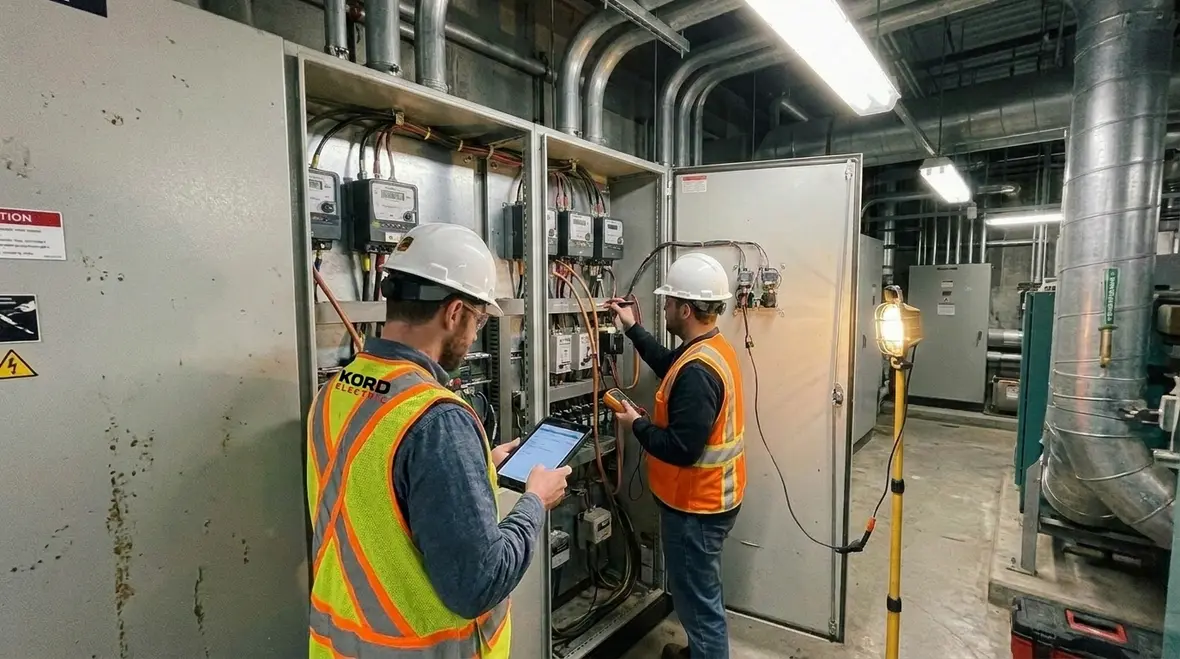
To do this, facilities use bypass arrangements, sectionalized buses, and planned isolation steps. Switchgear design often includes compartments and interlocks that allow safe service. Transfer schemes then shift load between sources without forcing a full outage.
Just like in a commercial rewiring project where cost depends on how much work the facility must shut down, downtime affects total cost and total risk. In the Kord Electric rewiring cost guide for commercial electrical systems, we highlight how planning and scope influence both schedule and disruption. That same thinking applies to redundancy. If you plan maintenance modes correctly, you reduce the chance that the facility pays for downtime in the form of lost work, stressed staff, and delayed operations.
Accordingly, we help teams plan outages, test procedures, and handoff steps ahead of time. We also guide them on documentation, because the team that maintains the system next quarter should not learn the design by guessing.
Protection coordination: how faults stay local
Redundancy keeps power available, but protection keeps that power safe. The goal is simple: when something fails, protective devices should isolate the fault quickly and keep other parts of the system running. If protection coordination is weak, a single fault can trip upstream breakers and shut down multiple zones.
We help facilities align protective device settings, time curves, and current limits across feeders and distribution sections. We also review arc flash risk and operating procedures, especially for switchgear and distribution boards that serve life critical loads.
Then we add a monitoring mindset. Modern facilities track events and logs, which helps teams find repeating issues before they become failures. Our expert service staff often supports this with practical inspections and testing, so they can spot loose connections, failing components, and abnormal thermal patterns.
And if you think protection coordination sounds like a purely technical puzzle, remember this: it directly impacts uptime. When faults stay local, redundancy has something to work with. When faults spread, even the best backup system cannot save you from a cascade of trips.
Testing, monitoring, and documentation that keep redundancy real
Redundancy only works if it performs under real conditions. That means testing transfer operations, verifying generator startup, and confirming UPS behavior during load changes. It also means monitoring critical signals like battery health, load levels, and switchgear status points.
At Kord Electric, we help facilities create a routine that does not just check equipment, but proves performance. For example, we review start sequences and verify that the system transitions correctly between utility, UPS, and generator based on the site’s sequence of operation.
We also make sure documentation matches field reality. One of our technicians might open a cabinet and find missing labels, outdated single line diagrams, or mismatched breaker IDs. When that happens, we help correct records and update the system map. That keeps future service safe and keeps operations calm when someone needs answers quickly.
Besides, the best time to learn how a transfer system behaves is before an alarm forces the lesson. The alarm panel does not care about training calendars. It only cares that the system did what it was designed to do.
FAQ: redundancy and critical power for commercial data centers
Next steps for Kord Electric to improve redundancy protection
If your facility runs critical operations, you cannot treat redundancy as a one time install. Kord Electric works with commercial and industrial sites to review design intent, verify transfer and protection behavior, and support maintenance that keeps critical data center power redundancy strategies operating as promised. Our technicians and expert service staff will help you identify weak points, improve documentation, and build a practical testing plan.
To go deeper on how planned maintenance supports reliability, you can also explore our dedicated electrical preventive maintenance services, which pair naturally with redundancy planning to keep critical infrastructure running smoothly across large commercial and industrial facilities.
Reach out to Kord Electric today and let us help you keep power steady, alarms quiet, and uptime dependable across your data centers, major commercial properties, and high demand industrial sites.


