Overcurrent Protection for Commercial Systems
Overcurrent Protection Requirements for Commercial Electrical Systems: What We Require
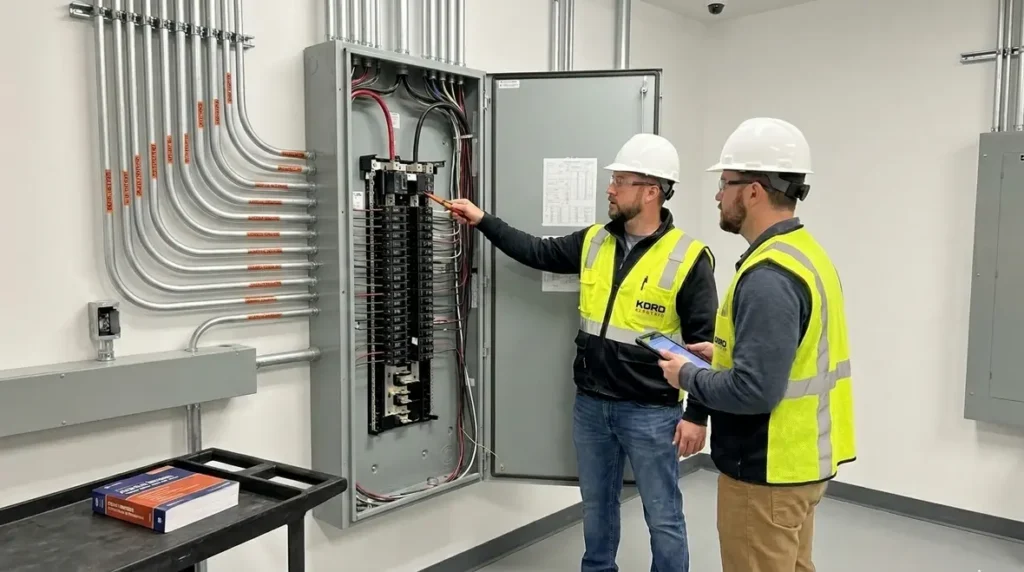
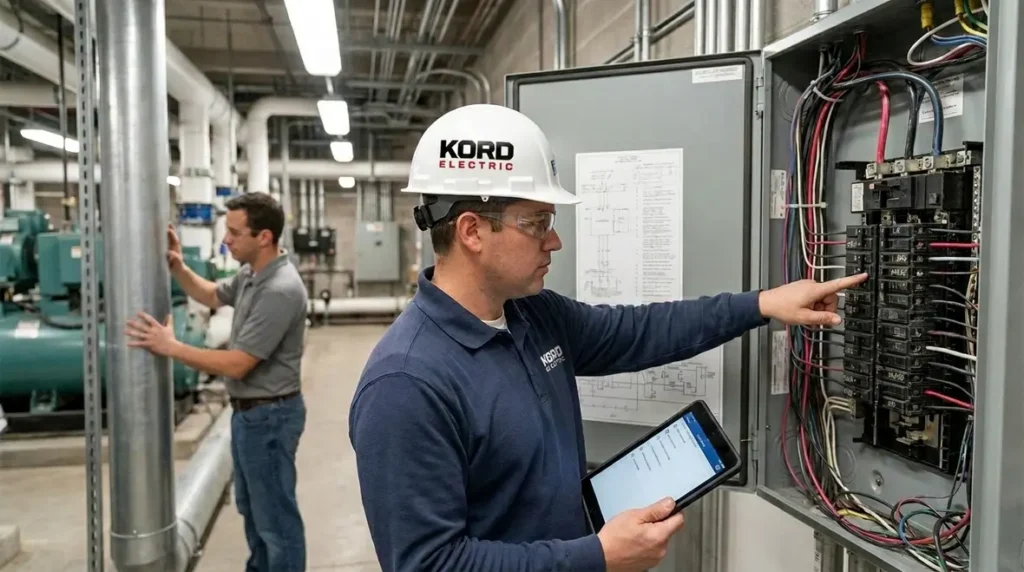
Commercial and industrial electrical systems need overcurrent protection requirements because one bad fault can turn “normal business” into “call emergency support.” Within the first moments of a fault, proper devices limit damage, reduce fire risk, and help keep critical loads running. At Kord Electric, we design and service protection schemes that match the real world: uneven loads, long feeders, code expectations, and the fact that your facility does not pause production while electricians chase a problem.
To get this right, our expert service staff explains what happens in plain language, then we align protection settings, coordination, and ratings to the site. Yes, we know it sounds thrilling, like watching paint dry, except the paint is electricity and it does not dry politely.
How Fault Current Actually Moves Through a Commercial Site
In most major property buildings and industrial facilities, current travels through a chain of equipment: transformers, switchboards, distribution panels, branch circuits, and equipment feeders. When a short circuit or overload occurs, the current does not simply “stop.” Instead, it surges along the path of least resistance, and it seeks the fastest route to damage if protection does not respond quickly enough.
First, we identify the likely fault points. Then, we estimate fault current levels at key locations. Next, we confirm that the protective devices can interrupt that current. Finally, we verify that the selected devices protect cables and equipment without causing unnecessary trips.
Our technicians approach it step by step because the one thing we refuse to do is guess. In other words, we do not rely on “it probably works.” Electricity does not care about vibes.
If you want a deeper dive into how the National Electrical Code tackles fault current and overcurrent protection in commercial settings, our breakdown of NFPA 70 for 2026 walks through key changes and practical implications for real-world facilities. You can explore that guide here: Understanding NFPA 70: The National Electrical Code Explained for 2026.
Device Selection: Breakers, Fuses, and Coordinated Protection
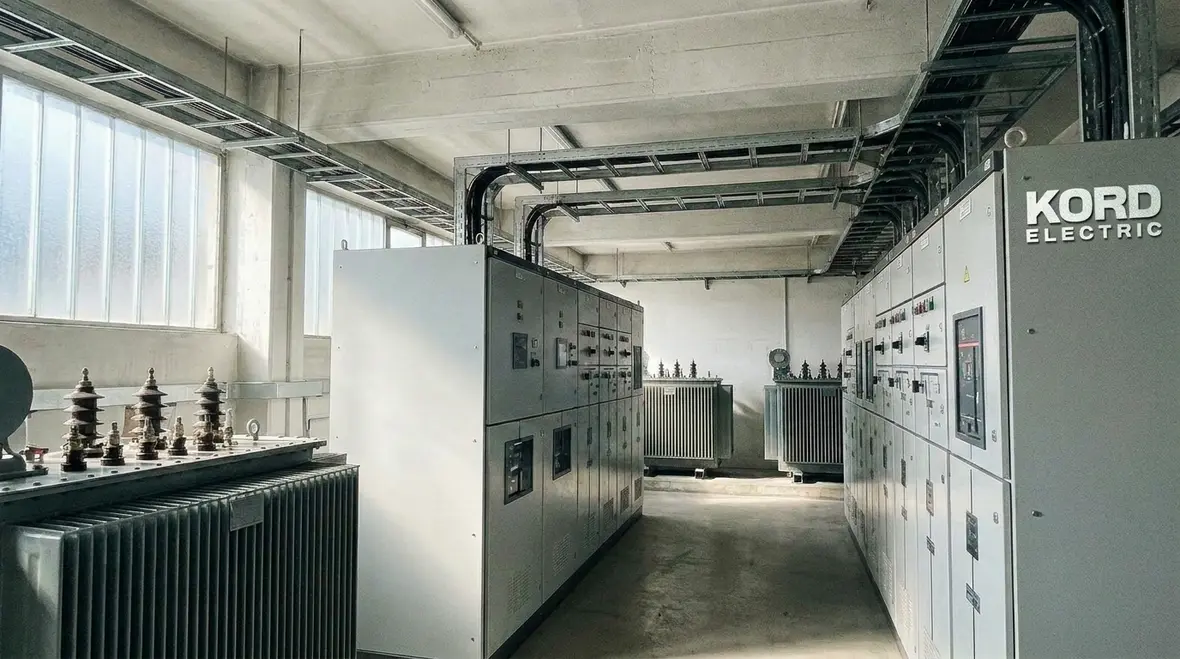
Overcurrent control in commercial electrical systems typically uses molded case circuit breakers, switchgear protective relays, and fuses. Each option offers different behavior under overload and short circuit conditions. Breakers often provide adjustable trip features, while fuses respond with a fast interruption profile. However, the best choice depends on the circuit type, cable ratings, and how you want faults to be contained.
When we design protection, we match the device to the conductor and equipment it protects. We ensure the device rating fits the load profile and the wiring temperature and insulation needs. Moreover, we confirm that the interruption rating, also known as the fault current interrupting capacity, exceeds the available fault current at the installed location.
Then comes the part that separates a safe system from a system that only looks safe on paper: coordination. We coordinate protective devices so the closest device clears the fault first, and downstream devices ride through brief events. As a result, you get fewer outages, tighter fault containment, and less downtime for your operations team.
Our expert service staff explains coordination like this: it is a smart chain of “who gets blamed first.” The breaker closest to the problem should act first, not the one feeding the entire building. Otherwise, everyone meets for the same fire drill, even when only one circuit misbehaves.
Trip Settings and Time Curves That Keep Power Flowing

Overcurrent protection requirements are not only about choosing devices. They also require correct settings and time curves. In commercial and industrial facilities, many systems rely on selective coordination, meaning the timing of trips must allow upstream devices to remain stable while downstream devices clear the fault.
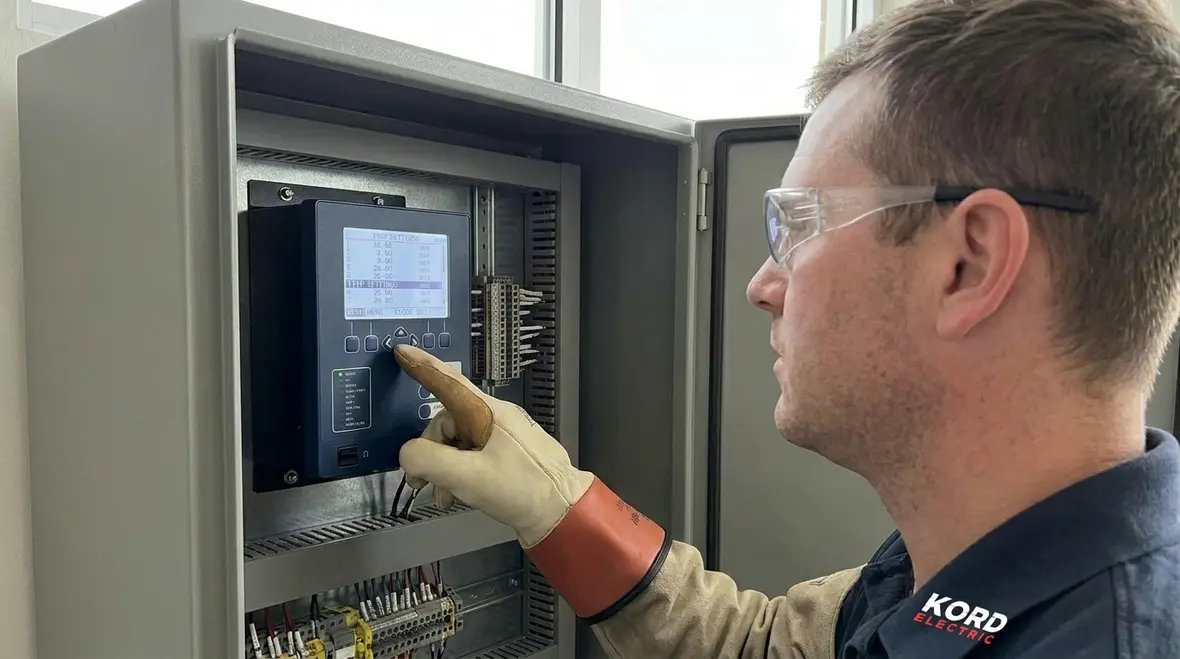
We review adjustment ranges, sensitivity, and delays. For adjustable breakers and relays, we confirm that overload trip curves protect conductors over time, while instantaneous or short time elements handle high fault currents quickly. In addition, we consider motor starting currents, transformer inrush, and other temporary conditions that can look like faults if settings are too aggressive.
Our technicians also check for nuisance trips. A circuit that trips too often teaches people to ignore alarms. Then the next fault becomes a real problem. So we tune the system to allow normal starting and expected transients, while still meeting safety goals.
If your facility operates around the clock, timing matters even more. Every unnecessary trip costs time, product, and patience. And yes, patience is also a finite resource, unlike circuit capacity.
Coordination Studies for Major Property Buildings and Industrial Facilities

Once device selection and settings are in place, we validate the plan through coordination studies. These studies use the electrical one line diagram, equipment data, and calculated fault current levels to test whether protective devices will clear faults in the intended order.
For a major property building, this means looking at feeders, switchboards, and large panels feeding critical tenant loads. For industrial sites, it means accounting for motor branch circuits, variable load conditions, and the reality that fault current can be significant. In both cases, our approach aims for clear fault response without shutting down areas that should stay online.
Coordination studies also help us document compliance and support maintenance decisions. Then, if you expand production or add new equipment, we can update the protection scheme rather than redesign everything from scratch.
Our expert service staff explains the results to stakeholders who do not want to read a book the size of a warehouse lease. We translate coordination outputs into what it means for your electrical uptime and safety, and we outline the next practical steps.
Protecting Conductors, Panels, and Equipment Without Overdoing It
Proper protection also means protecting the wiring itself. Overloads generate heat, and heat degrades insulation. That is why our work focuses on conductor ampacity, insulation rating, and ambient temperature assumptions. We also consider bundling effects in cable trays and conduits, plus any derating requirements tied to installation conditions.
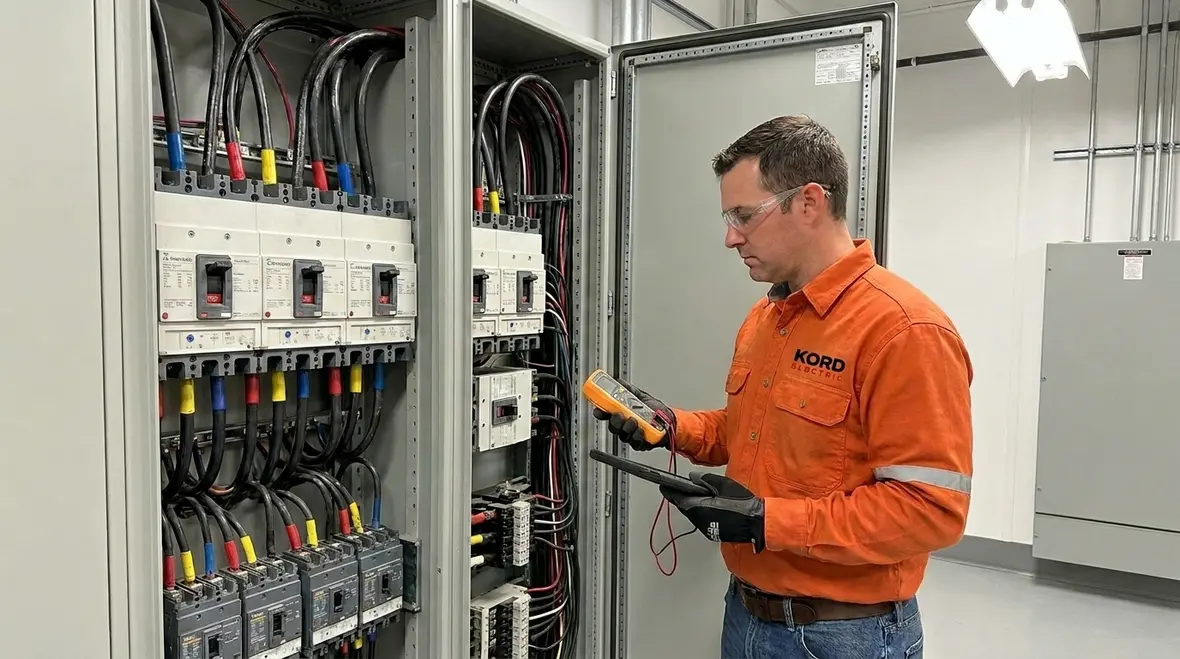
Furthermore, we verify that panelboards and switchboards can handle fault energy. Devices are not just about tripping; they must also interrupt current without causing damage. So we confirm short circuit ratings, series ratings when applicable, and proper protective clearing performance.
At the same time, we avoid overprotection that harms reliability. If we choose devices that react too quickly or at too low a level, we increase downtime. If we choose devices that react too slowly, we increase heat and damage risk. In other words, we aim for balance, because the goal is safety with continuity.
And if you are wondering, yes, we have seen both extremes. One extreme turns your facility into a blinking caution sign. The other turns it into an “insurance claim waiting to happen.” Neither outcome is good for business.
Maintenance, Testing, and Updates to Keep Protection Effective
Overcurrent protection requirements do not end after installation. Protective devices age, contacts wear, and settings can drift during maintenance or equipment changes. Therefore, we schedule inspection and verification to confirm that breakers and relays behave as intended.
We check for physical damage, verify trip settings, and perform functional tests when the facility can support short test windows. Also, after any panel changes, feeder additions, or load expansions, we recheck fault current assumptions and device coordination logic. If the system changed and the protection did not, the protection becomes a guess again.
Our technicians work with facility managers to plan service around production. We keep disruption low, and we explain what we test, why it matters, and what we recommend next. Our goal is simple: keep your commercial and industrial electrical system protected and dependable.
If your facility includes fire and life safety systems that must stay online during maintenance or outages, we coordinate our electrical protection work with any existing fire protection program so critical alarms, pumps, and suppression systems do not lose power without a plan. For facilities that also rely on dedicated fire services, our sister company provides full coverage fire sprinkler, alarm, and extinguisher programs across Southern California so your protection strategy stays aligned end to end. Learn more here: Full Fire Protection Services.
FAQ
One Quick Comparison That Helps Teams Decide
| Approach | What It Improves |
| Clear device selection tied to conductor ampacity | Less heating and better wiring protection under load |
| Correct interrupting ratings for fault levels | Safer clearing of high fault current events |
| Time curve tuning and selective coordination | Fewer outages and faster fault clearing near the source |
Ready for a Protection Plan Built for Your Facility
If your commercial or industrial site runs on uptime, your electrical protection must do the same. Kord Electric can review your one line diagrams, confirm available fault current, select and set protective devices, and support coordination studies that keep critical areas online. Our expert service staff explains findings in business friendly terms, then our technicians implement the improvements with care. Call us today to schedule an assessment and bring calm back to your switchgear room.
For facilities that also need a verified fire protection partner to match their electrical reliability goals, our fire protection team delivers fire sprinklers, alarms, extinguishers, and fire pump services across Southern California. If you want one coordinated plan that treats power, protection, and suppression as a single risk picture, start here: Fire Pump Service & Fire Protection Support.
When you are ready to align your overcurrent protection requirements with code, uptime, and real-world operating conditions, our team is ready to help you design, verify, and maintain a protection scheme that keeps people safe and equipment productive.