Commercial EV Charging Station Costs and ROI Guide
Commercial EV Charging Station Costs, and Why They Matter Fast
In the real world, a property owner does not start with hope. They start with numbers. At Kord Electric, we often hear questions about commercial EV charging station costs early, because the budget shows up before the first driver ever pulls in. Costs can vary based on the number of ports, power level, electrical upgrades, and site needs, but a practical budget helps avoid delays that feel like a comedy sketch where everyone forgets the punchline.
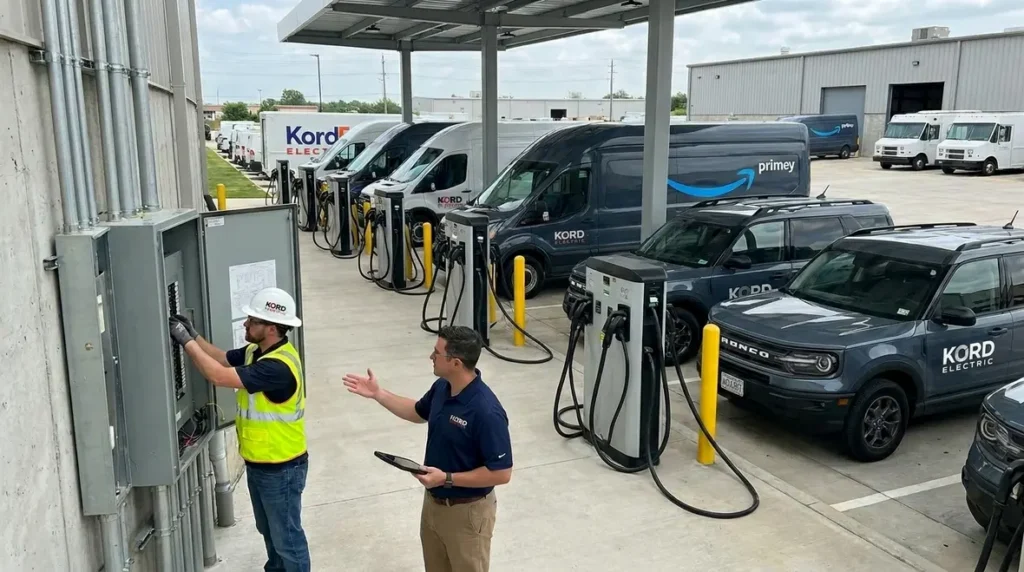
To keep this guide useful, we explain the financial path step by step for commercial and industrial facilities and major property buildings. We also make sure our technicians and expert service staff explain what they see in the field, in plain language, so you can plan with confidence instead of guesswork. And yes, we will keep it calm. Charging projects should not feel like a late night apocalypse movie.
ROI Basics That Property Owners Can Actually Use
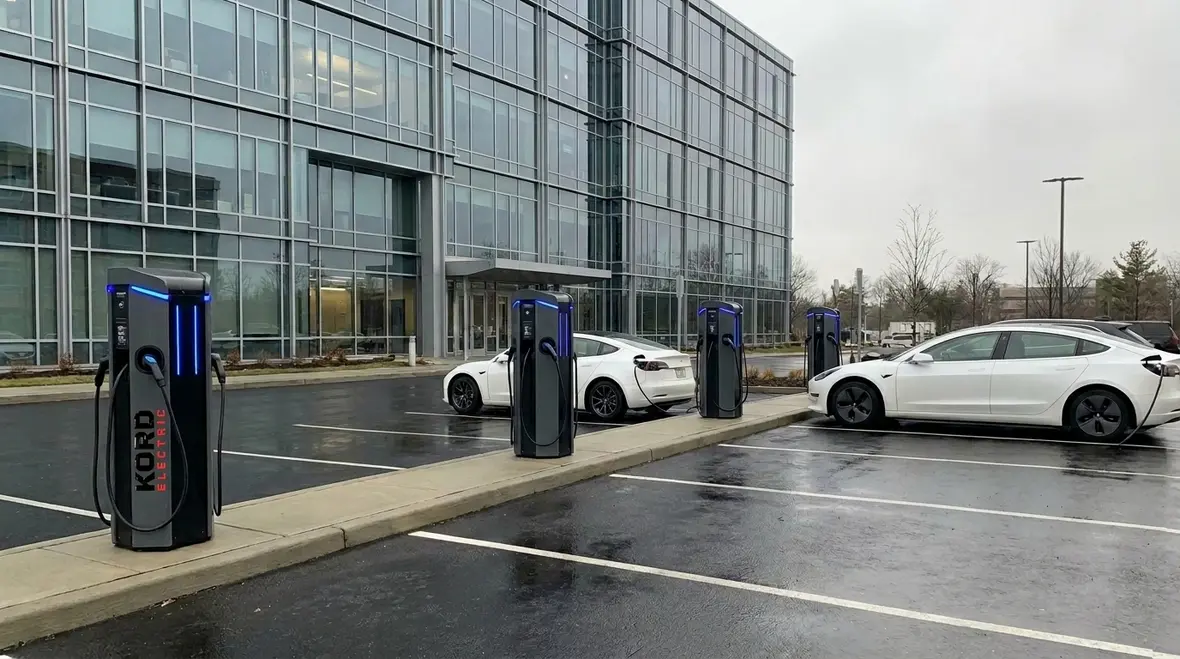
Commercial EV charging ROI comes down to one thing: what your site earns or saves compared to what you spend. We approach it like a spreadsheet, not a wish. First, you identify costs such as equipment, installation, trenching, switchgear or panel work, permits, and ongoing maintenance. Next, you set revenue or value levers. Those levers usually include charging fees, lease or tenant retention, higher property appeal, and sometimes utility incentives.
Then you connect the dots with simple math. If you add chargers to a building that already attracts EV drivers, you can strengthen occupancy and reduce churn. Even when you do not chase “big profit,” you can still improve total asset value. That matters in commercial real estate, where the goal is not a sugar rush. It is steadier long term returns.
As you weigh ROI against infrastructure, many property teams also review Kord Electric’s dedicated EV charger installation services so the financial model lines up with a build plan that is actually constructible and code compliant.
What We Estimate for Installation and Electrical Upgrades

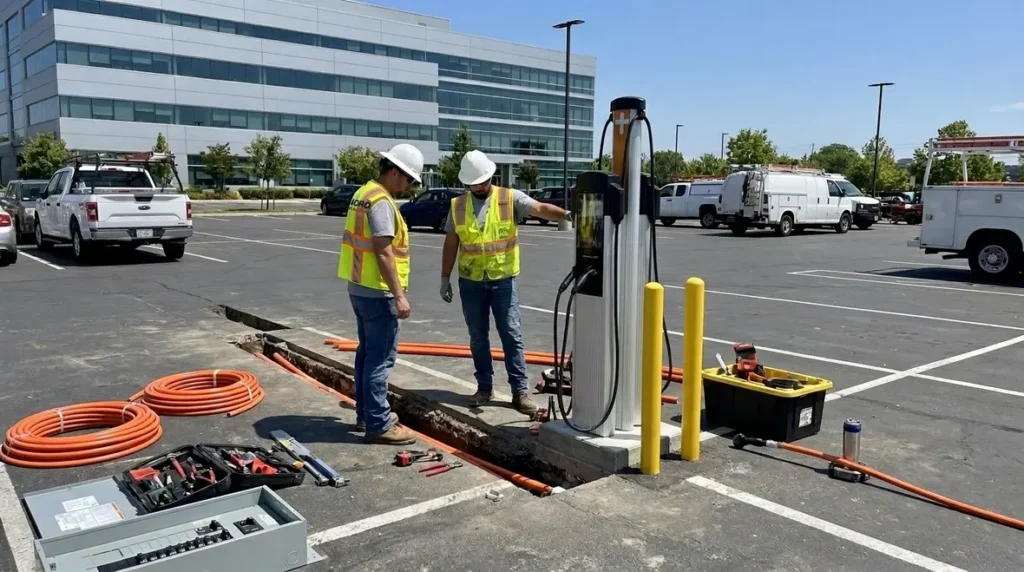
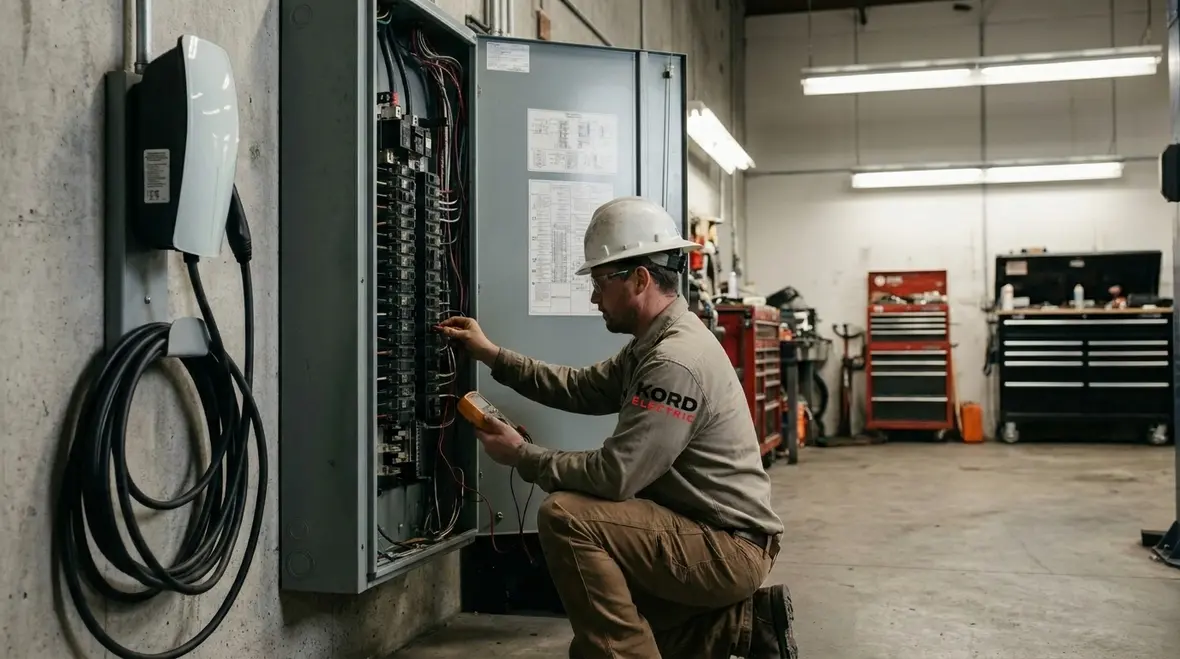
To support your ROI planning, we start with a site reality check. Our team, including technicians and expert service staff, walks through power availability, conduit routes, load capacity, and how vehicles will actually park and connect. We do this because the cheapest plan on paper can get expensive when the electrical system refuses to cooperate.
On many sites, the main cost driver is electrical upgrade work. Therefore, we look at switchgear capacity, transformer limits, and whether the building has room for managed charging. Managed charging can reduce strain by distributing power intelligently. As a result, some properties avoid larger upfront upgrades. Meanwhile, better planning can reduce downtime and keep contractors from turning your electrical room into a temporary museum.
If you want the flow of what we handle, Kord Electric supports EV charging installation with a structured process. That includes evaluation, proper design, code compliant installation, and project coordination for commercial and industrial facilities and major property buildings. For complex facilities, teams sometimes pair this work with services that address voltage fluctuations in commercial and industrial facilities so chargers share the system peacefully with existing equipment.
Choosing Business Models That Drive Payback
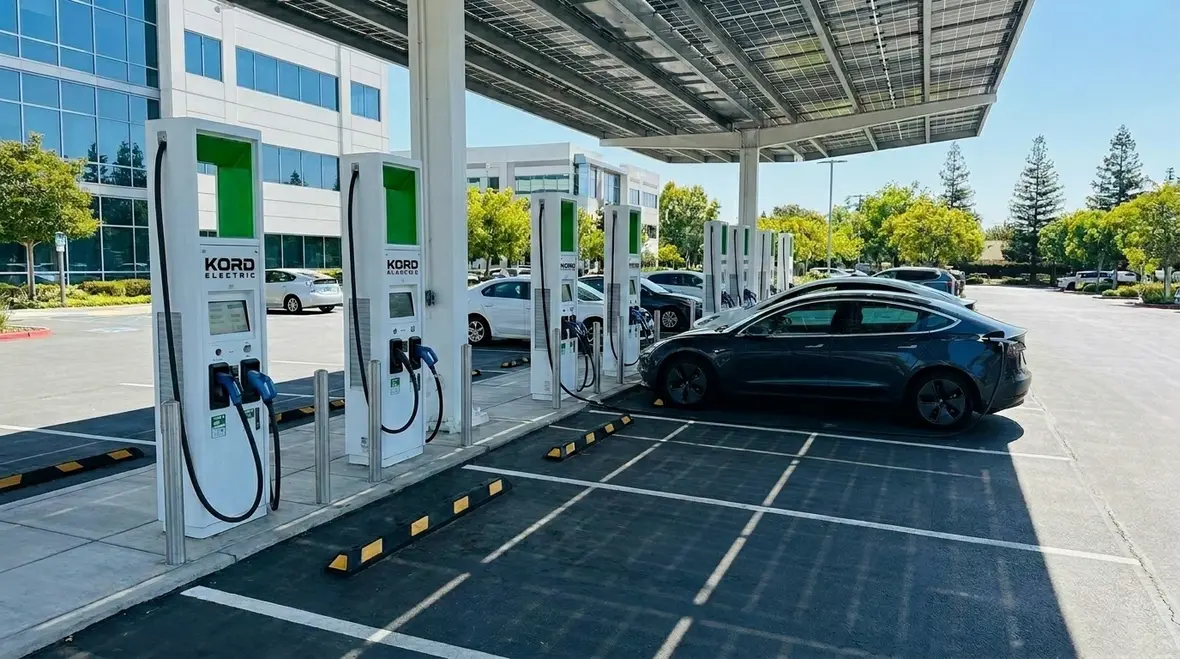
Not every ROI story looks the same. Therefore, property owners often select a charging model that matches how their site operates. Common options include pay per session, subscription access, and time based rates. Another approach allows controlled access for fleet vehicles or employees. Each model changes revenue timing, but all can strengthen the customer experience.
For example, a property with steady tenant traffic may benefit from access plans. A facility with public visitors might do better with session fees. Additionally, some owners treat EV charging as a retention tool. In that case, revenue may not be the only win. They reduce vacancy risk by offering a modern amenity, which can keep tenants from shopping around.
And yes, we know what you are thinking. “Is this like putting a vending machine on a corner?” Not exactly. But if the vending machine is reliable and saves people time, it tends to pay its way.
Pricing, Utilization, and the Forecast That Keeps You Sane
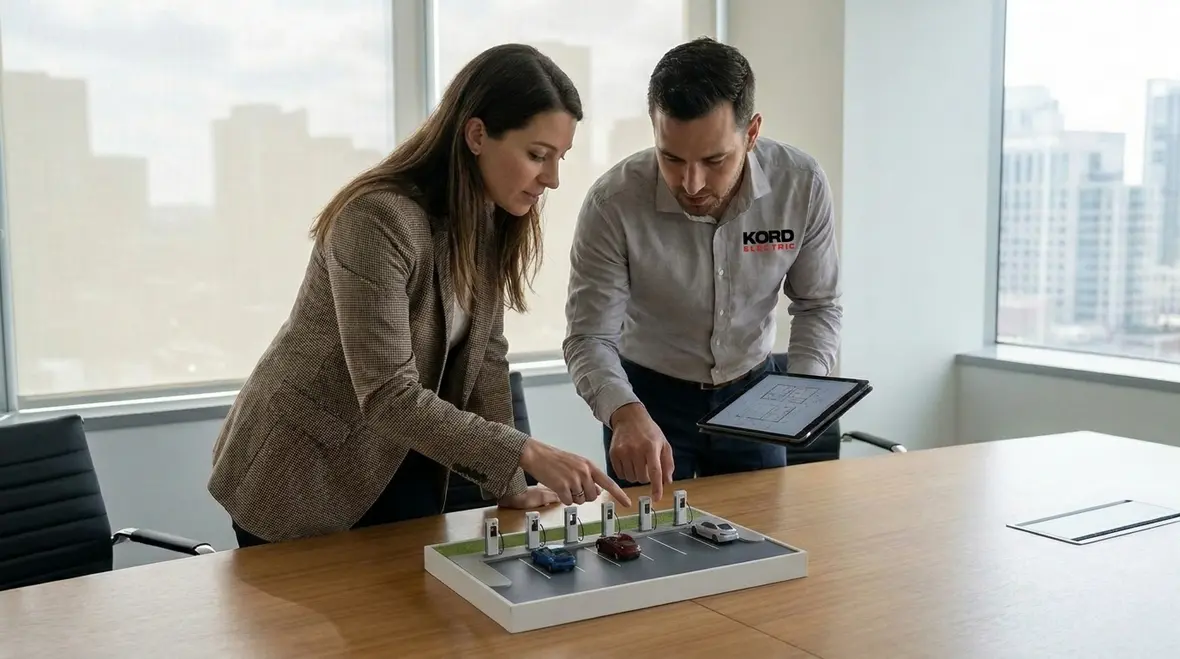
ROI depends on utilization. Yet many teams estimate utilization based on guesswork, then act surprised when reality shows up. We help property owners forecast usage using site specific factors such as parking turnover, driver access, length of stay, and nearby charging competition.
Transitioning from “how many chargers” to “how many sessions” requires a simple method. First, you estimate daily arrivals and charging behavior. Next, you estimate the average charge delivered per session and the expected session time. Then you apply your pricing model. From there, you project monthly revenue and compare it to your financing or cost recovery timeline.
Here is the practical part: utilization often grows after installation. Drivers learn where chargers are. Meanwhile, tenants talk. Word spreads faster than a celebrity scandal in a slow news week. Therefore, forecasting should include a ramp period. Many properties see stronger performance over time as demand becomes familiar. For scalable design ideas that support that growth, some owners also explore Kord Electric’s guidance on EV charging infrastructure scalability for commercial sites.
Risk Management: Permits, Maintenance, and Grid Limits
Every investment has risk. In commercial EV charging projects, risk usually shows up in three places: permitting and inspections, electrical constraints, and ongoing maintenance. We reduce those risks through disciplined planning. Our technicians and expert service staff explain the likely hurdles early and keep the project aligned with code and safety expectations.
Permits vary by jurisdiction and building type, and delays can stretch schedules. Therefore, we coordinate documentation and site readiness so your timeline stays intact. Electrical constraints also matter. If a building cannot support the intended load, chargers may underperform or require load management. That is why managed charging can protect ROI by preventing performance issues.
Maintenance risk is often underestimated. Stations require periodic inspections, firmware updates, and connector upkeep. A well built and serviced system lowers downtime, and downtime directly reduces revenue. In short, reliability protects your business case. Many commercial properties also coordinate EV work with broader programs like emergency electrical services to create a full safety net when critical systems go offline unexpectedly.
How Incentives and Financing Affect ROI
Many property owners focus only on upfront numbers, because it is uncomfortable to think about payback. However, incentives and financing can move your ROI timeline. Utility rebates, state programs, and federal support may apply depending on location and project design. Therefore, we help owners plan for these items during the evaluation stage, not after the invoice shows up.
Financing can also change the outcome. If a lease or loan spreads the cost over time, the ROI calculation changes because you now compare revenue against payments. Still, the same logic holds: revenue plus retention value should outweigh financing costs and operating expenses. When the math works, you get a smoother payback curve. In many regions, property teams also review incentive guidance like Kord Electric’s insights on EV charger rebates for commercial properties so they can pair local programs with their ROI strategy.
Featured FAQ for Commercial Property Owners
Common Mistakes That Delay Payback
Even careful teams can stumble. First, they may size chargers without confirming electrical capacity, which can trigger change orders. Second, they may set pricing without understanding how long drivers stay and how often sessions occur. Then revenue underperforms and the ROI story becomes weaker.
Another mistake is treating the installation as the final step. Therefore, owners need a plan for monitoring and service. If connectors degrade or chargers go offline, utilization drops. That is why we plan reliability from day one, with technicians and expert service staff who understand commercial uptime expectations.
Finally, some owners fail to communicate access rules. If drivers do not know how to use the station, sessions drop. We help property owners plan signage, policies, and operational details so the equipment actually gets used, not just installed. For properties layering EV charging into broader upgrades, some also review Kord Electric’s lighting installation services or other commercial electrical work so projects move in a coordinated way instead of as isolated one off jobs.
Plan Your Commercial EV Charging ROI with Kord Electric
Kord Electric helps commercial and industrial facilities and major property buildings turn charging into a predictable business case. Our technicians and expert service staff evaluate your electrical needs, design a safe plan, and support installation and service so uptime protects your return. If you want to understand your commercial EV charging station costs and how they connect to payback, we can walk through your site and build a clear ROI path. Reach out to us today for a focused consultation and a no drama plan.
To explore design and construction details for your project, you can also review Kord Electric’s dedicated EV charger installation service page, which outlines how site evaluation, engineering, installation, and testing come together for commercial and industrial EV charging deployments.
If your facility plans a broader electrical upgrade alongside EV charging, related services such as lighting installation for commercial and industrial spaces or emergency response support can be scheduled together so your infrastructure strategy stays aligned and future ready.