Electrical Safety for Commercial Tenants Guide
Kord Electric supports commercial and industrial facilities, along with major property buildings, where electrical risk never takes a day off. In this guide, we focus on Electrical Safety for Commercial Tenants, because tenants should not guess their way through switchgear, panels, and safety procedures. We explain what tenants must do, what property owners must enforce, and how our technicians help ensure the right steps happen in the real world, not just in a PDF binder.
Electrical Safety for Commercial Tenants: the practical reality in commercial buildings
Third person can describe the problem fast, but the solution needs steady hands. Tenants usually face electrical systems through daily actions: turning on equipment, resetting breakers, using receptacles, and requesting repairs. Yet, many incidents start with small habits that look harmless. For example, someone plugs in a tool with a frayed cord, then “just keeps working” until the outlet sparks. As funny as it sounds, electricity does not care about your deadlines.
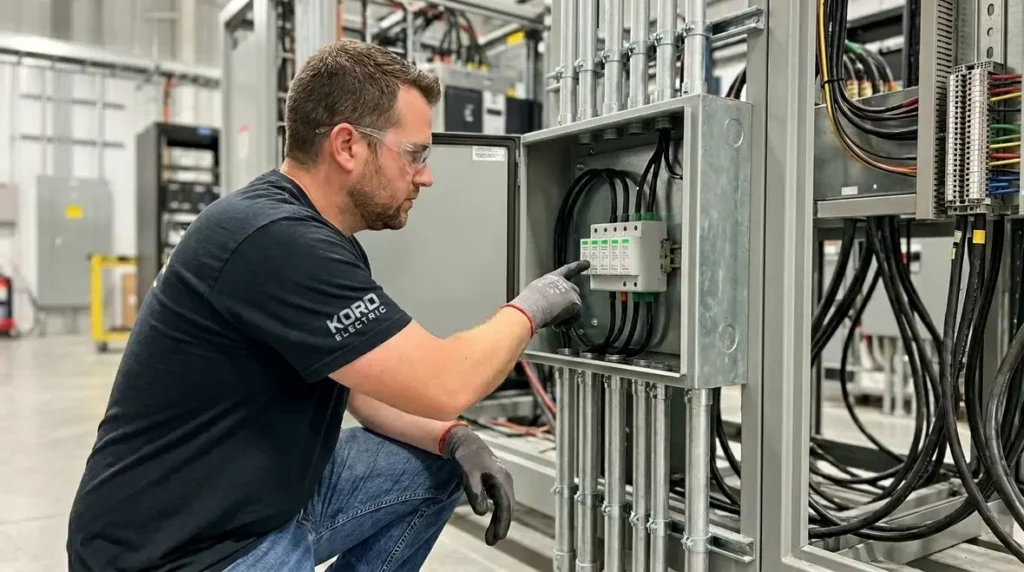
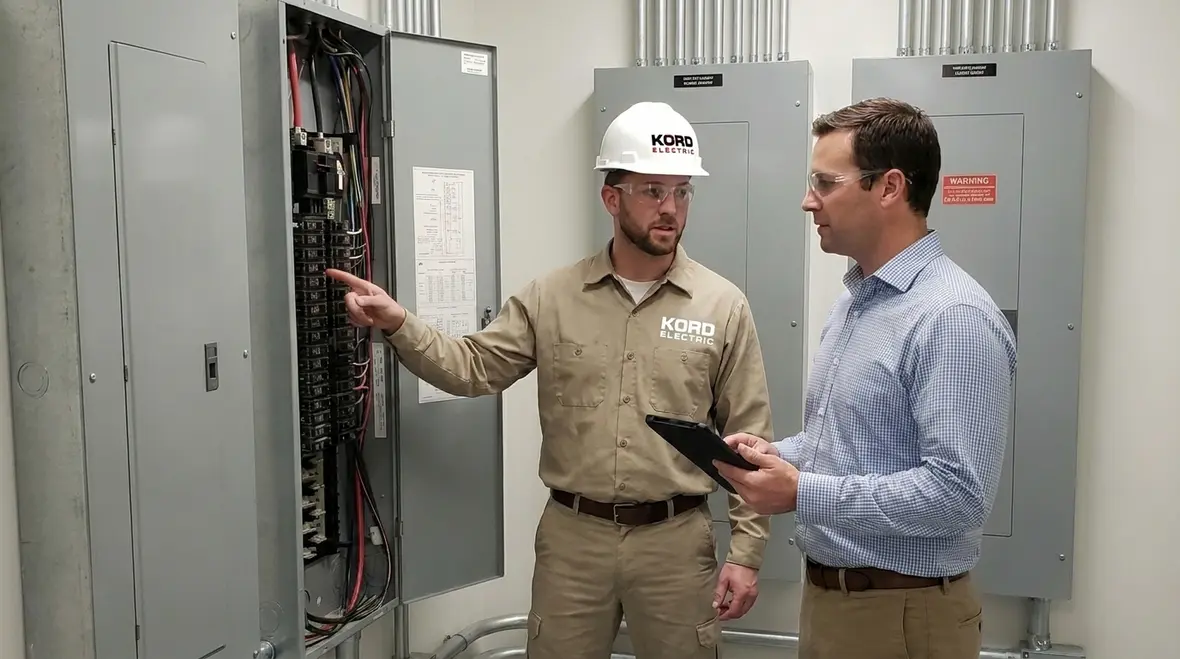
So, we help tenants and facility teams follow basic safety protocols that reduce shock risk, prevent arc flash injuries, and protect sensitive equipment. Most importantly, our expert service staff teaches the “why” behind each step. They explain, then they show. And when the building team asks questions, we answer like professionals, not like a vending machine that only accepts certain coins.
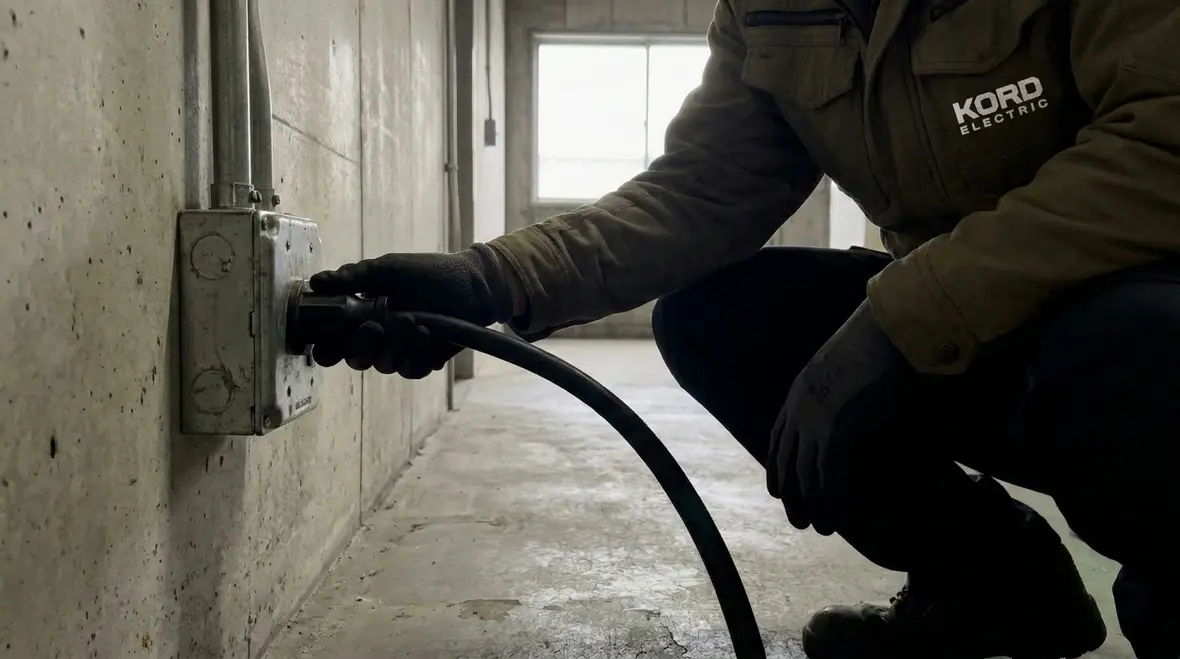
For a deeper look at how hidden issues can build up behind the walls of busy facilities, many property teams also review Kord Electric’s insights on hidden electrical risks in commercial buildings to support safer day-to-day decisions.
Tenant responsibilities that actually reduce risk
Tenants do not own the building, yet they control how people interact with the electrical system inside their leased space. Therefore, responsibilities must be clear, written, and followed. Kord Electric typically sees safer sites when tenants handle these items consistently:
- Report problems quickly. If a breaker trips repeatedly, if an outlet is warm, or if lights flicker under load, tenants should report it immediately.
- Only use approved equipment. Tenants should avoid unauthorized power strips, daisy chaining, and “temporary” wiring that never becomes permanent.
- Maintain clear access. Tenants must keep electrical panels, disconnects, and equipment rooms unobstructed, because access delays can turn a repair into an emergency.
- Use the right person for the job. Tenants should not open panels or change breaker settings unless trained and authorized, because wrong actions can worsen fault conditions.
Meanwhile, facility management must define who has authority to shut down equipment. Then, tenants should know how to reach that authority fast. In many buildings, a call to the wrong desk creates delays, and delays are where incidents grow legs.
For commercial tenants who want to align everyday habits with codes and inspection expectations, Kord Electric’s article on electrical safety compliance for small businesses offers additional context on how building rules and tenant behaviors connect.
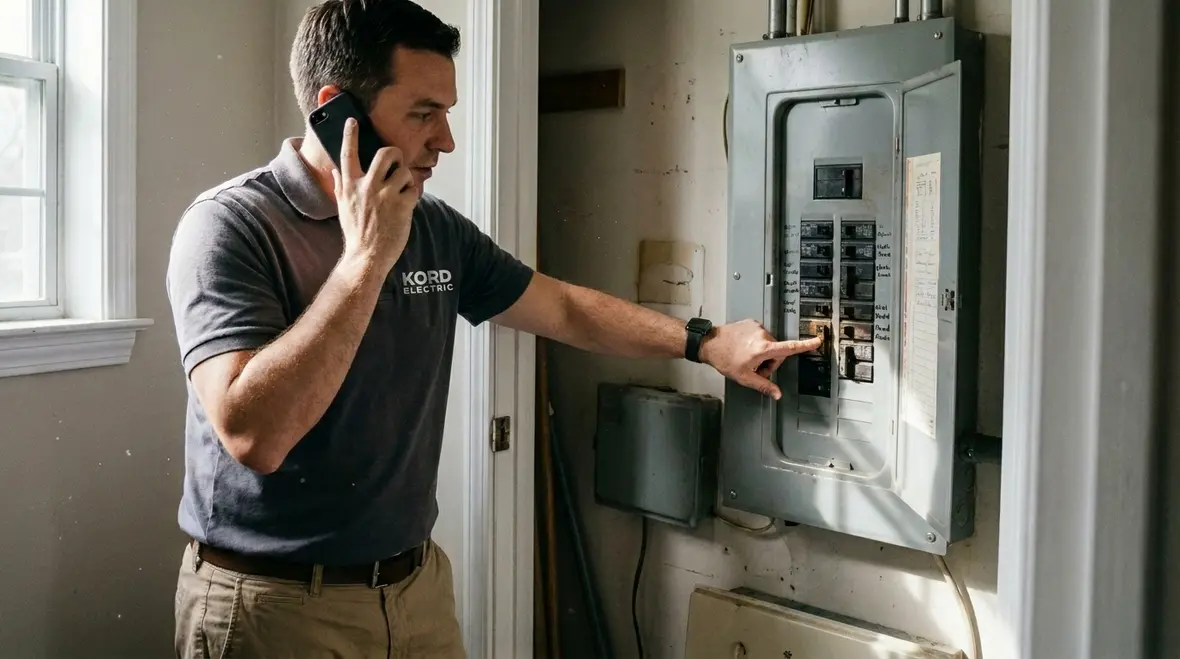
How we train teams to handle panels, breakers, and cords
Our technicians focus on what people touch every day. They also focus on what people should never touch. For example, if someone thinks a tripped breaker is “probably fine,” we show them what that assumption costs. Breakers trip for reasons. And if a breaker keeps resetting without fixing the cause, the system remains unstable.
So, what does training look like? We guide commercial and industrial teams through clear steps:
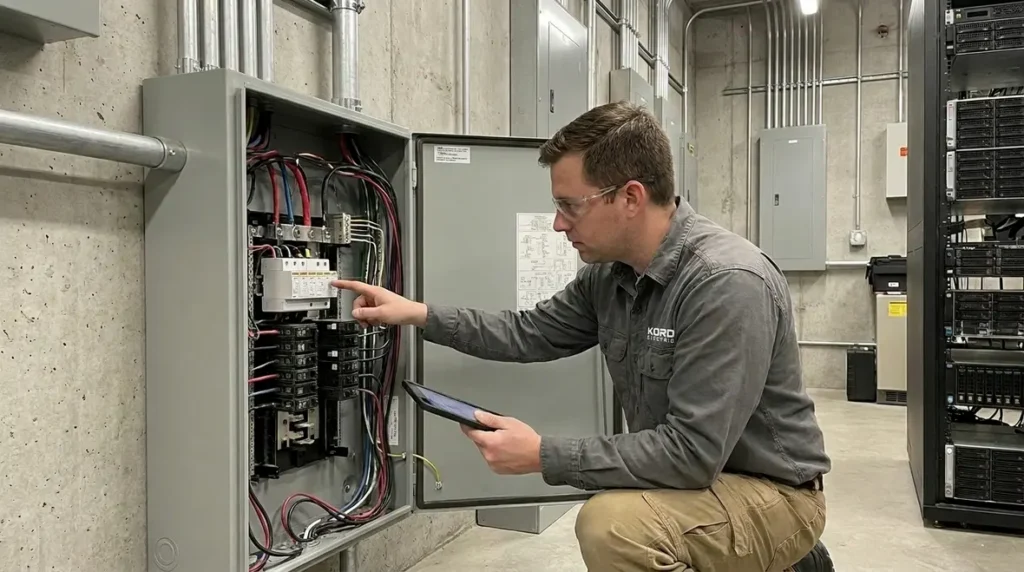
- Visual checks before action. Tenants should spot damaged cords, loose covers, and burn marks. They should not investigate deeper than a safe, surface level.
- Use lockout and tagout correctly. When maintenance requires deenergizing equipment, authorized staff must control the energy source and document the process.
- Respect labeling. Tenants should treat panel directories and circuit labels as safety tools, not as suggestions.
- Know when to call professionals. If there is buzzing from a panel, heat at a termination, or signs of water intrusion, tenants should stop and request service.
Then our expert service staff explains each step in plain language. We keep it practical. We also keep it calm. Because when people feel rushed, they make mistakes. And electricity does not forgive mistakes the way pop culture heroes do after one dramatic monologue.
As tenants learn to spot early warning signs, many facilities pair this hands-on training with structured electrical preventive maintenance so that inspections and service follow the same safety priorities the training promotes.

Arc flash and shock prevention: the steps that matter most
Shock and arc flash hazards show up in workplaces that look “normal” from the outside. A panel could seem quiet, yet it may hide dangerous conditions inside. Therefore, prevention depends on disciplined habits.
First, tenants and property teams should support safe work practices around energized equipment. That means choosing the right protective approach for each job and following procedures that match the hazard level. Our team helps coordinate service so that electrical work occurs with the proper planning, tools, and controls.
Second, the building should enforce good cable and connection management. Loose connections create heat. Heat accelerates insulation aging. Then one day the failure arrives like an unexpected bill. To prevent that, we recommend:
- Scheduled inspection of panels and terminations in high use areas and major property buildings.
- Moisture control around electrical rooms and exterior feeds where water and condensation can become a quiet enemy.
- Clear procedures for equipment energization so staff does not “flip and hope.”
- Proper grounding and bonding checks, because a weak connection can turn a fault into a danger.
Finally, we emphasize incident response. If something sparks or a person receives a shock, immediate action matters more than bravery. Tenants should follow their site emergency plan and call for assistance without delay. We would rather respond to a problem early than after someone tries to “play mechanic” with live equipment.
For sites dealing with unstable power, pairing these habits with targeted support for voltage fluctuations in commercial and industrial facilities helps protect sensitive systems before a minor irregularity becomes a major event.

Inspection, maintenance, and reporting routines for commercial spaces
Safety improves when teams operate with rhythm. Instead of waiting for failure, commercial tenants can reduce risk through ongoing inspection and structured reporting. Kord Electric supports property teams and tenant stakeholders by helping them build reliable service routines for commercial and industrial facilities.
Here is how we encourage practical maintenance planning:
- Create a clear reporting path. Tenants should know exactly who receives safety notifications and how fast someone responds.
- Track recurring issues. If breakers trip for one type of equipment, we treat it as a pattern, not a coincidence.
- Schedule targeted checks. High load areas, loading docks, server rooms, and equipment rooms deserve more attention than light switch corners.
- Document what gets repaired. Our technicians record service actions so the next team understands the history and does not start over.
To make this easier, we often align two viewpoints during planning: what tenants notice on the floor and what facility teams verify at the panel. When those two perspectives meet, safety gets faster and smarter. And yes, that is how you avoid the “telephone game” that turns into chaos during a real emergency.
Many organizations connect these routines to a formal electrical preventive maintenance program, so that inspections, testing, and repairs all follow a shared schedule instead of reactive guesswork.
Emergency readiness: what tenants should do before the alarm
Emergency readiness does not begin during a crisis. It begins before the first sign of trouble. Tenants should understand how to shut down equipment safely, how to keep pathways clear, and how to communicate with property staff during urgent situations.
When we work with building teams, we recommend planning that includes these basics:
- Know the shutoff locations for your leased space and major shared systems, and make sure access stays clear.
- Post simple instructions near critical equipment, using language that staff can follow during stress.
- Practice the communication flow so everyone knows who calls whom.
- Keep emergency lighting and exit routes reliable, especially during high occupancy hours.
Moreover, our expert service staff helps tenants understand the limits of what they can safely do. If a problem requires deenergizing equipment, tenants should not improvise. They should follow policy. We keep that message consistent, because in emergencies, clarity beats guesswork every time.
For properties that have already experienced sudden outages, Kord Electric’s guidance on emergency power failures in commercial buildings gives tenants and facility teams a shared playbook for what to expect and how to respond.
Electrical Safety for Commercial Tenants FAQ
To support Electrical Safety for Commercial Tenants in real-world conditions, tenants and property managers often ask similar questions. The answers below keep expectations clear and practical.
Closing CTA: schedule a safety check with Kord Electric
Electrical safety cannot be an afterthought in commercial and industrial facilities. If your team wants fewer disruptions, safer daily operations, and better confidence in what is behind the panel door, Kord Electric is ready. Our technicians and expert service staff help tenants and property teams plan maintenance, improve reporting, and respond correctly when issues appear. Contact us to discuss your building needs and schedule an assessment today. Let’s turn electrical risk into electrical control, one calm, professional step at a time.
If you would like a structured program that keeps Electrical Safety for Commercial Tenants tied to inspections, testing, and documentation, explore our dedicated electrical preventive maintenance services for commercial and industrial facilities.
For buildings experiencing unstable voltage, nuisance trips, or sensitive equipment issues, our specialized voltage fluctuation repair services help protect operations while keeping tenant spaces safe and compliant.