
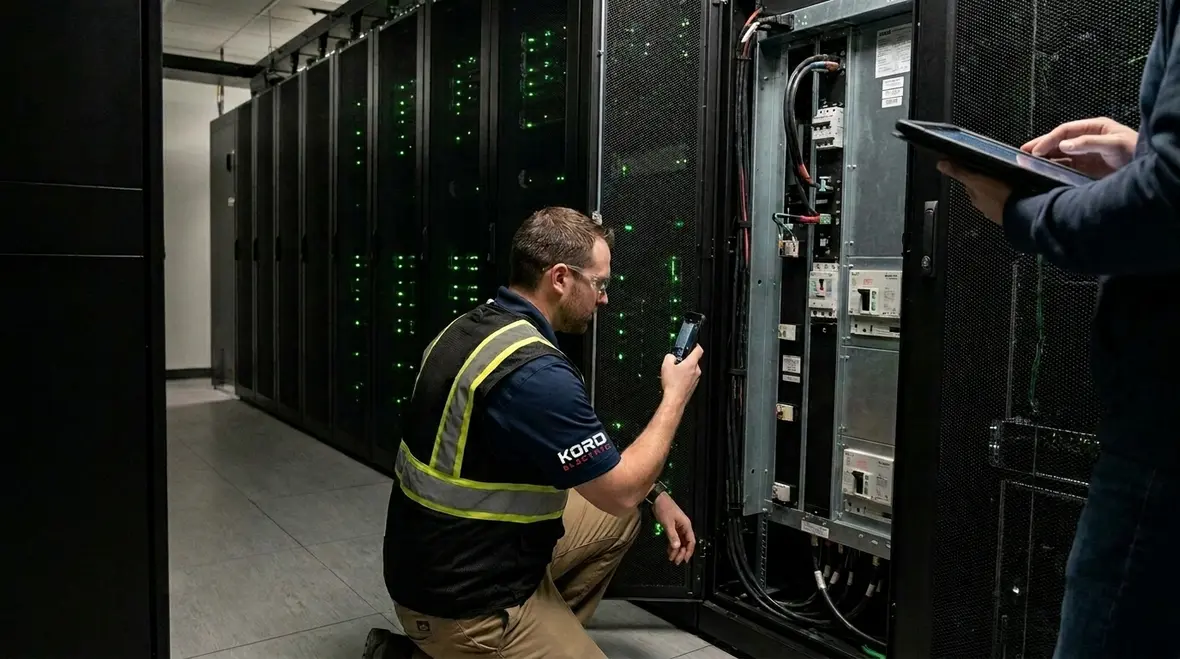
Data Center Power Reliability Strategies
Data center power reliability is not a slogan for Kord Electric. It is the work we do when budgets get tight, demand spikes, and outages try to sneak in like an uninvited guest at a board meeting. We plan for the failure points that matter, then we build a system that keeps servers running, cooling stable, and operations calm. Meanwhile, our technicians explain the “why” in plain language, because nobody should need a decoder ring to understand their power plan. In this guide, we share key strategies we use for commercial and industrial facilities and major property buildings, so your uptime stays steady even when the world does not.
What increases data center uptime the moment power starts acting weird?
We have seen “small” power problems grow into expensive downtime, so we start by treating power like a living system. First, we map the entire path from utility feed to critical loads, and we identify where interruptions, sag events, and harmonics typically cause trouble. Next, we design for redundancy at the right level, not just the level people brag about.
Then we address the real villains: single points of failure, poor transfer switching, unmanaged power quality, and aging components that quietly lose performance. If you have ever heard a server “crackle” during a voltage event, that is not mystical energy. That is the system begging for a better power environment.
Our team also checks operating procedures, because even the best hardware fails if the human process is unclear. Therefore, we combine design, installation, and maintenance planning so the reliability strategy holds under day to day conditions.
Redundancy that actually works, not just looks good on a slide deck
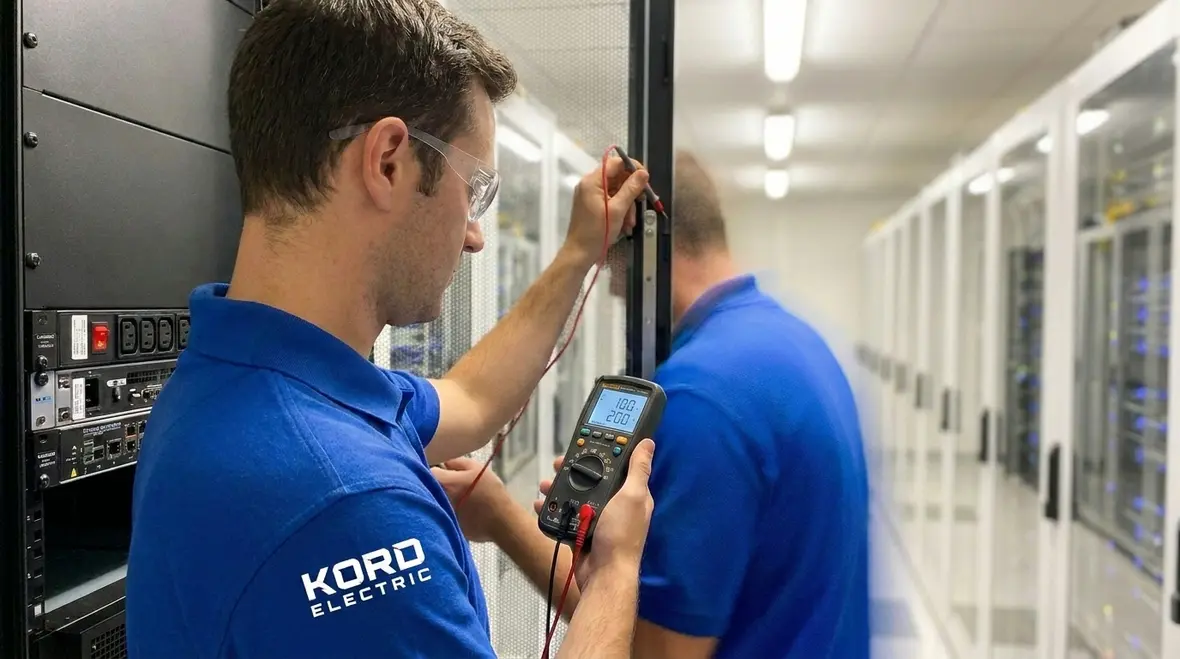
When Kord Electric builds for reliability, we focus on redundancy that supports critical loads under real scenarios. For example, we align UPS systems, generator sets, switchgear, and distribution so that a fault does not ripple through the whole facility.
We design with layered protection. That means protective devices coordinate properly, transfer mechanisms behave predictably, and power delivery keeps a stable voltage and frequency range for sensitive IT equipment. Additionally, we verify that maintenance tasks do not take the whole system out of service.
However, redundancy is not only about extra equipment. It is also about isolation and testing. So we plan how technicians will inspect, load test, and verify performance without creating downtime or risk. And yes, we document it, because “we think it was fine” is the exact phrase that makes incidents worse.
Power quality controls that protect sensitive loads
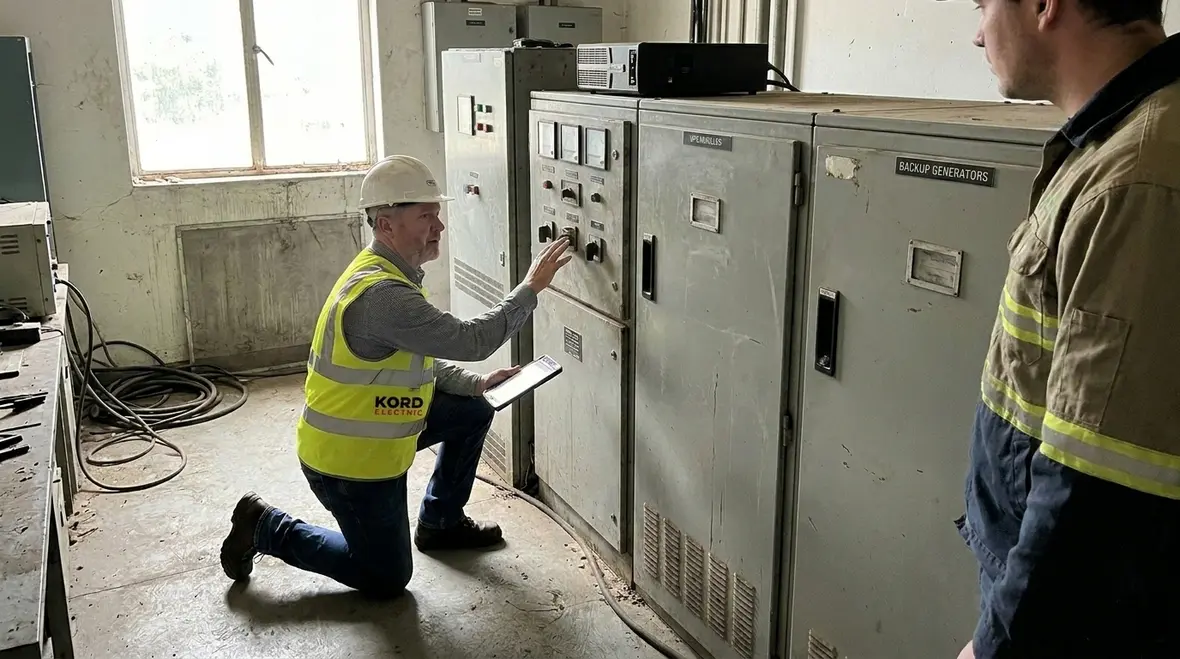
Data center power reliability depends on more than continuity. It also relies on power quality, including harmonic distortion, voltage dips, transient spikes, and frequency stability. Our engineers evaluate the facility electrical profile, then they design mitigation steps for the loads that create the most stress.
For many commercial and industrial environments, power quality issues show up as nuisance trips, intermittent faults, or gradual equipment degradation. Consequently, we implement strategies such as proper grounding and bonding, disciplined cabling layouts, and selective device coordination. Where needed, we add power conditioning solutions so critical systems experience a cleaner and steadier supply.
Moreover, we do not stop at design. We help ensure that the installed components match the intended behavior through commissioning and validation. In short, we treat power quality like a guardrail, not a wish.
How we plan load management to prevent reliability surprises
Even a well designed backup system can struggle if load assumptions are outdated. So we start with accurate load analysis and operating profiles. We review equipment lists, typical and peak power usage, startup currents, and growth plans. Then we translate that into a practical plan for distribution and transfer behavior.
At this point, our technicians step in with clear explanations. They tell facility teams how load changes can affect runtime, how redundancy behaves during growth, and why certain maintenance modes matter. It is a calm conversation, not a lecture, because we want operators to feel confident.
Then we add operational safeguards. We define thresholds, monitor critical metrics, and build response steps into procedures. As a result, when the facility runs hotter, draws more power, or cycles equipment, the system responds with more predictability.
Commissioning, testing, and maintenance that keep reliability on schedule
Installation is only the first chapter. Kord Electric strengthens data center power reliability through commissioning and ongoing maintenance built around actual operating risk. We validate that protection settings coordinate correctly, that transfer operations meet performance expectations, and that monitoring behaves the way the design intended.
We also plan for testing that does not disrupt business. We schedule load tests and runtime checks, verify battery health where applicable, and confirm that generator and switching systems perform under controlled conditions. In many cases, our expert service staff explains what they are measuring, why it matters, and what “pass” looks like in operational terms.
And when maintenance comes due, we help facility leaders follow a routine that prevents “surprise failures.” In other words, we keep the system from becoming a mystery novel with the servers trapped inside the last page.
Designing for future growth in major property buildings and C and I sites
Major property buildings and commercial and industrial facilities rarely stay the same. Floors get added, tenants change, and equipment density climbs. Therefore, our reliability strategy accounts for expansion without major rewiring or major downtime.
We create a design that supports scalable distribution, smart expansion pathways, and clear upgrade steps. We also evaluate how new loads interact with existing systems, especially in spaces that operate with demanding cycles such as HVAC upgrades, process equipment, or high density computing.
Where it fits, we align reliability planning with other electrical projects across the site. For example, if an organization is investing in EV charging infrastructure, we coordinate power planning and load distribution so the facility does not silently compete with critical circuits. Our approach to EV charger installation reflects this mindset, where we consider capacity, layout, electrical protection, and safe operation. You can see examples of how we think through an installation process and planning details on our EV charger installation page.
That same careful planning supports reliability goals for critical IT areas, because the facility does not live in separate electrical worlds. It all shares the same foundation.
How can teams reduce outage risk during upgrades and switching?
Upgrades create their own risk. So we plan change management as seriously as we plan the hardware. First, we define a shutdown and transfer approach that protects critical loads. Next, we coordinate with facility leadership so everyone understands the sequence, the timing, and the backup plan.
Then we use controlled switching steps that limit exposure to unsafe operating states. Additionally, we verify configuration changes through checklists and validation steps before the system returns to normal operations.
Our technicians guide teams through the process and explain how each stage affects reliability. As a result, facility staff learns the system behavior instead of guessing it. And guesswork, like decaf coffee, sounds comforting but does not solve the real problem.
FAQ
Final takeaway and next step with Kord Electric
If you want stronger uptime, we help you build data center power reliability into the design, the installation, and the maintenance plan. Kord Electric evaluates your facility electrical path, improves redundancy and power quality, and verifies performance through commissioning and testing. Then, our technicians explain each step clearly so your team can operate with confidence. If you are planning upgrades or building toward higher capacity, contact Kord Electric to review your power reliability strategy and chart the safest, most practical path forward. For facilities that want to reduce unplanned outages through structured care, you can also explore how our electrical preventive maintenance services support long term reliability across commercial and industrial properties.


