Commercial Outdoor Lighting Efficiency That Lasts
When a business runs long hours, power use does not stay “small.” That is why Kord Electric focuses on commercial outdoor lighting efficiency for commercial and industrial facilities, and for major property buildings where the lights must stay reliable, safe, and cost controlled. We see too many sites where fixtures glow brighter than needed, sensors fail, wiring runs are neglected, and drivers drift out of spec. Then the monthly electric bill arrives like an uninvited guest who eats first, pays last, and never leaves.
With our planning and expert service staff on site, we help others cut waste without turning the outside of their property into a dim cave. And yes, we do it in a way that still looks professional, because your customers and tenants notice the difference.
Commercial outdoor lighting efficiency that actually holds up in the real world
When a business runs long hours, power use does not stay “small.” That is why Kord Electric focuses on commercial outdoor lighting efficiency for commercial and industrial facilities, and for major property buildings where the lights must stay reliable, safe, and cost controlled. We see too many sites where fixtures glow brighter than needed, sensors fail, wiring runs are neglected, and drivers drift out of spec. Then the monthly electric bill arrives like an uninvited guest who eats first, pays last, and never leaves.
With our planning and expert service staff on site, we help others cut waste without turning the outside of their property into a dim cave. And yes, we do it in a way that still looks professional, because your customers and tenants notice the difference.
How energy waste shows up in outdoor lighting systems
Most energy waste does not start with “bad lighting.” Instead, it grows from small issues that stack up. First, fixtures get older. Even if the lamps still shine, output drops and the system starts running longer than it should. Next, controls fail or drift. A timer that used to shut down at 11 pm may keep running at 12:30 am, and nobody checks until the budget meeting.
Then there is the hidden cost: voltage problems. If power quality dips, drivers work harder and components age faster. As a result, you may see more maintenance calls, quicker failures, and replacement cycles that arrive earlier than planned.
In addition, many sites use incorrect lumen levels for the actual tasks. A loading dock, a pedestrian path, and a parking lane need different light profiles. When a facility uses one setting across everything, it pays for brightness where it is not needed.

Where our technicians begin: site review and measured baselines
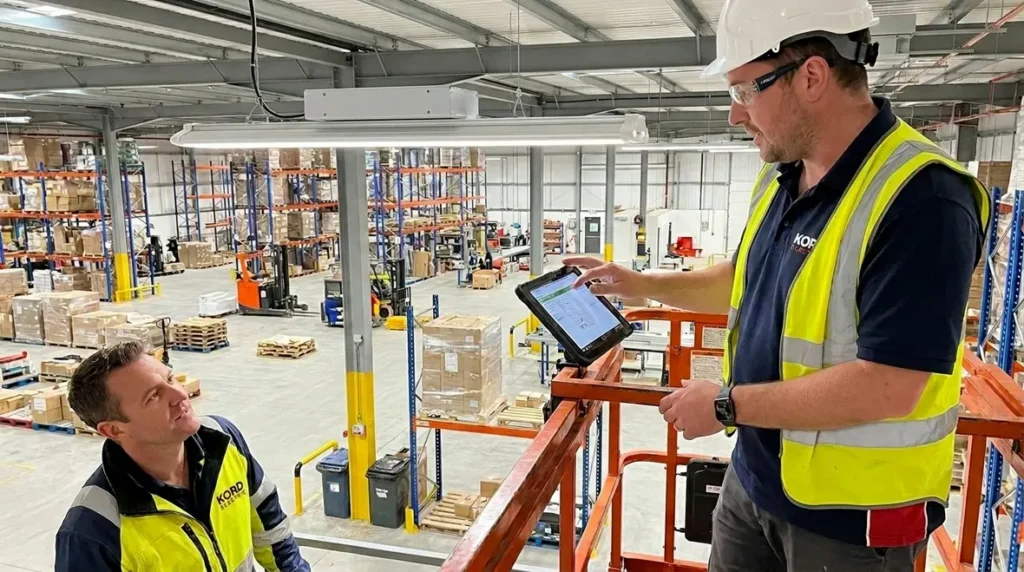
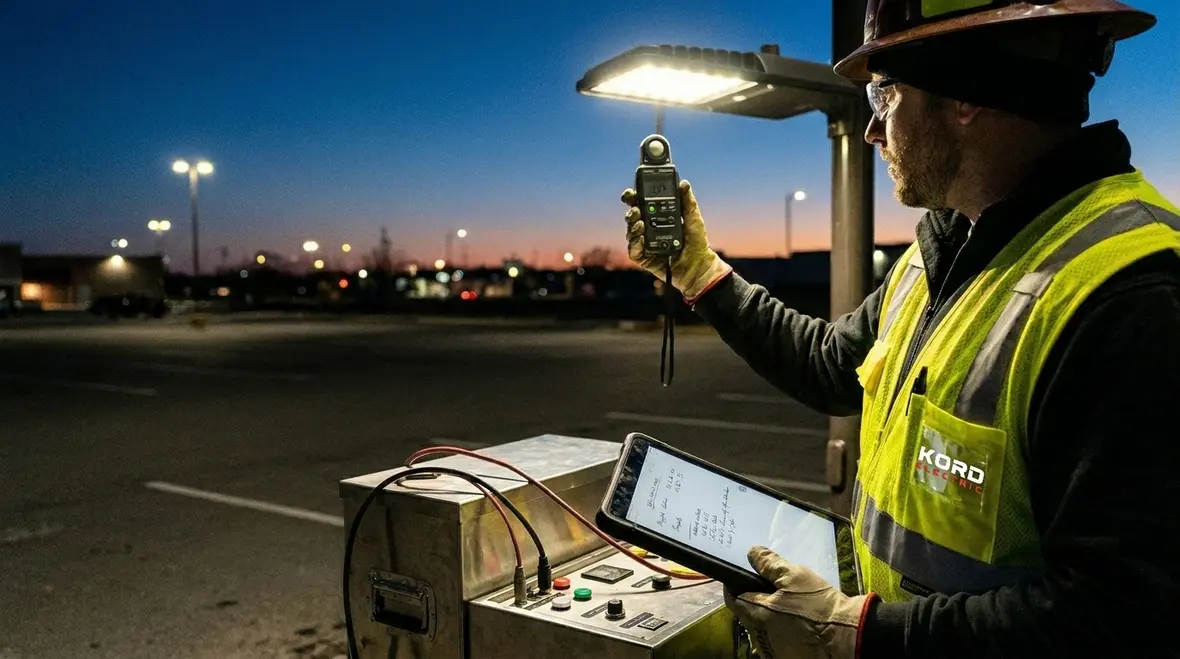
Others often guess. We measure. Our technicians start by reviewing the site layout, fixture types, mounting heights, and operating schedules. Then we verify how the lighting behaves during real conditions, not just on paper. We look at duty cycles, controller settings, and how zones respond to occupancy and time schedules.
After that, we build a baseline so the facility can see what changes do. We compare current energy draw, estimated output, and control response. Next, we identify the top drivers of wasted energy, such as fixtures staying on too long, lamps running at full output when lower levels would meet safety needs, or sensors misreading weather and shadows.
Our team also reviews how maintenance has been handled. If outdoor fixtures receive little attention, dirt buildup and lens clouding reduce effective output. That pushes sites to compensate by running longer or using higher settings.
Finally, our expert service staff explains what we find in plain language. We do not throw charts at people and walk away. We walk through the issues, show the likely impact, and help the team choose a path that fits the site.
Controls that cut costs without cutting safety
Outdoor lighting should work like a good policy: clear, consistent, and only as strict as needed. For commercial and industrial facilities, we recommend controls that match real movement patterns. For example, parking areas and entrances should not behave the same as loading zones or storage yards.
We often set up staged lighting levels. Lights can run at a steady, energy wise level during low activity hours, and then step up when motion triggers. This approach saves energy while still supporting safe navigation and visibility. It also reduces “on off” stress that can wear components faster.
Additionally, scheduling matters. Many sites benefit from astronomic timers aligned to actual sunset and sunrise. Weather and seasonal shifts should not force the lighting system to burn energy unnecessarily during shoulder months.
Finally, we check sensors carefully. Poor placement can cause false triggers from tree shadows, passing vehicles, or changing weather patterns. When sensors get tuned correctly, you remove wasted runtime without making people feel like the lights are playing tricks on them. (Nobody wants a haunted parking lot.)
Preventive maintenance that protects output and reduces downtime
Even the best lighting design loses value without care. That is where preventive maintenance becomes more than a “nice to have.” It becomes a cost control tool. Kord Electric supports our clients with an approach aligned to the logic behind our electrical preventive maintenance program, where we focus on keeping systems stable, safe, and ready to perform.
In practical terms, our service staff checks key parts that influence efficiency and reliability. We inspect drivers, review control operation, verify wiring connections, and confirm that fixtures respond as intended. Then we schedule tasks before small failures become full repairs.
Our team also addresses the details that people forget. They include cleaning lenses and housings where buildup blocks light, checking for corrosion where water collects, and testing for consistent output from the system. When components stay within design limits, they last longer. That means fewer emergency visits and fewer late-night “why is this one area dark” calls.
Most importantly, this maintenance reduces the gap between planned and actual performance. A site can invest in upgrades, but if the system drifts, commercial outdoor lighting efficiency will slip anyway. Preventive care keeps the system on track. For facilities that want a deeper, structured strategy, our electrical preventive maintenance programs provide a broader framework for keeping critical systems ready.
Upgrade paths that balance brightness, glare control, and ROI
Some facilities jump straight to full replacement. We help others choose smarter steps. First, we evaluate whether retrofits can deliver the needed results. In many cases, upgrading drivers, optimizing optics, or improving control wiring can raise performance without forcing a full teardown.
Next, we handle light quality. Efficiency is not just about watts. It is also about how light lands on surfaces. Proper optics reduce wasted spill into areas that do not need it, and better aiming cuts glare. That protects pedestrians and helps the site meet safety expectations.
Then we consider runtime strategy. A fixture that runs less often, but still produces the right light when it matters, can outperform a brighter fixture that stays on longer. As a result, the return on investment can improve even when the hardware upgrade is modest.
We also account for compliance needs and site safety. We work with commercial and industrial settings where reliability matters. If the facility needs lights for entrances, yards, or work zones, we ensure the plan supports those needs rather than chasing energy savings at the expense of visibility.
For leaders planning broader improvements, resources such as Kord Electric’s commercial lighting upgrade guidance and Title 24 retrofit analysis help connect outdoor upgrades with interior efficiency and code compliance. That way, commercial outdoor lighting efficiency becomes part of a larger, long term strategy instead of a one-off project.
Why ongoing reporting matters for commercial and industrial leaders
Leadership teams do not need guesswork. They need outcomes. We provide documentation that ties lighting changes to the operating goals of the facility. This helps property managers and operations leads track performance over time and stay ready for budget cycles.
Moreover, reporting helps spot drift early. If controls start to behave oddly after storms, or if certain zones stop responding correctly, the system can be corrected before it becomes a cost leak. In addition, consistent reporting supports decision making for future projects, like adding more zones or expanding the control strategy.
Our expert service staff also explains trends in a practical way. Instead of vague statements, we outline what to watch, what we corrected, and what benefits we expect next. That calm, steady approach keeps energy management from turning into a monthly mystery.
FAQ
CTA: Get your site lighting performing, not just glowing
When a property keeps paying for wasted outdoor lighting energy, the problem does not fix itself. Kord Electric can review your system, measure real runtime behavior, and set a plan that improves commercial outdoor lighting efficiency through smart controls, careful upgrades, and preventive maintenance. If you want your entrances, yards, and work zones bright when they should be, and efficient when they should not, reach out to us. Our expert service staff will explain the findings clearly, and we will handle the rest.
If you are also planning broader projects inside the facility, our commercial lighting installation and upgrade services help align indoor and outdoor strategies so the whole property benefits, not just one zone at a time.
For property teams that want a long term partner, Kord Electric’s preventive maintenance, Title 24 support, and lighting design services can be woven into a single plan that keeps your commercial outdoor lighting efficiency strong year after year.