Top Causes of Commercial Electrical Distribution Faults
Commercial electrical distribution troubleshooting: what usually triggers the fault
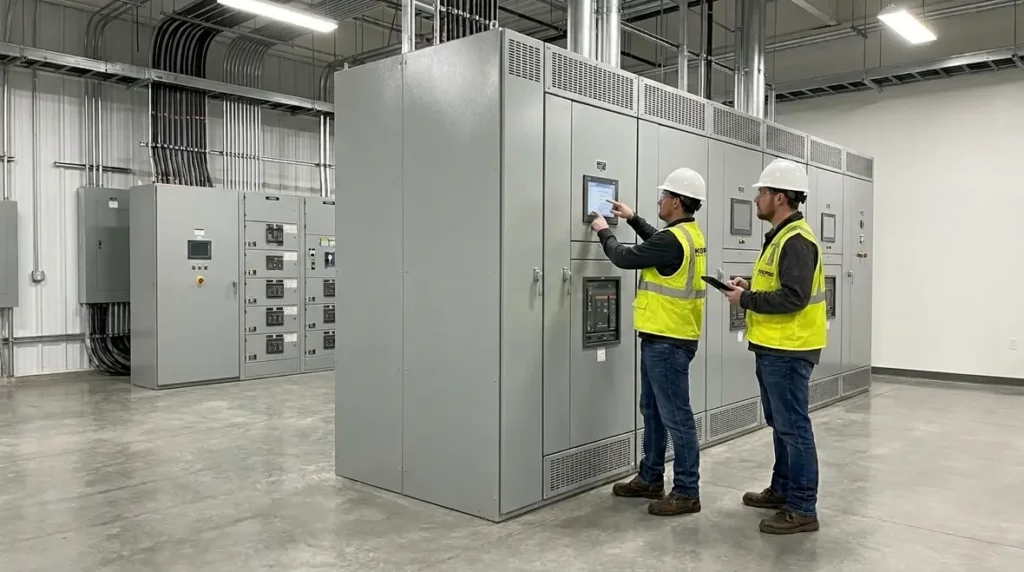
When a commercial building starts acting like it is haunted, it is often not the ghosts. It is the power. During electrical distribution troubleshooting, our Kord Electric technicians look for the usual suspects across the service entrance, switchboards, feeders, panels, and large loads. In many cases, we find early warning signs before a problem becomes a full shutdown. Still, a fault can appear fast, because heat builds, connections loosen, and aging components stop behaving politely.
In this guide, we explain the most common causes of commercial electrical distribution faults, and we also describe how our expert service staff approaches diagnosis. While you might expect one dramatic failure like in a movie, real life usually runs on smaller issues that stack up quietly until the lights decide to go on strike.
How poor load management stresses distribution equipment
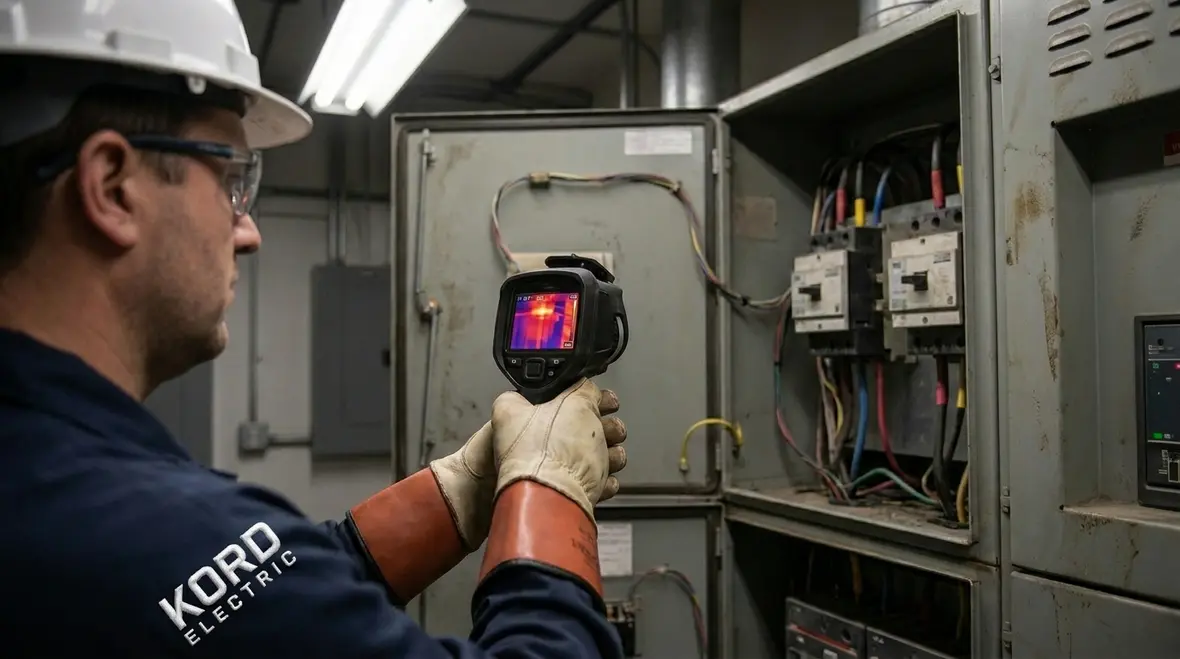
One of the most frequent causes we see is load growth without matching electrical distribution capacity. Over time, tenants add equipment, warehouses add racking and motors, and offices add more servers because nobody ever stops at “just enough.” As a result, conductors run hotter than they were designed to handle. Then insulation life shortens, and voltage drops get worse during peak demand.
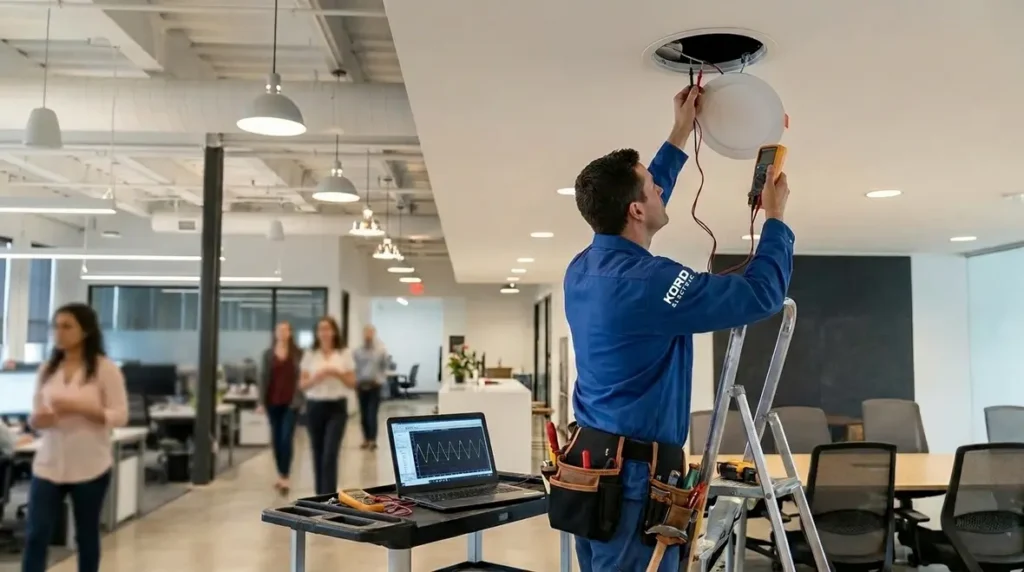
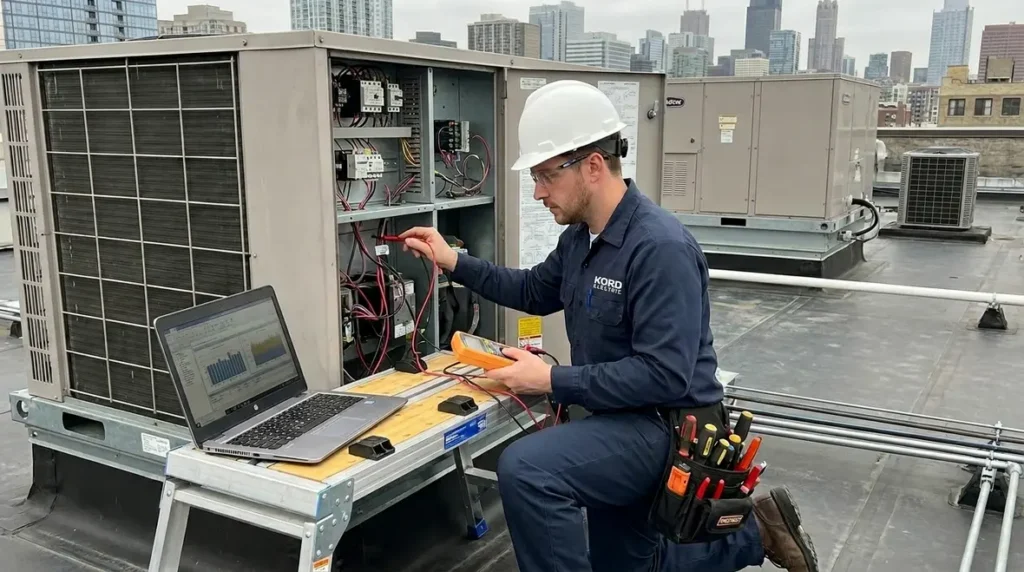
To make this practical, our expert service staff checks load profiles, identifies peak periods, and compares measured current and voltage to nameplate ratings. Electrical distribution troubleshooting often begins with a reality check: what the system delivers now, not what it delivered on day one.
Additionally, improper demand settings and misaligned breaker coordination can cause nuisance trips or, worse, selective failures where one part trips while another part feeds the fault. In short, the system does not fail randomly. It fails where stress concentrates.
Linking load growth to real-world facility risk
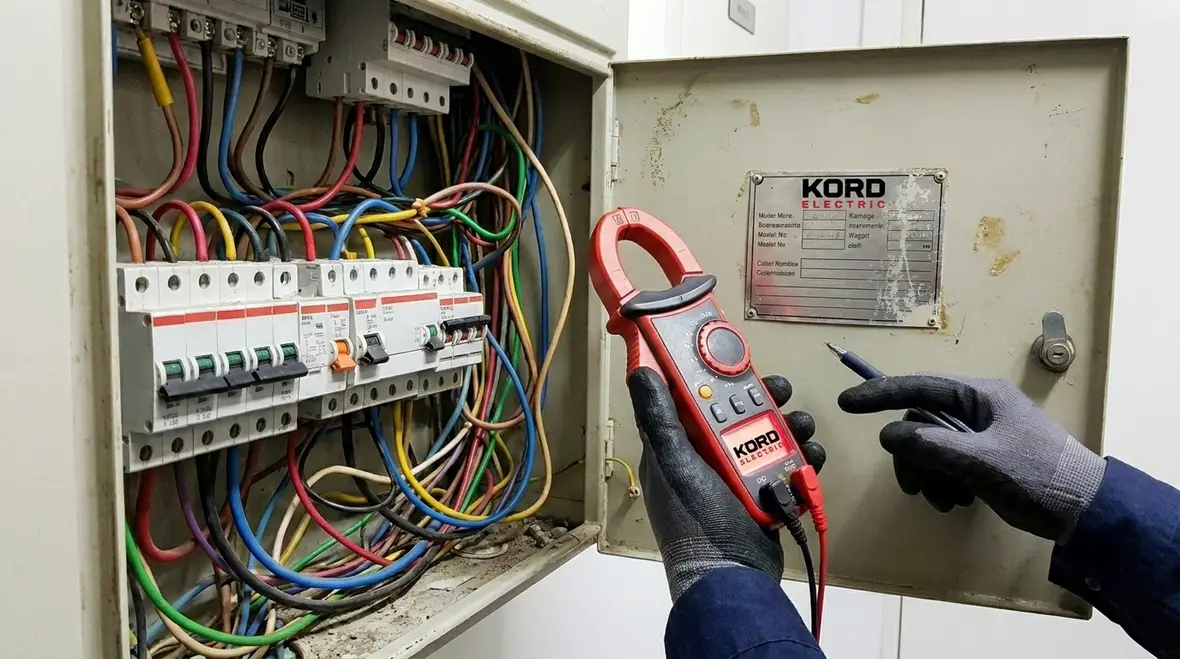
In many commercial and industrial facilities, electrical distribution started out sized correctly, then gradually fell behind reality as expansions, tenant improvements, and process upgrades stacked up. That is why our technicians do not just look at breaker labels. They ask what changed, how it was added, and whether the original distribution design ever received a matching update.
If you want to see another example of how quiet load growth turns into risk, our team explains this pattern in detail in their guide on hidden electrical risks in commercial buildings, where “just one more load” slowly becomes a reliability problem hiding behind closed panels.
Why loose connections and bad terminations cause repeat faults
Loose connections behave like a slow leak in a tire. At first, everything looks fine. Then heat builds at the contact surface. Eventually, the connection oxidizes, resistance rises, and the area becomes a hotspot. That hotspot can lead to arcing, intermittent outages, and blackened bussing or lug marks you cannot unsee once you spot them.
In industrial and commercial facilities, vibration adds another layer. Forklifts, compressors, pumps, and HVAC systems move air and structure, and movement loosens hardware over time. Moreover, poor torque, rushed installation, or incorrect wire sizing during past work can turn a minor termination issue into a recurring fault pattern.
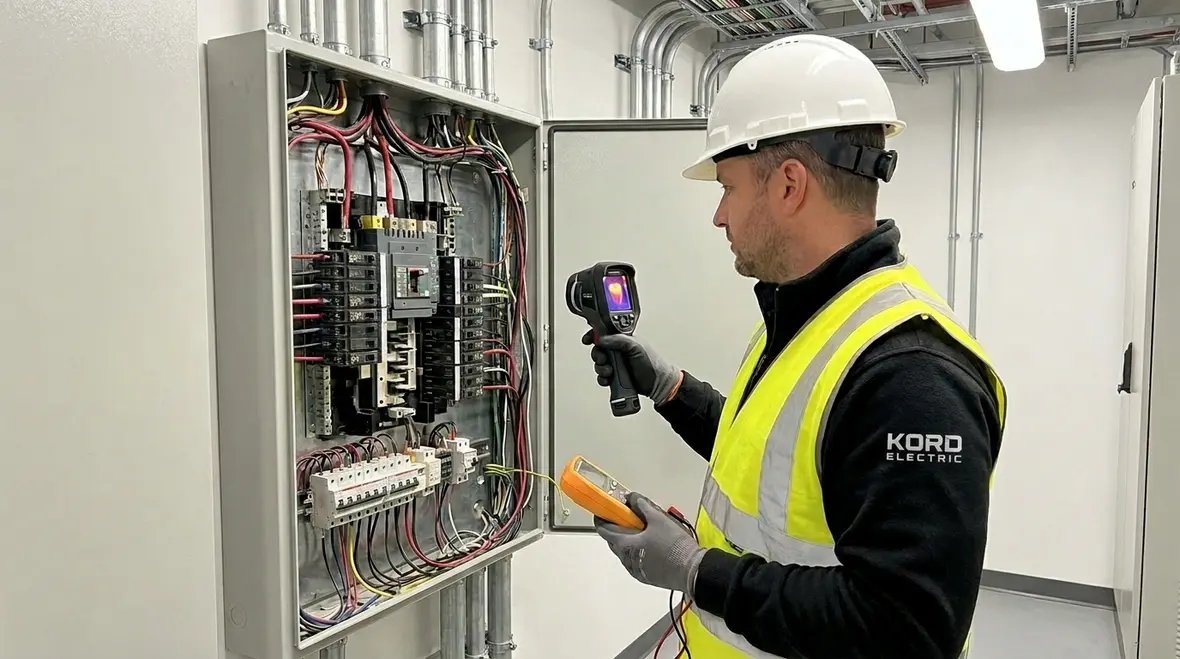
Our technicians treat this as a top priority because it is preventable. We visually inspect, verify torque where applicable, check connection integrity, and then align findings with test results. When you catch a problem early, you avoid the “fix it after it smokes” approach, which, to be fair, is a technique best left to barbecue.
How repeat faults reveal deeper termination problems
When the same area keeps tripping or overheating, it is rarely a coincidence. Repeat faults often point to the same loose lug, the same overloaded tap, or the same section of bus where past work cut corners. Our expert service staff correlates breaker events, thermal imaging, and inspection notes so those patterns stand out clearly instead of staying hidden in a stack of work orders.
In some cases, we find that earlier “repairs” only addressed symptoms, not root causes. Tightening a hot screw on a damaged conductor might buy temporary relief, but it does not reverse insulation damage or long-term oxidation. That is why our approach pairs torque checks with conductor condition assessments and, when needed, full terminations instead of halfway fixes.

Moisture, dust, and corrosion: the quiet fault accelerators
Moisture intrusion and environmental contaminants create major trouble for distribution gear. Condensation can form inside enclosures when temperature swings, and leaks can bring water to areas not built to stay wet. Then corrosion starts at gaskets, hinges, latches, and wire entry points. Once corrosion spreads, contact resistance increases and faults become more likely.
Dust and conductive debris can also create problems, especially in industrial corridors, loading docks, and manufacturing spaces. Fine dust combined with humidity can turn enclosures into conductive paths. Therefore, our technicians monitor cleanliness levels and check seals, drains, and venting choices for the environment.
When we perform electrical distribution troubleshooting, we do not only look for visible damage. We inspect for insulation stress, signs of tracking, and uneven wear. In many cases, we can trace repeated faults to a specific floor, room, or enclosure type, which makes the corrective path clearer and faster.
Environmental risks in commercial and industrial buildings
Every facility has its own environment story. Parking structure panels see exhaust, road salts, and moisture. Food production sites see washdown cycles and cleaning chemicals. Warehouses and distribution centers see fine dust and forklift traffic. Part of our job is to connect each fault pattern to the environment it lives in, then recommend enclosure upgrades, sealing improvements, or relocation where it truly matters.
For property teams who want to dig deeper into how hidden environments drive failures, the article on hidden electrical risks in commercial buildings expands on what happens behind the scenes when panels face years of quiet exposure.

Protection and coordination failures that widen the damage
Breakers and protective devices exist to limit damage. Yet protection and coordination issues often turn a small electrical event into a bigger one. Sometimes the settings are outdated, especially after equipment changes or after long periods without maintenance. Other times, the protective relay logic or breaker calibration drifts with age.
Then there are situations where parts of the system do not coordinate. For example, a downstream breaker might trip, but upstream protection might not clear the fault quickly enough. Or, a breaker might not trip at all during an overload, and the system overheats while everyone waits for a “later” that never comes.
Our expert service staff evaluates time current curves, checks device health, and confirms that protective actions match the facility’s risk profile. This matters most in commercial and industrial facilities where downtime affects operations, supply chain, and safety. It is also where major property buildings demand consistent reliability across many zones.
Coordinating protection with real loads and real priorities
Modern facilities rely on complex mixes of motors, drives, UPS systems, lighting, and sensitive electronics. That means protection has to do more than “trip eventually.” It must respond at the right time, at the right level, for the right circuit. During electrical distribution troubleshooting, we combine field measurements with protective device data so the coordination study matches day-to-day conditions instead of ideal drawings.
For mission-critical operations like data centers, that coordination work becomes even more important. Our team covers that side of the story in their article on data center electrical distribution design for reliability, where selective tripping and redundancy planning are essential to keeping uptime intact.
Harmonics, power quality problems, and their hidden impact
Even when equipment runs, power quality can still be harming your system. Nonlinear loads such as variable frequency drives, UPS systems, LED lighting drivers, and some process equipment create harmonics. Those harmonics can overheat neutral conductors, stress transformers, and worsen voltage distortion across feeders.
In the field, we often see symptoms show up first as nuisance tripping, overheating at terminations, or complaints that “the power feels unstable,” which is a polite way of saying the building is tired. Then a deeper look shows harmonic currents, misconfigured grounding, or improper filtration.
Because our goal is reliability, we include power quality checks as part of our broader maintenance thinking. When we connect measurements to equipment locations, electrical distribution troubleshooting becomes more than guesswork. It turns into a map of where the distortion concentrates and which loads contribute most.
Where power quality issues usually hide first
Harmonic issues often start quietly at the places that feel the most “high tech”: server rooms, data closets, drive-fed process equipment, or LED-heavy lighting retrofits. That is why we pair standard thermal and visual inspections with targeted power quality logging around those loads. Once we know which frequencies dominate and where they circulate, we can recommend filter strategies, conductor changes, or layout adjustments that address the actual problem instead of chasing noise.
If your facility already runs critical IT systems, the article on data center electrical requirements for uptime walks through how power quality, redundancy, and monitoring work together to protect those loads.
How maintenance plans reduce faults before they start
A strong maintenance plan helps us stay ahead of trouble. If you wait until failures show up, your schedule gets eaten by repairs, and your budget becomes a mess of emergency invoices. We prefer a steady approach, especially for commercial and industrial facilities and major property buildings that need dependable power.
If you want the details on how we structure our work, Kord Electric maintains commercial and industrial electrical maintenance plans that focus on inspection, testing, documentation, and corrective actions. This kind of plan supports a predictable cycle, and it also helps others in the building make better decisions because the data stays consistent. In other words, you stop relying on “memory and vibes” and start using facts.
Additionally, planned maintenance lets our expert service staff check critical components on a timeline that matches real risk. We review operating history, identify repeat concerns, and then prioritize the highest consequence work first. That is how we reduce unexpected faults without disrupting operations like an uninvited party guest.
For a deeper breakdown of how those programs work, you can explore Kord Electric’s article on commercial and industrial electrical maintenance plans, which explains how structured inspections, testing intervals, and documentation come together to keep systems calm instead of chaotic.
From emergency calls to predictable maintenance cycles
Facilities that shift from reactive repairs to scheduled maintenance usually see the same pattern: fewer surprises, shorter outages, and better clarity around where capital upgrades belong. Instead of hunting down the latest mystery trip, teams spend more time planning improvements and less time hunting for the one panel that decided to have a bad day.
Our own electrical distribution troubleshooting work often becomes the foundation of those plans. Every time we locate a fault, we also ask, “How do we keep this from happening again?” That is where thermography schedules, torque-check intervals, cleaning routines, and protection reviews move from “nice idea” to line items on a calendar.
What to do next for safer, calmer power
If you want fewer shutdowns and more predictable performance, contact Kord Electric. Our expert service staff supports commercial and industrial facilities with maintenance focused on prevention, not panic. We review your system, explain findings in plain language, and propose practical corrective steps based on testing, inspection, and risk. Then we document everything so your team can plan with confidence. Call us today to schedule an assessment and take your power system out of “surprise mode.”
If your facility also needs upgrades beyond troubleshooting, Kord Electric’s commercial and industrial service offerings cover everything from repairs to planned improvements. A helpful starting point is their overview of commercial and industrial electrical maintenance plans, which connects day-to-day inspections with long-term system reliability.
For property teams planning broader electrical projects, such as panel improvements, lighting upgrades, or EV charging expansions, Kord Electric’s dedicated commercial and industrial electrical services help align distribution reliability with future growth so today’s fixes support tomorrow’s plans.