
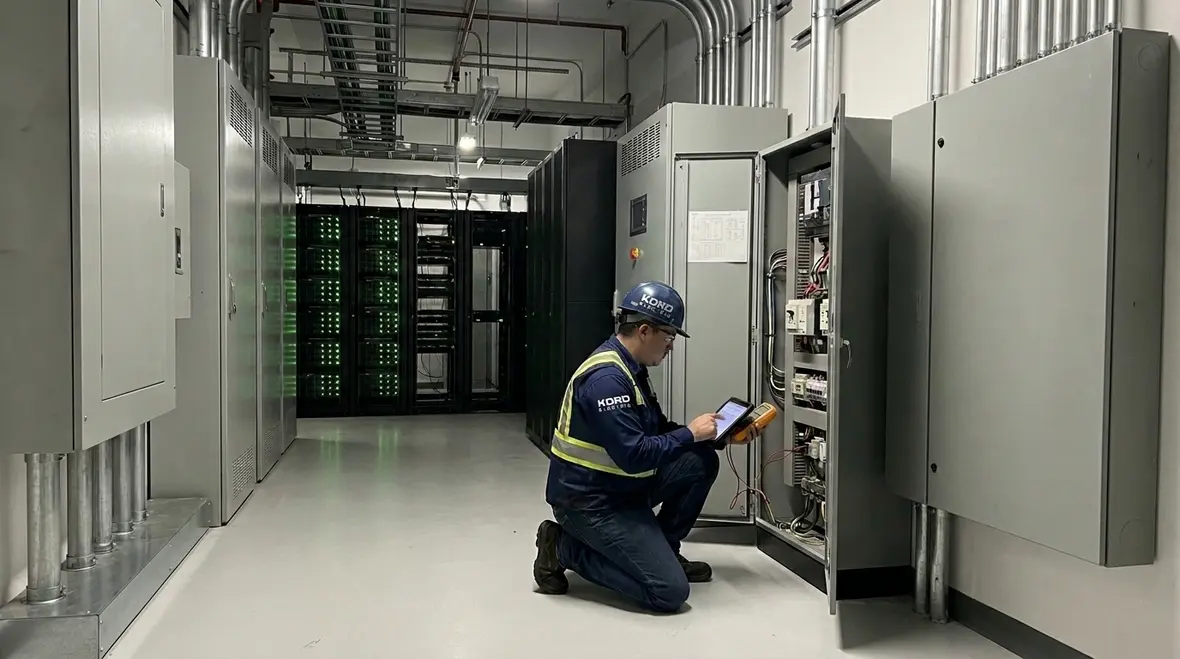
Data Center Uptime Solutions and Electrical Upgrades
Data centers do not have a “good time” to fail. They just have moments when the impact is bigger or smaller. When commercial and industrial operators look at data center uptime solutions, they are really asking a simpler question: how do we keep power predictable so everything else can stay calm? The answer sits inside the electrical infrastructure, the upgrades that remove weak points, and the preventive work that keeps small issues from becoming that surprise plot twist nobody ordered.
This guide walks through how Kord Electric approaches uptime for serious facilities: by strengthening power systems, planning work like operators, and tying everything back to clear reporting and practical decisions.
Data center uptime solutions that keep power steady, night after night
At Kord Electric, we focus on data center uptime solutions for commercial and industrial facilities, so the lights stay on and the systems stay ready when the stakes are highest. We use a practical approach to upgrade electrical infrastructure before failures spread, because downtime does not politely wait its turn. Instead, it shows up like a surprise plot twist in a superhero movie, and nobody asked for it.
To boost reliability, we plan preventive work, strengthen critical circuits, and verify performance with disciplined checks. Then, we document what we find and what we fix, so facility teams and owners can make confident decisions.
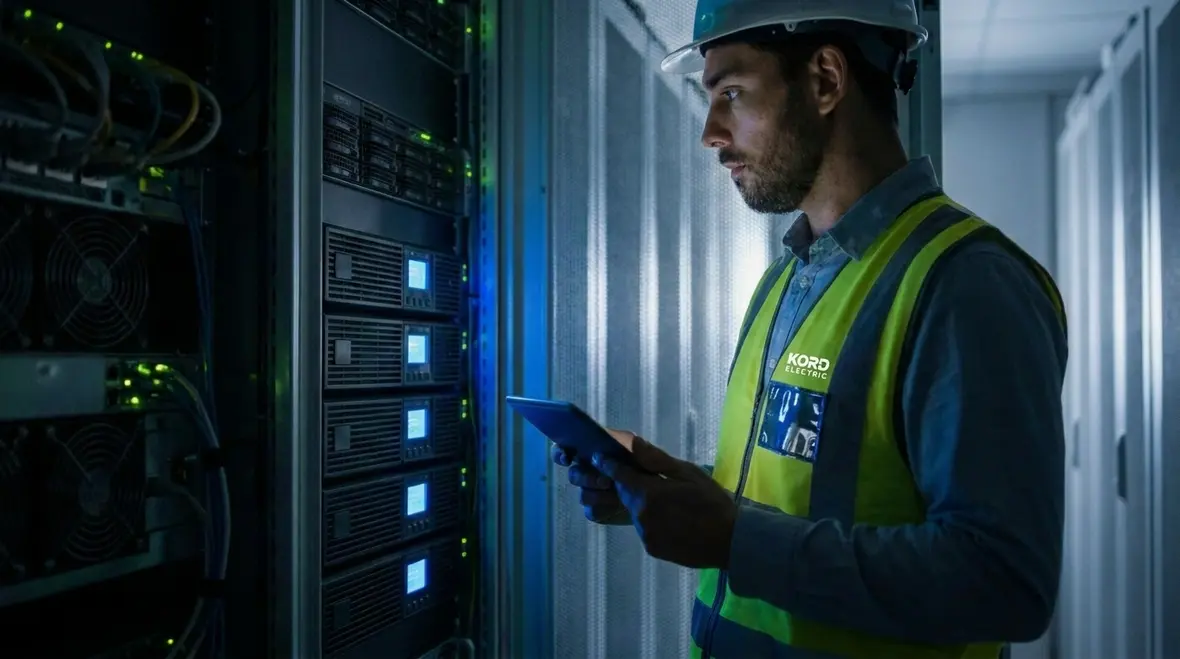
For facilities that run around the clock, those checks often tie into structured programs like electrical preventive maintenance services. When preventive work and targeted upgrades move together, power stops feeling like a gamble and starts behaving like part of a plan.
Why electrical upgrades raise uptime more than people think
When teams chase uptime goals, they often start with software, cooling controls, or monitoring alarms. Those parts matter, of course. However, electrical problems tend to be the quiet villains: loose connections, aging switchgear, failing batteries, and insulation breakdown rarely announce themselves with a dramatic headline.
Here is the truth we tell our clients in plain terms. Over time, the electrical system drifts away from its design point. Then, each stress event pushes it closer to a failure mode. As a result, the best path to data center uptime solutions is to upgrade strategically, not randomly.
We also help others avoid “spend first, learn later” decisions. Instead, our expert service staff reviews loading patterns, fault history, and equipment age so the work targets the real risks. That keeps capital spend aligned with actual outcomes, not hopes and guesses.
And yes, we have heard the classic line: “It ran fine last year.” That is like saying your car will survive because it started one morning. Eventually, the math shows up.
To make that math kinder, we often connect upgrade plans with insights from other commercial projects—from whole-building rewiring to hidden electrical risk assessments. When data centers share buildings with production floors, offices, or mixed-use spaces, an upgrade that stabilizes one area frequently removes risk for the others too.
Plan the work like an operator, not like a guesser
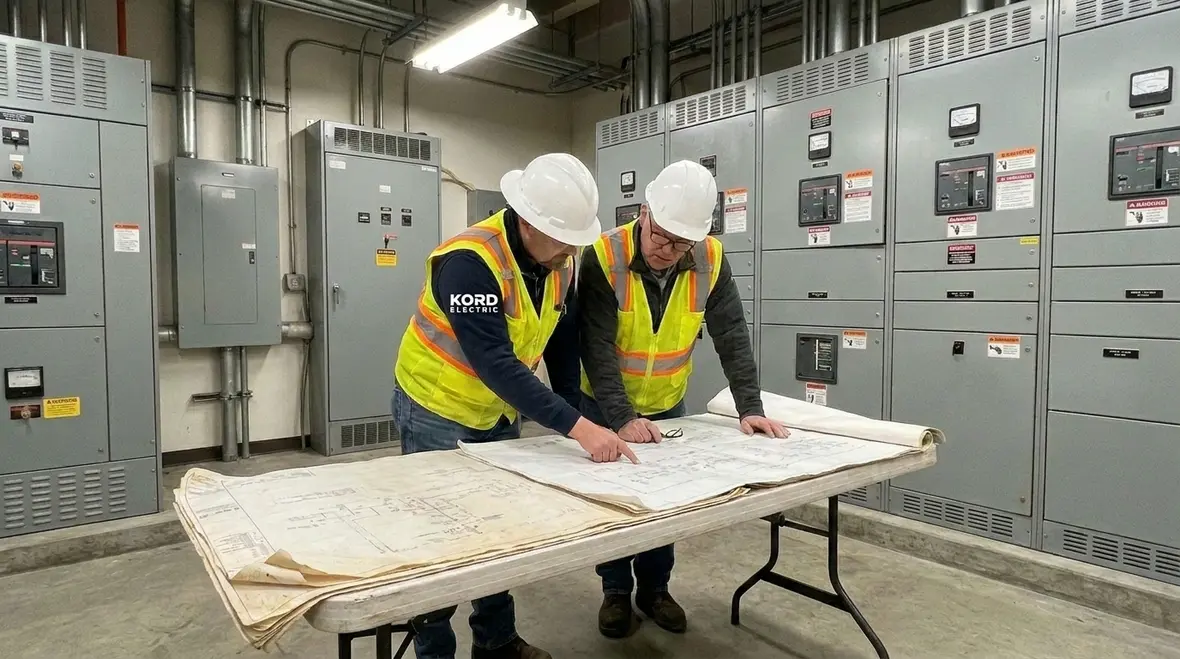
Upgrades only work when they match the operating reality of a building. For data centers and major property buildings, we coordinate plans around business needs, redundancy goals, and outage windows. In other words, we treat your power like a living system with careful timing.
Our process starts with field review and system mapping. We look at incoming service, distribution, critical loads, grounding and bonding, transfer equipment, UPS pathways, and generator interfaces where applicable. Then, we compare what the system is doing today to what it was designed to do under load and fault conditions.
Next, we build a phased plan that supports continuity. We recommend upgrades that reduce single points of failure and improve isolation so a fault does not become a site event. If we need to shift paths, we plan the change so the building stays within safe operating limits.
To keep this clear, our technicians explain each step as they go. We do not hide behind jargon. We break down what the work affects, what stays energized, what is shut down, and why each choice protects your runtime targets.
For multi-site operators, this operator-first mindset becomes even more valuable. Standard playbooks for switching, testing, and temporary support help different locations follow the same disciplined process, whether the project is a minor feeder upgrade or a major cutover supporting a new row of racks.
Preventive maintenance that actually finds the problem early
Many facilities do preventive maintenance in name only. They swap parts on a calendar and call it done. We help commercial and industrial clients do it the right way: by using preventive tasks that reveal trends, weak points, and drift before they become failures.
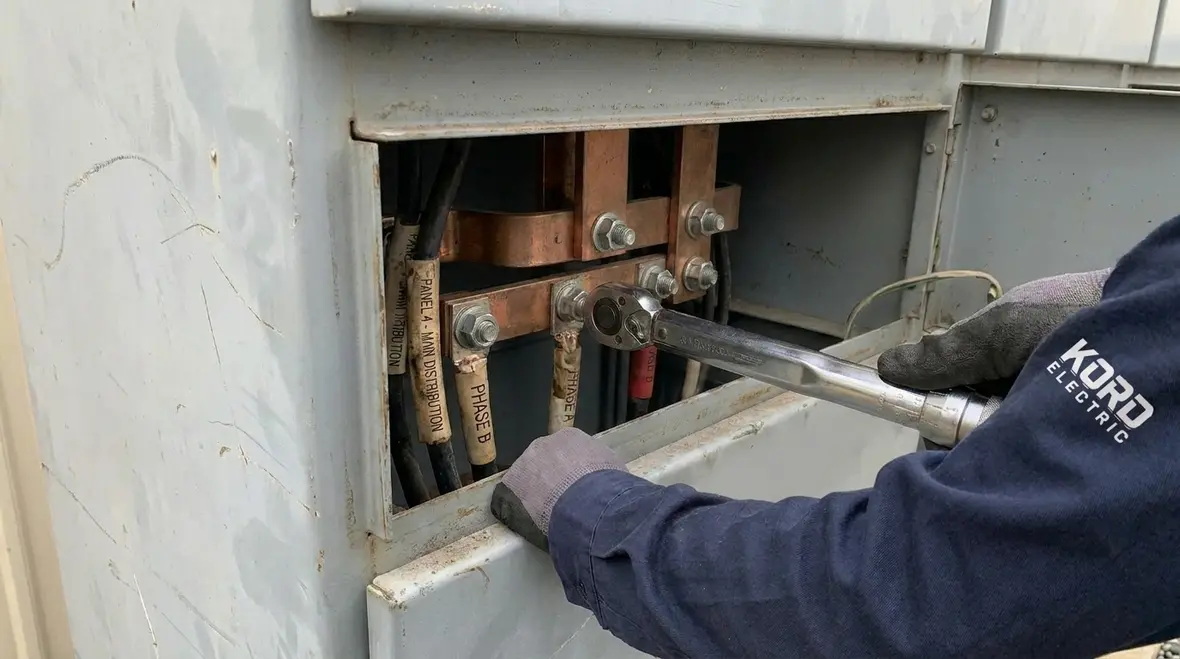
When our teams follow the approach outlined in electrical preventive maintenance, we focus on repeatable checks that match real risk. For example, we perform inspections and testing for critical equipment, verify connections, check insulation health, and review protective device behavior. We do not just look for obvious damage; we also measure and document condition.
Here is how it supports uptime. Preventive maintenance turns “unknown unknowns” into “known and manageable.” Once you can see how equipment changes over time, you can schedule upgrades at the right moment, not after an outage forces emergency work. That keeps operations calmer, costs lower, and response faster.
And because our expert service staff likes clarity, we explain results in business terms. If a reading suggests increased risk, we explain what it means, what it could cause, and what the upgrade or corrective action should be.
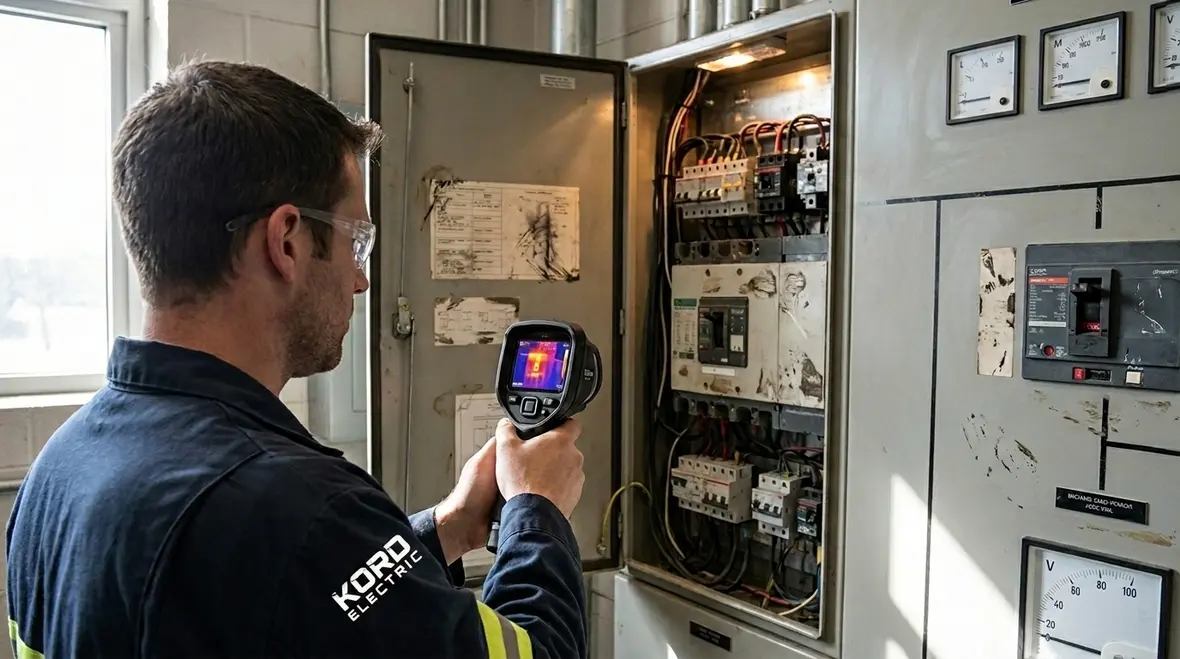
In data centers, this is where uptime targets become real. Infrared scans, torque checks, breaker testing, and UPS battery reviews create a fact-based picture of risk. Combined with structured documentation, that picture supports budget planning, service scheduling, and decisions about when to modernize older equipment.
Improve redundancy with targeted distribution upgrades
Redundancy does not help if the system still shares hidden weak links. Therefore, our electrical infrastructure upgrades often focus on how power routes through distribution layers. We strengthen switchgear performance, improve busbar integrity, and upgrade distribution components where aging or heat stress shows up.
We also help clients reduce the chance that one component failure cascades into multiple load losses. For example, we support better segmentation and proper protective coordination, so faults clear at the right level and the rest of the system keeps running.
Additionally, we evaluate the health of transfer paths, including UPS output feeds and generator interfaces where they serve critical loads. When transfer behavior is off, reliability suffers. So, we verify switching logic, check timing, confirm safe transition conditions, and document test outcomes.
Some folks treat redundancy like a sticker on a rack. Meanwhile, we treat it like a design requirement that needs verification. If you have ever seen “belt and suspenders” and wondered whether either one actually works, you already understand our mindset.
Those same principles apply across other high-demand environments, whether that means production floors, logistics hubs, or large office campuses. When distribution paths are clear, segmented, and tested, unplanned outages stop traveling farther than they should.
Make power quality boring again
Power quality issues can quietly damage uptime by increasing errors, shortening equipment life, and causing intermittent events that no one can reproduce on demand. That is why we address harmonics, voltage stability, and transient risk through a disciplined electrical review.
First, we assess system behavior under real load conditions. Then, we check grounding and bonding practices that protect sensitive electronics. Next, we recommend upgrades or corrections that reduce noise and improve stability across critical distribution paths.
When our technicians explain findings, they do it in a way that building teams can use. We relate power quality to real outcomes like reduced nuisance alarms, fewer fault events, and steadier operation of IT and automation systems.
Finally, we coordinate any recommended changes with the facility schedule. So, if a step needs a short controlled interruption, we plan it with care. If a step can occur while the system stays in service, we plan it that way too.
Because at the end of the day, the goal is simple. Your power should behave like it belongs in a stable adult relationship, not like it is trying to win an award for chaos.
When facilities notice flickering lights, unexplained resets, or sensitive equipment acting “temperamental,” these are often early signs of power quality trouble. Addressing them with a methodical review instead of quick patches turns mystery problems into solvable engineering work.
Trusted technicians and clear reporting that keep stakeholders aligned
Upgrades and maintenance work best when everyone understands what is happening and why. We support commercial and industrial clients with expert technicians who take the time to explain what they observe, what they test, and what the results mean. That includes facility managers, engineering teams, and owners who need reliable data for planning.
We also build reports that help decision making. Our team documents conditions, highlights risk drivers, and outlines recommended actions with priority and timing. Therefore, stakeholders can align on budgets and schedules without guessing.
And because communication matters, we keep the tone professional and calm. We do not rush clients into decisions. Instead, we walk them through options, including what to do first to protect uptime and what to plan next for longer term value.
So while the work might feel technical, the experience stays grounded and easy to follow. If someone wants the short version, we can give it. If they want the full technical record, we provide that too. Everyone gets the same facts, just at the right depth.
For facilities that prefer regional support with fast response, this same reporting framework also supports broader programs such as Los Angeles County electrical services. Local familiarity, documented history, and consistent technicians help complex sites move from one project to the next without losing context.
How uptime-focused upgrades connect to broader facility plans
Data centers rarely live in isolation. They share power with office towers, warehouses, production lines, or mixed-use developments. Because of that, uptime planning often becomes the backbone for broader electrical strategies across a property.
An upgrade that improves fault coordination for a server room may also protect a nearby manufacturing cell. A preventive maintenance round that inspects critical feeders for IT loads can double-check circuits supporting elevators, life-safety systems, or high-intensity lighting. The result is a facility where each improvement contributes to a more stable, predictable whole.
When we map out these projects, we help stakeholders see how data center uptime solutions, electrical safety, and future expansion plans fit together. That makes it easier to schedule work, coordinate shutdowns, and unlock budget for the upgrades that carry the most impact.
FAQ
Ready to upgrade for fewer outages
If you want a calmer operation and steadier uptime, Kord Electric can help you build a smarter electrical plan for your commercial or industrial facility. We focus on strategic upgrades, disciplined preventive maintenance, and clear reporting so stakeholders stay aligned.
For facilities across Southern California, that plan often includes a mix of local field support, regional coverage, and services that scale with your growth. Whether you are expanding an existing data hall, modernizing aging panels, or coordinating campus-wide upgrades, our team is prepared to design data center uptime solutions that fit your real-world schedule and risk profile.
Contact us today to schedule a review of your critical power system, identify risk drivers, and map a phased improvement path that protects your runtime targets. Let us keep your power boring and your outages rare, while your teams focus on the work that actually moves your business forward.
To explore how these strategies fit into your broader facility plan, you can also review our dedicated service offerings, including uptime-focused support for regional properties and complex campuses. Each project starts with clear goals, transparent communication, and a commitment to long term reliability.
When you are ready to connect uptime priorities with practical field work, Kord Electric is ready to help.


