Commercial EV Infrastructure Planning Guide
When a company plans to add EV charging, it needs more than a few chargers and a prayer. In this guide, we walk through commercial ev infrastructure planning so it fits the real world of commercial and industrial facilities, where uptime matters, budgets stay sane, and electrical systems do not magically scale because someone installed a parking sign.
As Kord Electric, we bring a method that helps others integrate charging, manage load, and protect operations. Our experienced technicians and expert service staff explain the “why” behind every step, so the plan sounds clear, not like an overengineered spreadsheet from a dystopian movie. And yes, we use jokes sparingly, because even charging equipment deserves a little joy.
Plan charging like a system, not a parking perk
Commercial and industrial buildings treat electricity like a lifeblood. Therefore, adding EV charging without a system view can create delays, nuisance trips, and costly upgrades. Our approach starts with understanding how power moves through the facility, including service size, distribution panels, feeder capacity, and existing demand patterns.
Next, we align the charging plan with actual behavior. That includes when vehicles arrive, how many chargers you need now versus later, and whether fleets return to the site in predictable blocks. Then we map that schedule to electrical capacity. After that, we size equipment and controls so they support peak demand without turning the building into a circuit breaker museum.
Finally, we document assumptions. This is not busywork. It protects you when budgets shift, when new tenants arrive, or when a facility manager changes. Our team helps others make decisions with confidence, not guesswork.

How commercial EV integration should fit your electrical maintenance plan
Many facilities already run electrical maintenance plans, yet charging gets treated like a separate project. That is where problems begin. So we make charging part of an integrated plan for commercial and industrial electrical maintenance and reliability. When we review existing maintenance, we look for gaps in inspection frequency, testing methods, and documentation practices.
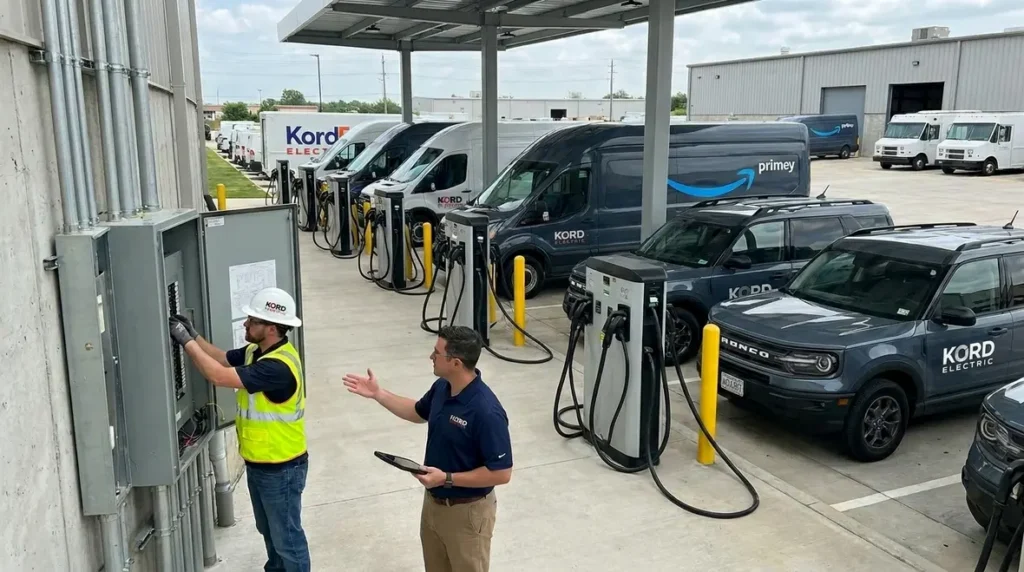
Then we coordinate charging equipment with the rest of the electrical system. That means planning for conductor terminations, torque checks where needed, protective device verification, and performance checks for chargers and related networks. Also, we ensure labeling and as-built records stay accurate, because nobody enjoys troubleshooting a system that looks like it got built during a fog machine.
If you have an established plan, we can align charging tasks to it. If you do not, we build a structure that matches the facility’s risk level and operating needs. And because our technicians communicate clearly, the client team understands what we are doing and what we are watching for.
To support this process, Kord Electric also references the broader approach shown in our commercial and industrial electrical maintenance plan resource here: Commercial and Industrial Electrical Maintenance Plans.
Step by step: from site load study to phased deployment
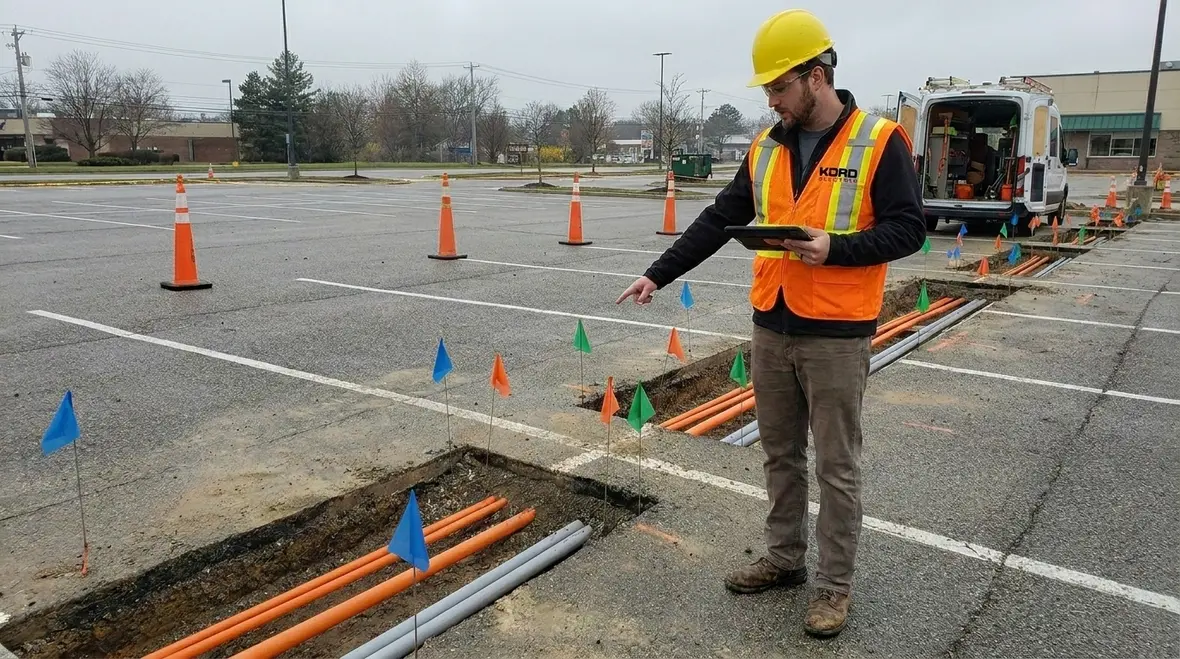
Others often ask how we build a charging plan that survives reality. We do it in clear steps. First, we collect utility data and internal load history. Utility bills and interval data matter because they show peaks, not averages. After we understand baseline demand, we estimate charging load by scenario, including growth and seasonal variation.
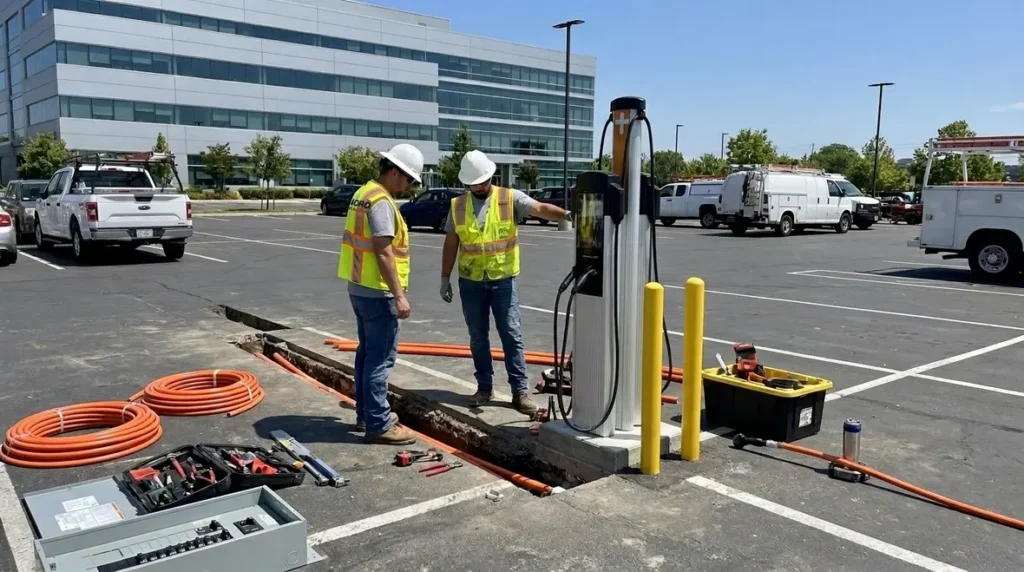
Second, we evaluate electrical infrastructure. We check main service capacity, transformer headroom, distribution limits, and panel availability. Then we identify the upgrade path that supports your schedule. Some facilities need a simple panel addition. Others need more involved improvements like conductor upgrades, switchgear adjustments, or transformer modifications.
Third, we design for phased deployment. This keeps costs controlled while allowing growth. Instead of paying for maximum capacity today, we plan enough capacity and controls so you can add chargers later with minimal disruption.
Fourth, we include smart load management where it makes sense. Load sharing prevents every vehicle from charging at maximum power at the same time. This reduces stress on your system and helps keep you within service limits. In other words, it stops the chargers from competing like characters in an office sitcom who all want the last printer.

Techs explain the controls and safety layers, because details matter
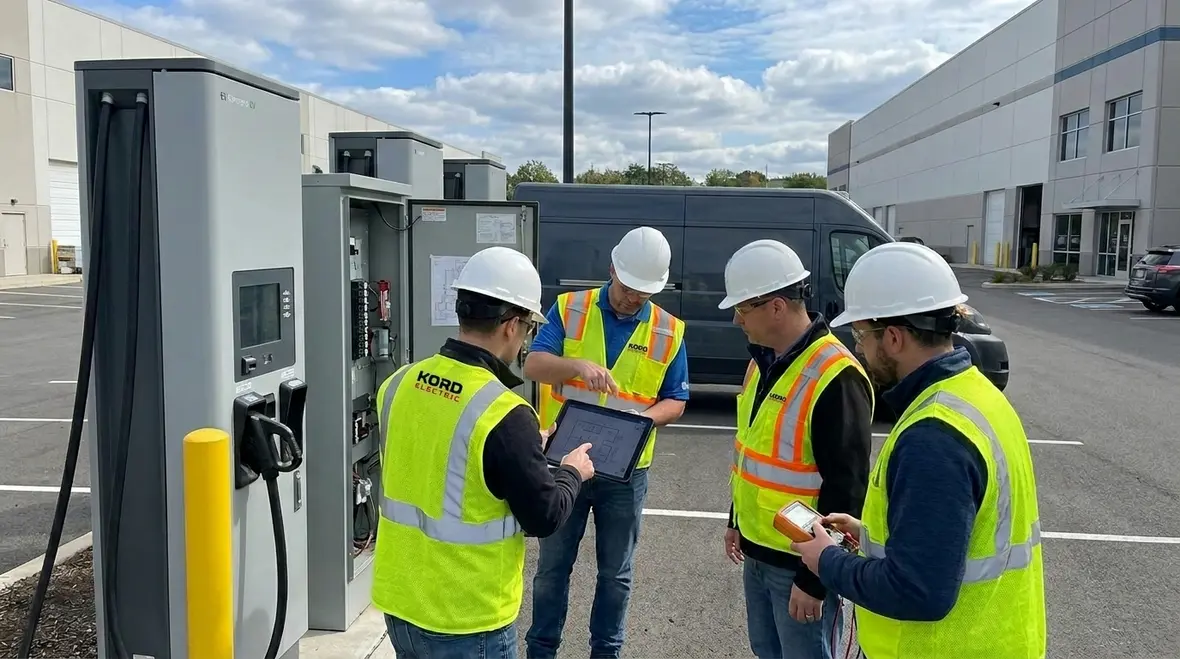
Charging infrastructure includes more than hardware. It includes controls, communication, protective features, and safe operating limits. Therefore, our expert service staff helps facility owners and maintenance teams understand these layers in plain language.
We walk through key topics such as how the charger communicates, what happens during network loss, how load sharing decisions get made, and how the system reacts to faults. Also, we explain how protective devices must work together. That includes ensuring proper coordination and verifying that fault behavior stays predictable.
Then we address physical and operational safety. We review clearances, conduit routing, grounding and bonding practices, weather considerations, and accessibility for maintenance. We also help teams understand what “normal” operation looks like, so they can spot issues early instead of waiting for a dramatic failure.
For commercial and industrial facilities, safety is not just a box to check. It is what keeps operations running. And when our technicians explain the “why,” the building team can support the plan with fewer surprises.
Design for reliability: uptime, access, and futureproofing
Charging must function during business hours and during the unexpected. So we design for reliability by considering access and serviceability. We plan cable routing that reduces wear, protects equipment from mechanical damage, and keeps maintenance reachable without tearing up the site.
Then we think about uptime. The plan should include how the electrical system will handle partial operation, how chargers will behave under reduced availability, and how load management will keep demand within limits. We also ensure that protective components are selected for the electrical environment and that installation practices support long life.
Futureproofing matters too, but we keep it practical. We prepare pathways for additional circuits, plan panel layouts that can expand, and select controls that can adapt to growth. Meanwhile, we avoid overbuilding where it offers little value. That is how others keep budgets from turning into a “maybe later” story.
To keep everything aligned, we also emphasize documentation and commissioning. After installation, we verify performance and record the system details so troubleshooting stays faster when real life shows up.
Permitting, utility coordination, and a smoother installation timeline
Commercial and industrial projects often feel slow because multiple parties move at different speeds. Therefore, we coordinate early. We help others prepare for permitting needs by understanding the local requirements that apply to charging installations and electrical work. Then we coordinate with utility stakeholders when service upgrades or capacity assessments are required.
Next, we structure the timeline to reduce downtime. We plan shutdown windows carefully, and we sequence installation work to keep the site functional as much as possible. Then we schedule commissioning so it does not stall at the end like an unwanted season finale cliffhanger.
We also manage expectations through communication. Our process emphasizes what will happen, when it will happen, and what information we need from the facility team. Because our technicians and service staff explain things clearly, stakeholders know the status without chasing updates like they are tracking a celebrity on paparazzi footage.
Service strategy after go live: inspections, testing, and response
Once chargers are in place, many facilities think the job is done. In reality, ongoing service keeps performance steady and reduces risk. So we build a post-installation strategy that fits the building’s operating schedule and risk level.
We recommend inspection and testing that includes visual checks, verification of terminations, performance monitoring, and review of protective devices. Also, we include steps for troubleshooting and response when a charger shows fault conditions or when network communication issues arise.
Then we define responsibilities. Our expert service staff supports facility teams with clear instructions, while also handling deeper diagnostics. That way, others do not waste time swapping parts blindly or treating every issue like a new mystery podcast.
For commercial and industrial buildings, we focus on minimizing downtime. The goal stays simple: keep charging operational, keep safety strong, and protect the electrical system that supports everything else on site.
FAQ
Call Kord Electric for a plan that keeps your facility moving
Commercial and industrial charging success does not come from guessing. It comes from sound commercial ev infrastructure planning, careful electrical review, clear installation sequencing, and steady service after go live. If you want chargers that support operations instead of interrupting them, we are ready. Contact Kord Electric to review your site, map your load strategy, and build a phased plan your team can trust. Let us handle the electrical details, while you handle business.
When you are ready to move from planning into action, explore how Kord Electric’s dedicated commercial and industrial EV charger installation services turn your roadmap into safe, code-compliant infrastructure that drivers can actually depend on.
For properties across the region, our broader Los Angeles County commercial electrical services support panels, lighting, troubleshooting, and maintenance, so your EV upgrades fit naturally into a reliable, long-term electrical strategy.