Emergency Power Redundancy Strategies Guide
At Kord Electric, we build critical emergency power redundancy strategies that help commercial and industrial facilities stay alive when the grid does not. Our approach starts with layered backup power, uses proven transfer equipment, and plans for real maintenance windows rather than fantasy schedules. Then we validate everything with load testing, coordination, and clear operating procedures so your team can react fast, not panic slowly. Because when the lights go out, people do not search for troubleshooting guides like it is a streaming service. They act.
In this article, we explain how we help facility owners protect business continuity using practical redundancy design, sound compliance thinking, and technicians who explain decisions in plain language. You will also see how NFPA 70A and NEC alignment matters, so the solution works on day one and day one after that.
Why redundancy keeps a business running when power fails
For commercial and industrial facilities, downtime costs stack up like unpaid parking tickets. First comes lost production, then stalled operations, then revenue that does not come back. Redundancy helps because it reduces the chance that a single point of failure brings the entire site down.
However, not all redundancy acts the same. A backup generator without the right transfer logic still leaves you exposed during switching. A second unit without proper distribution coordination can create nuisance trips. And a “one size fits all” plan can fail under real load conditions, like startup surges from HVAC, pumps, conveyors, compressors, or process systems.
So, we focus on a strategy that covers three layers. First, we reduce failures with proper sizing and selection. Second, we keep systems on line with fast, reliable transfer and distribution design. Third, we maintain readiness through testing and managed maintenance so the equipment performs under stress, not just on paper.
Design the layers: generation, transfer, and distribution
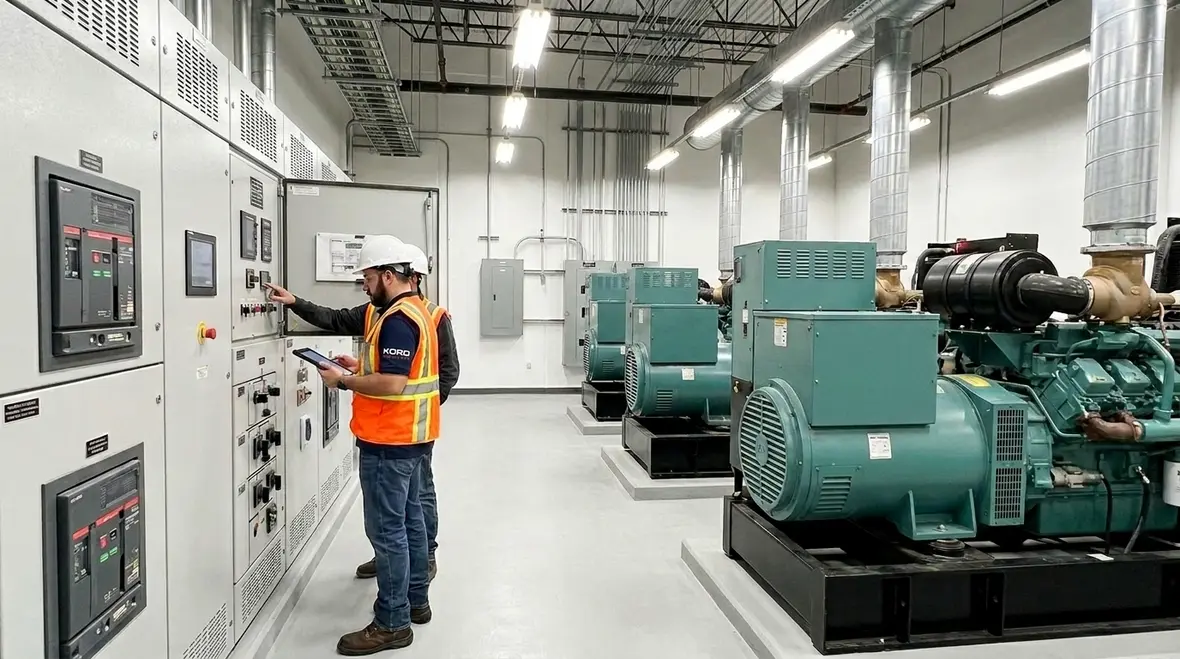
When we design emergency power redundancy strategies for major property buildings, we treat the system like a chain. Each link must hold. If one part slips, the whole chain breaks.
Generation is only the beginning. We select generator sets based on actual facility loads, including motor starting profiles, transfer switch behavior, and seasonal variation. Then we account for critical loads in a way that matches how the site actually runs, not how it runs in a perfect spreadsheet.
Next comes transfer. We use transfer equipment and control schemes that support smooth, repeatable switching. Then we verify interlocks so systems do not backfeed. Finally, we verify the sequence of operations so essential loads shed or start in a controlled way if needed.
Then distribution ties it together. Redundant paths and proper panel arrangement can keep life safety loads steady even when non critical loads drop. In other words, we do not just keep the lights on. We keep the systems that protect people, maintain safe conditions, and support continued operations working the way your facility needs.
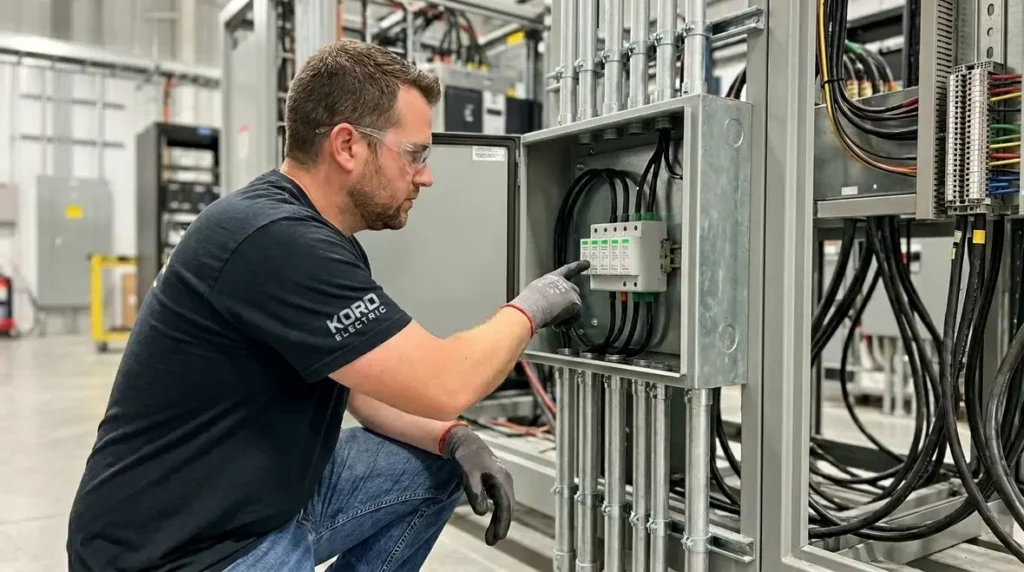
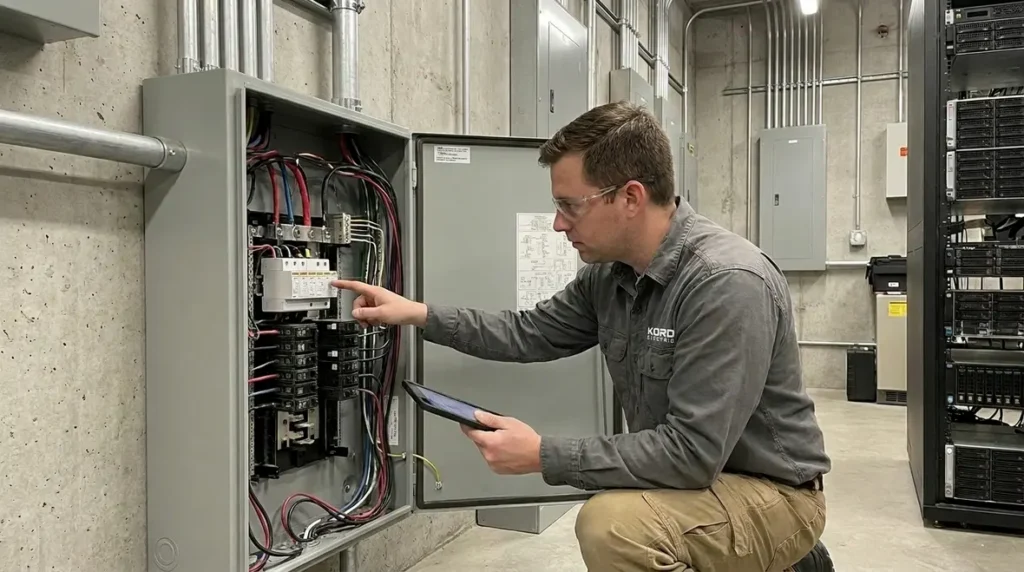
Our technicians explain these layers step by step during commissioning. They do not just say “it is redundant.” They show the logic, point out the failure points we tested, and explain what your team should expect during an outage. That calm clarity helps decisions get made faster, and it helps operations staff feel confident instead of confused.
For facility teams that want to understand where backup systems can still fail, even when generators exist, our article on emergency power failures in commercial buildings walks through real-world standby system risk points and how to address them before the next outage.
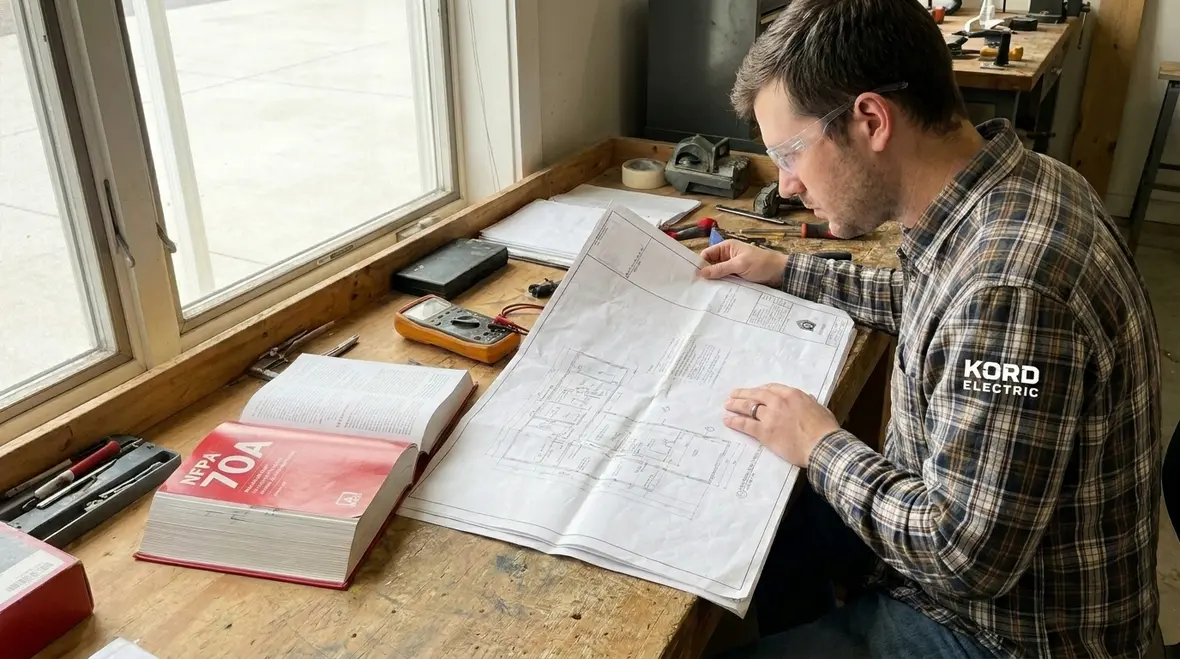
Coordinate compliance: NFPA 70A and NEC for commercial electrical systems
Compliance matters because it drives design choices that affect safety, reliability, and how your system gets inspected. Kord Electric takes compliance seriously for commercial and industrial facilities, and we align our design work with NFPA 70A and the NEC.
If the facility must follow rules for commercial emergency systems, we focus on the practical differences between NFPA 70A and NEC commercial requirements. The result is not academic. It shows up in how we classify conductors, install system components, plan switching behavior, and document protective devices.
From the perspective of our team, coordination starts early. We help owners and managers avoid costly rework by addressing compliance expectations during design, not after install. Then we build documentation packages that support inspection and long term maintenance. If your compliance effort feels like trying to assemble furniture with the wrong instructions, we help you get the right parts and the right order.
To keep things grounded, we also communicate what the code expects your facility to do, not only what the contractor does. Then we translate that into operating steps your people can follow during an event. That is part of redundancy too, because the best system still needs correct operation.
For a deeper view, our team also breaks down the practical comparison of NFPA 70A vs NEC for commercial electrical compliance in our blog resource on NFPA 70A vs NEC for commercial electrical compliance, so your redundancy plan lines up with how inspectors and jurisdictions actually review systems.
Load certainty: size correctly so backup power does not collapse
One of the most common surprises during an outage is load reality. A facility often runs differently than expected due to equipment duty cycles, aging motors, or seasonal operating patterns. Therefore, we treat load assessment as a core part of redundancy rather than a checkbox.
We work with facility stakeholders to identify critical circuits and understand how processes behave. Then we calculate power needs with enough detail to handle motor starting and sustained loads. In turn, we design for voltage stability and expected engine generator behavior during starting peaks.
Here is where redundancy can quietly fail. If the generator is undersized, it may start but then stall when multiple motors kick on. If transfer switching causes a delay that allows a large load block to drop, systems may reboot repeatedly. And if distribution does not sequence loads, critical operations can still face disruption.
So, we use a disciplined approach that includes load testing and functional checks. During commissioning, we also verify that the system responds in the order your facility needs. And if we notice any mismatch, our technicians propose adjustments before the system goes live, not after an outage exposes the problem. Because no one wants the “it worked in the training video” moment.
Use a smart redundancy approach for transfer equipment and switching
Switching is where timing matters. Even when the generator starts, transfer logic can create brief gaps or sequencing issues that affect sensitive systems. For that reason, we design switching paths with care and test how the facility transitions between utility and emergency sources.
We also apply redundancy principles to transfer design. For example, we reduce single points of failure in control logic and verify that protective devices coordinate properly. We plan for how the system behaves on return to normal power, not just during the outage. This is important for major buildings where tenants and operations depend on predictable power quality.
Our technicians walk facility teams through what will happen during an event. Then they explain what the status indicators mean. Finally, they help operations staff practice a clear response plan. That training reduces reaction time and helps people avoid well meaning mistakes that turn into expensive downtime. In a way, we help your team run the event like professionals, not like characters improvising during a movie.
For factories and production sites that need fast, confident responses when something trips, the checklist in our guide to electrical system troubleshooting for factories pairs well with robust transfer design, so teams know what to verify and document after a switching event.
Testing and maintenance that actually preserve readiness
Emergency power redundancy strategies fail when testing becomes a ritual without real value. Therefore, we build maintenance programs that keep equipment ready under real conditions. We coordinate service intervals with manufacturer guidance and facility operating schedules.
We also treat maintenance documentation like part of the system. Owners and facility managers should know what we checked, what we found, and what we will do next. When we service commercial and industrial facilities, we also consider how downtime affects production and tenant operations.
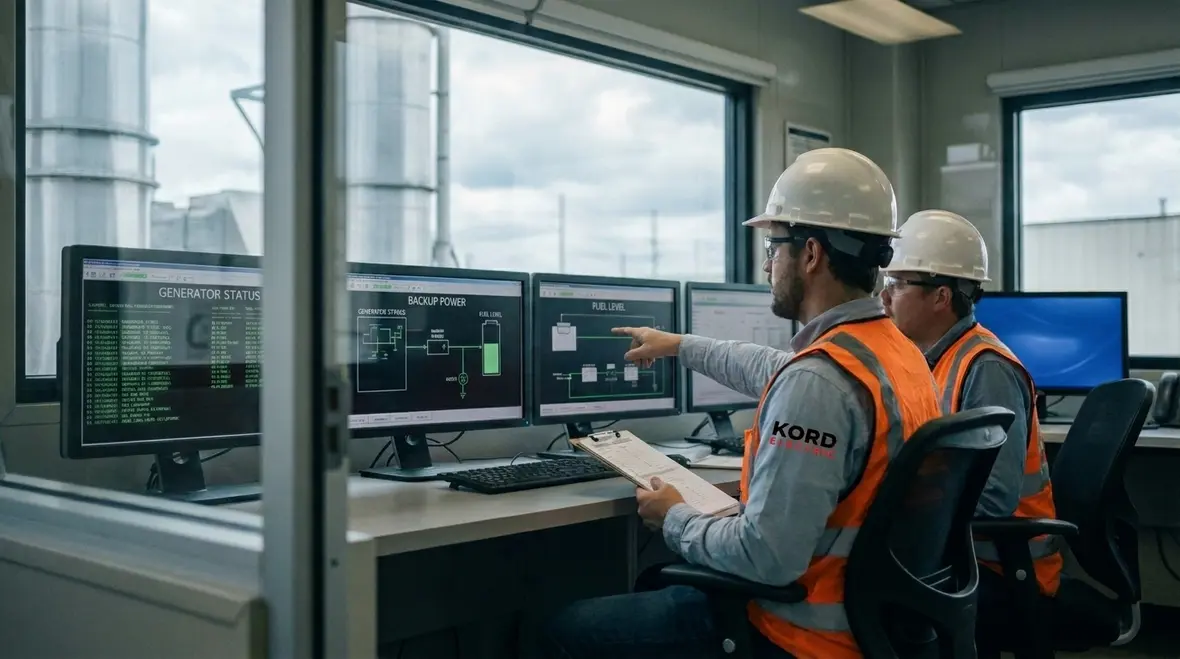
Our expert service staff typically focuses on functional readiness, including battery health, fuel system performance, controls and sensors, and protective devices. Then we verify the transfer sequence and confirm that the system starts and carries load within expected parameters.
And yes, we schedule testing in a way that respects real life. If a facility cannot afford to stop a process during peak hours, we plan around that. We would rather be the calm partner who prevents problems than the hero who shows up after the lights went out.
If your portfolio spans multiple major properties or industrial sites, structured electrical maintenance combined with thoughtful emergency power redundancy strategies turns stand-alone generators and ATS gear into a coordinated reliability program instead of a collection of “hope it works” assets.
Featured FAQ: quick answers for business continuity planning
Clear next steps from Kord Electric
If you are responsible for business continuity in a commercial or industrial facility, do not wait for a real outage to find out what your system can do. Kord Electric helps you plan and maintain emergency power redundancy strategies that protect critical operations, support compliant installations, and stay ready through real testing. Contact us for a site review, load assessment, and a redundancy plan your team can understand. Then we install, commission, and service with expert technicians who keep the process calm, clear, and reliable.
For facilities across the region, especially those operating in and around Los Angeles, pairing your redundancy work with dedicated regional support such as our Los Angeles County electrical services gives you a local team that understands industrial timelines, tenant needs, and the realities of keeping power steady in busy commercial environments.
When you are ready to turn emergency power from a question mark into a dependable system, our broader commercial and industrial electrical services can be combined with redundancy planning, code coordination, and preventive maintenance so your electrical infrastructure supports growth instead of limiting it.