Datacenter Mining Electrical Design: Electrical Infrastructure Requirements for High-Demand Sites
Kord Electric builds electrical systems that help commercial and industrial facilities run reliably, and we do it with a focus on Datacenter Mining Electrical Design: Electrical Infrastructure Requirements in mind. In many projects, power is not just “a utility connection.” It is the lifeblood of racks, cooling, controls, and uptime. So, we plan the infrastructure the way others plan a road trip: we look at the route, we account for detours, and we prepare for weather that no one asked for.
In this article, we explain how our team supports datacenter mining electrical design from first principles through commissioning. Even better, our technicians and expert service staff help translate the details into plain language, because complex systems should not require a secret decoder ring.
Assessing Load and Power Quality from Day One
When Kord Electric starts a new installation, we first map how power flows from utility to distribution and onward to mining loads. Then we ask what the load really does, not what the nameplate says. Mining equipment can swing in demand, and that means the design must handle changes without creating nuisance trips or slowdowns.
To keep things stable, we evaluate power quality needs like voltage regulation, harmonic levels, and allowable disturbance duration. In parallel, we verify grounding and bonding strategy, because an electrical system without a clean reference point can turn troubleshooting into a long, expensive mystery novel.
Next, we model operating scenarios so the facility team sees realistic outcomes. And because our expert service staff has seen common failure patterns, we also plan for what happens during expansion. For instance, if a tenant adds compute later, we want the electrical capacity to grow with them, not against them.
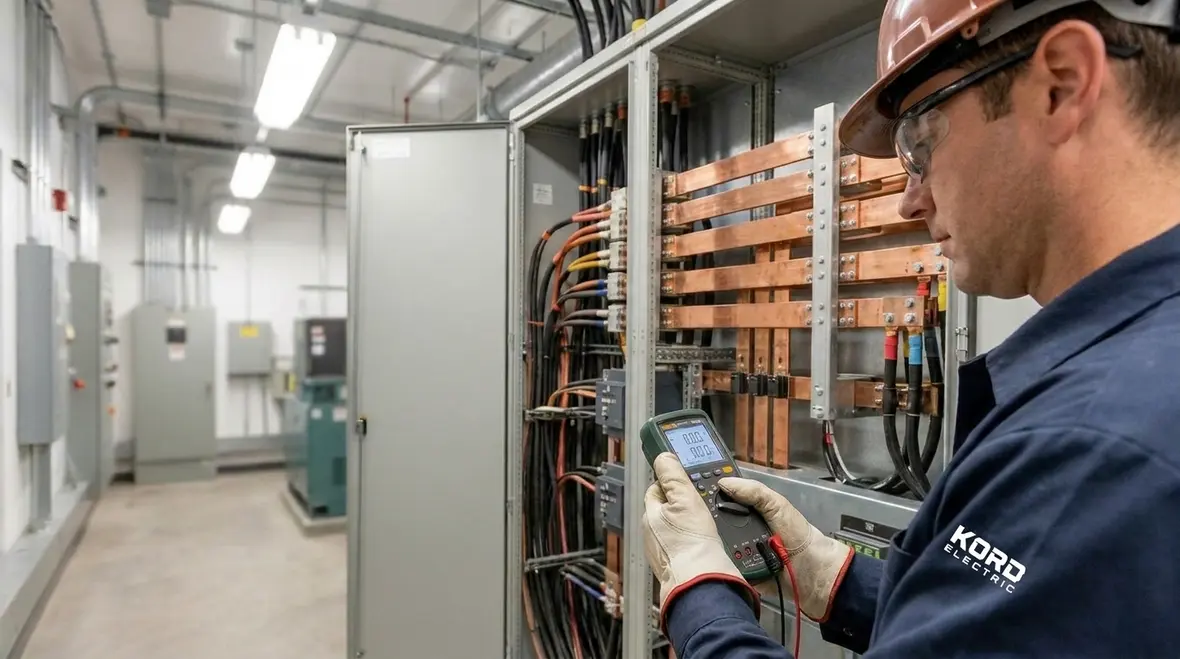
If you are planning a larger portfolio of digital infrastructure, this mining-specific work pairs well with Kord Electric’s broader insights in data center electrical distribution design for reliability, which dives deeper into how upstream distribution choices affect long-term stability.
Utility Interface and Service Entry Planning
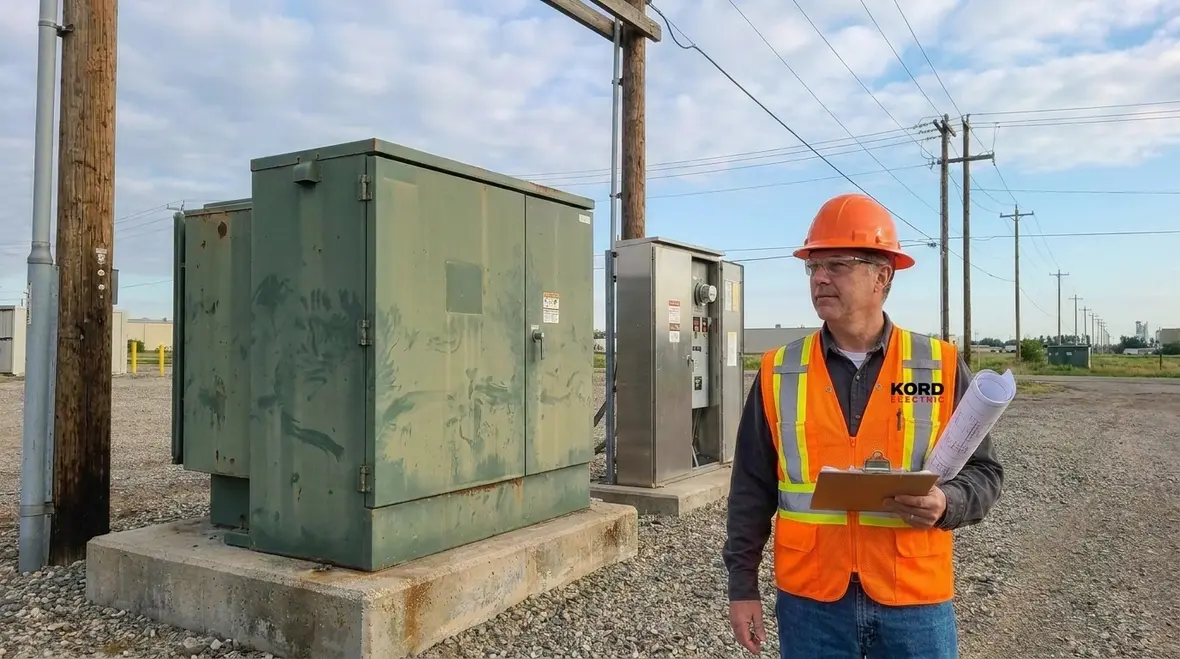
Many projects fail early due to assumptions at the utility interface. That is why we guide clients through service sizing, transformer selection, and the layout of service gear with clear rules. We do this before anyone orders equipment, because ordering the wrong gear is like buying a left shoe and calling it a style choice.
We consider redundancy requirements that match commercial and industrial expectations. Some properties need N plus one behavior so the site keeps running through common events. Others require more strict fault tolerance. Either way, we coordinate the service entry layout with protection settings so protective devices clear faults fast and reliably.
Also, we verify short-circuit ratings and coordination between upstream and downstream devices. This matters because a mining facility experiences repeated switching events, and protective devices must behave as a team, not as separate actors improvising at open mic night.
Designing Switchgear, Distribution, and Busbar Paths
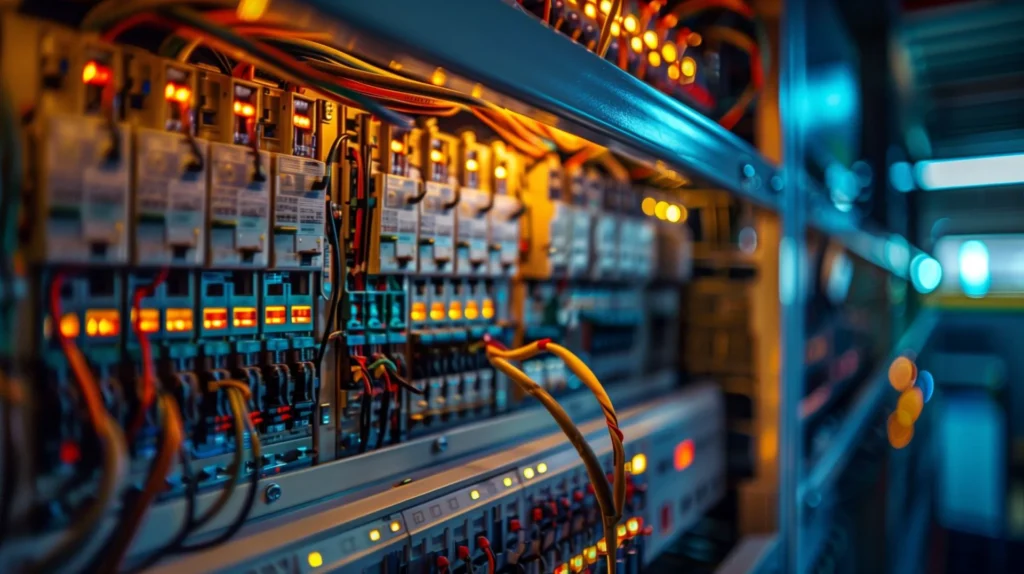
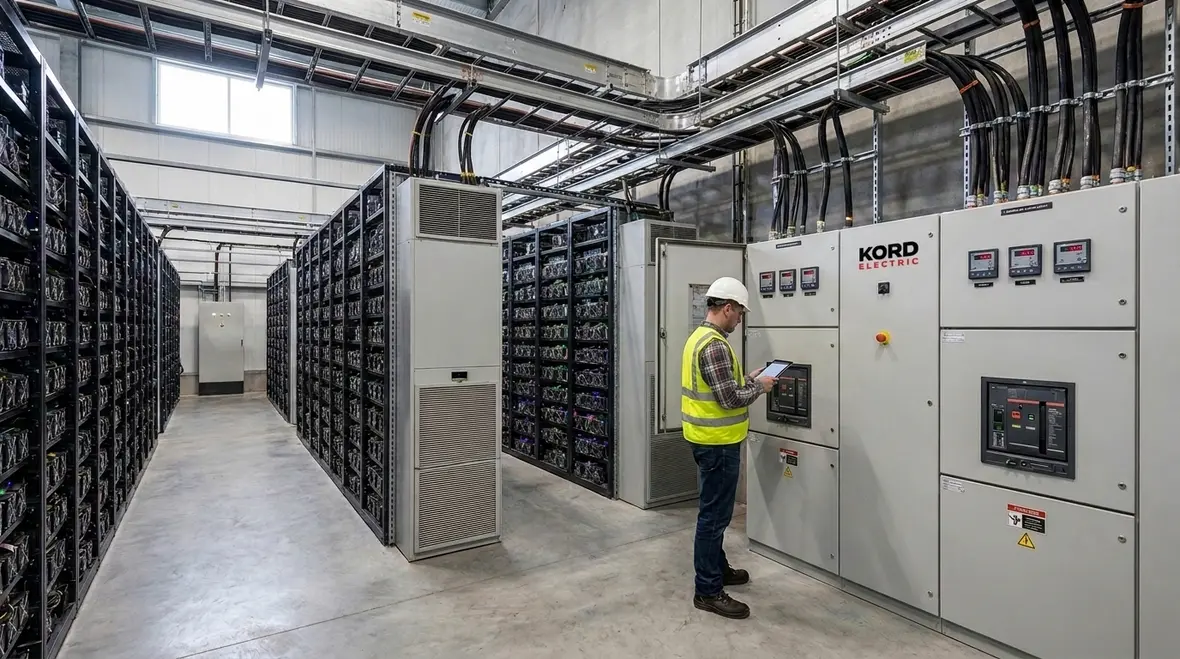
Once Kord Electric confirms the load and service entry concept, we build the internal distribution design. Here, we pay attention to switchgear configuration, cable routing, and busbar paths, because layout affects both performance and maintenance speed.
For high reliability, we often use a topology that supports safe isolation and planned maintenance without forcing a full shutdown. Therefore, we select breakers, relays, and coordination logic that fit the facility risk profile. Then we define labeling and access pathways so technicians can work without taking a detour through three locked rooms and one confused meeting.
We also plan distribution at the right granularity. Instead of one big “everyone shares one circuit” approach, we group loads logically to reduce the impact of a single device failure. Furthermore, we define protective zoning so a fault in one section does not cascade into a larger outage.
In practice, this means treating Datacenter Mining Electrical Design: Electrical Infrastructure Requirements as a complete system, not a pile of parts. Busways, feeders, and panelboards are laid out so technicians can trace power paths quickly, isolate sections safely, and bring new equipment online without rewriting the entire one-line.
How Redundancy and Reliability Modeling Protect Uptime
Uptime is the business goal, so reliability modeling should not be an afterthought. Kord Electric uses structured evaluation to match redundancy to expected operating needs. For example, if downtime causes direct financial loss or violates service level expectations, we design for faster restoration and reduced downtime risk.
In practice, reliability modeling helps teams decide where to place redundancy. It also helps confirm that protective devices clear faults in the right sequence. And because we work with commercial and industrial facilities and major property buildings, we keep the focus on predictable outcomes, not fantasy “what ifs.”
Our expert service staff often explains this in the field by walking through a fault scenario with simple steps. In other words, they show how the system behaves during a real event, so the client understands what changes and what stays on. That calm, practical guidance helps decision makers feel confident, not overwhelmed.
For mining datacenters, we also look at how redundancy interacts with power quality and cooling. A backup source is not much help if transfer events create voltage dips that trip sensitive loads or overload cooling circuits. Reliability modeling gives us a way to test those interactions before they show up on the worst possible day.
Cooling, Power Density, and Physical Layout Coordination
Electrical design does not live alone. Cooling strategy and power density influence electrical architecture, cable selection, and routing constraints. When the facility increases rack density, electrical components experience higher ambient temperatures. So, we coordinate with mechanical teams and facility stakeholders to align equipment placement with thermal limits.
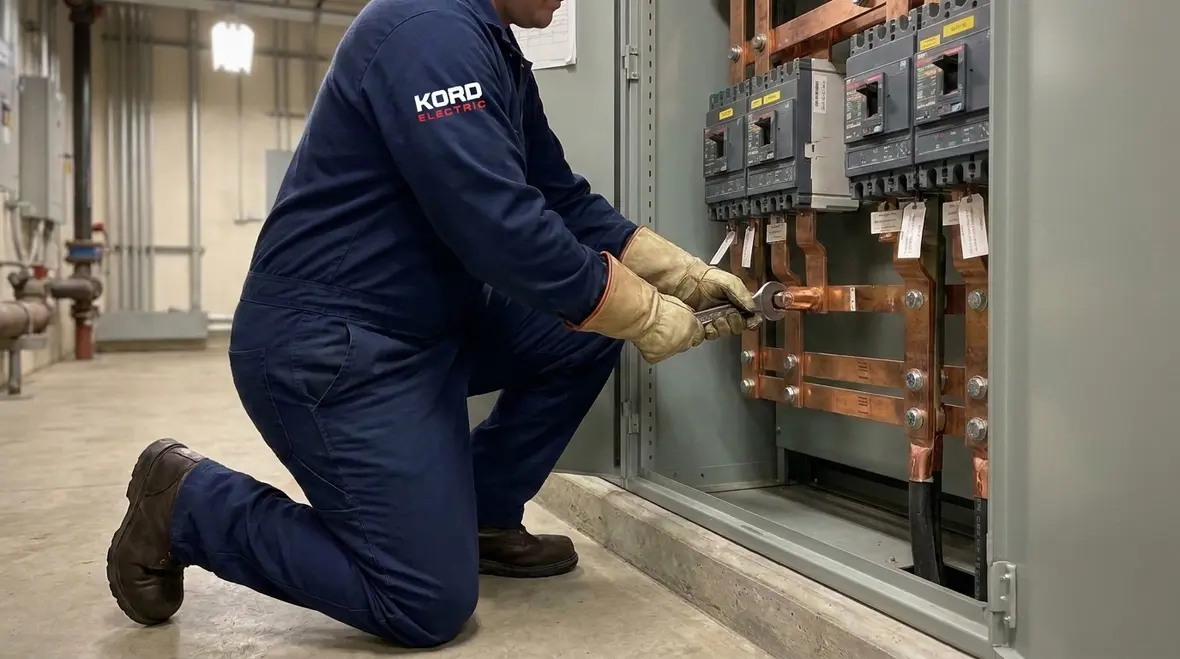
We plan cable sizes and conductor temperature ratings based on the actual environment. Then we consider the effects of heat on terminations and connections, because loose connections do not care about schedules, budgets, or the calendar turning to Monday.
Also, we design pathways that support safe installation and future changeouts. For instance, we build in room for additional feeders and structured cabling without forcing awkward bends or rushed terminations. We do this so technicians can upgrade later with less downtime and fewer surprises.
For high-demand mining builds, we treat cooling and electrical layout as a matched pair. Dense racks, overhead busways, and underfloor distribution all have consequences for airflow. Coordinated planning makes sure that the electrical infrastructure you invest in today does not become a thermal bottleneck tomorrow.
Protection, Metering, Monitoring, and Commissioning Workflows
A reliable system depends on more than equipment. It depends on correct settings, clean instrumentation, and a commissioning plan that actually gets followed. Kord Electric builds protection and monitoring into the design so operations teams can see what is happening and respond quickly.
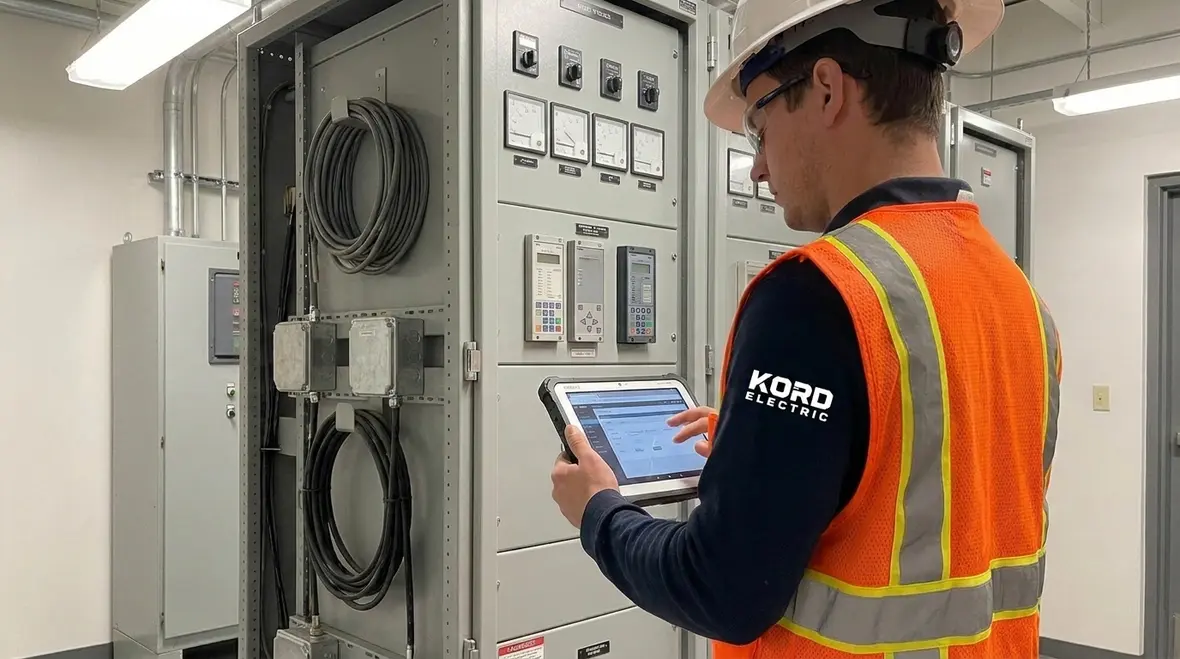
We specify metering and monitoring for key distribution points, so facility managers track energy usage, detect anomalies, and plan for capacity. We also make sure protective coordination aligns with the expected fault current and device clearing times. Then we document everything in a way that supports service work, including clear labeling and test results.
During commissioning, our technicians apply field testing and verify behavior under load and under simulated conditions where appropriate. Furthermore, we confirm control sequences and alarms, because an alarm that never trips during a test is like a smoke detector that only works on holidays. It sounds dramatic, but it is a common problem in poorly prepared projects.
Finally, we leave the facility with training. Our service staff explains the operating logic, the maintenance plan, and the “what to do first” steps when an issue appears. That education keeps the system stable after turnover, which is where many designs quietly drift off track.
For mining operations that share infrastructure with other tenants or mission-critical loads, we often pair commissioning with a broader review of commercial electrical services for Los Angeles County facilities. That way, property teams understand how their mining build-out fits into the larger building strategy.
FAQ: Datacenter Mining Electrical Design for Commercial Facilities
Why Kord Electric for Your Electrical Build
When a mining datacenter pushes power and reliability to the edge, electrical design cannot be generic. Kord Electric brings disciplined planning, careful coordination, and expert service support for commercial and industrial facilities and major property buildings. Our technicians explain the details clearly, so your team understands the system instead of guessing. If you want an electrical infrastructure that protects uptime and makes future expansion smoother, contact us today. We will review your needs, map the risk, and build a plan that keeps the lights on, even when things get loud.
If you are comparing new builds, retrofit work, or expanding an existing server footprint, you can also explore how our broader data center electrical infrastructure design for reliability approach supports everything from distribution topology to ongoing maintenance. Together with a mining-focused strategy, it gives you a clear playbook for long-term uptime.
To see how this mindset translates into real-world service, review our dedicated data center and critical facility offerings. From design through testing, Kord Electric aligns Datacenter Mining Electrical Design: Electrical Infrastructure Requirements with practical construction realities and the way your team actually operates day to day.