Data Center Electrical Design: Power Distribution, Redundancy & Safety
At Kord Electric, we build Data Center Electrical Design: Power Distribution, Redundancy & Safety into the heart of every project we support for commercial and industrial facilities, along with major property buildings. In other words, we plan so your power arrives on time, stays clean, and behaves the way your equipment expects when things get stressful. First, we map the power paths and decide how distribution will work across the facility. Then, we engineer redundancy so a single failure does not become a full outage. Finally, we design safety features that protect people, systems, and uptime, because downtime does not care about budgets or project schedules. And yes, we have heard the classic line “The lights flickered once, so we are fine.” We treat that like a joke that never repeats.
How we start designing a data center electrical system
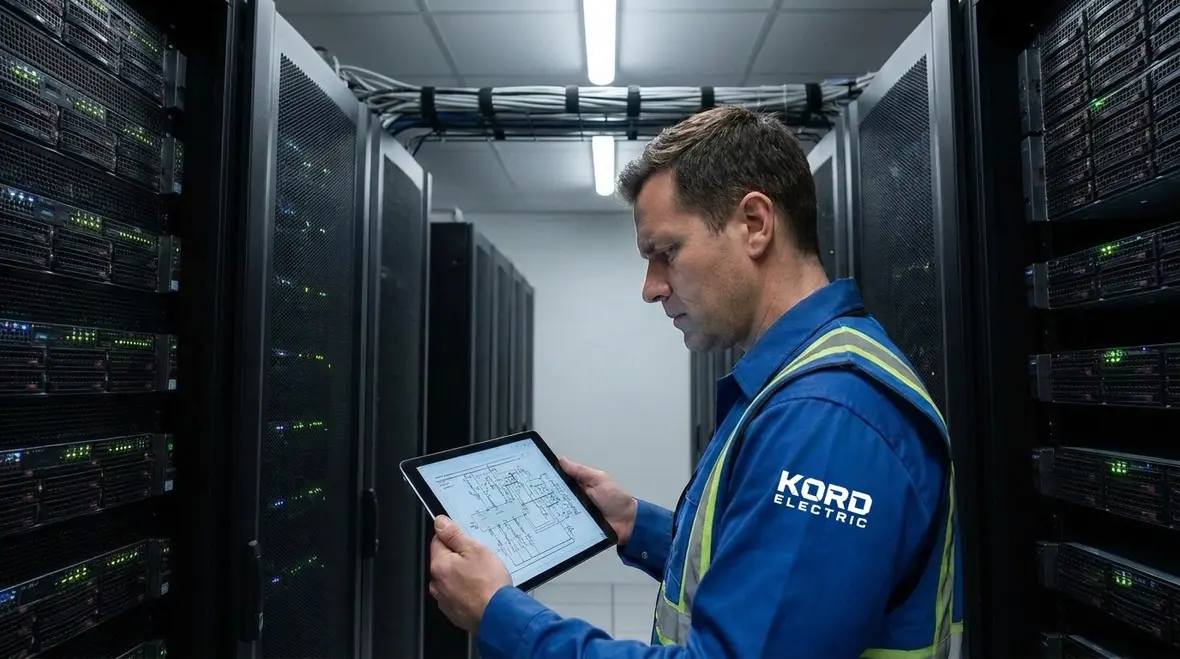
To begin, our technicians and expert service staff treat the job like a living thing, not a one time blueprint. We gather load data, review mechanical and operational needs, and validate your growth timeline. Then we translate that information into an electrical plan that supports power in normal operation and during abnormal events.
Next, we define the architecture choices that guide everything else. We decide where utility feeds land, where distribution starts, how power flows to critical loads, and how we isolate risk areas. Moreover, we align the design with your operational goals and the reality of how the facility will run. If you want a system that feels calm even when the unexpected shows up, we plan for the unexpected early.
Our team also checks the “what if” scenarios. What if a breaker trips? What if a maintenance window happens at the wrong moment? What if a component reaches the end of its life faster than expected? By answering these questions early, we avoid expensive surprises later. In data center work, surprises usually arrive with a bill attached.
If you want to see how this early-stage planning connects to the broader backbone of your facility, you can also explore Kord Electric’s companion resources such as the data center electrical infrastructure design for reliability guide, which walks through how resilient power paths support real-world operations from the utility service down to critical loads.
Power distribution that stays stable under load
When we talk about power distribution, we do not mean “it turns on.” We mean predictable voltage, manageable losses, and controls that reduce stress on transformers, switchgear, and downstream equipment. Therefore, our design focuses on the electrical behavior of the system as load changes across day, season, and expansion.
We often structure distribution with careful feeder zoning and clear labeling so maintenance teams can work quickly and safely. In addition, we use design practices that help limit harmonics and reduce overheating. Power quality matters because modern IT equipment can be sensitive to distortion, not just outages.
We also set up the system to support monitoring and response. That includes metering strategies that help operators spot drift before it turns into a problem. And since most facilities run with both baseline and surge behavior, we design for both. Put simply, we build distribution so it does not get moody when your load does.
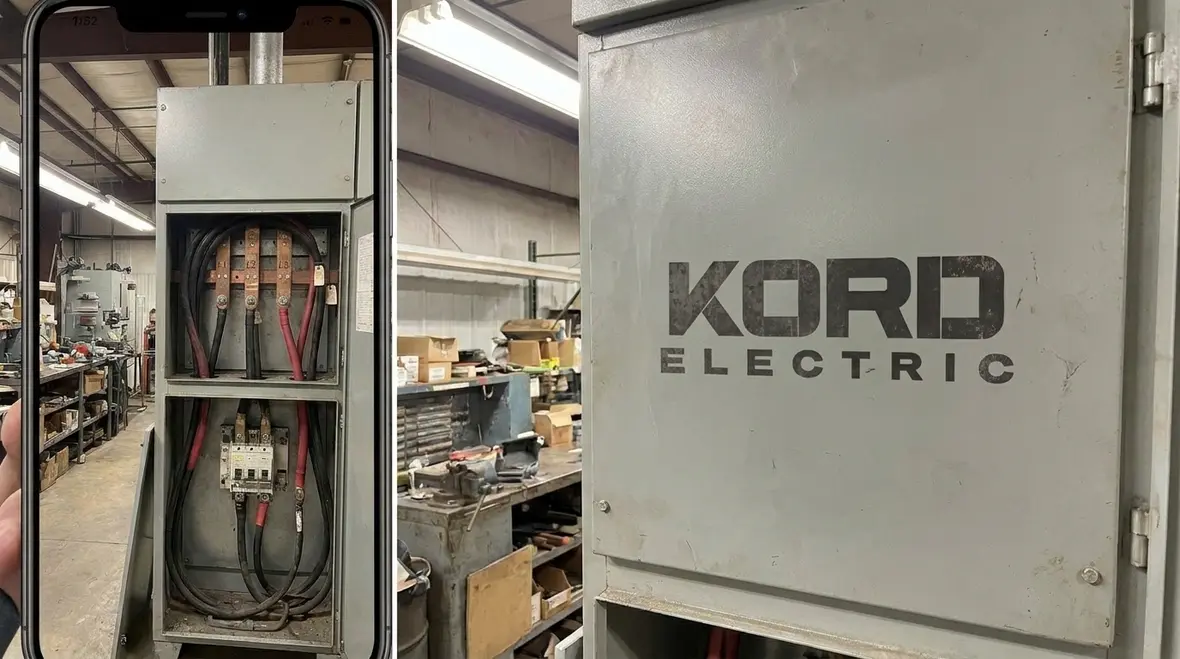
For facility leaders who want to go deeper on this topic, Kord Electric’s article on data center electrical distribution design for reliability connects the dots between feeder sizing, thermal behavior, and how protective device choices influence your long-term uptime story.
Building redundancy that actually protects uptime
Redundancy can sound impressive on paper. However, in practice, redundancy must be engineered so it functions during real failures. That means we define what “redundant” means for your loads, your switching approach, and your maintenance plan.
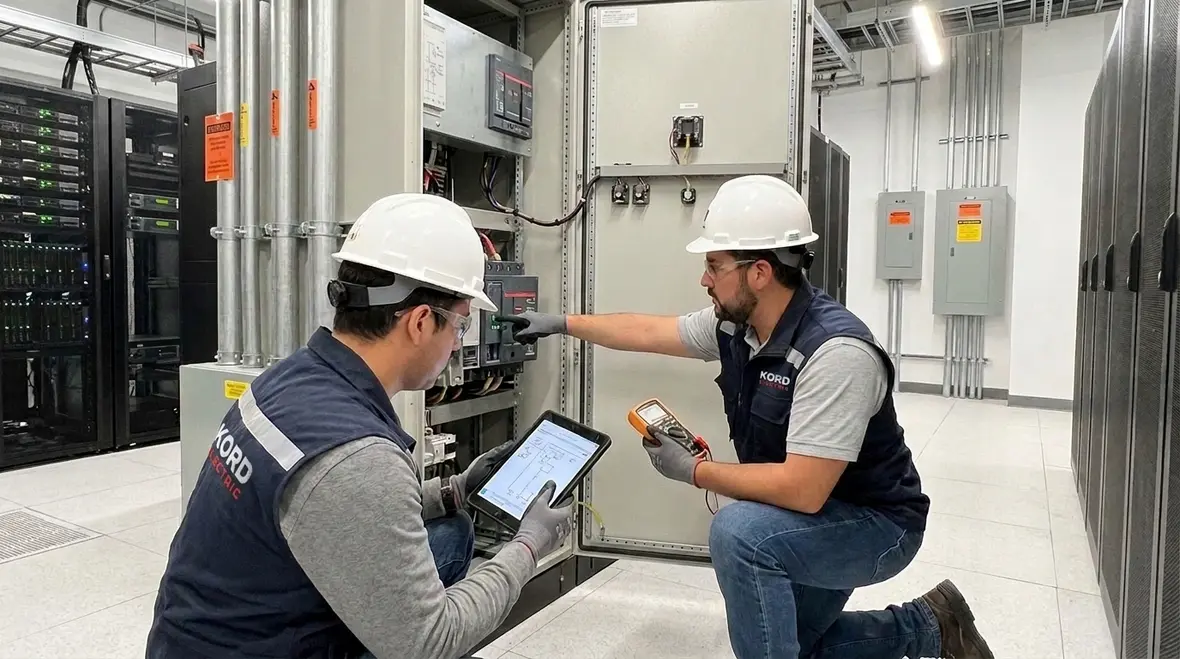
We work through the decision points that matter: whether critical loads receive power through multiple independent paths, how transfers happen, and what equipment can be serviced without causing a full interruption. Then we design the switching scheme so the system can shift loads smoothly when a fault occurs.
Just as important, we verify that protection systems coordinate properly. If protective devices do not coordinate, you can end up with a wider outage than needed. Consequently, our technicians review settings, selectivity, and fault clearing times, so the right equipment trips first and the rest stays up.
Finally, we include a practical maintenance view. Our expert service staff explains the design to the people who will actually operate and service it. We do not just send drawings and wish luck, because luck is not a switchgear strategy.
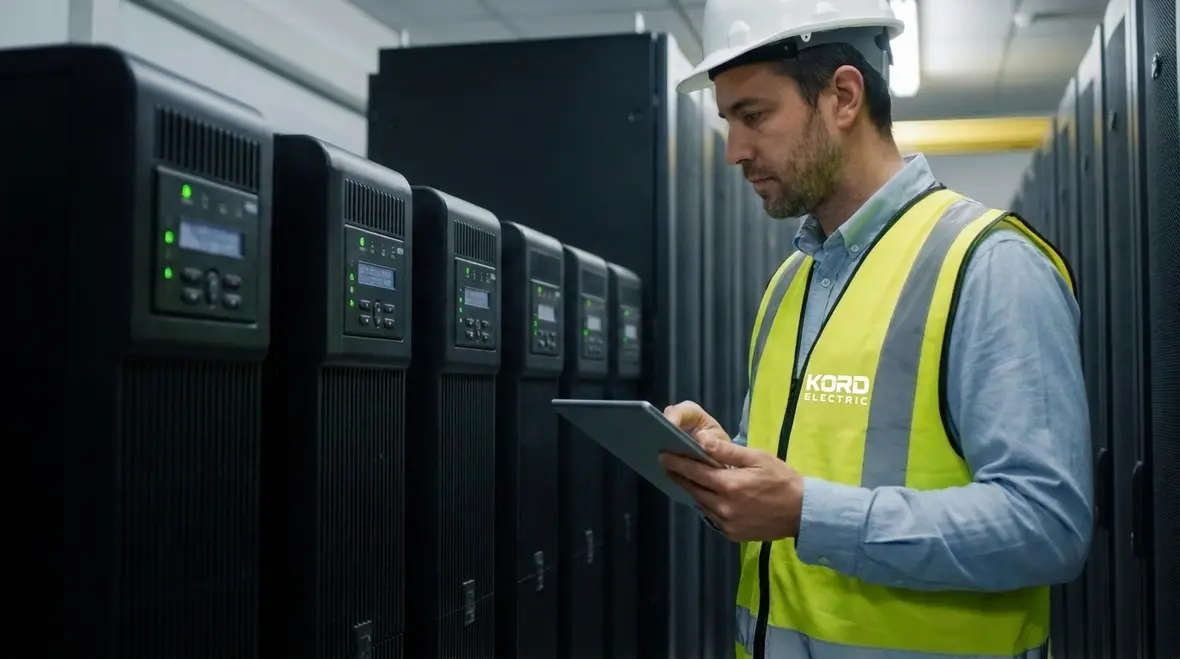
In many projects, this redundancy conversation also extends beyond the walls of a single data center. Major property buildings that behave like “mini data centers” can benefit from the same disciplined approach outlined in Kord Electric’s office building electrical capacity assessment guide, where capacity, backup power, and critical circuits are planned together instead of in isolation.
Safety systems that protect people and equipment
Safety is not an add on. In our Data Center Electrical Design: Power Distribution, Redundancy & Safety approach, safety runs alongside performance. We design grounding and bonding so fault current behaves predictably. We also plan protective device selection for both personnel safety and equipment survivability.
When faults happen, the goal is controlled, quick clearing with minimal collateral damage. To support that, we apply coordinated protection and clear arc fault risk management where needed. Also, we address the physical layout and access so field work stays safe and efficient.
We pay close attention to how systems are isolated for maintenance. That includes lockout and tagging approaches, interlocks, and labeling. Moreover, we make sure operational staff can understand the design quickly. Our technicians walk teams through the system logic and explain what each component does during normal operation and during a failure event.
If you have ever watched a technician interpret a confusing single line diagram under time pressure, you already know why clarity matters. We design for clarity, not heroics.
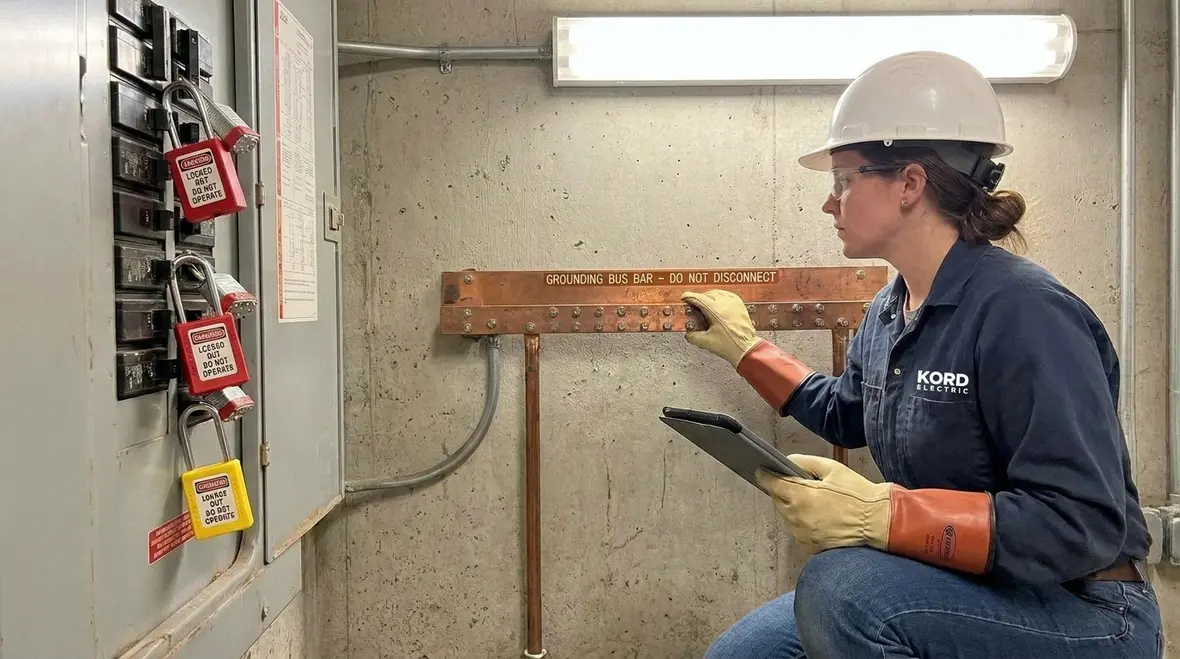
Because documentation and safe operation go hand in hand, many of our projects also incorporate the principles from Kord Electric’s electrical system documentation best practices resource, where one line diagrams, labels, and records are treated like essential safety tools instead of paperwork chores.
Efficiency targets that reduce waste without risking reliability
Efficiency in data center power design means reducing losses in the electrical system while still meeting reliability requirements. Therefore, we model and evaluate how power flows through conductors, transformers, switchgear, and distribution paths. Then we compare options based on both energy performance and operational resilience.
We also consider cooling interface impacts indirectly. Electrical design choices can influence heat generation, and heat affects performance and equipment life. As a result, we aim for designs that limit unnecessary losses and keep operating conditions stable. The result is a system that wastes less energy and supports a more consistent thermal profile.
In our process, we use practical checks that reflect real facility conditions. For example, we look at load profiles, demand patterns, and expansion needs. Then we plan distribution layouts that support efficient utilization, while keeping the safety and redundancy goals intact. Think of it as business friendly engineering: fewer surprises, lower operating pain, and a cleaner path to future growth.
For owners who want to connect efficiency with broader building performance, the commercial energy efficiency audit guide and the electrical infrastructure upgrade planning guide show how smarter power paths and better controls help both data centers and major properties cut waste without sacrificing uptime.
Commissioning, testing, and clear operator training
Design matters, but execution and verification decide whether performance shows up when you need it. That is why we build commissioning steps into the delivery approach. Our team confirms that protective coordination works as intended, that switching sequences function correctly, and that metering and monitoring provide accurate information.
We also stress testing and validation where appropriate. After all, a system that looks right on a drawing can still fail under the real-world conditions of construction and energization.
Then we close the loop with training. Our technicians and expert service staff explain the system to facility operators in plain language, focusing on what they must do during normal use and how they should respond during alarms and events. Additionally, we help teams understand the consequences of common actions, like reconfiguring loads, performing maintenance, or handling a component replacement.
When operators trust the design, response times improve. And in a data center, faster response often translates into less downtime. We like simple cause and effect, especially when it saves money.
This is also where long-term thinking shows its value. Resources such as the data center power reliability and uptime design guide and the in-depth electrical design data center efficiency guide demonstrate how Kord Electric ties commissioning, testing, and operating procedures into a single, repeatable reliability playbook.
FAQ: Data center electrical design questions we hear every day
Get the power design work you can trust
If you need Data Center Electrical Design: Power Distribution, Redundancy & Safety for a commercial or industrial facility, we invite you to talk with Kord Electric. We will review your loads, discuss redundancy goals, and map a distribution and safety approach that holds up during real events, not just during walkthroughs. Our technicians and expert service staff will also explain the design clearly so your team can operate it with confidence. Contact us now to start a plan that keeps uptime steady.
For facility managers across Southern California and beyond, this work often fits into a larger strategy of protecting operations in busy regions like Los Angeles County. If you are planning upgrades, new data halls, or major tenant improvements, Kord Electric’s Los Angeles County electrical services team can help you align data center power design with building-wide reliability, permitting, and long-term maintenance plans.
Whether you are building a dedicated data center or integrating data center level infrastructure into a mixed-use or industrial property, the goal stays the same: predictable power, smart redundancy, and safety that feels built in, not bolted on. With the right electrical design partner, your site can treat power issues as rare exceptions instead of monthly cliffhangers.