
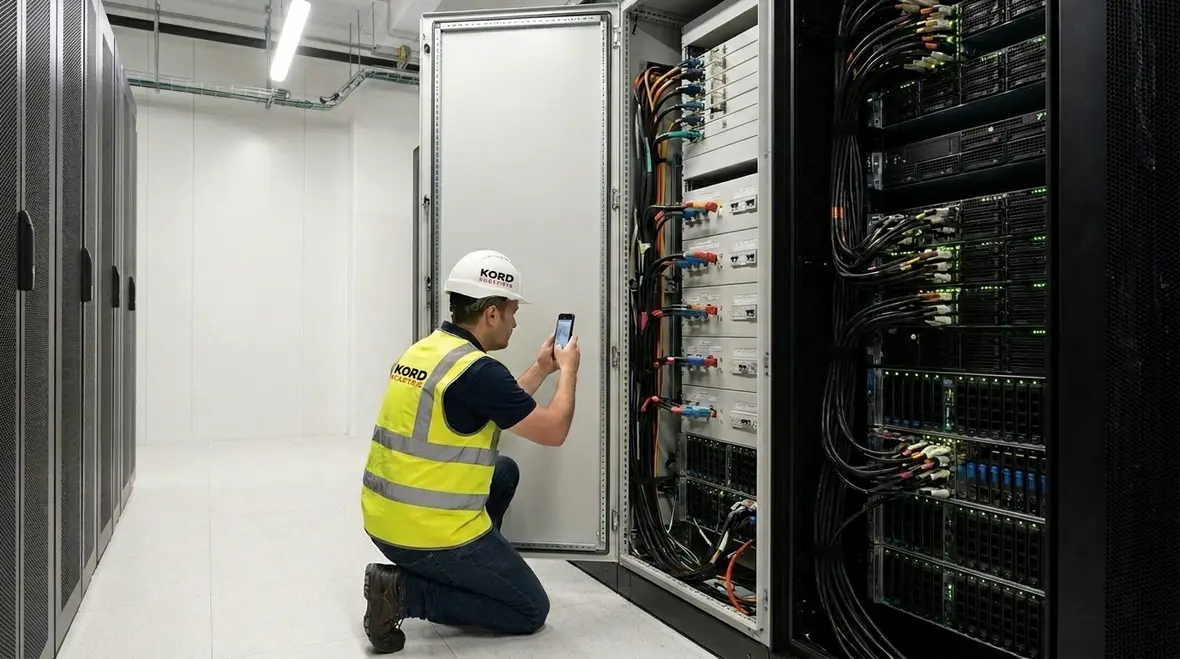
Data Center Power Reliability and Uptime Design
At Kord Electric, we take Data Center Power Reliability seriously because uptime is not a wish, it is a design goal. When the electrical system is right, servers stay online, teams trust the platform, and businesses stop treating outages like surprise guests who never RSVP. In this article, we explain how our technicians and expert service staff help owners optimize power paths, reduce risk, and keep data center operations steady. And yes, we also help with the boring parts like distribution and coordination, because that is where most failures hide. Like a bad sitcom rerun, the same power problems show up again and again. We aim to prevent the repeat.
1) Build power reliability into the distribution design
In commercial and industrial facilities, including data centers and major property buildings, power reliability starts long before equipment labels get printed. First, we map the load and the real operating needs. Then we design electrical distribution to keep critical systems fed even when a component fails. This is where our team follows the principles we outline in our blog on data center electrical distribution design for reliability, because “good enough” power is still failure waiting to happen.
Next, we plan redundancy at the right level. Some sites try to duplicate everything, which raises cost and complexity. Others underbuild and hope the utility behaves. We do better than hope. We use practical redundancy with clear switching and protection so the system can transfer loads without chaos.
Finally, we coordinate distribution with operations. When a transfer happens, the system needs to do it fast, cleanly, and in a way maintenance staff can understand. Our technicians spend time with facility teams so the electrical design matches real work practices, not just single day tests. Transitioning to a stable design also means we document the logic, because your future team deserves clarity.
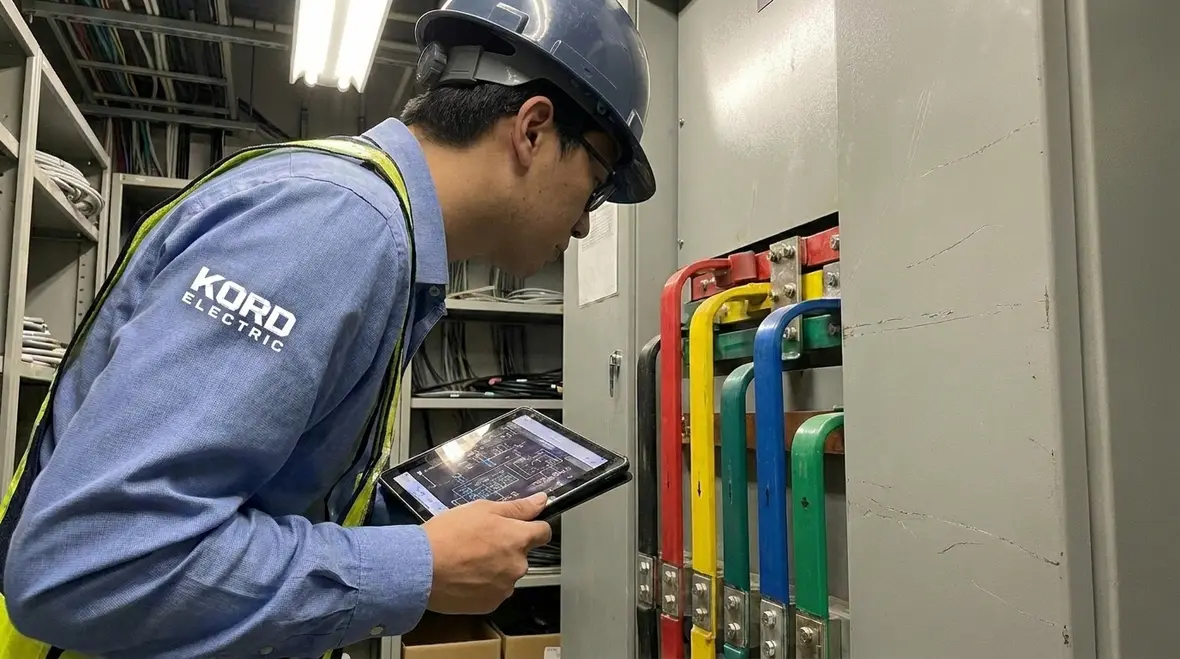
If you want to explore how upstream design choices shape reliability even further, pair this uptime-focused view with our deeper dive on Data Center Electrical Distribution Design for Reliability. Together, they outline how to get both the backbone and the day-to-day operations working in sync.
2) Why uptime failures often start with protection and coordination
When power events occur, protection systems decide the outcome. If protection coordinates poorly, one small fault can trip a larger portion of the system. As a result, the data plate can stay silent while production panics in the background. That is why we focus on settings, selectivity, and fault clearing speed.
Our expert service staff reviews how breakers, relays, transfer switches, and upstream protective devices interact. Then we verify that the system clears faults in the smallest area possible. This helps preserve uptime because only the faulty section disconnects, while the rest stays energized.
We also help owners plan for future changes. Loads grow, racks appear, and power demand shifts. Therefore, protection coordination must adapt. Our team supports planned upgrades and we recheck coordination after major changes to generators, UPS systems, switchgear, or bus configurations.
And if you think this sounds like “electrical detective work,” you are right. It is. The difference is we do it before the mystery hits your operations dashboard.
3) Reduce single points of failure with thoughtful redundancy
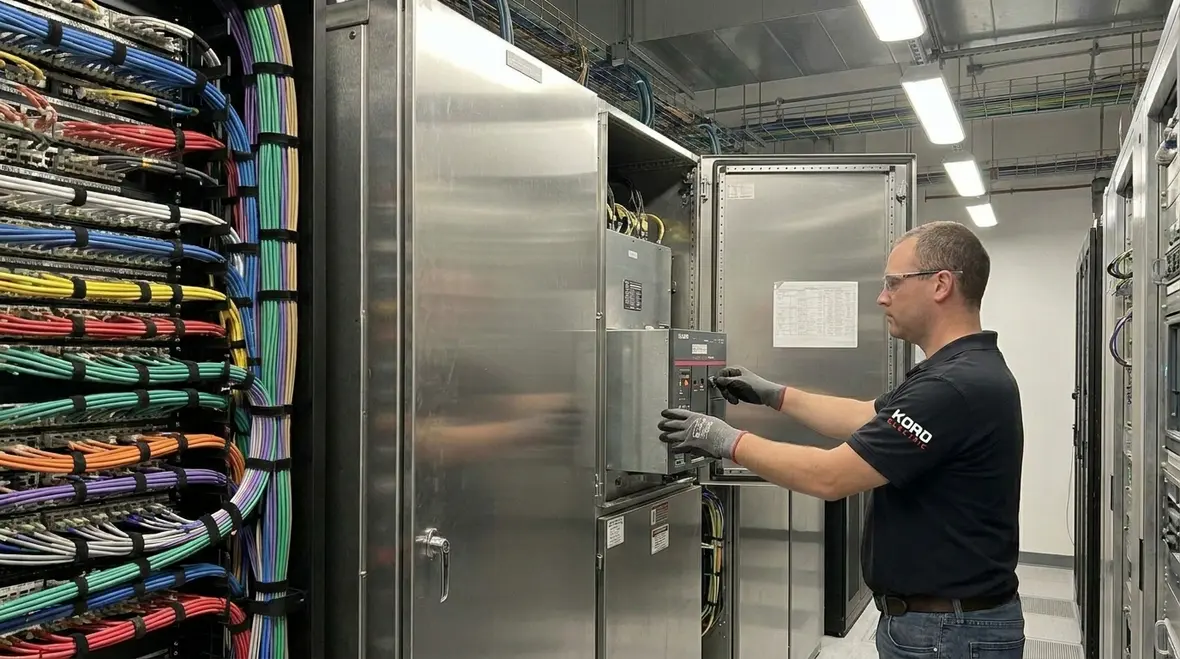
Redundancy is not a slogan. It is a set of decisions that affect every failure mode. To optimize Data Center Power Reliability, we remove single points of failure in a way that matches the facility’s risk tolerance and uptime targets.
First, we identify critical loads and separate them by function. IT loads, cooling support, network gear, and monitoring systems often need different levels of availability. Then we design the electrical paths to support that separation without forcing every system to ride on the same fragile element.
Second, we select switching and distribution approaches that support failover. For major property buildings and mission critical commercial sites, we help configure transfer strategies that maintain power during maintenance and fault isolation. That means your team can service equipment without turning off the entire operation.
Third, we verify that redundancy remains effective under real conditions. We do not stop at the one line diagram. We test assumptions in the field, review component ratings, and confirm that connections and bus arrangements support the designed flow.
In short, redundancy must be usable, not just theoretical. Otherwise, it becomes like a backup plan you never practice. It exists, but it does not help when the room goes quiet.
4) UPS and generator strategy that actually supports sustained runtime
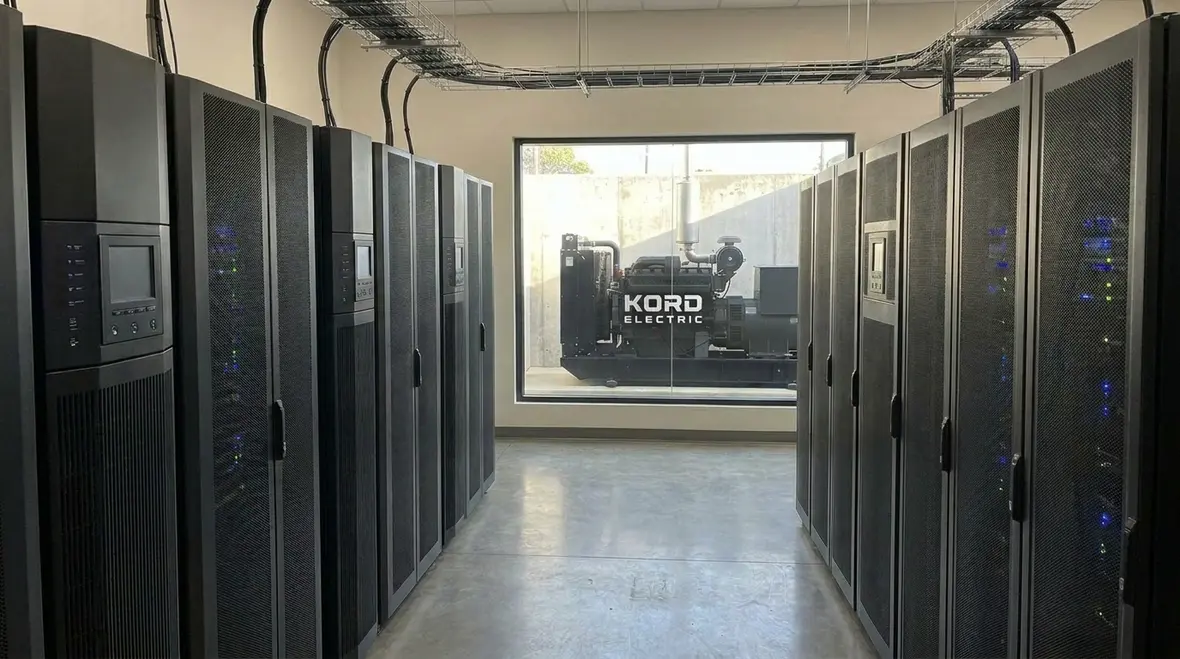
Many owners think UPS and generators are “on or off.” In reality, their performance matters most during disturbances that last longer than a brief glitch. So we design the power chain to support sustained runtime for critical operations, especially when utility power gets unstable.
To optimize Data Center Power Reliability, we align UPS operation with generator start behavior and transfer timing. We help ensure the system covers the transition period smoothly, so critical loads do not see harmful dips or interruptions. Then we review how paralleling, bypass paths, and maintenance modes affect power continuity.
We also coordinate fuel and maintenance planning for generators. A generator that can start is not the same as a generator that can run reliably when the load stays on for hours. Therefore, we support owners with service planning and realistic operational checks, based on facility schedules and monitoring.
Additionally, we consider load behavior during longer events. Some loads draw differently during power transitions, especially if cooling controls and motors restart. Our technicians help review these patterns so electrical design and operations align.
Look, nobody wants to learn generator facts the hard way. We prefer you learn them on a calm day with coffee, not during an outage with stress breathing down the neck.

5) Hot spots, thermal stress, and how electrical reliability quietly depends on maintenance
Even with a solid design, real world conditions can erode performance. Temperature, dust, humidity, and airflow affect switchgear, bus ducts, cable terminations, and connections. Over time, this can lead to insulation breakdown, increased resistance, and nuisance trips.
That is why our approach includes an ongoing maintenance mindset. We help facilities focus on key areas that often create failure hot spots, such as cable terminations, breaker mechanisms, and bus connections. We also support targeted inspections based on load profile and operating hours.
To keep uptime steady, we recommend maintenance that supports reliability and avoids surprise downtime. Our expert service staff explains findings in plain language so facility leaders can make decisions confidently. Instead of vague statements, we translate test results into practical next steps, including which components need attention first.
And when maintenance requires planned downtime, we help coordinate it with redundancy strategies. Then the system can stay online where it counts, while work happens in a controlled way. This reduces risk and protects operations, which is the whole point.
If your facility is building a longer-term plan around inspections and testing, it can also help to align this uptime strategy with the structured approach outlined in our guide to Electrical Preventive Maintenance for Commercial and Industrial Facilities. Together, design, protection, and maintenance keep reliability from becoming a guessing game.
6) Managing design for growth without breaking reliability later
Data centers and major property buildings rarely stay the same. They add racks, upgrade cooling, and expand tenant space. Meanwhile, power capacity and distribution plans must keep up without forcing full redesigns every time leadership says, “We need more.” We get it. Business moves fast. Electrical systems have to move smart.
So we design with growth in mind. First, we plan space, bus capacity, and feeder routing so expansions fit the original architecture. Second, we size protection and switching to support future load levels. Third, we keep the documentation clean and updated so the system stays understandable as it grows.
We also verify reliability impacts during upgrades. When a facility adds a new UPS module, generator set, or switchgear bay, coordination may shift. Therefore, we recheck settings and validate how transfer sequences operate with the new configuration.
At Kord Electric, our technicians treat upgrades like a living system, not a one time event. This helps prevent the common scenario where new loads work fine at commissioning, then cause problems months later when patterns and stress levels change.
For facility teams planning multi-year roadmaps, pairing this growth strategy with broader insights from our Data Center Electrical Infrastructure Essentials guide can make it easier to prioritize which parts of the system to scale first, and which to monitor closely as loads rise.
7) How we deliver Data Center Power Reliability outcomes for commercial and industrial sites
Owners do not only need a design. They need a partner who helps them maintain it and improve it over time. For commercial and industrial facilities and major property buildings, we bring service staff who understand both electrical engineering intent and operational reality.
We start by listening. Then we review the existing one line, operational goals, and maintenance constraints. Next, we assess reliability risks, including protection behavior, transfer sequences, redundancy gaps, and thermal conditions. From there, we recommend improvements that align with uptime targets and budget realities.
During implementation, we coordinate with onsite teams to keep work safe and controlled. Afterward, we help validate performance and support ongoing maintenance planning. Just as important, we explain what we did and why, so others can carry the process forward.
Because in the end, a power system is only as reliable as the team that can run it. We make sure your team can.
If your facility is also refining its broader uptime playbook, our article on Data Center Electrical Requirements for Uptime connects the dots between design targets, testing, and real-world operating expectations, so your Data Center Power Reliability strategy stays grounded in what the equipment actually has to do every day.
FAQ
CTA: Let us strengthen your uptime plan
If your facility runs on uptime, do not leave power reliability to luck. Kord Electric can review your distribution design, protection coordination, redundancy strategy, and maintenance plan, then recommend practical upgrades that support commercial and industrial operations. Our technicians explain the findings clearly, and our expert service staff helps you move from “we think it is fine” to “we know it is stable.” Contact us today to schedule a reliability assessment and protect your next operating season.
For facilities ready to turn that reliability assessment into an actionable service roadmap, our dedicated Electrical Preventive Maintenance Services provide a structured way to keep critical equipment tested, documented, and ready for the next operating cycle.


