Commercial EV Charger Installation Planning Guide
When a commercial site moves toward electric fleets and customer charging, Commercial EV Charger Installation must start with disciplined planning, not guesswork. At Kord Electric, we help major property buildings and industrial facilities lay the groundwork early so chargers perform well, permitting stays smooth, and downtime stays low. And yes, we will say it plainly: installing chargers is not like hanging a coat rack. It is more like running a reliable power story, with the right actors on stage and the right wiring in the wings.
In this guide, third person readers will see how we plan for capacity, site layout, safety, trenching, utility coordination, and ongoing support. Meanwhile, our technicians explain what matters, in language people can use, not mystery code. For a quick reference, we also align with infrastructure essentials we cover in our data center electrical infrastructure guidance, because the rules of dependable electrical planning do not change just because the equipment is new.
Commercial EV Charger Installation begins with planning that actually holds up
Commercial EV Charger Installation for serious commercial and industrial facilities lives or dies on planning. Before anyone orders hardware or draws lines on a site map, the power story has to make sense from the main service all the way out to the last parking stall. That means understanding how the building already uses electricity, how people and vehicles move on the property, and how future expansion might stress today’s decisions.
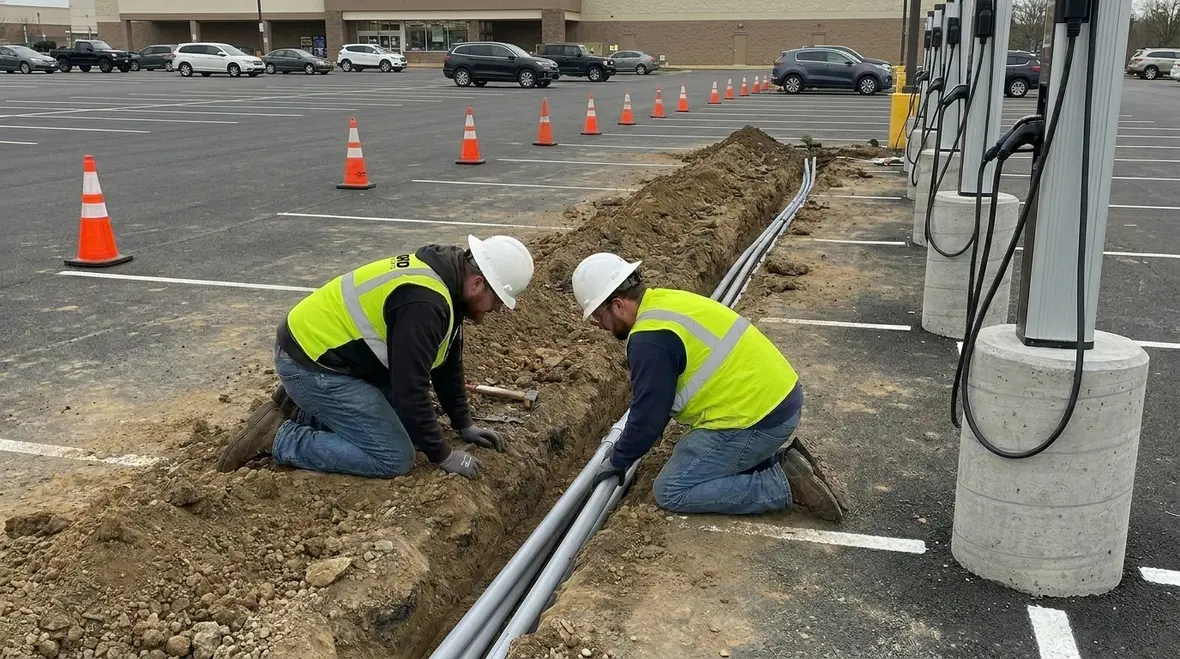
At Kord Electric, our technicians and expert service staff approach new charging projects the same way they approach critical power work in data centers and major property buildings: start with the fundamentals, remove surprises, and keep the system maintainable for the long haul. That mindset is what turns “let’s put a few chargers over there” into a coordinated plan that holds up when the first fleet vehicles plug in at the same time as a busy tenant load.
This planning-focused approach also keeps the project realistic. Instead of promising magical timelines or pretending that existing infrastructure can always handle anything, we walk through options calmly. Sometimes that means recommending panel upgrades, new feeders, or load management strategies that mirror how we design robust electrical infrastructure in complex environments. The goal is simple: no mystery, no hand-waving, just a power plan the building can trust.
What a site survey must confirm before a single wire is cut
Our experienced team starts with a site survey that answers the questions clients ask right away, and the ones they do not know they should ask yet. First, we confirm the electrical room condition, panel labeling accuracy, and available capacity. Then we review the load profile for the building, including HVAC cycles, lighting schedules, and any planned upgrades. After that, we look at the physical placement of parking, vehicle flow, and cable routing paths so the finished install avoids future pain.
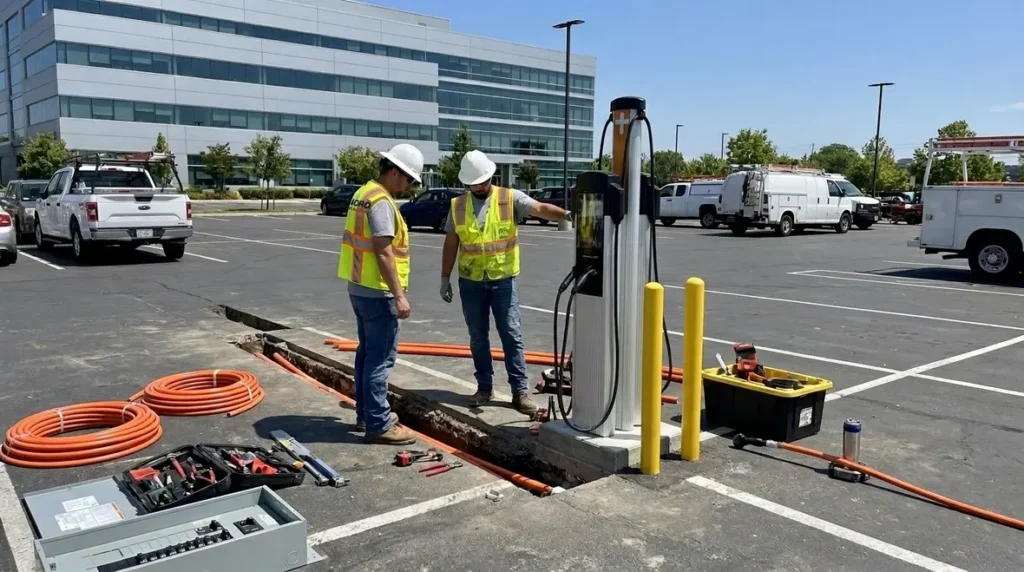
Next, we verify charger location in a way that respects safety rules and real-world use. For example, where vehicles park affects cable length, bollard placement, and conduit routes. Also, we check whether the surface is asphalt, concrete, or pavers because installation method and restoration needs change.
Meanwhile, our expert service staff walks the client through the survey findings in a calm, direct manner. They explain why a “quick spot check” is not enough for commercial and industrial sites. Because if the power path surprises the crew on day three, the project cost surprises everyone on day four. And nobody enjoys that kind of plot twist, unless they are auditioning for a reality show.
Electrical load planning that protects capacity, not just equipment
Commercial chargers draw real power, and we treat power like a budget that must balance. Therefore, we build a load plan before final design. We evaluate existing service size, transformer limits, feeder ratings, and the condition of upstream equipment. Then we model expected charger demand using realistic usage patterns, not a best-case fantasy.
To keep the installation efficient, we plan for simultaneous charging behavior. Some facilities use a strategy where all units do not ramp up at once. In that case, load management helps protect facility demand and reduces utility upgrade needs. However, we still confirm the electrical system can handle the worst-case conditions required by code and permitting.
We also consider power quality factors such as voltage drop and harmonic concerns, especially when facilities run multiple high-load devices. In addition, we review grounding and bonding so fault protection behaves as expected.
If the building needs upgrades, we do not hide the truth behind technical fog. Instead, our team clearly outlines options, timelines, and impacts. That is how we prevent a charger system from becoming a “works today, fails later” situation.
Permits, utility coordination, and schedule clarity
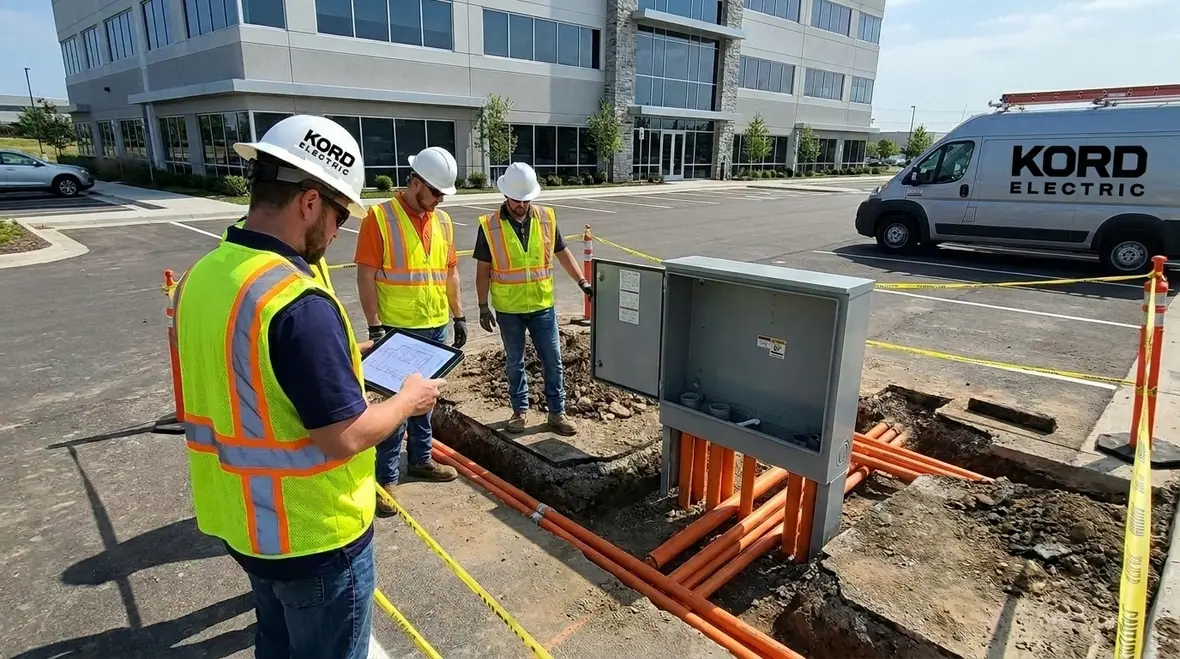
Permits often decide how fast the project moves. Yet many teams treat permitting like a last-minute formality. We do not. We coordinate early with the local authority having jurisdiction, because documentation quality affects turnaround time. Also, we align our drawings and electrical one-lines with what the inspector expects, not what a generic template suggests.
Utility coordination matters too, especially when the site service requires changes or when metering updates are needed. Therefore, we review the interconnection requirements, communicate with utility representatives where applicable, and plan for lead times on transformer or meter work. While clients sometimes expect the utility to move on their timeline, we prepare for the real world, because the utility does not run on “good vibes.”
As for scheduling, we map installation phases so construction does not collide with other building operations. We schedule work around tenant activity where relevant, and we plan shutdown windows for any tie-ins. Importantly, we coordinate on-site access and staging so the parking area stays safe and usable.
How we design conduit, trenching, and placement for real durability
After power planning and approvals, we shift to physical design. Here we think about how water, vehicle impacts, and long-term weather will affect the system. We plan conduit routes that minimize turns, reduce strain on conductors, and protect cables from physical damage.
For trenching and surface restoration, we choose methods that fit commercial and industrial site standards. Therefore, we define depth requirements, bedding and backfill approach, and restoration scope early. This keeps the work predictable and helps facilities avoid patchwork repairs that show up later like an awkward afterthought.
We also plan for hardware: bollards, grounding conductors, junction boxes, and charger enclosures. Placement choices must support vehicle behavior and maintenance access. Additionally, we consider wayfinding and lighting so drivers can locate chargers and staff can inspect them without a scavenger hunt.
While this part sounds “boring,” it is the difference between a charger that lasts and one that becomes a service call. And as any property manager knows, service calls can multiply like characters in a bad sitcom when the budget gets cut.
Safety systems, testing, and expert commissioning
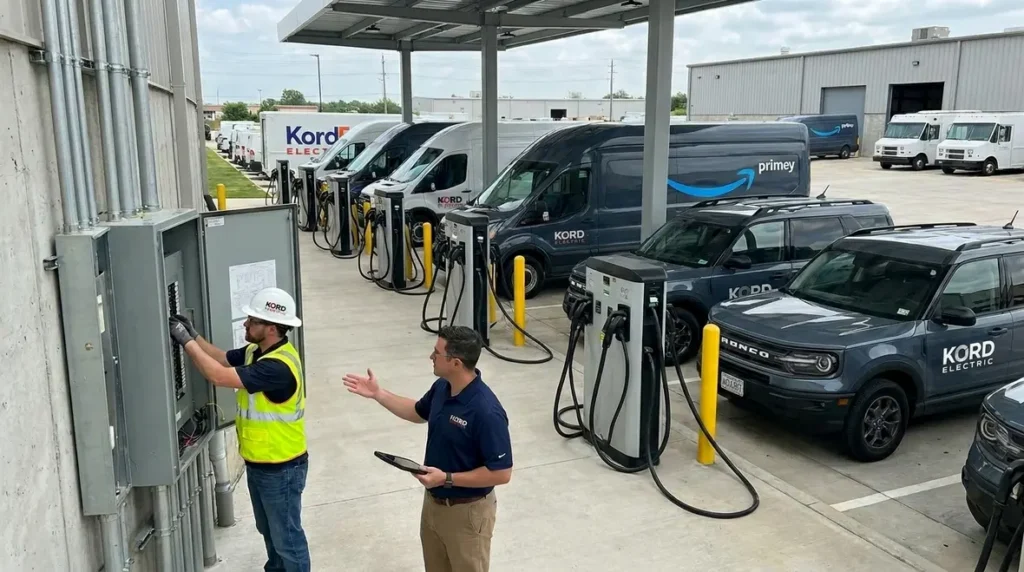
Once installation is complete, we verify performance and safety before we close the project. Our technicians follow a structured commissioning process that includes insulation checks, continuity testing, phase verification, and functional testing of protection devices. Then we validate charger behavior under load conditions that match the design intent.
We also check labeling, identification, and documentation. In commercial environments, the future depends on clarity. Therefore, we confirm the panel schedules are updated, the equipment labeling matches the as-built drawings, and the operating instructions are available for facility staff.
Furthermore, we train the people who will manage the charging system. Our expert service staff explains how to interpret status indicators, what routine checks look like, and how to handle common issues. If the client wants advanced features like network reporting, we cover how uptime visibility works and how alerts flow.
In short, we commission with the calm focus of someone who has seen what happens when testing gets rushed. Because when safety checks get skipped, the building pays for it later, often with interest.
Ongoing support, maintenance plans, and uptime you can count on
Commercial EV infrastructure works best when maintenance plans match the site’s usage pattern. After the install, we help clients keep chargers operating with reduced downtime. That means we recommend inspection routines for connections, enclosures, and mounting hardware. We also plan for firmware updates when the charger platform supports them.
We help facilities track performance trends and respond to fault codes quickly. Instead of waiting until a charger goes dark, we encourage proactive checks based on run time and usage. Additionally, we coordinate spare parts strategy for faster repairs when components fail.
For major property buildings, we also plan support coverage around peak operational hours. That way, our response does not disrupt the daily rhythm of the facility. Transitioning from install to operations must feel smooth, not like moving from a new phone to a broken one. Our team aims for smooth.
And if a site needs expansion, we design with future growth in mind. Therefore, the system architecture stays ready for additional chargers without forcing major redesign. When clients are planning broader power improvements, we can also coordinate with related upgrades covered in resources like our Data Center Electrical Infrastructure Essentials guide, so long-term planning stays aligned.
FAQ
Contact Kord Electric for commercial EV charging that stays reliable
Commercial EV charging success comes from planning that respects power, permitting, and real site conditions. At Kord Electric, our technicians and expert service staff build systems for major property buildings and industrial facilities, then we commission and support them for long-term uptime. If you are planning an installation, reach out for a site-focused plan that fits your capacity and schedule. Let us help you turn “someday” charging into a dependable operation your teams can trust.
To move from planning into execution, you can also review our dedicated EV Charger Installation service page for more detail on Commercial EV Charger Installation options, charger types, and our step-by-step deployment process for commercial and industrial sites.
Call Kord Electric today and get moving with confidence.