Industrial Lighting Control Systems for Efficiency
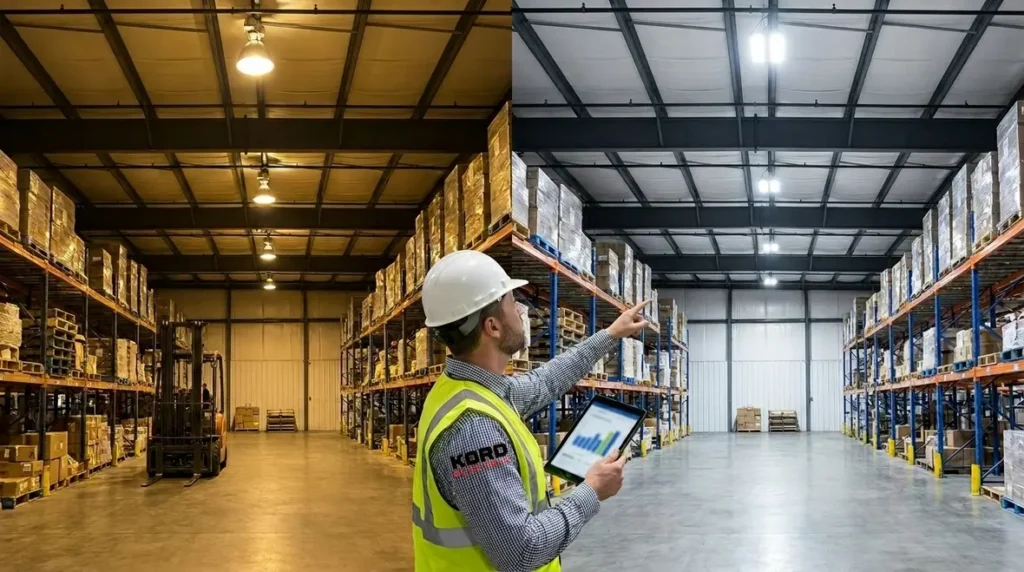
Kord Electric delivers Industrial Lighting Control Systems that help commercial and industrial facilities run smarter, safer, and more efficiently. In warehouses, manufacturing plants, distribution centers, and major property buildings, the right lighting strategy does more than turn lights on and off. It manages space, supports energy goals, and helps people work with better visibility. Yet many teams still treat lighting like a “set it and forget it” project, which is adorable in the same way a cat “hunting” a laser pointer is adorable. Meanwhile, we install and support control solutions with the kind of care your operation actually needs. And as our technicians explain during site visits, the real win is consistency: lights respond the way the building should, not the way someone hopes it will.
How advanced Industrial Lighting Control Systems improve day to day operations
When our team designs control systems for industrial spaces, we focus on the moments that affect productivity. For example, motion sensing helps areas with changing occupancy, while daylight harvesting reduces glare and waste near windows and skylights. However, the biggest improvement often comes from smooth control logic. Instead of harsh changes that distract staff, modern dimming and scheduling behave predictably, so your workforce stays comfortable and focused.
Additionally, we help facilities coordinate lighting with safety requirements. Emergency lighting strategies, task lighting zones, and exit area illumination need to stay dependable, especially during shift changes or planned downtime. Our expert service staff walks clients through these steps in plain language, so others in the building leadership team can explain the benefits to operations without sounding like they just read a lighting brochure in a hurry.
As a result, teams tend to spend less time troubleshooting lighting complaints and more time running the business.

Energy savings that hold up under real schedules
Most lighting upgrades fail in one place: assumptions. A facility does not always run at the same pace, and people do not always follow the calendar. That is why advanced control strategies should adapt to how the building actually behaves. Using schedules, occupancy events, and daylight input, Industrial Lighting Control Systems reduce wasted power without forcing staff to fight the lighting.
We typically see savings come from three sources. First, controls cut unnecessary runtime in lower traffic zones. Second, dimming maintains useful light levels instead of running everything at full output all day. Third, scheduling aligns lighting with shift patterns, maintenance windows, and after hours needs. If a site uses multiple floors or large zones, we help map control areas so that light changes occur in the right places, not randomly like a poorly tuned theater spotlight.
And because our technicians verify performance after installation, savings stay practical. We do not just hand over equipment and hope for the best. For facilities planning a broader upgrade that includes layout improvements and fixture changes, our team often pairs controls with strategies from our industrial lighting layout optimization guidance so spacing, mounting, and control behavior all work together instead of at odds.
If you are comparing options or budgeting a project, you can also review our commercial lighting upgrade cost guide, which outlines how controls, fixtures, and labor typically stack up across real projects. That context helps teams understand where Industrial Lighting Control Systems deliver the strongest long-term value, not just the lowest first number on a quote.

Safer work zones through smarter light behavior
In industrial settings, visibility affects safety. Controls can reduce blind spots, improve uniformity, and help maintain target brightness levels where tasks happen. As forklifts move, people walk, and work stations change, the lighting system should respond in a controlled way. Meanwhile, we also address glare and contrast, which matter when staff work with screens, controls, machinery, or reflective surfaces.
Moreover, our expert service staff considers safe switching behavior. When areas transition from idle to active states, the system should stabilize quickly without sudden flicker. For emergency and safety related lighting, we help ensure the control approach does not compromise required performance during power events or system faults. Our work aligns with current code expectations, including NFPA 70 and California commercial lighting requirements, so that emergency lighting, egress paths, and safety systems behave correctly when they are needed most.
To keep everything calm and predictable, we document zoning, setpoints, and behavior so your team can understand what the lights will do before someone starts asking “Why did it do that?” For safety managers focused on hazard reduction, our workplace lighting safety hazards guidance pairs well with Industrial Lighting Control Systems because it connects real-world incidents to the way light behaves across a facility.
Lower maintenance and longer life for fixtures
Advanced lighting controls reduce wear and tear when they prevent unnecessary stress on fixtures. Dimming operation, occupancy based control, and scheduled behavior reduce hours at full output, which can extend lamp and driver life depending on fixture type. This matters most in large facilities where labor and downtime carry real costs.
We also plan for practical service. Our technicians label and configure control zones so troubleshooting gets faster, not harder. Additionally, modern control systems can flag faults and report status, which helps maintenance teams respond early instead of waiting for a full failure. That is the difference between “we will fix it when it breaks” and “we fix it before it becomes a problem,” which, in our world, is a big deal.
On major property buildings with shared mechanical areas, parking garages, and mixed use service corridors, these steps keep lighting stable across long schedules. When clients already use structured electrical preventive maintenance programs, we can fold lighting controls into the same routine so inspections, testing, and documentation happen without extra chaos.
Better comfort and task performance for people who actually work there
Even when energy savings look great on paper, teams still care about comfort. Industrial lighting should support focus and reduce eye strain, especially during long shifts. Advanced control approaches help maintain suitable light levels by controlling brightness over time and adjusting to occupancy and daylight. That means less “too dark then too bright” frustration.
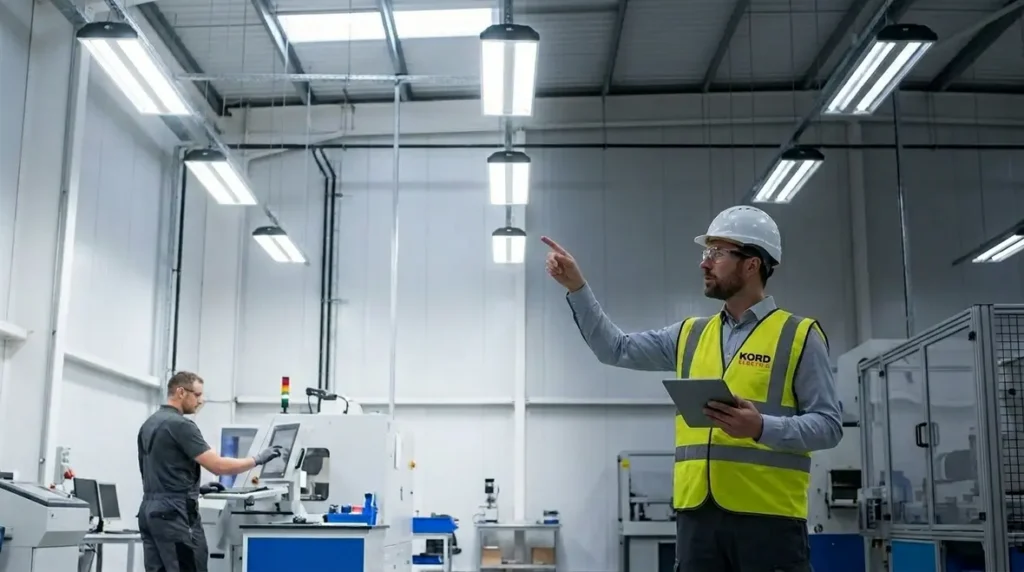
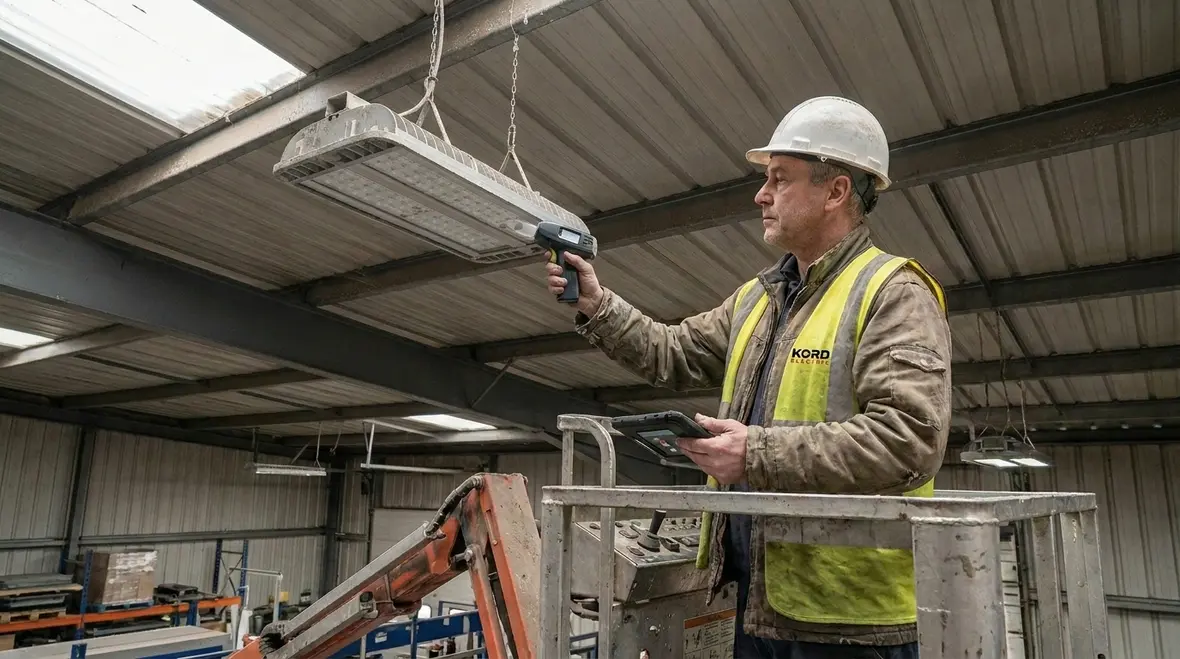
We design for the tasks. A production floor needs consistent task visibility. A loading dock benefits from motion and time based strategies. Offices and support spaces need glare control and smooth dimming. Our technicians explain the setup clearly during commissioning so managers know how zones respond, and so supervisors can train staff without turning the process into a group project from hell.
When people feel comfortable, they work better, complain less, and report issues sooner. In other words, the building stops acting like it is moody. Many facility managers also combine Industrial Lighting Control Systems with broader lighting layout improvements so that both the “where” and the “how” of light support the people actually doing the work.
How we design, install, and support control systems for commercial and industrial facilities
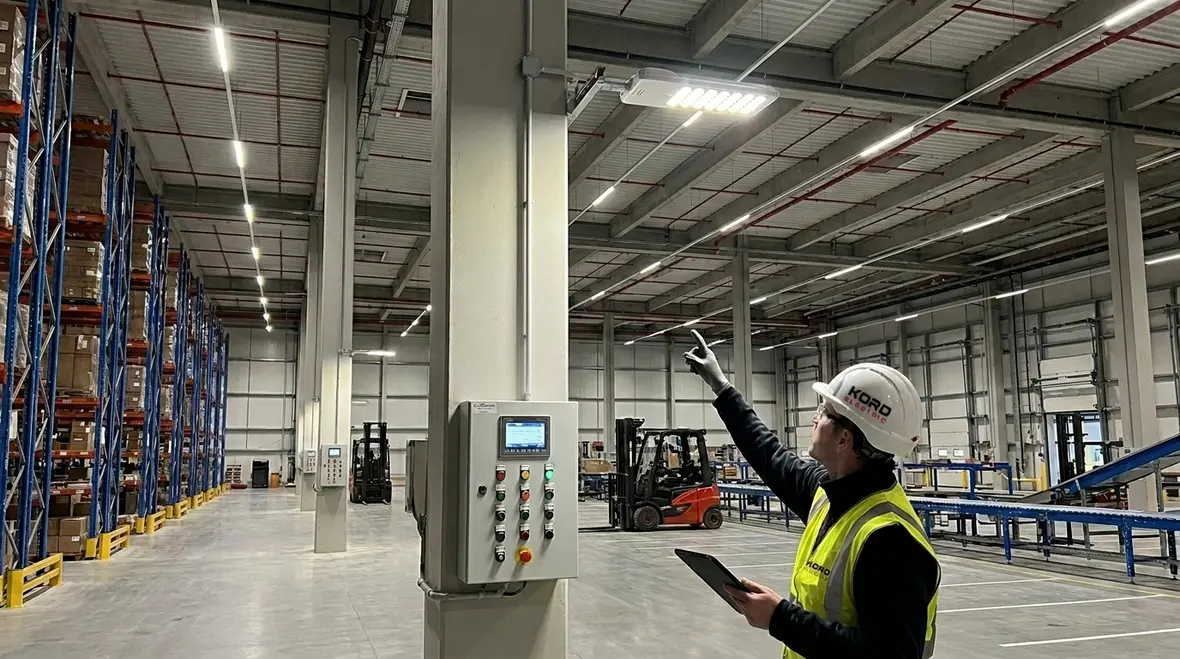
Kord Electric works with commercial and industrial facilities and major property buildings, and we treat each site like it has its own personality. First, our team audits the lighting layout, power pathways, and usage patterns. Then we define zones based on task areas, foot traffic, and daylight conditions. Next, we select control components that fit the environment, including durable hardware for warehouses and facilities with harsh conditions.
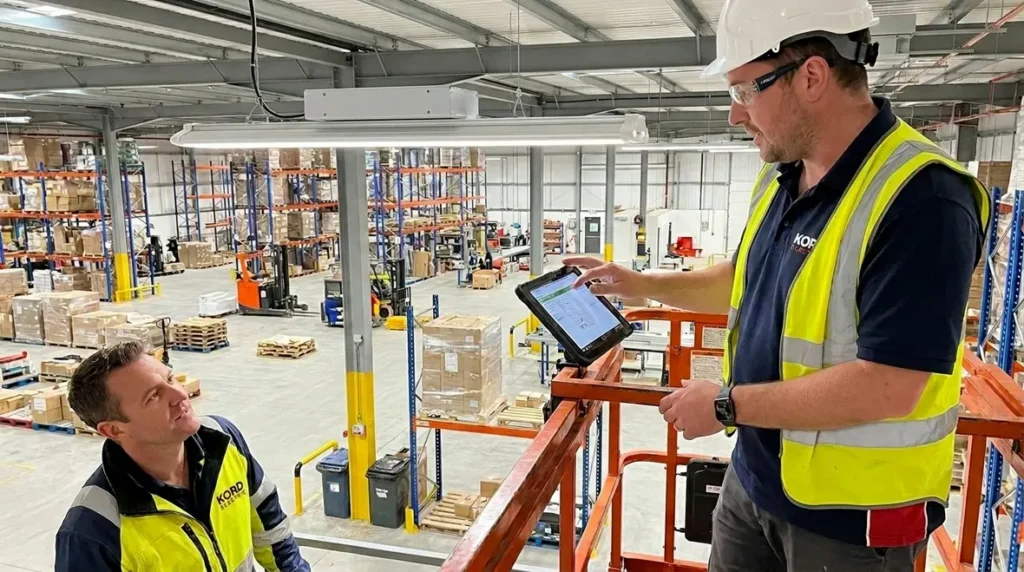
During installation, our technicians coordinate electrical details and control wiring so the system behaves correctly from day one. After that, we commission the system with real operating schedules. We test dimming curves, verify occupancy behavior, and confirm that lighting levels match the intended target zones.
Finally, our expert service staff supports ongoing performance. If a facility changes shift times or adds a new production line, we help adjust scenes and schedules. That flexible support matters because buildings evolve. So we make sure the lighting control strategy keeps up, not like a phone stuck on 10 percent battery in the middle of a meeting.
For facilities planning full system changes, our Lighting Installation Services provide the foundation for new fixtures and wiring, while Industrial Lighting Control Systems tie those fixtures into schedules, sensors, and zoning that match your actual operation instead of a generic template.
Dual column: key benefits and where they show up
| Benefit | Where it shows up |
| Energy reduction through daylight and dimming | Warehouses with skylights, offices near windows, mixed use lobbies |
| Safer visibility in task areas | Production lines, maintenance bays, loading docks, corridors |
| Lower maintenance time | Large facilities with long lamp life cycles and scheduled shutdown windows |
| Comfort and better light stability | Long shifts, training rooms, control rooms, admin areas |
These benefits stack when controls, layouts, and fixtures work together. For example, a facility might pair Industrial Lighting Control Systems with a new layout that fixes shadowing and a lighting installation strategy designed around code compliance. The result is not just “better lights” but a building that behaves more like a well-run process and less like a moody background character.
Frequently asked questions about Industrial Lighting Control Systems
Request a site consult with Kord Electric
If your commercial or industrial facility needs lighting that performs consistently, Kord Electric can help. We assess your layout and usage patterns, design Industrial Lighting Control Systems that fit your zones, and install with careful commissioning. Then our expert service staff stays available to support updates and performance checks as your operation evolves. Stop treating lighting like a guessing game. Call us today to schedule a site consult and get a plan that saves energy, supports safety, and keeps teams comfortable.
For organizations planning a broader project that includes new fixtures, wiring, and code-focused upgrades, our dedicated Lighting Installation Services page outlines how we handle complex commercial and industrial lighting work from design through commissioning. Pairing those services with Industrial Lighting Control Systems gives your facility a complete strategy instead of a patchwork of one-off fixes.