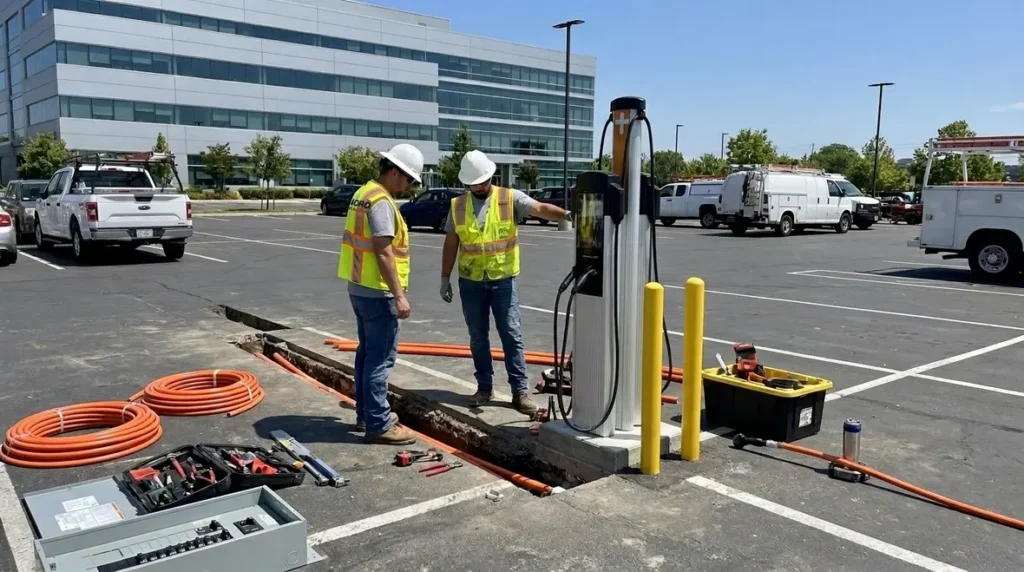
Electric Vehicle Charging Station Load Management
Electric Vehicle Charging Station Load Management that actually keeps businesses running
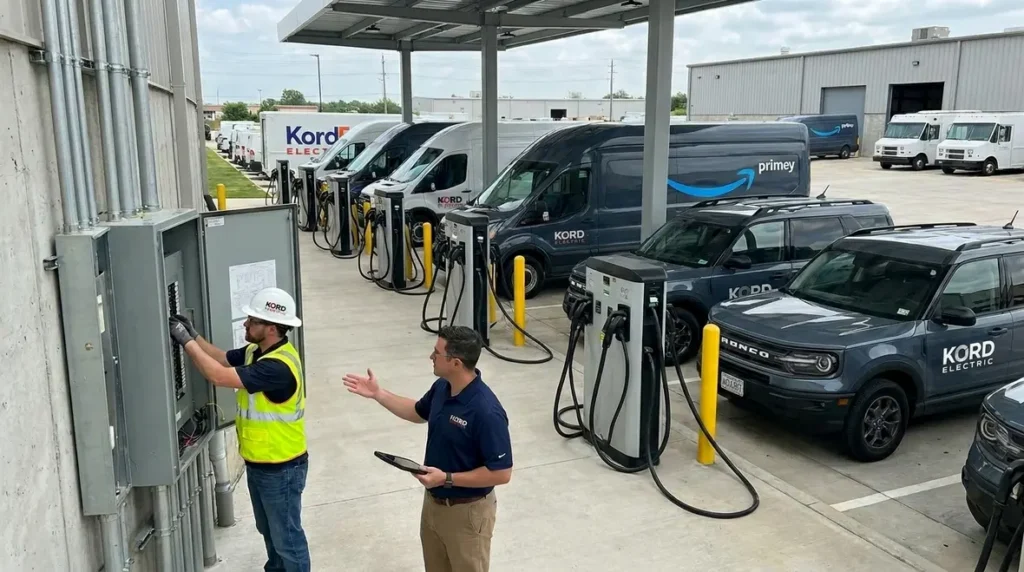
In commercial EV charger installations, Electric Vehicle Charging Station Load Management helps prevent sudden power spikes that can strain electrical service, trip breakers, or slow down charging when it matters most. At Kord Electric, we plan and manage charging loads for commercial and industrial facilities and major property buildings, so your site stays stable while drivers stay happy. And yes, we know it is tempting to “just install more chargers and let the grid figure it out.” The grid always figures it out, usually at the worst possible time, like during an employee shift change or a tenant event.
Our expert technicians and service staff explain what we are doing and why, step by step, in plain language. Then we tailor the system so charging power shifts smoothly as vehicles arrive, depart, and finish charging. That approach protects your site operations while reducing costly electrical upgrades you might not need.
Why load balancing matters in commercial and industrial power systems

Commercial and industrial buildings rarely run on a calm, steady baseline. Instead, they experience changing demand from HVAC systems, elevators, lighting, manufacturing equipment, kitchen loads, dock doors, and seasonal schedules. When EV chargers join that mix, unmanaged charging can create demand peaks that exceed what the electrical system can handle.
In simple terms, if multiple vehicles start charging at the same time at high power, the site demand can jump quickly. Therefore, electrical equipment may work harder than expected. For some facilities, that means voltage dips, nuisance tripping, and service interruptions. For others, it means utility upgrades that arrive like an unwelcome surprise invoice.
However, with load management, we treat EV charging as a controllable workload. So instead of charging everyone at full speed instantly, we allocate power based on available capacity and site needs. Meanwhile, charging still supports the business goal, whether that goal is fleet readiness, tenant satisfaction, or a smooth hospitality schedule.
How dynamic load management works on a real site
When we design dynamic load management for an installation, we look at how power flows through your facility and how demand shifts through the day. Then we set up the chargers and control system to respond in real time.
Typically, our approach includes these elements:
- Real time monitoring of electrical load so we can see what the facility is using right now
- Demand limits that cap charging within your service capacity so your lights do not blink like they are auditioning for a sci fi movie
- Priority rules for specific charging groups, such as fleet vehicles that must finish by a certain time
- Smart allocation that adjusts charging output across chargers as cars connect or disconnect
- Safe controls that protect equipment and avoid unstable operation
Next, our expert service staff explains the behavior you should expect. For example, when a new vehicle plugs in, the system may start it at a lower initial power, then increase it as capacity becomes available. During peak HVAC hours, the system reduces charging output, and later it ramps back up. That pattern keeps the facility stable while still delivering practical charging outcomes.
We use voltage stability planning to avoid dips and complaints
EV charging does not only draw current. It can also influence voltage performance, especially when demand changes quickly across a shared service. If your building already sees voltage fluctuation, adding chargers without planning can make issues worse and lead to tenant complaints or equipment complaints.
That is why we reference the kind of guidance discussed in our resource on voltage fluctuations for commercial and industrial sites. We treat voltage stability as part of load management, not an afterthought. Therefore, we evaluate service size, feeder capacity, transformer behavior, and existing loads. We also consider how the charging system will ramp power rather than slam it all at once.
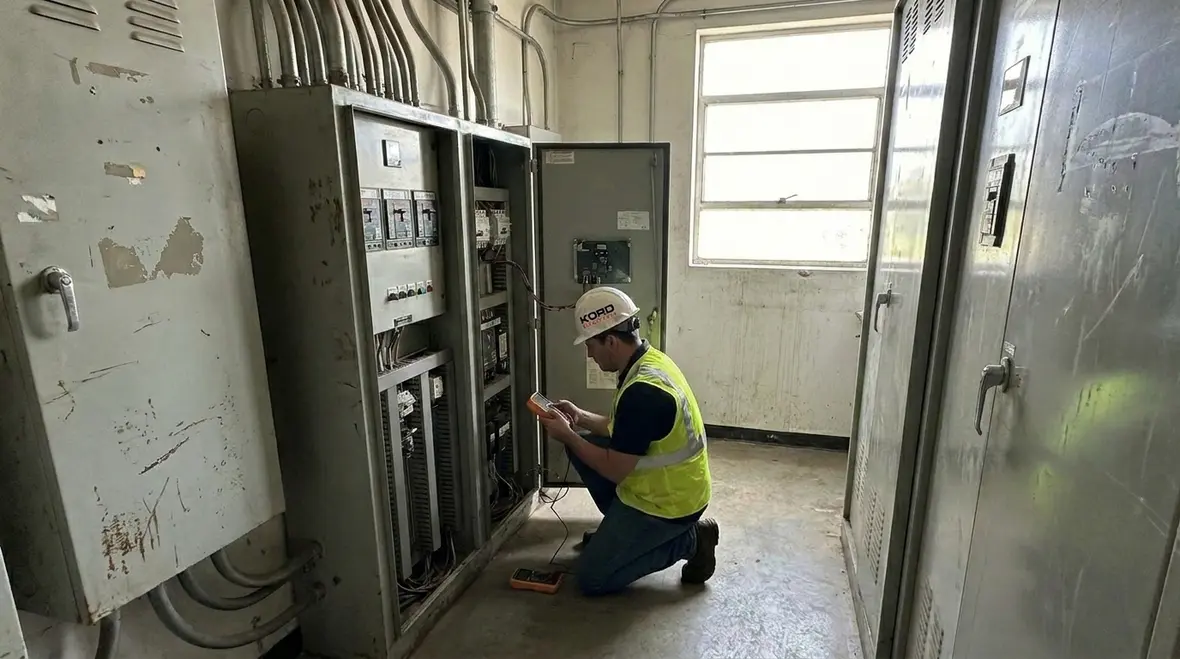
During commissioning, our technicians verify proper operation and check that the charging system responds correctly to changing site conditions. At that stage, we walk through expected results with the facility team. Then everyone knows what “normal” looks like, so there is no guessing game later.

Installation design choices that reduce upgrades
Dynamic load control works best when the installation design matches your facility. So, we choose components and layouts that support stable operation across real schedules and real drivers. For commercial and industrial work, we focus on predictable outcomes and long term performance.
Here is how our design decisions help reduce unnecessary electrical upgrades:
- Charger grouping: we plan charger zones based on electrical topology, so control stays efficient
- Staged ramping: we configure charging behavior to increase power smoothly rather than instantly
- Headroom allocation: we reserve capacity for building needs like HVAC cycling and equipment start up
- Load priority schedules: we align charging priorities with business hours and vehicle duty cycles
- Future readiness: we design with room to expand, so adding more chargers does not mean starting over
And yes, upgrades still happen sometimes, because physics and utility policy do not care about our optimism. However, with Electric Vehicle Charging Station Load Management and smart system configuration, we often avoid upgrades that exist only because of avoidable charging peaks.

What technicians explain during commissioning and ongoing service
We do not disappear after the last cable is dressed and the site looks good. Our technicians and expert service staff explain how the system responds and how building teams can work with it. That matters because the people managing a property do not want to learn a control system on a Friday night.
Typically, we cover:
- Charging behavior: how the system allocates power as vehicles connect and depart
- Operational expectations: what changes during peak building loads and why
- Status reporting: how to interpret system indicators and what alerts mean
- Maintenance rhythm: what we check during service visits to keep reliability high
- Clear escalation paths: who to call and what info helps us resolve issues fast
Then, if your facility uses fleet operations or has tenant programs, we help align charging priorities with real needs. For example, a fleet yard might prioritize return-to-base timelines. A major property building might prioritize tenant fairness and predictable charging windows. Either way, we keep the explanation calm and direct, because confusion is how problems grow legs and start roaming.
FAQ: quick answers about load management and commercial chargers
Call Kord Electric to protect power capacity and keep charging reliable
Dynamic load management helps commercial and industrial facilities charge EVs without triggering demand spikes, voltage issues, or surprise electrical upgrades. At Kord Electric, our technicians and expert service staff design the control strategy, commission the system, and explain exactly how it will behave on your site. If you are planning chargers for a major property building or fleet operation, contact us for an assessment and a clear plan. Let us help you charge smarter, so your power stays steady and your schedule stays on time.
If you are already dealing with flickering lights, nuisance tripping, or unstable equipment performance, our team can also help you address the underlying power quality issues. Explore our dedicated guide on voltage fluctuations in commercial and industrial facilities to see how load management, diagnostics, and corrective work come together to stabilize your system.
For facilities that want long term reliability beyond the EV project, pairing Electric Vehicle Charging Station Load Management with a structured preventive maintenance strategy offers even more protection. Kord Electric’s electrical preventive maintenance services help keep panels, switchgear, and feeders in top condition so your charging investment rests on a solid foundation.
Ready to move from “Can our building handle this?” to “Our charging just works”? Our dedicated commercial EV charger installation team designs and installs the full system, from load studies and panel work to commissioning and staff training. We focus on practical timelines, clear communication, and commercial-grade results so your project lands smoothly instead of turning into a never-ending experiment.
When you are ready to plan or expand EV infrastructure, we are ready to help you manage every kilowatt wisely—protecting your power capacity, your uptime, and your budget.