
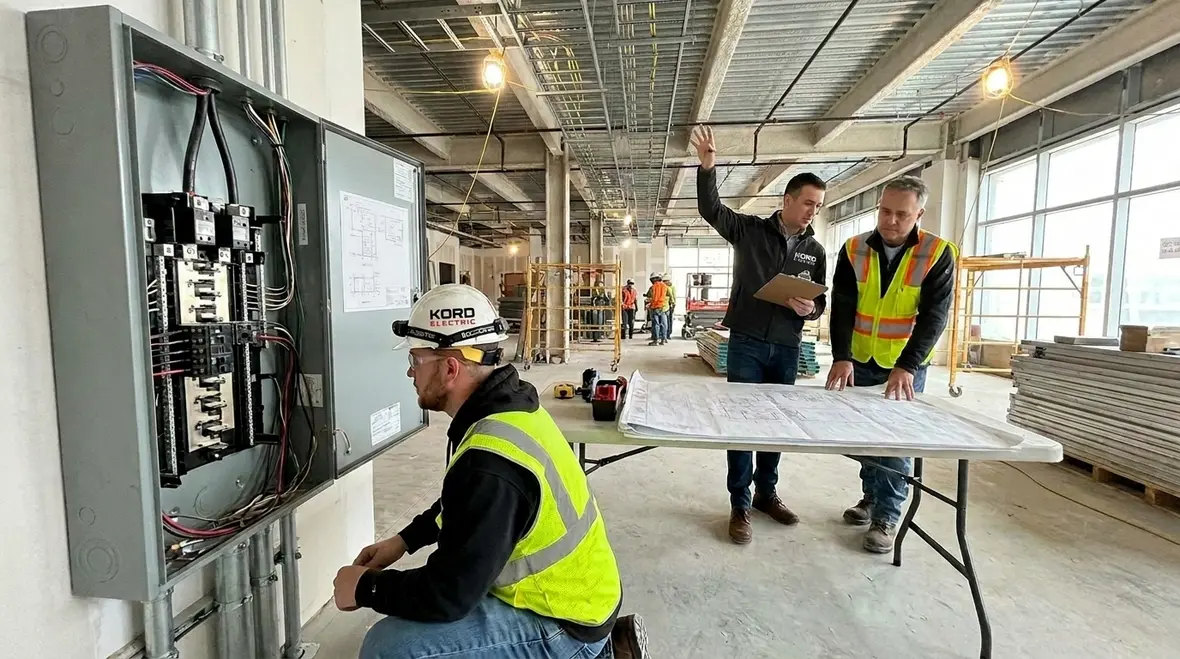
Electrical Code Upgrade Consulting for Renovations
When a commercial renovation starts, the electrical work rarely stays simple for long. Codes change, drawings get outdated, and the field finds surprises the office never planned for. That is exactly why we begin with electrical code upgrade consulting early. At Kord Electric, we help commercial and industrial facility owners map what must be upgraded, what can remain, and what needs to be documented before anyone pulls a single conduit. Then, as the project moves from demo to rough in to commissioning, we guide teams so compliance does not turn into a late night horror movie. Yes, electrical inspections can feel like a sequel you did not expect. And yet, with the right planning, it ends with a clean pass.
Understanding commercial electrical compliance without the panic
In commercial renovations, compliance is not a single checklist. Instead, it is a chain of requirements that connect to one another. For example, Kord Electric technicians review how the new work affects existing circuits, life safety loads, grounding, overcurrent protection, and labeling. Furthermore, we look at how power distribution changes as tenant improvements expand, as equipment is added, and as loads shift from one panel to another.
Many owners think the code question is simply “Is it allowed?” However, in the real world, we also ask “Is it defensible?” That means the design aligns with current standards, the field follows the design, and the paperwork matches what is installed. Otherwise, inspectors may require corrections that cost time and disrupt operations.
Our expert service staff explains each step in plain language. We do not hide behind jargon. And when we say something must be upgraded, we explain why, what risk it reduces, and how we plan to complete the work without shutting down the whole building like a movie stunt gone wrong.
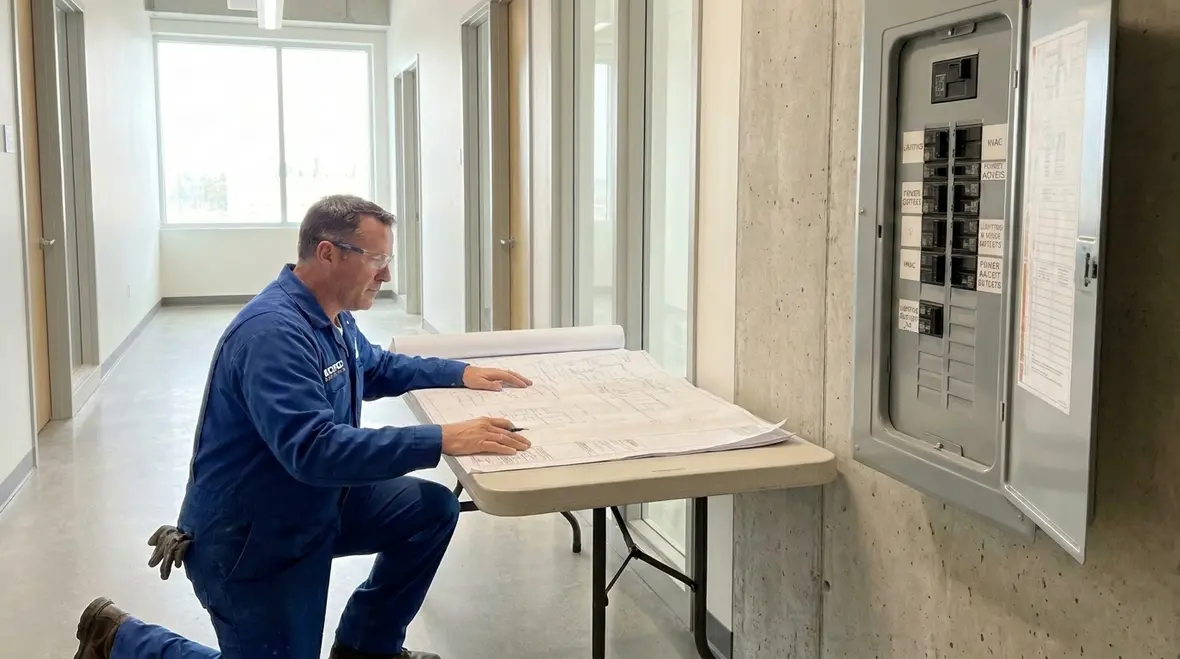
For facility owners who want a deeper primer on the rules behind those requirements, Kord Electric breaks down NFPA 70 and its impact on real-world projects in their guide to the national electrical code for 2026, helping teams understand why the rulebook keeps changing as technology evolves.
Which parts of a renovation trigger code changes
Not every renovation forces a total electrical reset. Yet several triggers can elevate requirements quickly. For instance, if the renovation modifies branch circuits, changes equipment locations, adds new panels, or expands electrical service, the scope often grows beyond the visible work. Likewise, alterations that affect wiring methods, grounding systems, or emergency power can bring additional rules into play.
At Kord Electric, our team identifies these triggers early during project planning. Then we align the design team, the contractor, and the facility manager on what will be required before construction begins. That approach keeps the job moving, and it prevents that familiar moment when the drawings look right until the inspector points out a detail from a different world.
We also consider how commercial and industrial environments behave. A plant, a warehouse, or a high traffic property needs reliability. Therefore, we treat compliance as a safety and performance project, not just paperwork. When electrical code upgrade consulting enters the picture, the team can phase upgrades in the most cost aware way while still meeting inspection expectations.
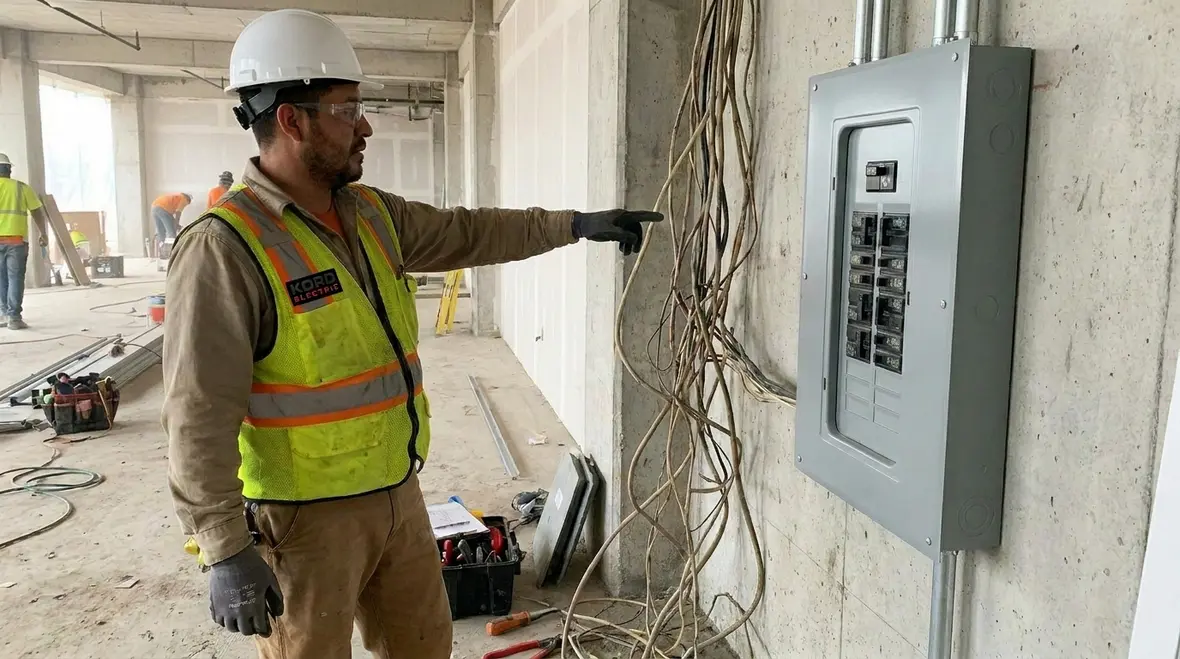
These same triggers show up in other upgrade projects too. When commercial kitchens are reconfigured, when new EV chargers are added for fleets, or when lighting layouts are modernized with recessed LED fixtures, code requirements shift alongside the equipment. That is why experienced consulting teams look at the whole system, not just the most visible new gear.
Risk mapping for panels, grounding, and life safety loads
To manage compliance complexity, we map risk by systems. First, we evaluate service and distribution. Next, we review panels and overcurrent protection for coordination and proper ratings. Then we assess grounding and bonding practices because even small gaps can create big problems for fault clearing and equipment safety.
Finally, we focus on life safety circuits. In commercial buildings and major property structures, emergency lighting, exit signage, fire alarm related power, and certain control systems follow strict expectations. If renovation work touches these circuits, the code impact can be significant. Therefore, our technicians verify how power routes, how emergency power functions, and how testing and labeling will work after construction.
This is where experienced guidance matters. Our expert service staff helps owners understand consequences. For example, if a renovation adds new loads near the edge of a panel capacity, it may push the system into a condition that will not pass inspection. Additionally, it can degrade performance under peak demand. We address these issues during design review so the build does not become a patchwork.
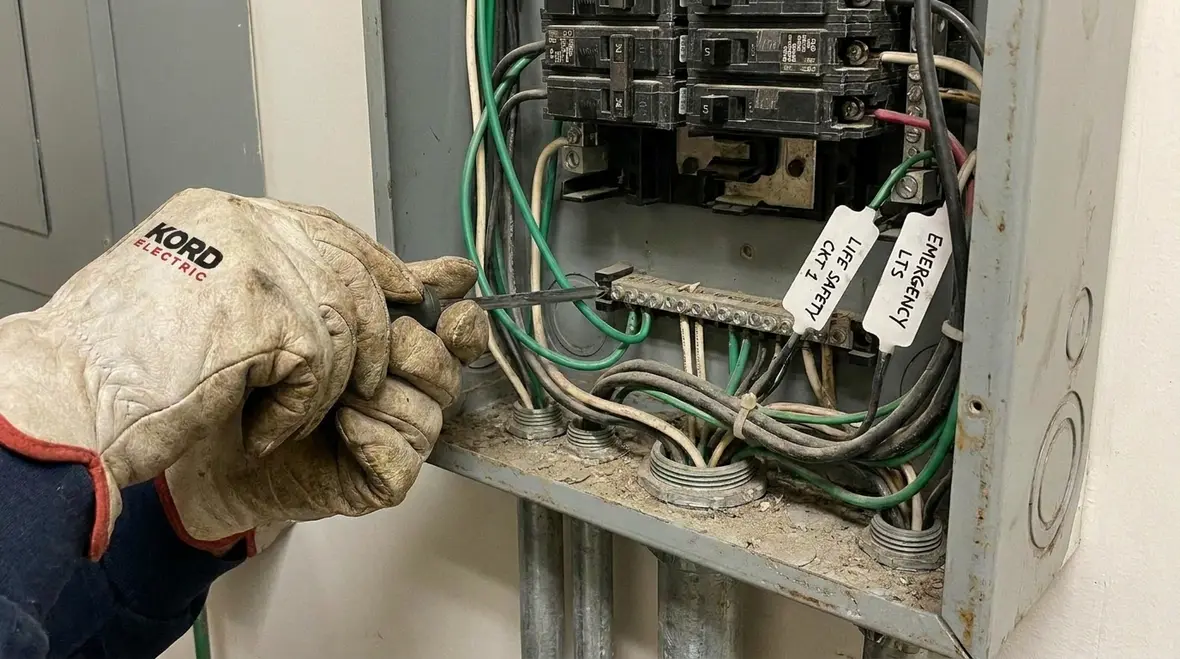
Risk mapping also ties directly into how maintenance will function after the renovation. Modernized panels and clearly labeled distribution help preventive maintenance programs catch issues like loose connections, overloaded circuits, and aging components long before they become shutdown events. In that sense, smart code-driven upgrades create a foundation for more reliable electrical preventive maintenance over the life of the building.
Coordinating inspections and documentation before fieldwork
Inspections fail for predictable reasons. In most cases, the wiring does not match the approved documents, the labeling is incomplete, or the required test evidence is missing. That is why we stress coordination and documentation.
When our technicians enter the project, we verify that the design team’s intent can be executed in the field. Then we help the contractor plan so conduit routing, conductor sizing, and terminations align with the drawings. Meanwhile, we confirm what will be needed for closeout: test results, labeling schedules, and any forms required for sign off.
Furthermore, we help facilities plan for operational continuity. Many commercial buildings cannot shut down power without a careful process. So we coordinate work sequencing. We phase outages when possible, and we communicate timing clearly to reduce disruption to tenants, staff, and logistics.
To keep everyone aligned, we explain the “why” behind each requirement. People remember a reason better than a rule, and that mindset reduces mistakes. If compliance feels like a scavenger hunt, we do not want your renovation playing that game.
Electrical code upgrade consulting for staged renovations
Staged renovations sound efficient, and they can be. Yet staging increases the chance that temporary conditions linger. Therefore, we treat the renovation schedule as part of the electrical compliance plan. As systems come online in phases, the wiring, labeling, and protective device settings must still meet code expectations at each stage, not only on final completion.
During this phase, electrical code upgrade consulting helps owners choose a path that balances budget, downtime, and compliance risk. We look at which upgrades can be bundled without creating new gaps later. Then we plan the sequence so the building ends each phase in a safe and insurable condition.
Also, we help address questions like how to manage existing deficiencies. If the building has legacy equipment that does not match current standards, we guide the team on the minimum corrections needed for the renovation scope. However, we do not just chase the shortest route. We evaluate long term risk, maintenance impact, and the likelihood of future upgrades.
Our approach is calm and methodical, because electricity does not care about deadlines. It cares about safety and correct installation. If that sounds like the world’s least funny joke, trust us, we have heard worse from live panels.
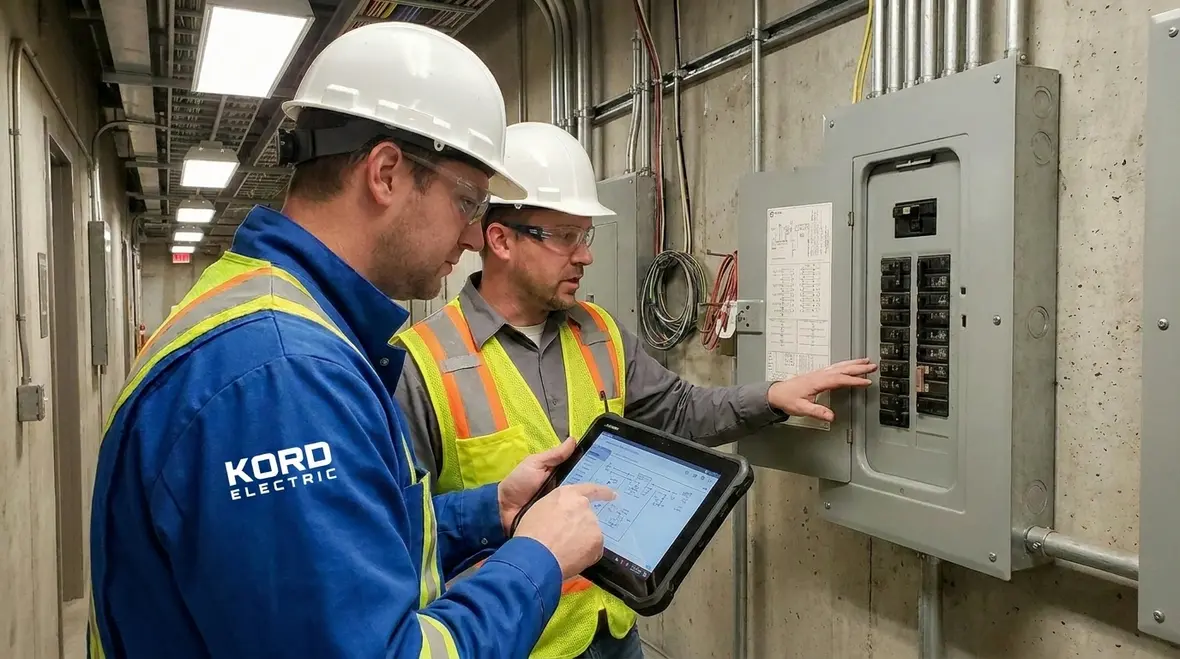
For facilities that must remain online around the clock, combining staged electrical upgrades with structured maintenance visits gives operators more control. Each phase of work ends with testing, documentation, and clear next steps, instead of a vague promise to “clean it up later” when time finally appears on the schedule.
How Kord Electric’s technicians keep projects compliant in the field
Technical skill matters, but consistency matters more. Kord Electric runs field work with an emphasis on repeatable quality. Our technicians follow documented procedures for testing, torque and termination checks, conductor identification, and panel labeling. Because when labels are wrong, inspections get delayed. And when test results are missing, the job gets stuck like a streaming service asking you to restart. Again.
Our expert service staff communicates with contractors and facility teams throughout the build. Then we confirm details before problems stack up. For example, we coordinate how new circuits integrate with existing distribution. We verify that grounding and bonding remain continuous where required. We ensure routing and wiring methods meet the expectations for the environment, whether it is a dusty industrial area or a public facing commercial corridor.
Most importantly, we treat compliance as an outcome you can control. That means we address issues early, not after the rough inspection when “we will fix it later” becomes a costly plan.
On projects with sensitive loads or continuous production schedules, that mindset carries into broader reliability strategies. The same teams that verify compliance during renovations can support ongoing voltage stability, panel health, and emergency power readiness, creating one continuous story from construction to long term operation.
FAQ
Common renovation triggers and their compliance focus
Renovation trigger |
Common compliance focus |
New circuits or panel changes |
Overcurrent protection, conductor sizing, labeling, and coordination |
Emergency or life safety impacts |
Power routing, backup performance, testing, and required markings |
Service or grounding modifications |
Bonding continuity, grounding methods, fault clearing expectations |
Final word: let us plan compliance before it becomes a surprise
Commercial renovations move fast, and electrical compliance often moves faster than budgets and schedules. When Kord Electric supports your project early, we help you plan electrical code upgrade consulting with real field awareness, clear documentation, and staged decision making. Our technicians and expert service staff explain requirements in plain terms and keep construction aligned with inspection expectations. If you are renovating a commercial or industrial facility and you want fewer surprises, contact Kord Electric now. We will review your scope, outline the upgrade pathway, and help you finish strong.
If your renovation is part of a broader reliability strategy, consider pairing electrical code upgrades with a structured electrical preventive maintenance program. Together, they create a stronger foundation for safe operations, smoother inspections, and fewer late night surprises behind the panels.
Whether you are planning a focused remodel, a multi-phase campus renovation, or a full distribution overhaul, Kord Electric’s commercial and industrial services can be tailored to your facility. From code-driven design reviews to hands-on field coordination, their team keeps the power side of your project moving in the right direction.


