Electrical Design Impacts Data Center Efficiency, Safety & Reliability
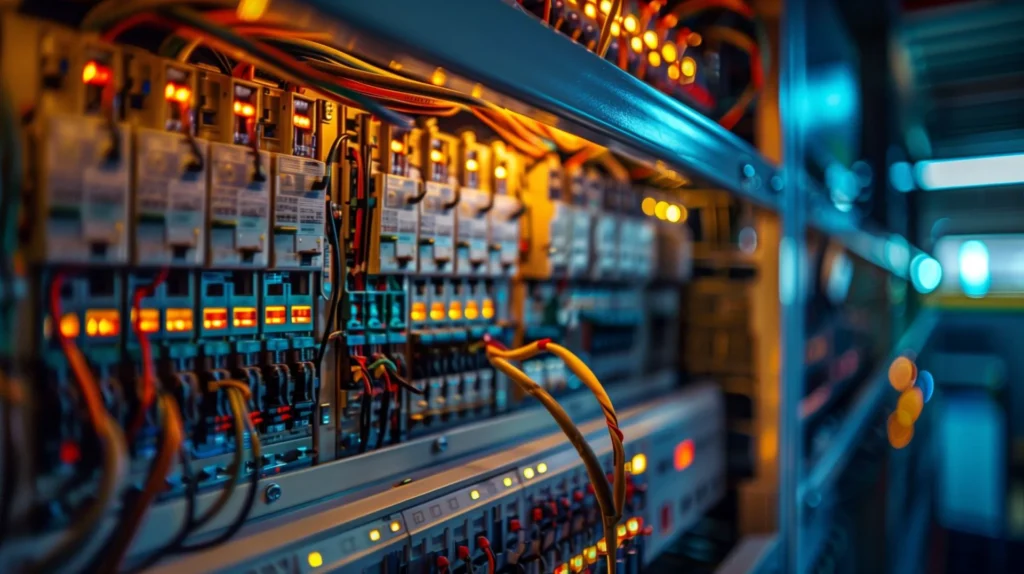
In a commercial and industrial data center, How Electrical Design Impacts Data Center Efficiency, Safety & Reliability is not a buzz phrase. It is the quiet work behind every stable rack, every cool aisle, and every moment your systems run without drama. We design electrical systems so power arrives cleanly, transfers smoothly, and fails safely when it must. Then, our technicians and expert service staff stay involved, because a design is only as strong as the details in the field.
To be clear, power problems do not announce themselves like a sitcom villain. They show up as random alarms, hotter hot spots, and odd shutdowns that make you wonder if the building is haunted. With a disciplined electrical plan, we help prevent that.
For a deeper dive into the broader infrastructure behind these decisions, you can review Kord Electric’s companion guide on Electrical Design Data Center Efficiency, which connects design choices to day-to-day performance in commercial and industrial facilities.
How Electrical Design Impacts Data Center Efficiency, Safety & Reliability shapes every minute of uptime
In practical terms, How Electrical Design Impacts Data Center Efficiency, Safety & Reliability shows up in the most ordinary moments. It is the transfer that happens smoothly when a breaker operates, the rack that never sees a random reboot, and the maintenance window that ends without a single surprise alarm. When we plan your power path, we focus on the real behavior of IT loads, cooling, and building systems, not just the drawings on day one.
That design discipline is what keeps your uptime from turning into an expensive guessing game. Instead of chasing ghosts in the infrastructure, your team follows clear logic: where the power comes from, how it moves, and which devices protect each step.
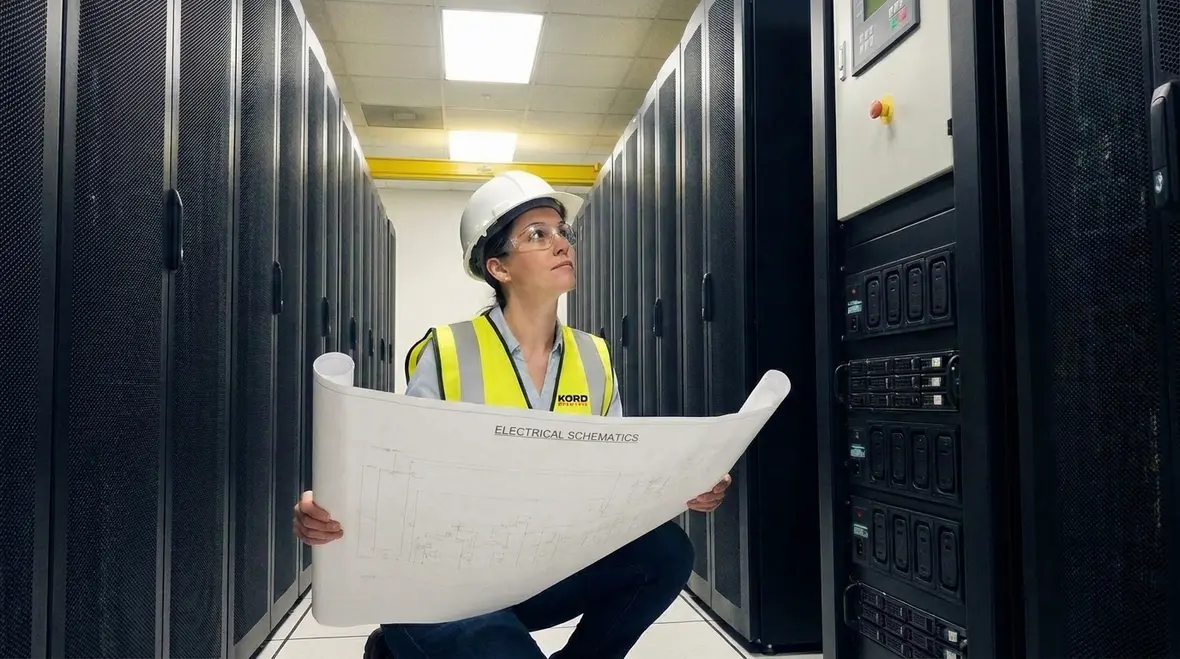
Start with load planning that matches real operations, not guesses
First, we build a load picture that reflects how the facility truly runs. That means we do more than add nameplate ratings. We review peak demand, diversity factors, power quality needs, and how equipment actually cycles through the day. Then we confirm what happens during planned maintenance and unplanned events.
When electrical design gets load planning wrong, efficiency suffers first. After that, safety risks grow. For example, undersized feeders and switches raise temperature, and temperature quietly degrades insulation and connections. Meanwhile, oversized components can drive other issues like poor control behavior and wasted capacity.
Our expert service staff also checks assumptions during commissioning and afterward during operational adjustments. In other words, we do not just draw a one time solution. We help keep the design aligned with the facility as it changes, so How Electrical Design Impacts Data Center Efficiency, Safety & Reliability stays relevant after phase one.
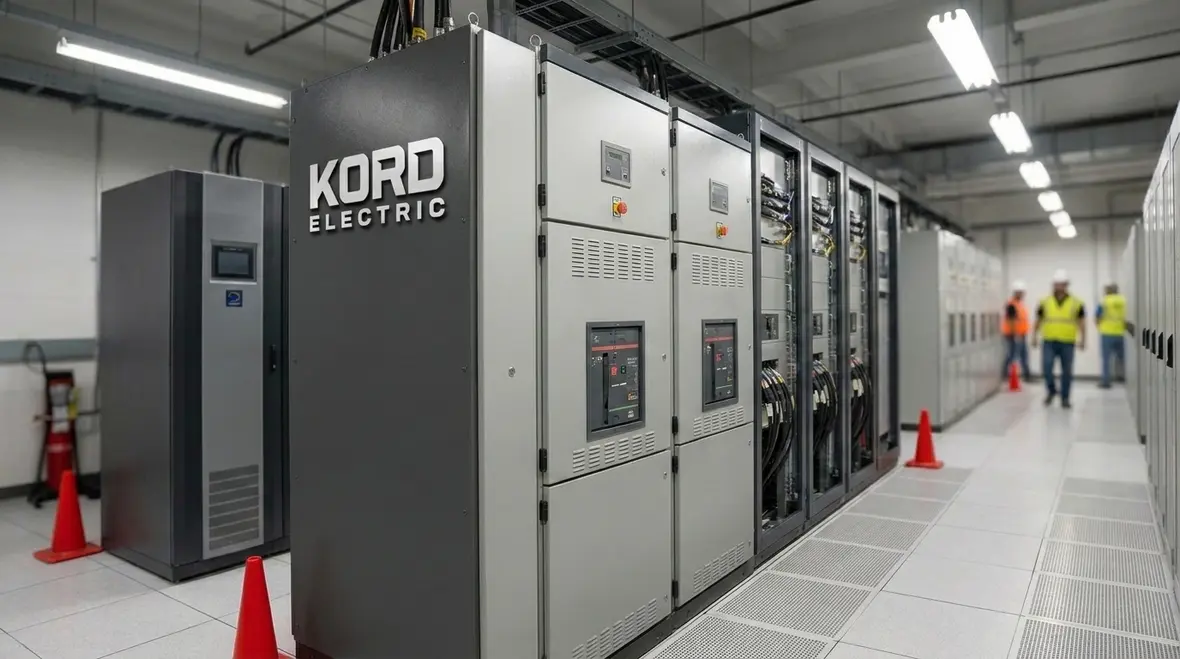
Power path design: efficiency improves when transfers stay smooth
Next, we focus on the power path from utility to critical loads. We design for redundancy and for efficient energy flow, because every extra conversion and unnecessary transfer costs you money and stability. At the same time, we plan so transfers happen predictably when conditions change.
For many data centers, the electrical path includes utility input, critical distribution, UPS, switchgear, and generators. However, we keep the design practical. We reduce avoidable losses, we minimize cable runs where it makes sense, and we choose components that match both current draw and duty cycle.
Then we address safety through separation and protection. We route fault energy in controlled ways, we coordinate protective devices, and we ensure that a single failure does not cascade into a broader outage.
If you have ever watched a door not close and thought, I will fix that later, you already understand why coordination matters. Electrical systems follow the same logic. Later never arrives. The system just fails louder.
When we plan these paths, we also think ahead to testing, maintenance, and future expansion. That is why we connect this discussion to broader topics like resilient infrastructure, scalable layouts, and reliability focused distribution design that Kord Electric explores in guides such as their data center electrical infrastructure articles on reliability and growth.
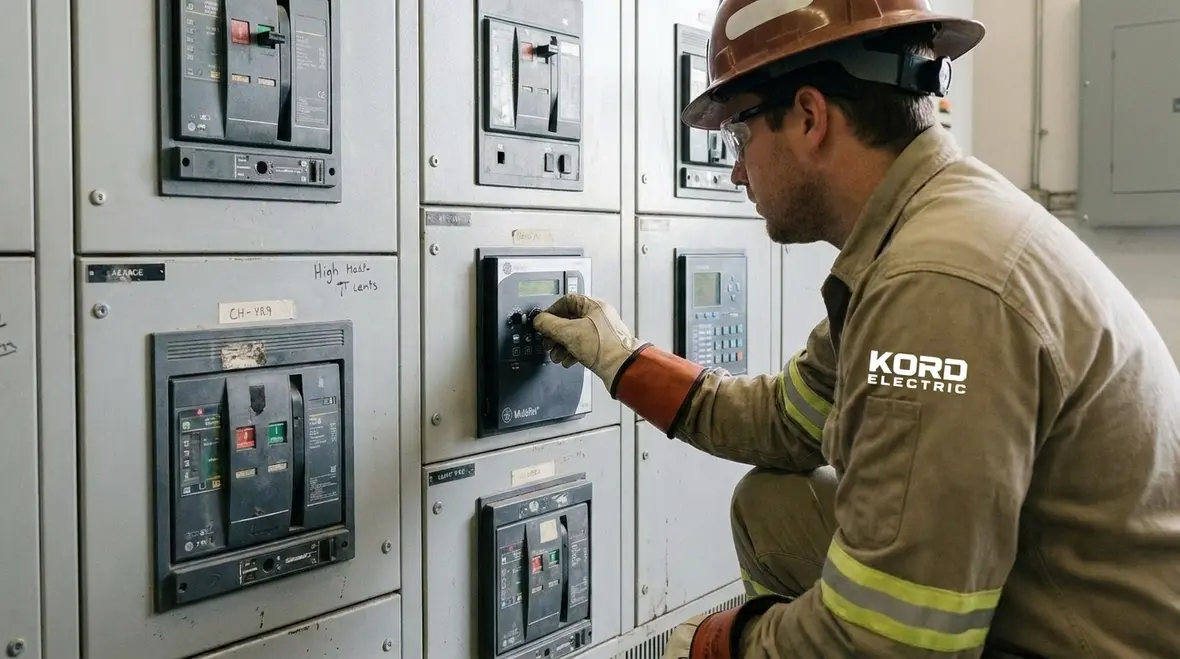
Electrical safety relies on protection settings that people can trust
Safety is not a sticker on a panel. It is the result of correct protective device selection, correct settings, and correct coordination. So we help clients by building protection schemes that respond the right way to the right fault.
We look at overcurrent protection, ground fault behavior, arc flash risk, and how devices interact across voltage levels. Then we coordinate trip curves so faults clear at the smallest effective portion of the system. As a result, you preserve power to the rest of the facility while keeping people safer during service.
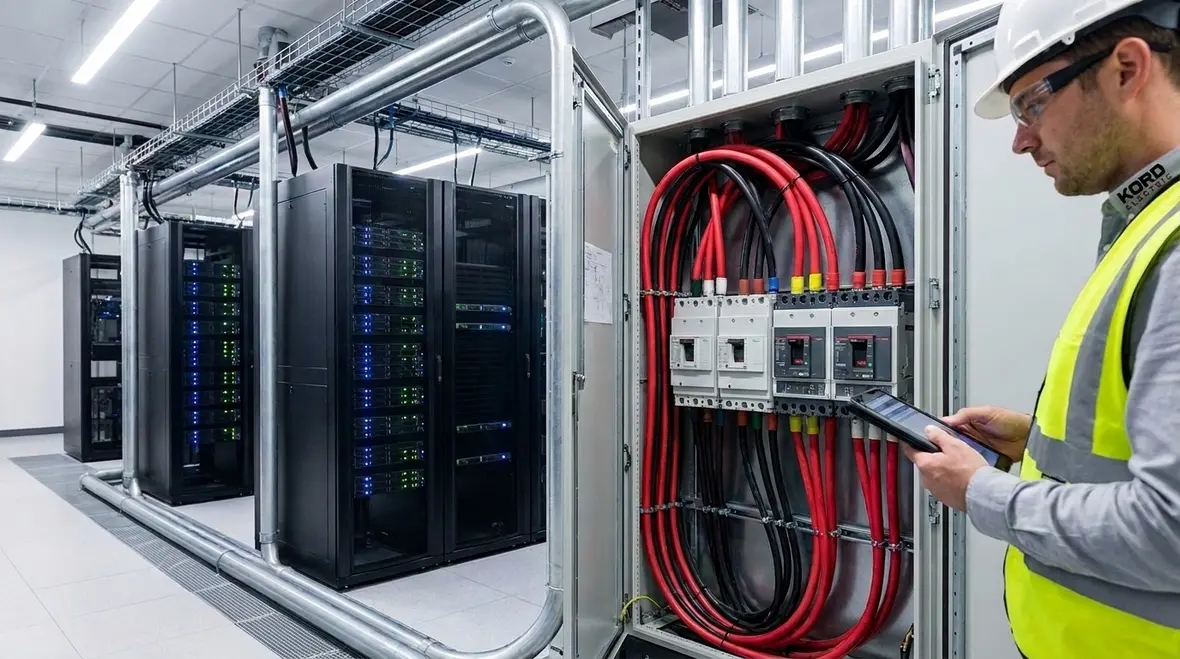
Our technicians explain the logic in plain language. They do not just say, “It is coordinated.” They show what happens during a fault, what device should act first, how the timing works, and why the chosen setting protects both equipment and staff. That kind of clarity reduces confusion during maintenance and helps teams respond calmly under stress.
When we align these settings with real-world operations, we support the same uptime goals described in Kord Electric’s data center electrical solutions resources: calm, predictable behavior instead of surprise outages.

UPS, batteries, and generator systems: design choices change both reliability and risk
Then we move into the heart of most data centers, the UPS and backup power layers. Here, How Electrical Design Impacts Data Center Efficiency, Safety & Reliability becomes very visible. UPS configuration affects efficiency during normal operation, while generator and transfer design affects outage recovery time and safety.
We help clients evaluate topology choices such as online, line interactive, or modular approaches. We also account for battery type, runtime requirements, and charging behavior. If you design batteries without respecting aging and duty cycles, you may pass tests on day one and fail under real conditions later.
At the same time, we plan generator integration with correct synchronization and transfer logic. We also consider fuel storage, ventilation impacts, and safe maintenance access. In many major property and C&I facilities, these constraints affect both code compliance and operational scheduling.
Our service team stays involved beyond installation. They support testing, review operational trends, and help update procedures as the facility grows. That continuity is how reliability moves from a design talking point to an everyday outcome.
Cooling and power quality work together, because heat is never just heat
Electrical design directly influences thermal performance. For instance, poor distribution layout increases resistive losses. Those losses create heat in conductors and connections. Even small increases in temperature can reduce life expectancy for electrical components and sensitive server hardware.
Therefore, we align electrical and cooling strategy. We examine how current load affects conductor sizing, how cable routing impacts ambient conditions, and how switchgear and UPS rooms manage heat. Then we coordinate with mechanical design so the whole facility runs as one system, not as separate departments trading blame.
Power quality also matters. Voltage sags, harmonics, and unstable waveforms can increase stress on power supplies. Over time, that stress can trigger faults or force unnecessary derating. We design filtering, grounding strategy, and distribution characteristics to reduce those risks.
And yes, we know harmonics can sound like a weird band name. But unlike a band, harmonics do not leave after the encore. They stay, they accumulate, and they cost you reliability.
Commissioning, documentation, and training keep safety real after the project ends
Finally, we make sure the electrical design stays correct after installation. So we plan commissioning steps early, we validate protection settings, we confirm labeling and as built drawings, and we verify that test results match the design intent.
Then our expert service staff trains the people who must operate and maintain the system. We explain switchgear sequences, UPS operating modes, and emergency procedures. We also help teams understand what to watch during day to day operation: alarms, trends, and early indicators of component stress.
This is where safety and reliability meet the human side of engineering. When staff can interpret a display and understand what it means for the power path, incidents shift from chaos to controlled response.
In commercial and industrial facilities, that training also reduces downtime during planned work. Instead of improvising with a live system, teams follow procedures built on a clear design foundation. That foundation is reinforced when documentation stays current and accessible, rather than buried in a folder no one has opened since commissioning.
Can older electrical systems still support modern reliability demands?
Sometimes yes, and sometimes the wise move is a phased upgrade. Many major property and C&I facilities face the same challenge: the load evolves, and the original design starts to strain. We review existing one line diagrams, protection behavior, and operational history, then we recommend improvements that preserve uptime during change.
In many cases, we modernize switchgear, refine protective settings, improve grounding, and adjust distribution layouts to reduce losses. We also help clients plan upgrades so the facility stays online. Because for a data center, downtime is not a schedule item. It is a business event.
When these upgrades are part of a structured plan instead of a string of emergency repairs, you get closer to the same steady performance that purpose built facilities enjoy. That is why we connect assessment, design, and construction to long term maintenance and monitoring instead of treating them as separate projects.
FAQ
Ready to protect uptime with a design that stays safe under real conditions?
If you run a commercial or industrial data center, you need an electrical plan that balances efficiency with safety and reliability, not theory with hope. At Kord Electric, we bring disciplined design, careful coordination, and expert service staff support that keeps systems aligned after installation. Now is the time to review your power path, protection strategy, and commissioning approach. Contact Kord Electric to schedule a consult and put clarity back into your electrical foundation.
As you evaluate your options, you can also explore Kord Electric’s broader Los Angeles County commercial electrical services, which support projects that span new data center builds, tenant improvements, and modernizations across complex facilities.
Note: This article supports commercial and industrial facilities and major property buildings only.