Commercial Emergency Power Systems Requirements Best Practices
At Kord Electric, we treat Commercial Emergency Power: Systems, Requirements & Best Practices like the calm voice you want in a crisis. In commercial and industrial settings, the difference between a hard shutdown and a controlled, steady ride through an outage often comes down to the right design, the right equipment, and the right people on your side. We work with facility managers, engineering teams, and property owners to build emergency power plans that protect life safety systems, keep critical operations running, and reduce expensive downtime. And yes, we also help you avoid the classic “it worked during the test once” situation. Because honestly, that is like trusting a smoke alarm that beeps once a year.
How emergency power protects commercial operations during outages
When utility power fails, commercial facilities do not get to pause their responsibilities. Instead, their systems face a tight timeline: move loads to backup power, stabilize voltages, and keep crucial equipment online. We explain it clearly to others, step by step, so teams understand how power flows from the normal source to the emergency source without chaos.
Typically, we focus on critical loads such as life safety lighting, exit signage, fire alarm systems, certain HVAC functions, access control, data and communications equipment, medical or lab equipment where applicable, and process systems that cannot tolerate downtime. In major property buildings, elevators and security systems also become priority loads, depending on the code requirements and building design. Therefore, the emergency system must match the facility’s needs, not just look good on a spec sheet.
Our expert service staff often hear the same concern from property teams: “We just need power, right?” Not exactly. If the system does not start quickly enough, if transfer switching adds delays, or if loads get overstressed, the backup power may fail when it matters most. That is why we approach emergency power as a system, not a collection of parts.
Choosing the right emergency power system for your facility
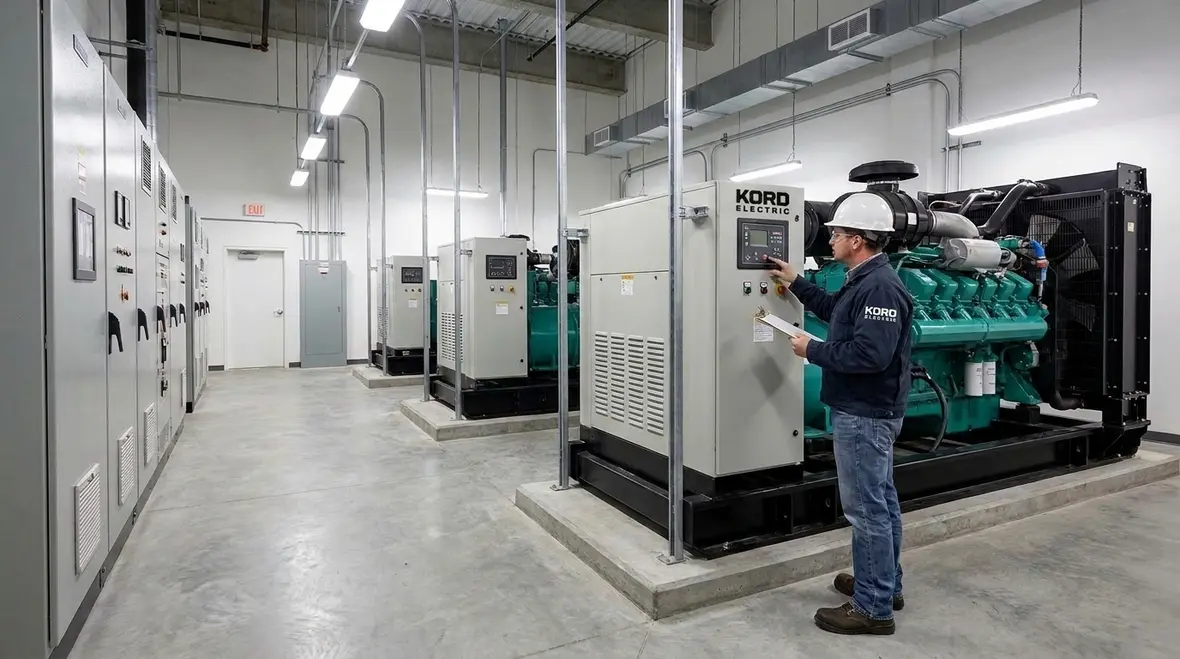
Next, we help decision makers compare system options based on the actual job, not generic claims. Some facilities use generator-based solutions, others rely on engine driven units, and some designs incorporate multiple sources for reliability. Additionally, we consider whether your site needs a static transfer system, a UPS strategy for sensitive controls, or a hybrid approach that covers different timescales.
In commercial and industrial facilities, we look at these factors right away: the expected runtime, the size and type of critical loads, the starting surge for motors and compressors, the voltage and phase requirements, and the space and ventilation constraints. We also account for noise limits, fuel logistics, maintenance access, and how your facility operates during routine work hours.
To keep things practical, our technicians explain what happens during each phase of an outage. First, the system senses the utility failure. Then, switching moves loads to the emergency source. After that, the system supplies power within designed parameters. Finally, the system transitions back to utility power when the normal source returns. Each step must work reliably, and each component must coordinate with the others.
And if you are thinking, “We will just cross that bridge later,” we have a small problem with that bridge. We prefer you cross it during planning, not during a storm.
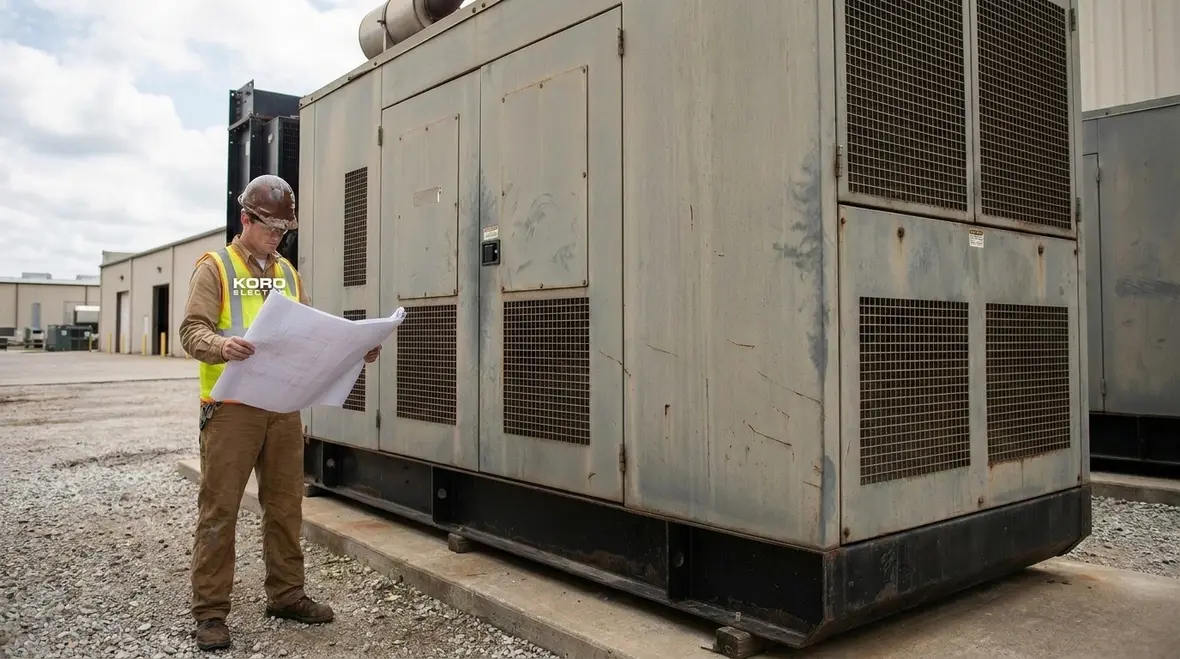
Planning beyond the generator nameplate
For many buildings, it is tempting to start with a generator size and call it a day. Instead, we begin with a system perspective: emergency feeders, transfer equipment, and critical panels must all line up with how the building lives hour by hour. We talk through typical operating patterns, seasonal load swings, and which systems truly cannot afford to reboot in the middle of an outage.
If your facility leans heavily on data and communications, we often pair generator capacity with UPS strategies that ride through transfer events smoothly. For sites that depend on process equipment or large HVAC loads, we account for starting currents and staging so the emergency system does not stumble right when it starts earning its keep.
Owners and managers who want to go deeper into source selection and practical generator sizing often review related guidance like Kord Electric’s article on Commercial Emergency Power Generator Planning, which walks through how runtime, fuel, and code requirements fit into real projects.
Commercial emergency power requirements and compliance basics
Now we get into the part that makes facility leaders nervous, because codes can feel like paperwork with teeth. Still, requirements matter, and we help teams navigate them with clarity. We design and document systems for commercial and industrial applications, and we coordinate the engineering approach with the expectations that inspectors typically look for. We also help owners understand what they must provide during commissioning and ongoing operations.
In most commercial and major property settings, compliance centers on ensuring emergency power provides required duration and supports the proper loads. We discuss selection of transfer equipment, protective device coordination, labeling and identification, and the need for testing procedures that show reliability. Furthermore, we address installation details that commonly cause issues later, such as grounding and bonding practices, generator wiring methods, and switchgear arrangement.
Our expert service staff also helps explain why load management matters. If you connect too much during the initial transfer, voltage drops and nuisance failures follow. If you shed loads correctly and sequence them, you keep critical circuits stable. That is the quiet difference between “emergency power is on” and “the facility stays functional.”
We keep the tone business casual, but we do not keep it casual with safety. Emergency power systems carry responsibility, and our teams treat that responsibility with the calm focus it deserves.
Connecting requirements to real-world testing
Compliance is not just a binder on a shelf; it shows up when the system is tested under real conditions. That is why we tie design details to commissioning steps and periodic verification. From transfer timing to protective device coordination, our approach lines up documentation with the results you see during functional checks and load tests.
For facility teams who want a deeper look at how testing supports these requirements in day-to-day operations, Kord Electric’s guide on Emergency Power System Testing for Commercial Buildings shows how disciplined routines keep emergency systems ready instead of just “hopefully fine.”

Installation, commissioning, and load testing that actually hold up
Once equipment selection is set, the next step determines whether performance matches the plan. We put strong emphasis on installation practices that reduce later surprises. Our technicians verify field conditions, confirm wiring and terminations, review generator and transfer switch settings, and ensure that controls operate exactly as designed.
Then commissioning takes over. We do not treat commissioning as a checkbox. We test the system through realistic scenarios, including transfer behavior and time to pick up critical loads. Additionally, we verify that the system meets its intended voltage and frequency stability during steady operation.
After commissioning, load testing helps confirm the real world. We evaluate how the emergency source handles starting surges from motors and how it manages varying demand. For facilities with process loads, we consider whether the loads ramp up quickly or step in stages. Therefore, we build a test approach that mirrors how your facility actually runs.
Our staff also helps you set expectations for what “good test results” should look like. If a test produces unexpected alarms, we dig into causes rather than shrugging. In other words, we do not just watch the system perform. We understand why it performs.
Many commercial and industrial facilities pair this commissioning mindset with broader reliability work. By combining emergency testing with structured preventive maintenance and periodic power reliability audits, you move from hope to evidence. That is the difference between “we think it will run” and “we know our system has already proven itself when we asked hard questions.”

Maintenance plans and monitoring for dependable backup power
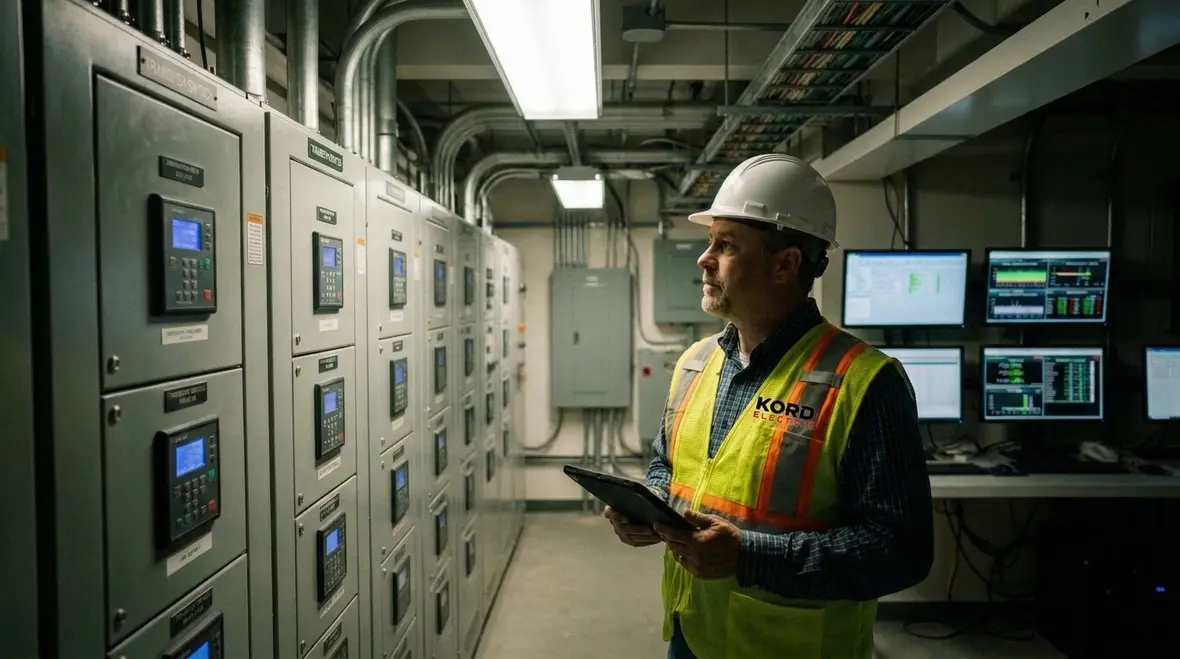
Emergency power must be ready all the time, not only during scheduled tests. That is where maintenance and monitoring come in. We advise commercial and industrial facility teams to plan service based on manufacturer requirements, operating conditions, and the criticality of loads. Our expert service staff helps build maintenance schedules that make sense for each site, including record keeping and consistent inspection intervals.
We focus on the details that prevent downtime: battery health, fuel quality and management, coolant levels, lube oil condition, filter status, vibration and wear indicators, and control panel operation. We also review transfer equipment performance since switching components often become the weak link when systems sit too long.
Many owners ask about monitoring, and we explain the options in plain terms. Remote status alerts can help teams respond quickly when something drifts out of range. However, monitoring works best when you pair it with scheduled service and clear responsibilities for response. Otherwise, you just get notifications like a group chat you ignore.
To make it easier for property managers, we also guide the communication between building operations and service crews so nobody waits for the next meeting to handle a clear issue.
Turning maintenance into uptime, not just paperwork
The most reliable emergency systems usually do not have the fanciest labels; they have the most consistent habits. We help clients set up simple, repeatable checks and align them with the bigger-picture reliability strategy. That might include periodic power reliability audits or folding emergency power checks into broader Los Angeles County electrical services so everything from breakers to generators speaks the same reliability language.
Planning for real life: coordination across the building and site
Even with the right generator and transfer switch, emergency power performance depends on coordination. We help facilities plan the electrical distribution strategy, including where critical loads connect, how circuits separate, and how controls communicate. In major property buildings, multiple tenants and shared infrastructure create extra complexity. Therefore, we help owners and contractors align on which loads receive emergency power and how transfer behavior will protect equipment.
We also consider the facility layout and operations. For example, data and communications equipment often needs clean power and stable timing signals. Security systems and life safety circuits require reliable behavior and consistent testing. Industrial process loads may involve motor control centers and sequencing logic that must be configured properly to avoid cascading failures.
Because emergencies do not respect tenant schedules, we help property teams coordinate documentation and training. We explain what staff should do during an outage, what they should observe, and how to report issues. Our technicians often provide guidance that helps non electrical teams understand what the system is doing. That shared understanding reduces confusion, and it shortens response time when seconds matter.
This coordination mindset also supports other layers of reliability. When you align emergency power behavior with modern distribution upgrades and smarter controls, you build a commercial electrical system that stays steady even when the grid does not. That is where concepts from resources like Kord Electric’s Modern Electrical Systems for Commercial Buildings guide connect directly to the way your emergency gear responds under pressure.
Quick comparison: system components and what to verify
Component
Transfer equipment
Generator and prime mover
Critical load paneling
Battery and controls
Protection and grounding
Testing and documentation
What we verify
Switching timing, proper ratings, correct control signals, and stable transitions under load
Starting performance, voltage and frequency stability, cooling and fuel readiness, and control panel settings
Correct load assignments, breaker coordination, labeled circuits, and sequencing plans where needed
Battery health, charger operation, alarms and interlocks, and fail safe control behavior
Proper grounding and bonding, protective device coordination, and safe fault clearing
Test procedures, commissioning results, and service records aligned with your facility plan
FAQ
Ready to protect your commercial and industrial facility?
If you manage a commercial building, an industrial site, or a major property complex, do not gamble with emergency power. At Kord Electric, we design, install, commission, and maintain backup power with the kind of steady, deliberate care that keeps systems online when the grid goes quiet. We bring our technicians and expert service staff to the table, explain your options clearly, and help you build a plan that holds up under testing. Call us today to schedule an assessment and get your emergency power strategy moving.
For facilities that want emergency power to sit inside a bigger reliability story, we often connect Commercial Emergency Power: Systems, Requirements & Best Practices with broader services like Los Angeles County electrical services for commercial and industrial facilities. That way, your standby systems, everyday distribution, and long-term projects all point in the same direction: safer operations, fewer surprises, and a building that keeps working even when the grid does not cooperate.