Data Center Electrical Reliability: How to Prevent Power Failures
Data Center Electrical Reliability: How to Prevent Power Failures starts with a simple truth: when power goes wrong, everything downstream feels it, fast. In a data center, that means downtime, damaged equipment, and expensive recovery work. However, we at Kord Electric see something most people miss. The goal is not just “keeping the lights on.” It is keeping systems stable, predictable, and ready for the next failure, the next maintenance window, and the next surprise from the utility or the environment.
In this article, we explain how commercial and industrial facilities and major property buildings can prevent power failures by planning for redundancy, managing load, and tightening testing and monitoring. And yes, our technicians and expert service staff will walk you through the why, the how, and the practical details that actually hold up when the stakes are real.
Why power failures start before the blackout
Most teams treat a power event like a single moment: the lights flicker, then they go out. Yet from our field experience, many failures begin earlier, quietly. A failing component, a loose connection, a degraded battery, or a relay that drifts out of spec can sit in the system long before anyone notices.
So, instead of reacting, we build reliability around early warning. For example, we help facilities confirm that their power quality stays within target ranges. Harmonics, voltage sags, and frequency issues do not always trigger an immediate outage, but they stress UPS systems, power supplies, and sensitive IT gear. Therefore, teams that only watch for “outage” signals miss the real story.
Our technicians explain it in plain terms during on site assessments. If your UPS has to work harder every day, it will age faster. If a breaker trips more often than it should, the trend matters. And if the generator runs but loads transfer at the wrong time, the risk grows. That is not panic, it is math.
Build redundancy that behaves, not just that exists
Redundancy often sounds like a checkbox. People say, “We have two UPS units,” or “We have N plus one generators,” and then everyone exhales. But then we ask a better question: do those layers actually protect you under real conditions, including during maintenance and component faults?
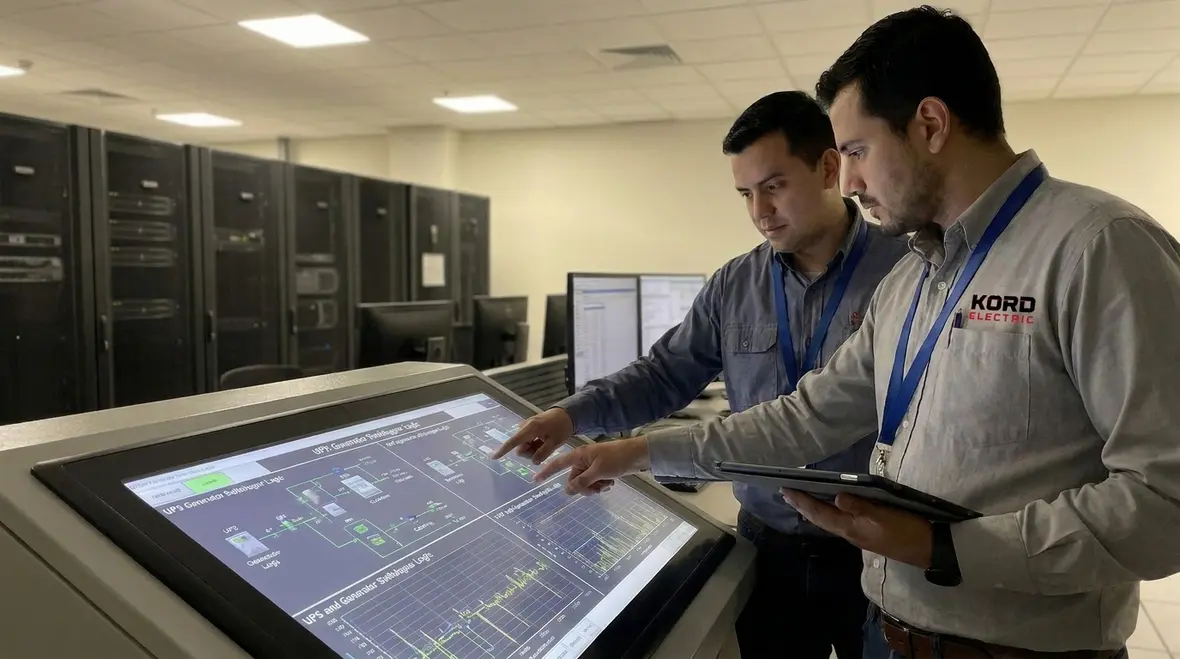
At Kord Electric, we focus on how redundancy behaves under load transfer and switching events. We help clients review architecture and switching logic so the system supports both planned and unplanned scenarios. For instance, the difference between protected and unprotected transfer paths matters. Also, the sequence of operations during generator start, UPS coverage, and static switch action can make or break your outcome.
In one common situation, the equipment is technically redundant, yet the commissioning or settings do not align with the expected transfer time. As a result, a transition can become longer than design intent. Then computers and supporting infrastructure experience stress that can lead to instability. Meanwhile, the team believes the system is “redundant,” because it has the gear on paper.
We keep things practical. Our expert service staff reviews how systems will react, and we document the real switching steps so maintenance crews and operations teams understand the plan. And if something does not look clean, we fix it before it becomes a live fire drill. Because nobody wants a generator to perform like a sitcom understudy that forgot the lines.
For deeper design guidance on redundancy and uptime strategy, many facility teams pair this article with Kord Electric’s resource on Data Center Power Reliability and Uptime Design, which explores how distribution, protection, and redundancy work together over the full life of the system.
Prevent power failures with smart load planning
Even a well designed power system can fail if loads grow faster than the plan. Therefore, Data Center Electrical Reliability: How to Prevent Power Failures depends heavily on load management, including sizing, phase balance, and future growth assumptions.
We support commercial and industrial facilities by helping teams align mechanical and electrical loads with the actual operating profile. Cooling systems, fans, pumps, and supporting equipment can swing based on temperature set points and demand. At the same time, IT load may increase in bursts rather than a steady line. So, you need a load strategy that does not assume everything behaves politely.
Our technicians often see outdated load models. For example, a data hall might show a conservative number years ago, but today’s density changes the current profile. If the electrical distribution does not reflect that, you may exceed design margins. And if you exceed margins, protective devices and power conversion stages face more heat and stress than they were meant to handle.
We also encourage teams to verify phase balance and ensure distribution paths support expected current flow. Additionally, we help clients consider battery health and runtime needs for the actual workload, not the original theoretical scenario. That is the kind of detail that keeps reliability from turning into a wish.
If your facility is actively planning for growth, it can also help to align this reliability work with broader guidance such as Kord Electric’s discussion of Data Center Power Scalability and Growth Planning, so load strategy, expansion, and protection stay in sync.
Test and commission like you mean it
If reliability is a discipline, testing and commissioning is the training. Yet some organizations test once at turnover and then move on. Over time, settings drift, batteries age, firmware updates affect control behavior, and components wear out. Consequently, the system becomes less like “as designed” and more like “as lucky.”
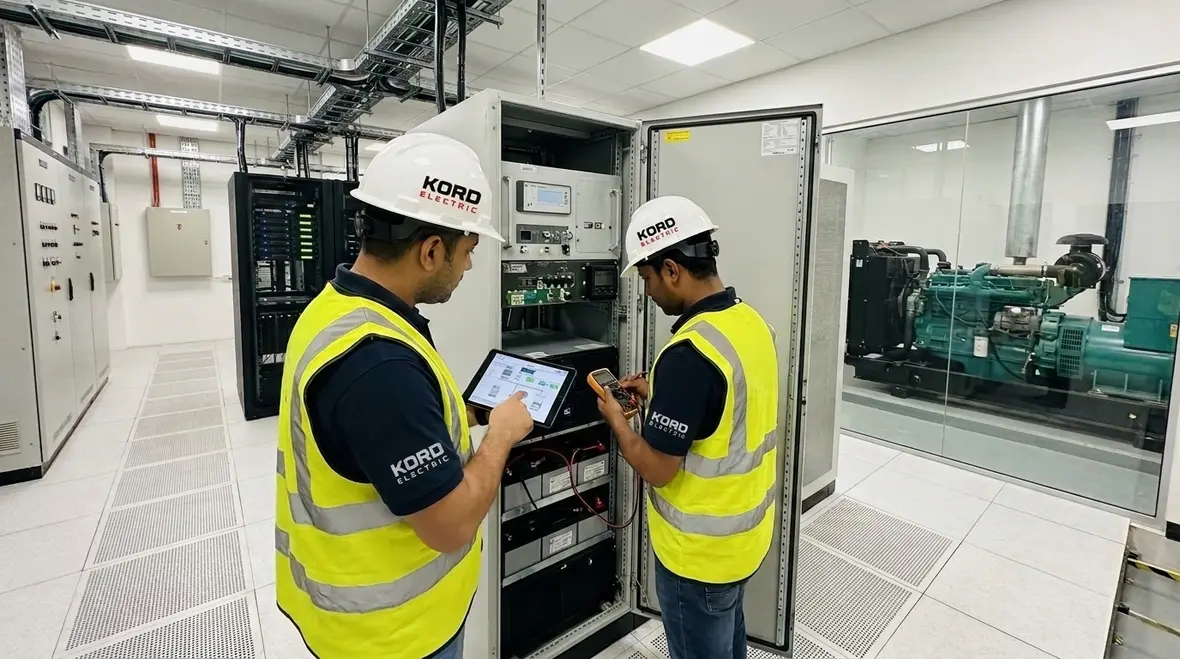
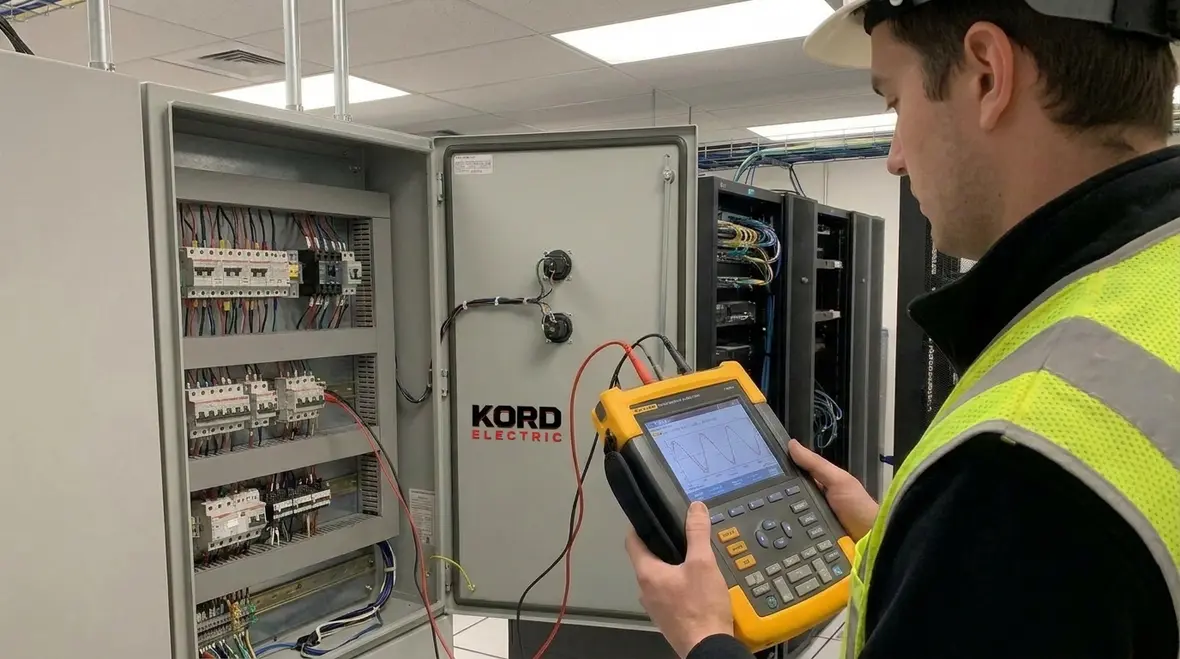
In our service approach, we help facilities create a testing rhythm that matches their risk level. We focus on critical events such as UPS transfer behavior, generator start sequencing, static switch performance, and breaker operation under expected conditions. We also help ensure that testing results get logged clearly so trends show up before failures do.
To make this simple, our expert service staff explains how to interpret results, not just how to run the test. For example, they break down what consistent runtime results mean for battery capacity. They explain what small changes in voltage regulation suggest about load or conversion performance. Then they connect that to action, such as targeted maintenance or updated operational procedures.
And yes, we include the human side. People get busy. So we build schedules that fit commercial and industrial operations. Because downtime windows are real, and they cost money. The goal is confidence, not chaos. Testing should feel like control, not like a surprise party where the guest of honor is failure.
For teams formalizing their uptime playbook, this testing discipline aligns closely with what we outline in Kord Electric’s guide on Data Center Electrical Requirements for Uptime, which connects system expectations to real-world verification.
Monitor continuously and act early

Preventing power failures is easier when teams see problems coming. Therefore, continuous monitoring plays a central role in reliability. With the right data, operators can track voltage levels, alarms, load trends, battery conditions, and generator readiness. More importantly, they can correlate events to root causes.
We help clients think beyond basic alarms. For example, monitoring should reveal whether the system is trending toward instability. Temperature rises in distribution components can signal failing connections or overloaded circuits. UPS alarms can show early battery or bypass issues. Generator measurements can point to poor readiness before the first real load test fails.
Additionally, we encourage a disciplined approach to alarm management. Too many alarms can hide the important ones. Our technicians support a process that identifies what truly matters for operational risk, and we help teams set response procedures that follow internal priorities.
When monitoring triggers action quickly, the facility avoids the classic pattern: wait until a failure happens, then scramble. As long as teams keep reviewing and responding to the right indicators, Data Center Electrical Reliability: How to Prevent Power Failures becomes a living practice rather than a one time project.
Maintain power equipment with a real maintenance plan
Maintenance is not about replacing parts early just to feel busy. It is about keeping the system inside its safe operating zone. Accordingly, Kord Electric supports commercial and industrial facilities with maintenance planning that matches equipment type, duty cycle, and operational requirements.
We align maintenance tasks with expected wear and with performance evidence from testing and monitoring. That means we look at battery health data, generator run test results, UPS component status, and distribution thermal conditions. Then we schedule work with clear scope and documentation so operations and facility teams know what to expect.
Breakers, bus work, and transfer gear deserve attention too. Loose terminations and contamination can create heat and intermittent behavior. Therefore, we focus on inspection methods that find issues before they escalate. Our expert service staff also works with teams to verify that maintenance does not accidentally introduce new risk, such as incorrect set points or incomplete restoration of configurations after service.
In a data center environment, maintenance should reduce uncertainty, not increase it. We treat it like preserving the reliability you already paid for.
For organizations that manage both mission critical and more conventional spaces, these maintenance practices often tie into broader programs like Kord Electric’s Los Angeles County electrical services, helping align preventive work, upgrades, and emergency response across the full portfolio.
FAQ
Dual column guidance: reliability actions that pay off
What we verify
- Load models match actual operating density and growth
- Transfer logic and switching timing behave as designed
- UPS and generator performance trends stay in range
- Protective device settings align with risk and coordination
What happens next
- Testing plans with clear success criteria
- Maintenance schedules tied to evidence, not guesses
- Alarm management and response workflows
- Documentation for operations and service teams
When Data Center Electrical Reliability: How to Prevent Power Failures becomes part of this structured workflow, facilities see fewer surprises and more predictable uptime. Many owners also explore complementary guidance like Kord Electric’s resources on power redundancy and reliability audits to round out their roadmap.
Call Kord Electric when reliability becomes urgent
Power reliability should feel steady, not hopeful. If your data halls, server rooms, or mission critical systems depend on stable power, we at Kord Electric can help you strengthen Data Center Electrical Reliability: How to Prevent Power Failures with planning, testing, and maintenance that actually hold up in real operations. Our technicians and expert service staff explain every step in business friendly language, so your team can act with confidence. Reach out to us today and schedule a reliability review.
If you are coordinating reliability improvements across multiple buildings or locations, it can also be helpful to connect this work with broader programs described in Kord Electric’s articles on power reliability audits for commercial facilities and related service offerings that keep electrical upgrades, monitoring, and emergency response aligned.
For facility leaders who want a direct path from strategy to field work, Kord Electric’s commercial and industrial teams support data centers, office buildings, and complex properties across the region with services that connect reliability planning, upgrades, and everyday operations into one coherent plan.