

Electrical Load Balancing for Commercial Facilities
Electrical Load Balancing for Large Commercial Facilities: what we optimize first
At Kord Electric, we start every load balancing plan with the simple truth that large commercial and industrial facilities do not “stay still.” Equipment cycles, tenants change usage, and seasons swing demand like a swing set at the park, except the park is your switchboard. In the first steps, we use electrical load balancing strategies to manage how power spreads across phases and circuits, so no one feeder or transformer gets overworked while others sit there like they are waiting for overtime. Then we verify the results with real measurements, not guesses, and we document a clear path for upgrades that make sense for the building’s actual life.
Next, our expert service staff explains what we find in plain language. In other words, we show you what is happening, why it matters, and how to fix it before it turns into a costly problem. Because nobody wants a surprise trip. Not even the breakers. (They have a reputation.)
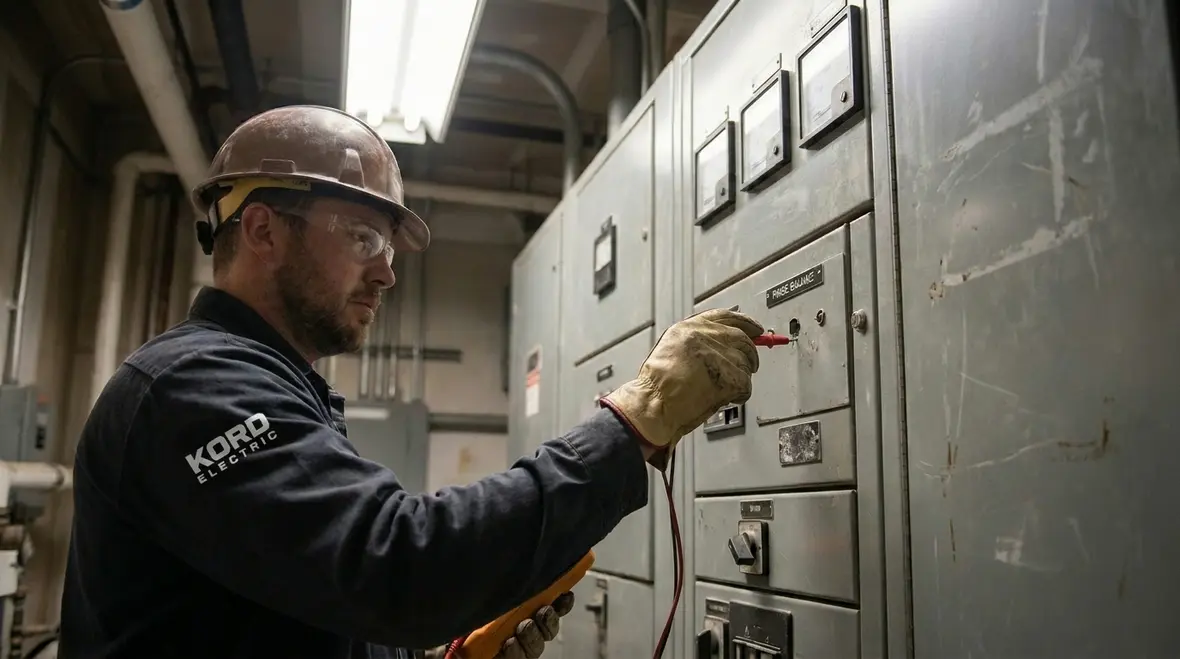
In large facilities, that first optimization step often includes catching hidden imbalances long before they trigger a shutdown. We look at where critical equipment lives, which tenants drive the most demand, and how the building’s operating schedule shifts loads across the day and across the year. From there, our teams build a practical roadmap so improvements follow a sequence that matches budgets, downtime windows, and safety priorities instead of guessing and hoping.
Why phase imbalance quietly damages commercial power systems
Phase imbalance happens when loads do not draw evenly across the three phases. Over time, that uneven draw raises heat in conductors and switchgear, increases losses, and can cause nuisance alarms. More importantly, it can lead to premature wear on components that were never meant to run hot. And while some issues show up as “minor” alarms, the real damage often shows up later as higher maintenance, faster aging, and reduced reliability.
To make this real, our technicians often see patterns in large facilities like these: the kitchen or cafeteria spikes on one phase during peak hours, HVAC controls shift during seasonal schedules, and data rooms can add steady draw that tilts balance. Meanwhile, lighting and common area circuits spread unevenly because of how historic renovations were wired. Therefore, the building becomes a patchwork of old assumptions and new loads.
Then there is the utility side. When imbalance pushes voltage quality out of range, sensitive equipment can behave badly. Finally, the facility manager spends time chasing symptoms instead of solving the root cause.

When a facility runs this way for years, those small imbalances add up to bigger problems. Transformers operate warmer than design, insulation ages faster, and breakers operate closer to their edge. It is a little like running an engine on an incline all the time. It still runs, but every mile takes a bigger bite out of its lifespan. With intentional electrical load balancing strategies, we flatten that incline so systems can do their job without constantly fighting uneven demand.
How we measure demand before we touch a wire
We do not jump straight to changes. First, we collect data. Our approach focuses on measured load profiles and accurate identification of where current flows. We use load monitoring to track phase currents during the facility’s normal operating windows, including shift changes, morning warmups, after hours, and weekend schedules when equipment patterns differ.
At this stage, our technicians and expert service staff talk through the results as they go. We explain what “load” means for your specific building, where it concentrates, and what changes to expect if you relocate circuits or add capacity. In addition, we review upstream equipment ratings, feeder sizes, breaker coordination, and any existing constraints like service limits or transformer tap settings.
Next, we map circuits and identify which loads drive imbalance. Sometimes the cause looks obvious, such as a group of panels fed from the same phase. Other times the culprit is sneaky, like a set of plug loads on one side of a tenant retrofit. Either way, we treat the building like a living system that requires a plan, not a guess.
This measurement-first mindset also gives facility managers clear documentation they can revisit later. When a future project comes along, such as a new tenant or process line, the team already knows where the weak spots and strong points live. Instead of guessing at capacity based on breaker labels, they can lean on real data and past trend lines to make better decisions, faster.
Electrical load balancing strategies for real facility constraints
Once we know what is happening, we design electrical load balancing strategies that work within your facility constraints. Large commercial and industrial buildings rarely allow shutdown windows without consequences, so we plan changes around uptime. We also consider code requirements, safety clearances, and how other systems depend on consistent power.
- Circuit rebalancing by redistributing single phase loads so each phase carries similar current.
- Panel and feeder reassignment when the structure of existing distribution creates unavoidable tilt.
- Load staging by shifting start times for motors, HVAC staging steps, and process equipment when allowed.
- Targeted load additions by selecting phases for new circuits based on current capacity margins.
- Correcting wiring and connection issues when phase relationships or terminations contribute to imbalance.
However, we avoid a one size fits all mindset. If a building has limited service capacity, we do not pretend that “moving circuits” magically creates power. Instead, we analyze headroom on feeders and transformers, and we recommend upgrades when required.
And yes, some people try to solve this with duct tape logic. “We’ll just add another breaker.” That is the electrical equivalent of saying, “We’ll fix the car by adding more vibes.” It sometimes works briefly, but it usually ends with a tow truck and a budget meeting.
When upgrades are the smart move, we coordinate them with broader work such as panel improvements and reliability projects. For properties across the region, combining load balancing with targeted services like Los Angeles County electrical services for large commercial facilities helps control downtime while raising the overall stability of the distribution system.
The result is not just a prettier panel schedule. It is a building that starts up clean on Monday mornings, rides through peak seasons without unexplained trips, and gives maintenance teams room to plan instead of react. That stability becomes even more important as new loads arrive, especially EV charging and electrification projects that stack fresh demand on top of legacy infrastructure.
EV charging and other growth projects: balancing power without drama
Many facilities grow their electrical footprint through EV charging, new office buildouts, warehouse expansions, and upgrades to HVAC or process equipment. Therefore, load balancing must connect to project planning. We help commercial clients integrate new loads while protecting existing power quality and ensuring phases remain balanced under peak demand.
If your facility is adding EV infrastructure, we align phase selection and circuit design with the building’s actual load behavior. For example, our EV charger installation work considers how charging load ramps over time, how many chargers run simultaneously, and how the facility draws power during business hours versus late night windows. We also coordinate the distribution path so the building does not overload a single feeder or phase during peak charging periods.
Our technicians explain the process in a way that decision makers can use. We walk through what we will install, what we will test, and what the building should expect during charging events. Then we document the setup so operations teams understand the limits and schedule behavior. That way, the chargers do not become a “surprise hobby” for the maintenance department.
To support those goals, we also review existing panel capacity, circuit availability, grounding and bonding details, and how protective devices will respond to expected load profiles. Matching electrical load balancing strategies with realistic charging behavior helps facilities avoid nuisance trips, unexpected demand spikes, and last-minute scrambles for emergency upgrades.
Testing, documentation, and ongoing tuning after upgrades
After any rebalancing or electrical modifications, we verify results. We check phase currents again under peak conditions, confirm breaker and feeder behavior, and confirm voltage stability for equipment that depends on clean power. We also verify that protective devices operate properly and that no circuit labels or panel schedules create confusion.
Then we produce documentation that helps your team run the building confidently. We provide clear notes on what changed, what to monitor, and what new baselines should look like after commissioning. As a result, facility engineers do not have to guess what was done last year, or why one transformer seems warmer than it should.
For many large properties, the best plan includes periodic tuning. Loads shift with tenant changes, equipment replacements, and schedule updates. Therefore, we recommend re-checking phase balance at intervals that match operational reality, such as after major tenant buildouts or after adding high demand systems.
Our expert service staff also keeps communication simple. If we see a pattern that suggests future imbalance, we tell you early. That approach prevents the “wait until something fails” cycle that no one enjoys, not even people who binge crime documentaries for fun.
Common mistakes we help commercial facilities avoid
Large facilities often inherit power problems from past renovations, contractor gaps, or missing as built records. As a result, some common mistakes show up repeatedly, and we help clients correct them before they become expensive habits.
- Adding new loads without phase planning which tilts current and overloads equipment.
- Ignoring upstream limits where feeders or transformers cannot support growth.
- Rebalancing without measurement which can create a new imbalance while fixing the old one.
- Assuming tenant wiring matches schedules when labels and reality do not agree.
- Skipping testing after changes which leaves voltage and protection outcomes uncertain.
When clients work with Kord Electric, our approach stays grounded. We explain options, we show tradeoffs, and we recommend the most practical path to keep the building steady. In other words, we bring order to the chaos, like a librarian who also understands switchgear.
That same mindset applies whether we are troubleshooting voltage behavior, planning new charging, or supporting heavy industrial production. For some facilities, the smartest path forward is pairing detailed load balancing work with related services such as voltage fluctuation repairs or broader reliability upgrades, so the entire electrical backbone supports long term performance instead of fighting against it.
FAQ
Conclusion: let Kord Electric steady your building’s power
When power demand grows, imbalance becomes a quiet tax on reliability. With Kord Electric, we measure your facility’s real load patterns, then apply practical electrical load balancing strategies that fit commercial and industrial operating needs. Our technicians and expert service staff explain every step, test the results, and document what your team needs to manage confidently. If you want a calmer, steadier electrical system for your major property, contact us today and we will map a plan you can trust.
For sites planning the next phase of upgrades, from panel improvements to EV charging and reliability work, our team can also connect electrical load balancing with related commercial services so the entire power path stays aligned. When you are ready to move from “watching the warning lights” to building a stable long term plan, our commercial and industrial specialists are ready to help.
If your facility operates across Los Angeles County or the surrounding region and you need a partner who understands heavy demand, tight schedules, and complex infrastructure, Kord Electric’s dedicated commercial services team can align testing, design, and field work under one plan. From the main service down to the final branch circuits, we focus on keeping your building balanced, resilient, and ready for whatever the next project brings.


