
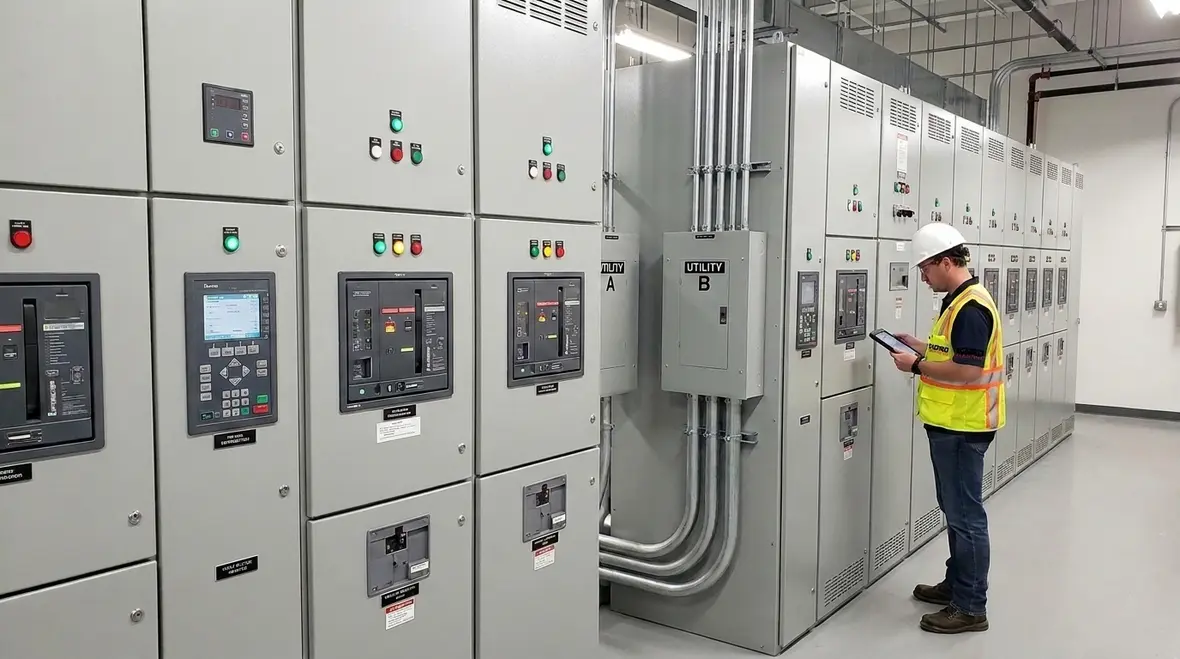
Electrical Redundancy Services: Design for Uptime
Electrical uptime is not luck, it is design
Kord Electric delivers Electrical Redundancy Services: Protecting Critical Commercial Power Systems for data centers, hospitals, industrial campuses, and major commercial property buildings. We know you do not run your business on vibes. You run it on power quality, reliability, and the ability to handle faults without drama. And yes, downtime feels dramatic even when it starts quietly, like a single breaker that “might be aging.”
In our work, we build redundancy so the lights stay on, cooling keeps working, and your critical loads keep doing their jobs. We also explain the design choices in plain language, because our technicians do not hide behind jargon. They walk the floor, they verify details, and they tell facility owners what matters and why.
Why redundancy matters when the stakes are high

When a commercial or industrial facility loses power, the cost moves fast. It is not only lost production. It is lost confidence, failed processes, delayed reporting, stuck servers, and a long chain reaction that no one wants to debug at midnight. Therefore, redundancy must go beyond simply adding a second power source. It must address how power flows, how faults get isolated, and how systems restart under stress.
Many buildings think they have backup power because they installed a generator years ago. However, the real question is how the facility behaves when something fails at the worst time: a utility event, a transfer malfunction, a switchgear issue, or a control logic fault. Others add more gear, but they do not fully coordinate the protection settings, which means the “backup” may trip the same way the primary did. That is like calling for a second lifeguard who only knows how to swim backward.
In our approach, we map critical loads first, then we design paths so that failure in one section does not blind the rest of the system. Then, we test it, because drawings do not catch real-world surprises. Our service staff will review the operating philosophy with your team so the system responds the way you expect.
How we design power paths that do not collapse
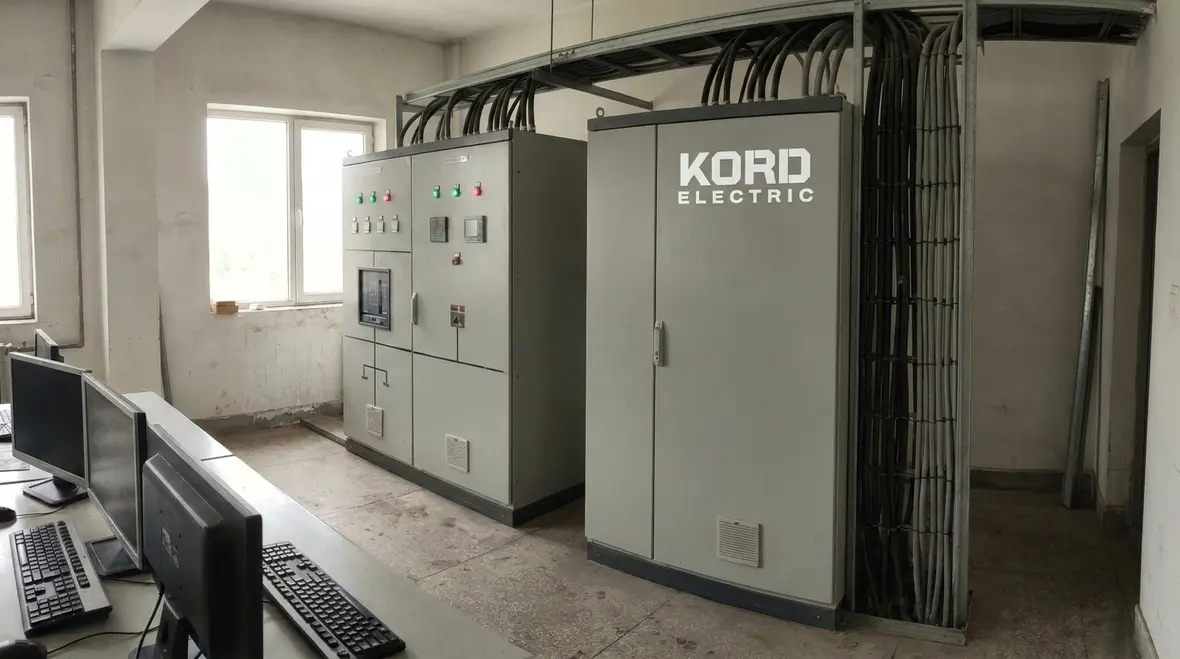
At Kord Electric, we plan redundancy like an engineering process, not a shopping list. First, we identify the critical bus groups and the loads that must remain stable. Next, we decide the right level of separation between sources. Then we align switching, protection, and control so your facility can ride through faults cleanly.
Our technicians often use a framework built around what we see in high availability sites. We coordinate utility interfaces, generator systems, switchgear, and UPS where needed. Then we design the transfer behavior so it happens quickly and predictably. In other words, if a device fails, the design routes around it instead of waiting for an alarm to grow louder.
From there, we verify that protective devices clear faults without taking down healthy sections. We also check that the system can transfer under real load conditions, not only under light testing. And because reliability depends on more than hardware, we confirm that controls, sensors, and interlocks operate in a way that avoids unwanted switching loops.
When teams ask about uptime targets, we reference our own guidance on data center power redundancy for maximum uptime, including the idea of building toward very high availability through coordinated layers. As we explain in our blog on data center power redundancy, the goal of near maximum uptime depends on how all power components interact, not how many components exist. That same logic applies to commercial and industrial properties.
Electrical Redundancy Services: Protection that stays selective
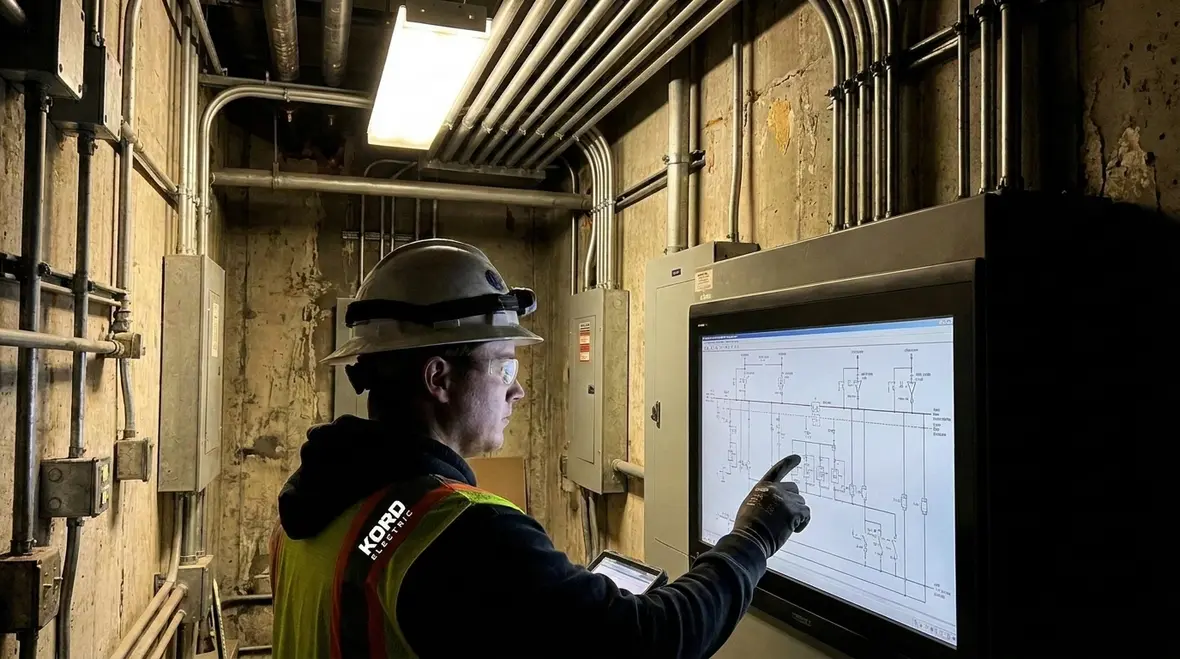
In real facilities, protection devices decide the outcome. Therefore, our Electrical Redundancy Services: Protecting Critical Commercial Power Systems work focuses on selectivity, coordination, and fault containment. Selectivity means that when a fault occurs, the system isolates only the affected part. Coordination means the devices act in the right sequence so one failure does not cascade.
We help your team plan arc fault behavior, short circuit performance, and breaker clearing times. Then we tune settings based on the actual one line diagram, cable runs, transformer characteristics, and available fault currents. After that, we verify the coordination scheme so the protection system clears faults reliably, not randomly. If you have ever heard a building say, “We are pretty sure it will work,” you already know why we do not rely on that approach.
Also, we examine the control logic that enables transfers. Transfers are where many redundancy plans fail, because timing, permissives, and interlocks may not line up with how the site operates. Our technicians explain the logic steps and test the behavior so the transfer path works during abnormal conditions, not just during a training session.
As a final layer, we document the operating approach for facility staff. Then we review the “what if” scenarios in practical terms, so everyone knows what to expect when something goes wrong.
Switchgear, UPS, and generator coordination that actually matches the load
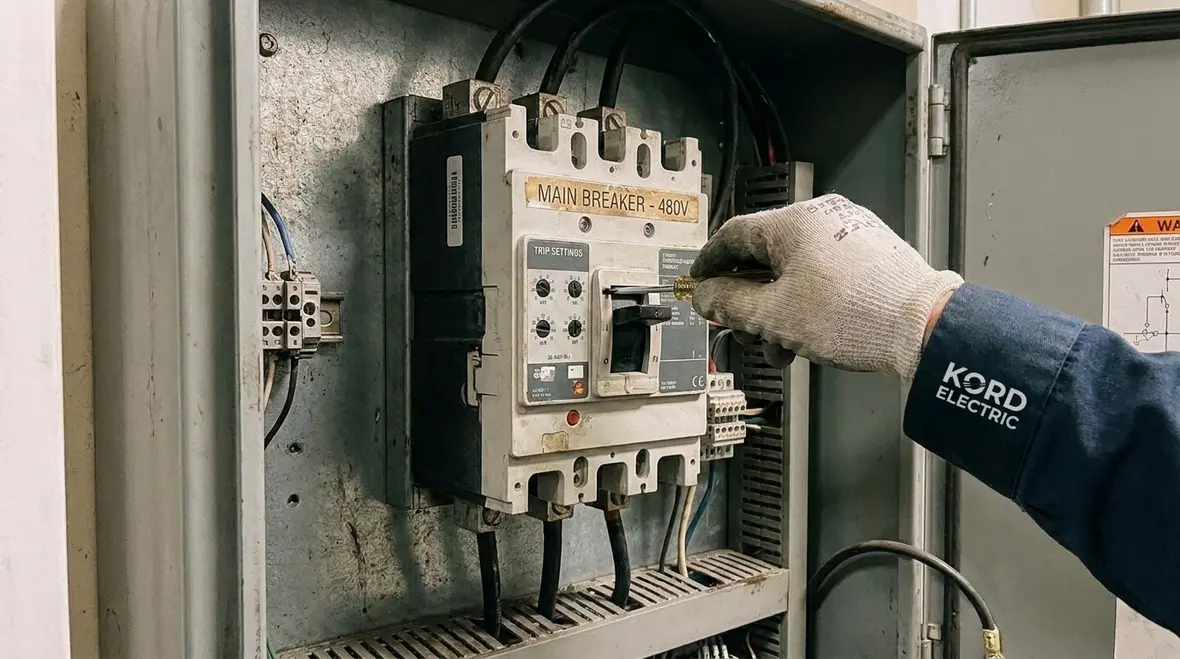
Redundancy becomes real when the equipment supports the load you care about. For that reason, we coordinate switchgear, UPS, and generators based on how the facility uses power. We do not treat the UPS as a magic box, and we do not treat the generator as a blanket answer. Instead, we make sure each layer plays its role and hands off to the next layer cleanly.
For critical loads, UPS systems can protect against utility disturbances and bridge transfer time. Then generators can carry loads once they stabilize. However, those handoffs must align with your transfer scheme, your run time requirements, and your load profiles. If the UPS capacity or runtime settings do not match the actual load, you can lose power at the worst moment. And if the generator start sequence does not match transfer permissives, the system can stall while control logic waits for a signal that never arrives.
We also pay attention to distribution. Even if sources are redundant, poor bus design can force healthy loads into a faulted section. Therefore, our service staff verify routing, sectionalizing, and downstream protection to keep power stable where it matters.
We then support commissioning and performance verification so the system proves its design intent. In short, we move from theory to results, with tests that reflect how the facility truly runs.
Testing, commissioning, and ongoing service for commercial and industrial sites
Once the redundancy design exists, the next question is whether it remains reliable. Therefore, we schedule commissioning activities and verification steps that confirm the system works as intended. We also validate that protective settings, control sequences, and transfer behavior align with how operators handle emergencies.
After commissioning, periodic testing and maintenance protects the plan. Components age. Control boards drift. Batteries weaken. Breaker mechanisms change their feel. Then a system that “used to be good” can become unreliable without warning. Our technicians help facilities stay ahead of those changes with practical service, documented checks, and clear recommendations.
We also train your team. Our approach includes explaining how to interpret alarms, how to respond to transfer events, and what to check during abnormal behavior. And yes, we keep it calm, because no one should sound like a siren while learning electrical logic.
For major property buildings and industrial sites, our goal is steady performance through seasons, load changes, and planned upgrades. If your facility adds equipment, expands production lines, or upgrades IT loads, we can review how those changes affect redundancy. That is how uptime plans stay current.
If your facility operates in Los Angeles County or the surrounding region, our broader Los Angeles County commercial electrical services support everything from new installations to upgrades that keep your redundancy plan aligned with real-world operations.
FAQ about redundancy for critical commercial power systems
Ready to protect uptime in your facility
If you want redundancy that behaves correctly during faults, Kord Electric is ready to help. Our technicians review your one line diagrams, critical loads, protection strategy, and transfer logic, then we coordinate the full power path for commercial and industrial sites. We also explain every step in clear terms, so your operators feel confident, not confused. Contact Kord Electric today for an assessment and a reliability plan built to keep your critical systems running when it matters most.
Our Electrical Redundancy Services: Protecting Critical Commercial Power Systems can also be paired with broader commercial and industrial support, from panel upgrades and service capacity changes to emergency response when something unexpected shows up. When uptime is the goal, we design and maintain power systems so they act like the steady partner your business needs, not another risk you have to manage.
To explore related support for your facility beyond redundancy design, visit our commercial electrical services in Los Angeles County or speak with our team about aligning redundancy, maintenance, and upgrades into one clear roadmap.


