
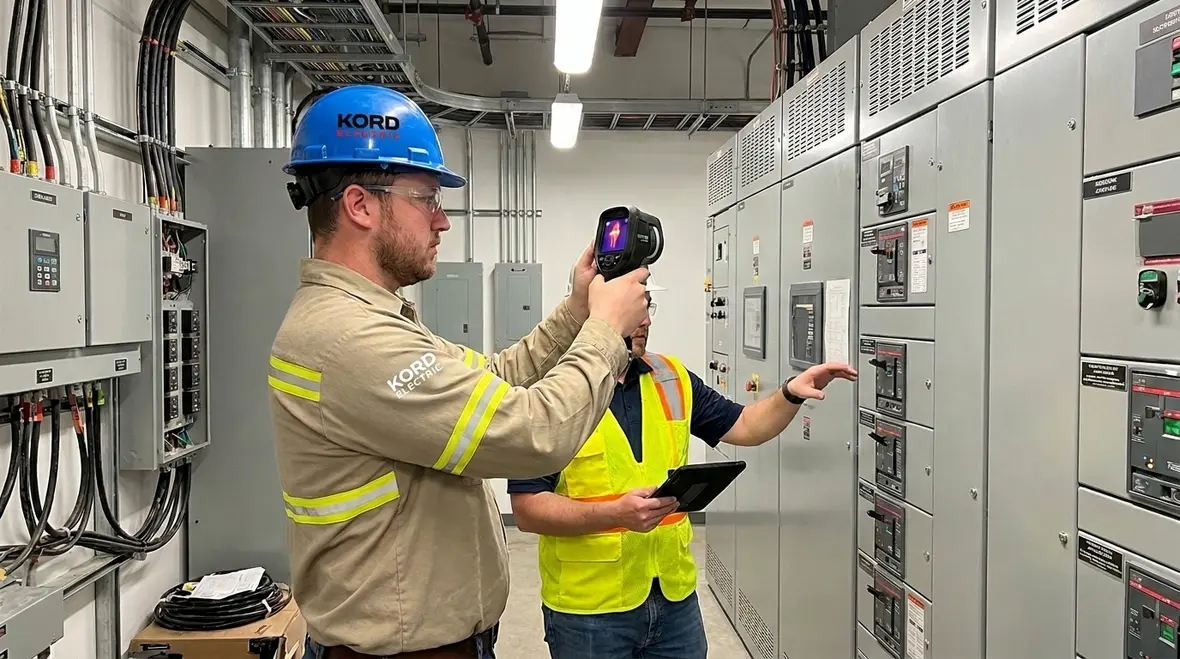
Electrical Risk and Hazard Assessments for Commercial Facilities
Kord Electric delivers Electrical Risk & Hazard Assessments for Commercial Facilities that help owners and operators reduce danger, prevent downtime, and keep power systems performing the way they were designed to. We do not treat safety like a checkbox. Instead, we treat it like a living system that must be monitored, understood, and improved over time. Our technicians and expert service staff walk through hazards in plain language, so decision makers can act with confidence. And yes, we still make sure people do not “wing it” when electricity is involved, because electricity does not care how brave you feel.
Based on our industrial electrical safety audit approach for reliability, we combine field observations, documentation, and practical controls that fit commercial and industrial environments. From switchgear rooms to rooftop panels, we help others see where risks start, how they grow, and what steps stop them.
Why electrical risk and hazard assessment matters in the real world
Electrical hazards rarely announce themselves with a dramatic soundtrack. They build quietly, usually through wear, hidden damage, poor access, or changes in operations. For commercial and industrial facilities, this can mean a chain reaction: a small issue becomes an outage, then becomes an investigation, then becomes a costly repair with business impact.
So we start by looking at how work actually happens. We review typical tasks, access patterns, equipment locations, and how people interact with electrical systems during normal operations and maintenance. Then we connect that to the likely failure points. For example, a cable tray that sits in a damp area might not cause issues today, but corrosion can weaken insulation over time. Likewise, an electrical room with cluttered pathways slows response and increases the chance of accidental contact or improper shutdown.
How Kord Electric builds a hazard picture that teams can use
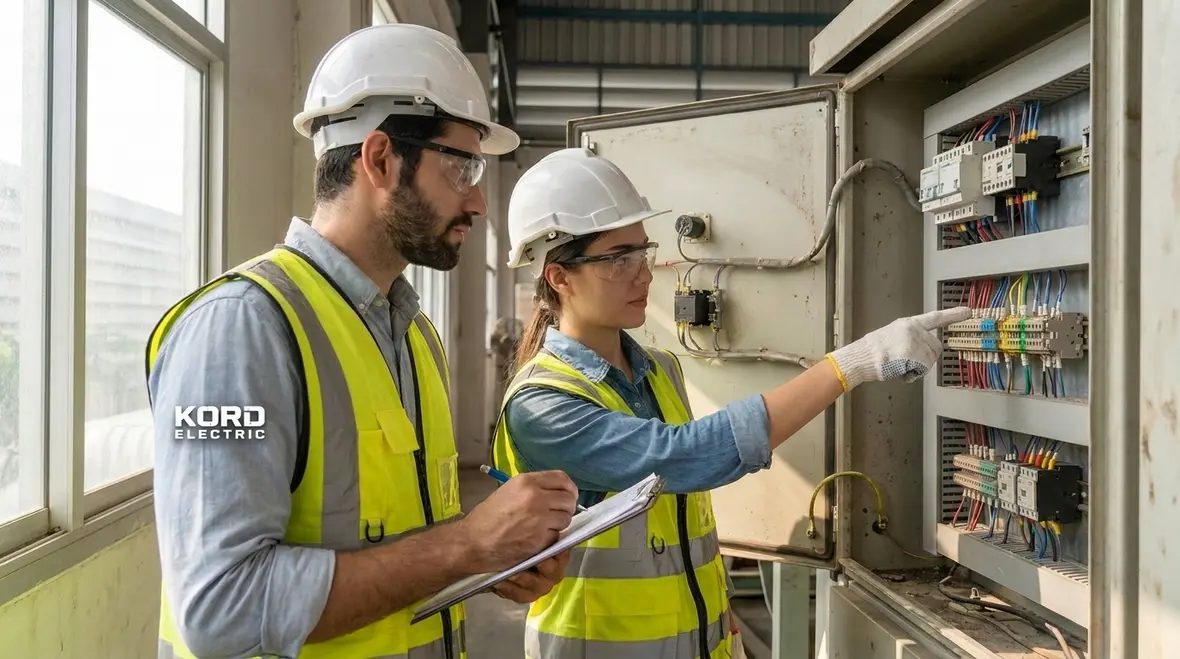
When we perform an assessment, our goal is not just to find problems. Our goal is to help the facility build a clear understanding of risk, so others can prioritize fixes based on real conditions. Therefore, we take a structured route that aligns with how reliable systems operate.
First, our expert service staff conduct an on site review of electrical equipment and the environment around it. We observe conditions like damaged labels, missing covers, exposed terminals, loose connections, inadequate clearance, and signs of overheating. Next, we evaluate whether the facility’s processes support safe work, including lockout and tag procedures, maintenance practices, and training alignment.
To keep the assessment useful, we also translate findings into action. Instead of vague warnings, we identify what needs attention, what may worsen if ignored, and what control measure fits the scenario. In other words, we turn “this looks bad” into “here is the safest next step.”
What we look for during an electrical safety audit for reliability
Our industrial electrical safety audit for reliability approach focuses on risk that affects both safety and dependable power delivery. We do not just stare at panels and call it a day. We look at the whole system context: equipment, connections, protective devices, and how the facility maintains them.
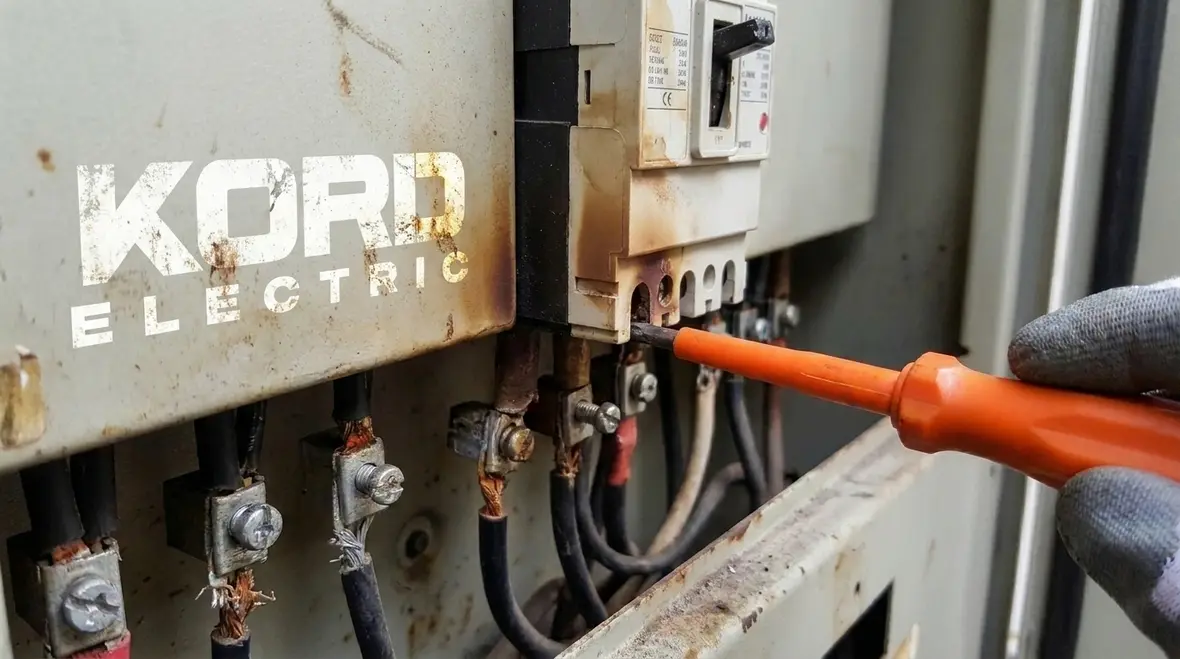
Common focus areas include the condition and labeling of distribution equipment, switchgear, motor control centers, and associated wiring paths. We check for issues such as moisture intrusion, improper workmanship that hides under “looks fine from here” logic, and worn components that can fail during peak loads. Additionally, we verify that protective devices behave as intended, since inaccurate coordination can allow faults to expand instead of clearing quickly.
We also consider how people move and work. For example, an electrical room that lacks clear boundaries can lead to storage inside zones that should stay open. That increases hazard exposure and slows safe troubleshooting. And if you think that is an edge case, we would remind you that most incidents start exactly where teams assume nothing will happen.
Common hazards in commercial and industrial electrical environments
Every facility has a different layout, yet hazards tend to follow patterns. Below are the categories we frequently address for commercial and industrial operations:
- Arc flash and shock exposure, especially where access is restricted or covers and barriers do not match the current configuration
- Loose connections and overheating, often visible through discoloration, hotspots, or insulation damage
- Damaged or missing identification, including unreadable labels and unclear circuit mapping
- Inadequate clearances around energized parts, work areas, and switching locations
- Moisture, dust, and chemical exposure that accelerates insulation breakdown and corrosion
- Process gaps such as inconsistent maintenance intervals, unclear responsibilities, or incomplete records
Then we link these hazards to practical outcomes. When someone cannot safely verify absence of voltage, a task slows down. When a protective device cannot clear a fault predictably, the risk increases. And when labeling fails, troubleshooting turns into guesswork, which is a fun way to invite downtime and an expensive conversation with your insurance company.
Using assessment results to prevent downtime and keep reliability high
After we complete the field work, we help the facility turn findings into a plan. This is where many safety programs struggle, because documentation sits in a binder and nobody uses it. We avoid that.
First, we prioritize hazards by risk and likely impact. Therefore, urgent items like unsafe access conditions and energized exposure receive attention before lower risk concerns. Next, we connect recommendations to maintenance cycles and operational realities. Our technicians and expert service staff explain the “why” behind each control, so facility teams can adopt the changes without turning every fix into a debate.
We also support reliability by addressing root causes, not just symptoms. For example, we do not only replace a component that overheated. We identify what contributed to the overheating, such as poor ventilation, load mismatch, or connections that did not maintain integrity. That approach reduces repeat failures and supports steadier performance.
For leaders who want to connect this reliability work with broader planning, resources like Kord Electric’s guide to industrial electrical safety audit for reliability help tie Electrical Risk & Hazard Assessments for Commercial Facilities into long term programs instead of one time projects.
How teams should act after the assessment is complete
A good assessment does not end when the report prints. In fact, the real value shows up after. We recommend a clear follow up workflow that helps commercial and industrial facilities maintain safety month after month.
At a minimum, teams should review findings, assign ownership, and set deadlines. Then they should update procedures, including lockout and tag expectations, arc flash awareness rules, and safe access requirements. Where needed, we help coordinate electrical work with operations so shutdown windows match the plan.
Finally, we encourage verification. That means confirming that recommended controls were installed correctly and that the facility’s records reflect the current state. Because if the equipment changes and nobody updates the documentation, the next assessment starts where the last one ended. And nobody wants to relive that story.
For facilities that want these improvements woven into a broader reliability roadmap, Kord Electric’s Los Angeles County electrical services for commercial and industrial operations help tie assessments, upgrades, and maintenance together across sites.
Frequently asked questions about electrical risk and hazard assessment
CTA: Schedule a reliability focused assessment with Kord Electric
If you manage a commercial or industrial facility and you want electrical safety that actually holds up in the field, Kord Electric is ready. Our technicians and expert service staff deliver clear Electrical Risk & Hazard Assessments for Commercial Facilities that connect hazards to practical fixes and reliability outcomes. Contact us to schedule an audit and receive a plan your team can execute without guessing. Let us help you protect people, reduce downtime, and keep your electrical systems working the way they should.
If you are also planning broader power reliability improvements, our team can align your assessment with services such as commercial power reliability audits and ongoing maintenance available through our regional programs. That way, each recommendation from the assessment feeds directly into a realistic action plan with the right level of support.


